You notice a water stain on the ceiling.
Or maybe a storm rolls through and you find shingles scattered across the yard the next morning.
Your first thought might be:
“Will my homeowners insurance pay for a new roof?”
The answer is one homeowners don’t always love hearing:
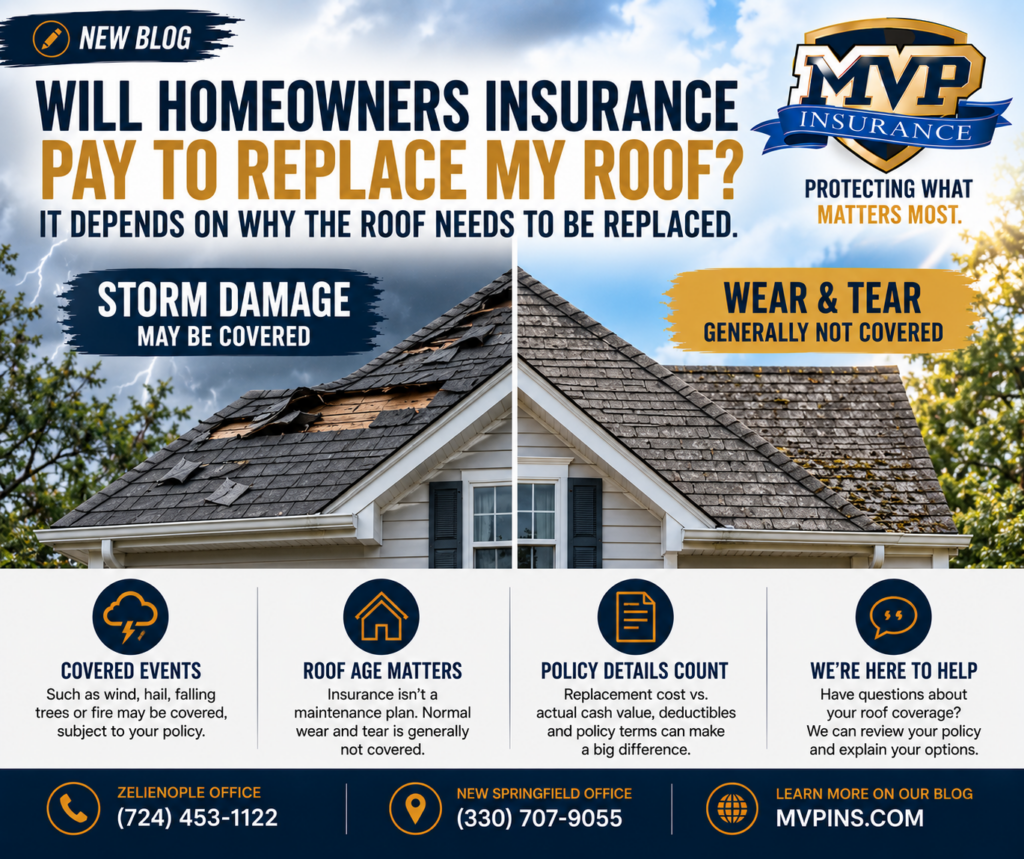
It depends on why the roof needs to be replaced.
Homeowners insurance isn’t designed to replace a roof simply because it’s old. But if your roof is damaged by a covered event, your policy may provide coverage, subject to its terms, limits, deductibles and exclusions.
Let’s look at the difference.
When Might Homeowners Insurance Cover Roof Damage?
Generally, homeowners insurance is designed to protect against certain sudden and accidental losses.
Depending on your policy, covered roof damage could potentially result from events such as:
- Wind
- Hail
- Falling trees or branches
- Fire
- Certain other sudden weather-related events
For example, suppose a severe windstorm damages an otherwise properly maintained roof and removes a section of shingles.
That’s very different from a 25-year-old roof that has gradually deteriorated and begun leaking.
The cause of the damage matters.
What About an Old or Worn-Out Roof?
This is where one of the biggest homeowners insurance misconceptions comes in.
Insurance generally isn’t a maintenance plan.
Roofs naturally deteriorate over time because of age, weather exposure and normal wear and tear.
If your roof simply reaches the end of its useful life, homeowners insurance generally isn’t intended to pay for a replacement just because it needs one.
Think of it like the tires on your car.
Your auto insurance doesn’t buy you new tires when the tread wears out.
Similarly, homeowners insurance isn’t designed to replace building materials simply because they’ve aged.
What If an Old Roof Is Damaged by a Storm?
This can become more complicated.
A roof can be older and experience storm damage.
How a claim is handled can depend on the cause and extent of the damage, the condition of the roof before the loss, your particular policy and how your roof is insured.
That’s why it’s important not to assume:
“There was a storm, so I’m automatically getting a new roof.”
A storm occurring near your home and a covered loss to your roof aren’t necessarily the same thing.
Replacement Cost vs. Actual Cash Value Can Matter
Another important question is how your policy values roof damage.
Depending on the policy, roof age, materials and other factors, coverage may be subject to replacement-cost provisions, actual-cash-value provisions, a roof payment schedule or other policy terms.
Those differences can significantly affect what you might receive after a covered loss.
For example, actual cash value generally takes depreciation into consideration.
That means an older roof may not be valued the same way as a brand-new roof.
This is something worth understanding before you have a claim.
Don’t Forget About Your Deductible
Even when roof damage is covered, your homeowners deductible usually applies.
Suppose you have covered roof damage and a $2,500 deductible.
That deductible affects the amount you’re responsible for before applicable insurance proceeds are paid.
Some policies may also have different deductibles for certain types of losses, depending on the carrier, policy and location.
Knowing your deductible now is much better than discovering it while you’re standing underneath a leaking ceiling.
Should You Automatically File a Claim After Every Storm?
Not necessarily.
Seeing a roofing company’s truck in your neighborhood doesn’t automatically mean you have an insurance claim.
If you suspect damage, determine what’s actually going on.
Document what you see and contact your insurance agent if you have questions about your coverage or whether a claim may be appropriate.
Your agent can help you understand the process and your policy before you make assumptions about what will happen next.
Maintenance Still Matters
Taking care of your roof can help prevent smaller issues from becoming bigger problems.
Homeowners should periodically pay attention to things such as:
- Missing or damaged shingles
- Flashing around chimneys and vents
- Clogged gutters
- Overhanging tree limbs
- Signs of water intrusion
- The general age and condition of the roof
You don’t need to climb onto your roof yourself.
If you have concerns, consider having it evaluated by a qualified professional.
Questions to Ask Your Insurance Agent
Instead of waiting until there’s damage, ask your agent:
How is my roof currently insured?
Do I have replacement cost or actual cash value provisions that apply to my roof?
What is my homeowners deductible?
Are there special roof provisions or limitations on my policy?
Does the age of my roof affect my coverage?
Those five questions can tell you a lot more than simply asking, “Is my roof covered?”
The MVP Approach
At MVP Insurance, we’d rather help you understand your homeowners coverage before the storm happens.
That includes explaining your deductible, how your home is insured and any important policy provisions that could affect a future claim.
And if something does happen, we’re here to help you understand the claims process and what your next steps may be.
No pressure. No confusing insurance jargon.
Just practical advice to help you protect what matters most.
Final Thought
So, will homeowners insurance pay for a new roof?
It may—if the damage results from a covered loss.
But homeowners insurance generally isn’t intended to replace a roof simply because it’s old or worn out.
The difference between damage and deterioration matters.
And the best time to understand that difference isn’t after a storm.
It’s today.
Have Questions About Your Homeowners Insurance?
MVP Insurance can help you review your current homeowners policy and understand how your coverage works.
Request an insurance quote from MVP Insurance
https://www.mvpins.com/quotes/
Already have insurance? Securely send us your current policy information:
https://app.usecanopy.com/c/MVPINSURANCE
“Think you might be overpaying?
Get a fast quote here: https://www.mvpins.com/quotes/”