

Pennsylvania teens move from a learner's permit to a junior license to a senior license. Each step requires a minimum amount of time, practice, or clean driving before the next one unlocks. Here's what each stage actually requires and what it means at home.
CG 20 37: Coverage After the Project is Finished
Can my 16-year-old drive their friends home from school in Pennsylvania? During the first six months of a junior license, they can carry only one passenger under 18 who isn't an immediate family member, unless a parent or guardian is in the car. After that window, the limit eases if your teen has stayed violation-free.
Does a teen with a learner's permit need to be on my car insurance? It depends on the carrier. Some require permit holders to be listed, and others don't rate them until they're licensed. Tell your agent when the permit is issued so there's no gap if something happens.
Can a junior license holder drive home from work after 11 PM? Yes. Pennsylvania's curfew includes an exception for travel to and from employment. Your teen should keep proof of their work schedule in the car in case they're stopped.
Pennsylvania's licensing rules work because they ease teens into risk instead of handing them full privileges on day one. Supervised hours, passenger caps, and the overnight curfew all target the situations where new drivers get hurt most. For families, those same rules shape the insurance conversation. A clean junior year, solid liability limits, and the right car assignment can keep your teen safer and your premium more manageable.
If your teen's road test is coming up, now is a good moment to see how different carriers would price your household. MVP Insurance is an independent agency with offices in Zelienople, PA and New Springfield, OH. We compare policies across multiple carriers so you don't have to. When you're ready, you can start your quote here, and we'll walk you through the options. MVP Insurance is licensed in Ohio (license #37714) and Pennsylvania (license #519263), NPN 10588293.
Pennsylvania still offers homeowners insurance below the national average, but recent increases have been steep, and Western PA homeowners have felt it through storms and rising rebuilding costs. Your location sets the starting point. Your deductible, your roof and home systems, and how you use your policy decide much of the rest.
The most useful step is seeing real numbers side by side instead of accepting a single renewal at face value. MVP Insurance is an independent agency with offices in Zelienople, PA and New Springfield, OH, and the team compares multiple carriers so you don't have to. When you're ready, start your quote here and get a clearer picture of what your home should cost to insure.
MVP Insurance is licensed in Ohio (license #37714) and Pennsylvania (license #519263), NPN 10588293.
Pennsylvania follows modified comparative negligence. You can recover damages from other drivers as long as your share of fault isn't greater than theirs combined. Your recovery is reduced by your own percentage. If you're found 30% at fault for a $10,000 loss, you'd typically recover $7,000 from the other side. Once you cross 50%, you can't recover from them at all.
Icy-road claims are full of split percentages. Say one driver was following too closely and another changed lanes abruptly on packed snow. Fault might land at 60/40 or 70/30. In a pileup, three or four drivers might each carry a slice. These percentages shape your claim history too, which is why it's worth disputing a split you think is wrong before it becomes final.
These two get confused all the time, and they pay for different situations.
- Emergency roadside service (sometimes called towing and labor) covers breakdowns: dead batteries on a zero-degree morning, flat tires, lockouts, or a winch-out when you've slid into a snowbank without damaging the car. It typically has a per-incident limit and is a low-cost add-on.
- Collision towing is part of your collision claim. When your car is damaged in a crash, the tow to a shop and reasonable storage are usually paid as part of the loss, subject to your deductible.
- Comprehensive can cover towing tied to non-collision losses, such as a tree limb crushing your hood during an ice storm.
A common mistake is assuming roadside service covers a crash tow, or that collision covers a simple winch-out. Check which one applies before you call, especially if you belong to an auto club as well.
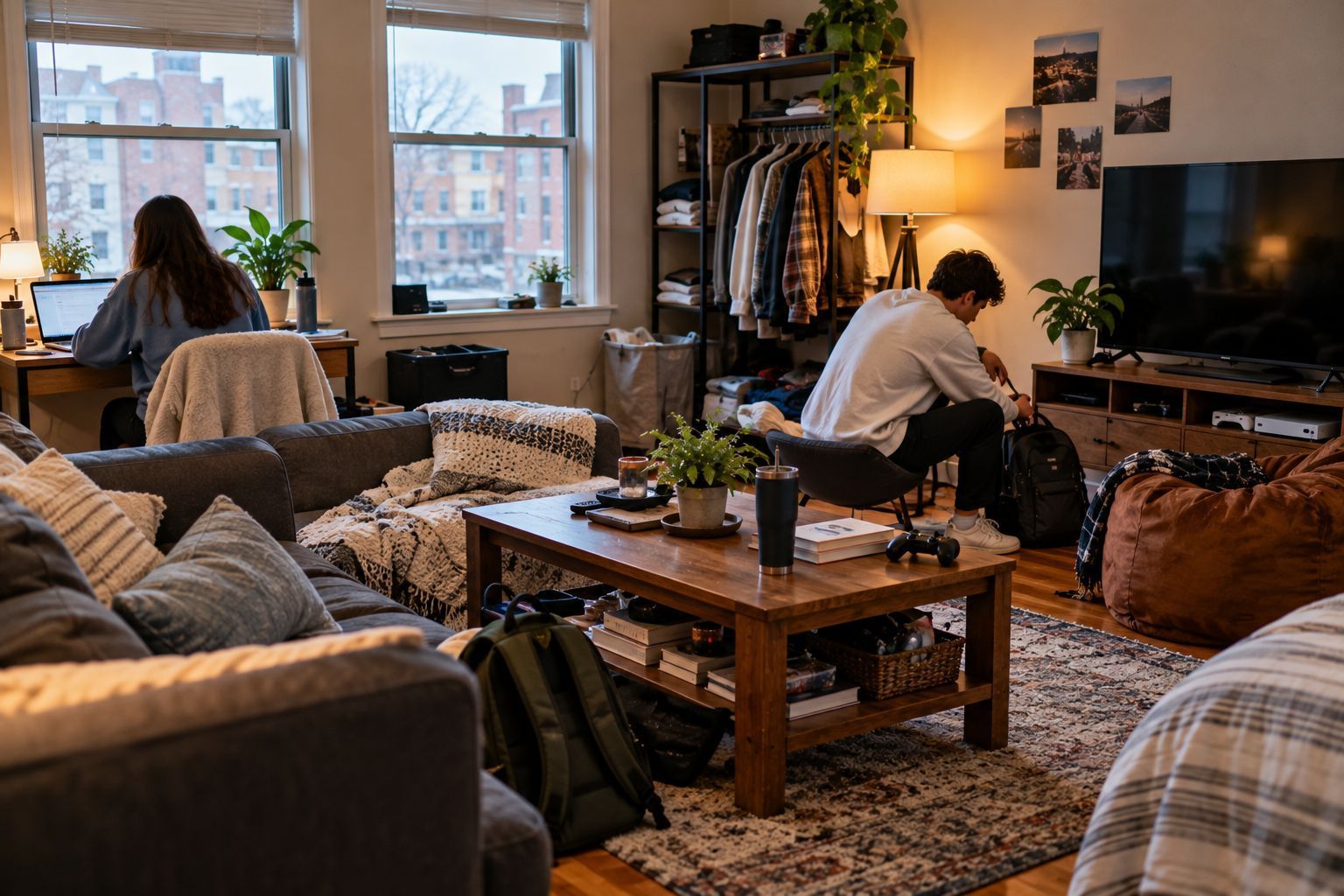
Two people split the rent, share a fridge, and sign the same lease. It's natural to assume one renters policy can stretch to cover both of them. In practice, that assumption causes more claim-day surprises than almost any other mistake renters make, and the reasons come down to how policies define who is actually insured.
Does Renters Insurance Cover Roommates in Pennsylvania?
In Pennsylvania, renters insurance typically covers only the people named on the policy, plus relatives living with them. A roommate who isn't listed generally has no coverage under your plan. Some carriers let roommates share one policy, but separate policies are often the smarter route because they avoid gaps in property limits, liability, and claim payouts.
That's the short version. The longer version matters because Pennsylvania doesn't require renters insurance at all. Even so,
landlords are legally permitted to require it as a condition of a lease. Many roommates buy a policy in a rush to satisfy a lease clause, without asking whose stuff it protects. A landlord's requirement doesn't spell out how roommates should split coverage. That part is up to you.
Shared Leases and Policy Ownership in PA
Signing the same lease does not put you on the same insurance policy. A lease is a contract between tenants and a landlord. Your renters policy is a separate contract between you and an insurance carrier, and it only protects the people it names.
Some carriers, including Erie and Progressive, may allow more than one name on a renters policy. The details matter, though. To be covered, a roommate needs to be listed as an "Additional Named Insured." That's different from the "Additional Interest" label landlords often ask for. Landlords typically request Additional Interest status so they get cancellation notices. It gives them no coverage, and adding a roommate that way wouldn't protect the roommate either.
Even with both names on the policy, the primary policyholder usually controls the claim. Checks may be issued to the named insured, and the carrier communicates with that person. If you and your roommate stop speaking after a fire, you could end up waiting on someone else to hand over your share of the payout.
Whose Belongings Are Covered Under a Shared Policy?
On a shared policy, both roommates' belongings are covered, but they draw from one pot. The personal property limit is a single number for the whole household, not a separate amount for each person.
Here's how that plays out. Say you and your roommate share a policy with $20,000 in personal property coverage. A kitchen fire spreads through the apartment, and you lose $14,000 worth of furniture, a gaming setup, and clothing. Your roommate loses $11,000 in electronics and a road bike. That's $25,000 in damage against a $20,000 limit. Somebody comes up $5,000 short, and the policy doesn't decide who.
Sublimits make this tighter. Jewelry, firearms, and some collectibles often carry separate caps, and two people's watches and rings can blow through those quickly. Before choosing a limit, each roommate should add up what they own. Most people underestimate by half. If you're comparing options, our guide to pennsylvania renters insurance explains how property limits and deductibles typically work in the state.
Liability Between Roommates and Legal Protections
Standard liability coverage usually won't pay claims between people named on the same policy. This "insured versus insured" exclusion is one of the least understood parts of a shared policy.
Picture this: your roommate leaves a space heater running, and it scorches your mattress, desk, and laptop. On separate policies, you could file under your own property coverage, and your carrier might pursue your roommate's liability coverage. If you're both named on one policy, that liability route typically closes. If you sue your roommate in small claims court, the policy you share might not provide a legal defense or pay a judgment either.
Medical bills work similarly. Standard Pennsylvania policies typically include $1,000 to $5,000 in "no-fault" medical payments for guests. A named insured isn't a guest. If you trip over your roommate's cords and break a wrist, don't expect that coverage to help.
The Benefits of Maintaining Separate Policies
Separate policies give each roommate their own full limits, their own deductible, and their own claims. For most shared apartments, that's the cleaner setup.
With carriers such as Westfield or Liberty Mutual, each roommate picks a property limit that fits what they actually own. A roommate with $3,000 of hand-me-down furniture doesn't have to fund coverage for a roommate's $9,000 camera kit. Deductible fights go away too. On one shared policy, a $1,000 deductible on a theft claim raises an awkward question: who pays it, especially if only one person's stuff was taken?
Separate liability matters most. Each of you carries your own protection if a guest gets hurt or you accidentally flood the unit below. Your roommate's claims history also stays off your record. The cost difference is usually small. As of this writing, Pennsylvania premiums average around $174 per year, and statewide policies typically run $15 to $20 per month.
Comparing Shared vs. Separate Coverage Options
A shared policy can work for a couple who merges finances, or for longtime friends with similar belongings and a lot of trust. It gets riskier with:
- Roommates found through a listing or app
- Big gaps in what each person owns
- One person planning to move out within the year
- Anyone with pets, since dog bite claims land on the policy's liability coverage
PA Renters Insurance Coverage Comparison Table
| Feature | Shared Policy | Separate Policies |
|---|---|---|
| Property limit | One limit for everyone | Each person has their own |
| Deductible | One, split by agreement | Each pays their own |
| Claim payout | Often goes to primary insured | Goes to each policyholder |
| Roommate vs. roommate claims | Usually excluded | Can be pursued |
| Liability limit | Shared by all named | Full limit per person |
| Claims history | Affects everyone named | Stays individual |
| Move-out changes | Policy must be rewritten | No change for others |
Location affects cost too. As of this writing, Philadelphia premiums often range from $190 to $240 a year, while rural areas may run $120 to $150. In Pittsburgh, annual costs typically fall between $155 and $195. One more gap applies to both setups: standard renters policies don't cover flood, and only about 1% of Pennsylvania households carry flood insurance. Roommates in a basement unit should look at that separately.
How Pennsylvania Roommates Can Secure Coverage
The simplest approach is to have each roommate get quotes from several carriers at once, instead of calling companies one by one. An independent agency like MVP Insurance can do that comparison for you.
Here's how it usually goes:
- Inventory your stuff. Walk each room with your phone and record what you own. This helps you set a realistic limit and speeds up any future claim.
- Check your lease. Note any required liability amount and whether your landlord wants Additional Interest status.
- Request quotes. An independent agent can compare options from carriers such as Frederick Mutual, Municipal Mutual, and Farmers of McCandless side by side, along with others.
- Decide shared or separate. With real numbers in front of you, the price difference is often smaller than people expect.
- Bundle where possible. If you have a car, pairing auto and renters coverage with one carrier can bring the total down.
MVP Insurance works with these carriers as an independent agent, so the comparison is built around your situation instead of one company's products. When you're ready, you can start your quote here or reach the team at our offices in Zelienople, PA and New Springfield, OH. MVP Insurance is licensed in Ohio (#37714) and Pennsylvania (#519263), NPN 10588293.
Frequently Asked Questions About Roommate Insurance
Can I add my roommate to my insurance?
Often, yes. Some carriers let you add an unrelated roommate as an Additional Named Insured. Keep in mind that you'll share one property limit, the liability between you is usually excluded, and the payout typically flows through the primary policyholder.
Does my insurance cover my roommate's stolen laptop?
Not unless your roommate is named on your policy. If they aren't listed, their laptop isn't covered under your plan, even if it was stolen from your shared living room. They would need their own policy to file a claim.
What happens to my insurance if my roommate moves out?
On separate policies, nothing changes for you. You just update your address if you move too. On a shared policy, call your agent right away to remove the departing roommate and adjust your limit, so you aren't paying to cover belongings that left with them, or leaving them listed on a claim that's now yours alone.
Search
Recent Posts
MVP Insurance is a local, independent agency, licensed to serve individuals and businesses across Ohio and Pennsylvania.
We serve clients from our offices in New Springfield, Ohio and Zelienople, Pennsylvania and throughout Northeast Ohio and Western Pennsylvania, working with multiple carriers to help contractors, landlords and real estate investors, restaurants, retail shops, auto repair shops, professional offices and many other personal and commercial clients find coverage that fits.
Our Owners
Two friends who started an agency
Owner
Joshua Medure
I am a Penn State marketing graduate with more than ten years in insurance. My childhood friend David and I started MVP Insurance in Northeast Ohio because we wanted the people around us to have an agency that gives honest advice, real choices and someone who picks up the phone. I lead the agency’s insurance strategy, which means I read the policies so our clients do not have to. Away from the office, I coach youth football.
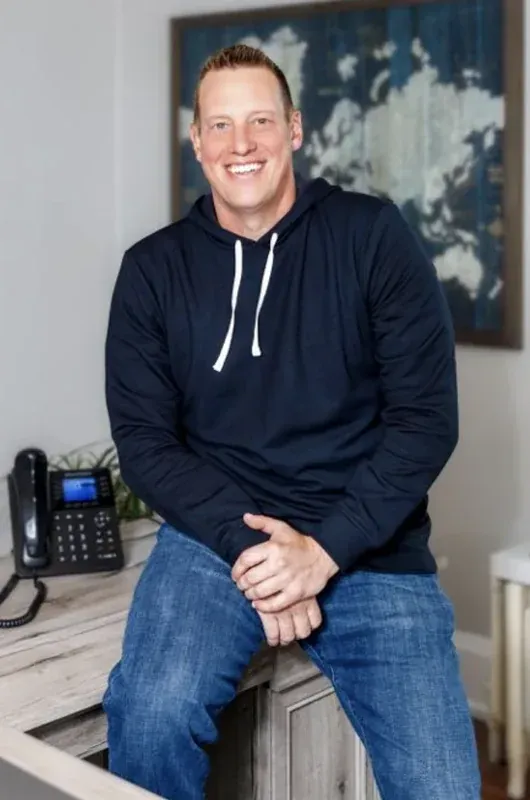

About the Author
David Varrati
Owner, MVP Insurance
I started MVP Insurance with my childhood friend Josh because we wanted people in Northeast Ohio and Western Pennsylvania to have an agency that explains things plainly and picks up the phone. I studied Political Science at Slippery Rock University and have spent more than ten years helping families and individuals protect what matters to them. When I am not in the office, you will find me coaching youth sports.