
Pennsylvania General Liability Insurance

Owner, MVP Insurance

Pennsylvania general liability insurance pays for injuries and property damage your business causes to other people: a customer who slips in your lobby, a ceiling you crack while installing a fixture, a product that fails after a sale. It also covers your legal defense, supplies the certificates clients ask for, and sets the limits that contracts often require.


That short answer leaves out the parts that cause real trouble. A landlord in Cranberry Township rejects your certificate because the wording is off. A general contractor in Butler won't let your crew on site until you add them as an additional insured. A roofer gets sued two years after finishing a job and learns his old policy didn't include completed operations. None of these are rare. They happen to careful owners who bought coverage in good faith and never got a clear explanation of what it did.


What follows breaks down how slip-and-fall and property damage claims are handled, how certificates of insurance and additional insured requests work, why completed operations coverage matters, and which limits Pennsylvania businesses typically carry. The goal is to help you read your own policy with fresh eyes and ask your agent better questions.

The Essentials of Pennsylvania General Liability Insurance

General liability insurance protects Pennsylvania businesses against claims from third parties, meaning people outside your company, for bodily injury and property damage tied to your operations, premises, or products. It does not cover your own employees (that's workers' compensation), your own building (that's commercial property), or your vehicles (that's commercial auto). Keeping those boundaries straight prevents most coverage surprises.


A standard commercial general liability (CGL) policy usually has several parts. Bodily injury and property damage coverage handles accidents. Personal and advertising injury covers claims like libel, slander, or using someone's copyrighted image in an ad. Medical payments coverage pays small injury bills regardless of fault, which often keeps a minor incident from turning into a lawsuit. Products and completed operations coverage handles claims that surface after your work is done.


Pennsylvania keeps a close eye on this line. Under PID Notice 2026-07, the state loosened filing requirements for many property lines while keeping strict oversight on commercial general liability to guard against discriminatory or excessive rates. Master policy lines for property and casualty were also kept within the filing requirements so regulators retain oversight. For business owners, that means CGL pricing still runs through state review.


MVP Insurance was founded in 2008 by Josh Medure and David Varrati to serve local business owners, and general liability sits at the center of what the agency does for commercial clients. As an independent agency, MVP compares policies from multiple carriers rather than selling a single company's product. That matters because two CGL policies with identical limits can differ sharply in their exclusions and endorsements.

David Varrati

By: Joshua Medure

Owner, MVP Insurance


MVP Insurance is a local, independent agency, licensed to serve individuals and businesses across Ohio and Pennsylvania.

We serve clients from our offices in New Springfield and Zelienople and throughout Northeast Ohio and Western Pennsylvania, working with multiple carriers to help homeowners, drivers, renters and condo owners, landlords, contractors, restaurant owners, shop owners, auto repair shops, professional offices and many other personal and commercial clients find coverage that fits.

Written By

David Varrati

Owner, MVP Insurance


Owner, MVP Insurance

On this page
Life

Term life pays your family a set amount if you die during the term; whole life lasts your lifetime and builds cash value. We help you size the amount to the mortgage, the kids and the years of income you want to replace.

Feature DP-1 (Basic) DP-3 (Special)
Covered perils Named perils only All risks, minus exclusions
Building settlement Usually actual cash value Usually replacement cost
Sudden water damage Often excluded Usually covered
Theft/vandalism Optional, limited Typically included
Loss of rent Often optional Usually included
Liability Often an add-on Add-on or included
Best fit Older, low-value homes Most modern rentals
PA legal requirement None by state law None by state law

Coverage for Slip and Fall Incidents and Property Damage Claims

If a customer gets hurt or their property gets damaged because of your business, general liability pays their medical bills, any settlement or judgment, and your attorney's fees. Defense costs are usually paid in addition to your limits on a standard CGL form, which is a bigger deal than most owners realize. A weak claim can still cost tens of thousands of dollars to defend.


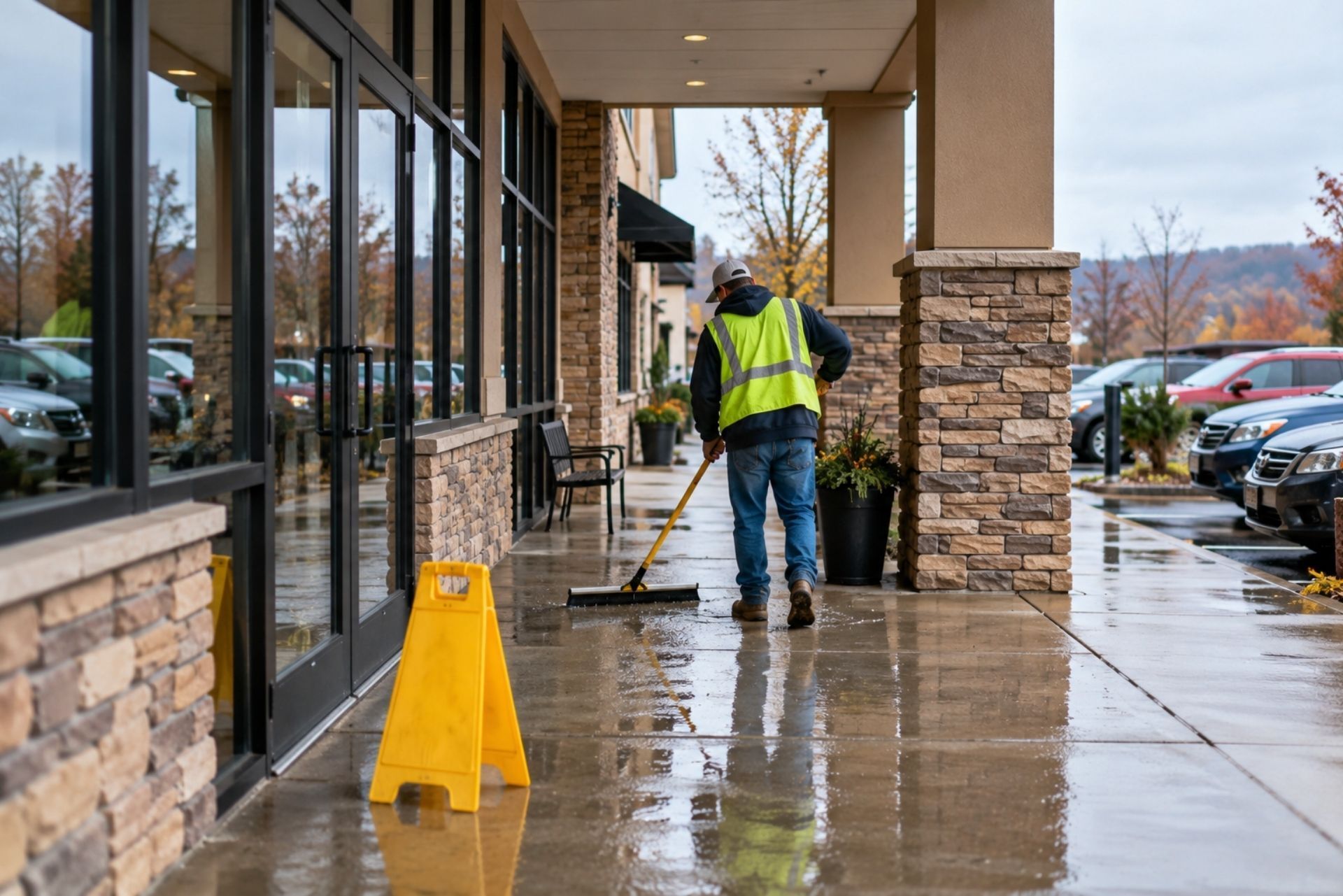
Slip-and-fall claims are the classic example. Picture a wet floor near the entrance of a Zelienople coffee shop on a February morning. A customer falls, breaks a wrist, and needs surgery. In Pennsylvania, slip-and-fall settlements typically range from $125,000 to $175,000, and cases involving permanent impairment often exceed $350,000. One claim like that can wipe out a year of profit for a small business without coverage.


Property damage claims look different but hit just as hard. Common examples include:


  • A plumber's fitting failsand floods a client's finished basement.
  • A painter's ladder tipsand shatters a homeowner's antique mirror.
  • A landscaper's mower throws a rockthrough a neighbor's car window.
  • A caterer's equipment scorches a rented venue's hardwood floor.


One mistake we see often: owners assume damage to the project they're working on is covered. Most policies exclude damage to "your work" and to property in your care, custody, or control. If a contractor drops a client's new appliance while installing it, that may fall outside the CGL entirely. Inland marine or installation floater coverage often fills that gap.


General liability is usually one piece of a broader plan. You can see how it fits with property, auto, and workers' comp in our overview of business insurance in Pennsylvania.Many smaller operations bundle liability and property together through a business owners policy in Pennsylvania,which often costs less than buying the two separately.

Written By

David Varrati

Owner, MVP Insurance


Owner, MVP Insurance

On this page

HCertificates of Insurance for Pennsylvania Contracts

Canopy import

Share your current policies in a few clicks through Canopy. We see exactly what you have today, so the comparison is apples to apples.

Certificates of Insurance for Pennsylvania Contracts

A certificate of insurance (COI) is a one-page summary proving you carry coverage, and Pennsylvania clients, landlords, general contractors, and government agencies ask for it before work begins. It lists your carrier, policy numbers, effective dates, and limits. It does not change your policy or grant anyone rights by itself, which is a point that trips up both sides of many contracts.


Businesses use COIs in a lot of everyday situations. A cleaning company shows one to land a contract with a property management firm. An electrician hands one to a school district before a summer project. A food truck owner provides one to a borough to get a festival permit. In each case, the other party wants proof that an accident on their watch won't land on their own insurance.


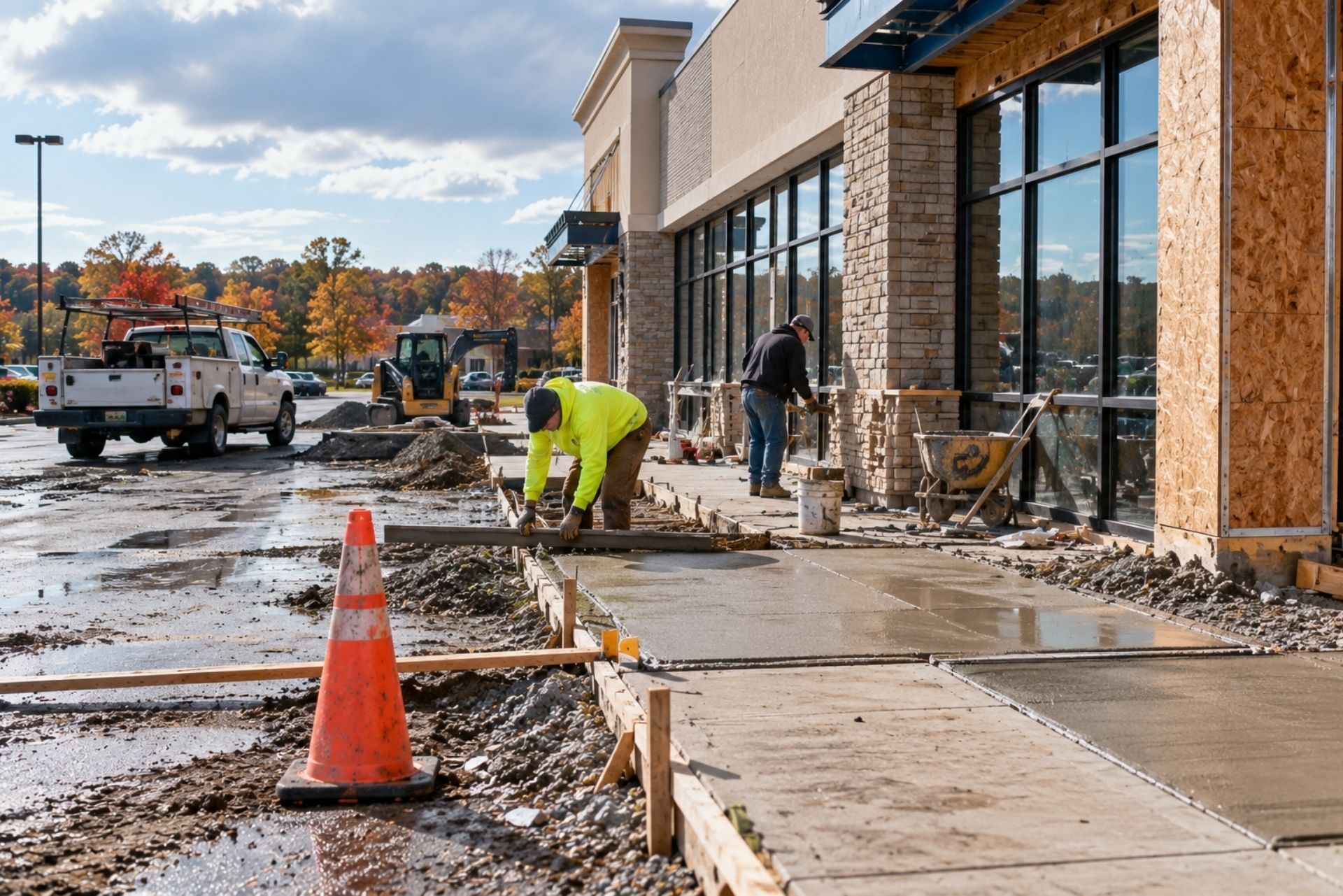
Home improvement contractors face a specific requirement. Contractors registered under Pennsylvania's Home Improvement Consumer Protection Act (HICPA) typically must carry minimum liability limits. As of this writing, that generally means at least $50,000 in personal injury coverage and $50,000 in property damage coverage. Those are floor amounts, though. Most homeowners and general contractors expect far more, and a $50,000 property damage limit won't go far if a kitchen fire spreads.


A few practical tips save headaches:


  1. Read the contract's insurance section before requesting a certificate, so the COI matches what's actually required.
  2. Ask for the certificate holder's exact legal name and address.
  3. Request COIs from your own subcontractors, too. If they're uninsured, their claims can land on your policy and drive up your premium at audit.
  4. Track expiration dates. A certificate that expired last month is the same as no certificate to a project manager.

Written By

David Varrati

Owner, MVP Insurance


Owner, MVP Insurance

On this page

Managing Additional Insured Requests on Your Policy

Adding a party as an additional insured gives them coverage under your policy for claims arising from your work on a specific project or location. It goes a step beyond a certificate. A COI only shows that you have insurance, while an additional insured endorsement actually extends your policy's protection to someone else.


This shows up constantly in Pennsylvania. Commercial leases almost always require tenants to name the landlord as an additional insured. Municipal contracts with townships, boroughs, and school districts typically demand it as well. General contractors require it from every sub on the job site. If a customer trips over your display in a leased storefront and sues both you and the property owner, the endorsement lets the landlord tap your policy for defense.


The details matter more than the request itself. Endorsements come in different forms:


  • Blanket endorsements automatically cover anyone you're required by written contract to add. They save time if you sign many contracts.
  • Scheduled endorsements name specific parties, so each new client requires a policy change.
  • Ongoing vs. completed operations wording determines whether the additional insured stays protected after you leave the site. Many general contractors insist on both.
  • Primary and noncontributory language means your policy pays first, without the other party's insurer sharing the loss.


Watch the indemnification clauses that usually sit beside these requirements. Some contracts ask you to cover the other party even for their own negligence. The Pennsylvania House passed HB 1541 in April 2026, which aims to void contract provisions requiring one party to indemnify another for that party's own negligence. Until anything becomes law, those clauses can still appear in contracts you sign, so have your agent compare what the contract demands with what your policy actually provides.

Written By

David Varrati

Owner, MVP Insurance


Owner, MVP Insurance

On this page

Products and Completed Operations Coverage

Products and completed operations coverage protects your business from claims that arise after a job is finished or a product has left your hands. Without it, a contractor could be fully insured while working and completely exposed the day after final payment. For contractors, manufacturers, and retailers, this is often the most important part of the policy.


Think about how these claims actually unfold. A deck builder in Cranberry finishes a job in May. Eighteen months later, a railing gives way during a family party and a guest falls. The injury happened long after the work ended, but it traces back to the builder's installation. Completed operations coverage responds to that claim, as long as the policy in force when the injury occurs includes it.


Products exposure works the same way for anyone who makes, sells, or distributes goods. A small Butler County manufacturer producing replacement parts, a farm stand selling canned goods, or a retailer importing space heaters can all face claims years after a sale. Pennsylvania courts allow product liability suits against sellers in the distribution chain, not just the original manufacturer, so retailers carry real risk too.


A few nuances catch owners off guard:


  • Separate aggregate limit. Products and completed operations usually has its own aggregate, often $2,000,000, apart from the general aggregate.
  • Excluded or limited for certain trades. Some policies for roofers or residential builders restrict this coverage or exclude specific work types.
  • Lapses are dangerous. If you close your business or let coverage lapse, future claims from past work may go uncovered. Retiring contractors should ask about tail options.


Ask your agent to confirm that your policy includes this coverage at full limits, especially if your work involves structural elements, electrical systems, or anything people stand on.

Written By

David Varrati

Owner, MVP Insurance


Owner, MVP Insurance

On this page

Comparison of General Liability Limits and Requirements

Most Pennsylvania businesses carry $1,000,000 per occurrence and $2,000,000 aggregate, which has become the standard contract requirement for leases, commercial clients, and most municipal work. The per-occurrence limit is the most your policy pays for one incident. The aggregate is the most it pays for all claims during the policy year.

Industry Common Per Occurrence Common Aggregate Typical Driver
Retail shop $1,000,000 $2,000,000 Commercial lease
Restaurant/café $1,000,000 $2,000,000 Lease, liquor license, events
Residential contractor $1,000,000 $2,000,000 Client and GC contracts (HICPA floor is lower)
Commercial contractor $1,000,000 $2,000,000 + umbrella GC and municipal contracts
Manufacturer $1,000,000 $2,000,000 products aggregate Distributor agreements
Office/consultant $1,000,000 $2,000,000 Client contracts, lease
Event vendor $1,000,000 $2,000,000 Venue or borough permit

Higher limits typically come from a commercial umbrella or excess policy rather than raising the CGL itself. A contractor bidding on a hospital renovation might need $5,000,000 total, built as a $1,000,000/$2,000,000 CGL plus a $4,000,000 umbrella. Umbrellas are often surprisingly affordable relative to the protection they add.


Think about the settlement range mentioned earlier. A single serious injury can approach or exceed $350,000, and a multi-person incident can climb much higher. The $1,000,000 limit isn't arbitrary; it reflects the real cost of bad days.

Written By

David Varrati

Owner, MVP Insurance


Owner, MVP Insurance

On this page

Frequently Asked Questions About PA General Liability

How much does general liability insurance cost in Pennsylvania? Pricing depends on your industry, payroll or revenue, claims history, and limits. An office-based consultant usually pays far less than a roofer, and an independent agent can compare quotes to find a competitive rate.


Is general liability insurance required by law in Pennsylvania? Most businesses aren't legally required to carry it, but leases, client contracts, and permits usually demand it. Home improvement contractors registered under HICPA typically must carry minimum liability limits.


Does general liability cover my employees if they get hurt? No. Employee injuries fall under workers' compensation, which Pennsylvania generally requires once you have employees.


Which insurance companies offer general liability in Pennsylvania? Carriers such as Erie, Westfield, Progressive, and Frederick Mutual write commercial general liability in the state. MVP Insurance works with carriers like these as an independent agent, so you can compare options side by side.


Will my rates go up in 2027? Commercial liability rates move with claim trends and still go through state review. Don't confuse them with health coverage: small business group health rates are projected to rise an average of 10.28% for 2027, but that figure applies to health plans, not liability.


How fast can I get a certificate of insurance? Once your policy is active, an agent can usually issue a certificate the same day. Additional insured endorsements may take a little longer if the carrier must approve specific wording.

Written By

David Varrati

Owner, MVP Insurance


Owner, MVP Insurance

On this page

Partnering with MVP Insurance for Your Business Protection

Good general liability coverage comes down to a handful of details: limits that match your contracts, completed operations at full strength, additional insured wording that satisfies landlords and general contractors, and certificates issued correctly the first time. Getting those right before a claim is far easier than arguing about them after a customer falls or a pipe bursts. Most coverage disputes we hear about started with a policy nobody had reviewed against the contracts the owner was signing.


That's where an independent agency helps. MVP Insurance works for you, not the carrier, so we shop multiple companies, explain the differences in plain language, and handle certificate and endorsement requests without making you chase anyone down. Claims support is available around the clock when something goes wrong. MVP Insurance is licensed in Ohio (license #37714) and Pennsylvania (license #519263), NPN 10588293.


If you're opening a new business, signing a lease, or bidding on a bigger contract, now is a smart time to review your coverage. Call our Zelienople, PA office at 108 E Grandview Ave, (724) 453-1122, or our New Springfield, OH office at 13823 Grant St, (330) 707-9055, for a consultation. When you're ready, start your quoteand we'll compare options so your next contract, lease, or job site request is one you can say yes to with confidence.

MVP Insurance is a local, independent agency, licensed to serve individuals and businesses across Ohio and Pennsylvania.

We serve clients from our offices in New Springfield, Ohio and Zelienople, Pennsylvania and throughout Northeast Ohio and Western Pennsylvania, working with multiple carriers to help contractors, landlords and real estate investors, restaurants, retail shops, auto repair shops, professional offices and many other personal and commercial clients find coverage that fits.

Our Owners

Two friends who started an agency

Owner

Joshua Medure

I am a Penn State marketing graduate with more than ten years in insurance. My childhood friend David and I started MVP Insurance in Northeast Ohio because we wanted the people around us to have an agency that gives honest advice, real choices and someone who picks up the phone. I lead the agency’s insurance strategy, which means I read the policies so our clients do not have to. Away from the office, I coach youth football.

Connect on LinkedIn

About the Author

Joshua Medure

Owner, MVP Insurance


I am a Penn State marketing graduate with more than ten years in insurance. My childhood friend David and I started MVP Insurance in Northeast Ohio because we wanted the people around us to have an agency that gives honest advice, real choices and someone who picks up the phone. I lead the agency’s insurance strategy, which means I read the policies so our clients do not have to. Away from the office, I coach youth football.

Personal Insurance in Ohio & Pennsylvania

Coverage for your home, your car, and your family

Protect the everyday things that mean the most to you.

Homeowners Insurance

Your home is one of your most valuable assets. We compare carriers to protect the house, your belongings, and your liability.

Car Insurance

We proactively shop the market to find the best combination of coverage and price for every car in your driveway.

Renters Insurance

Own a condo or rent your home? We insure your unit, your belongings, and your personal liability at a fair rate.

Umbrella Insurance

Extra liability protection above your home and auto policies. Large coverage limits for a small added cost each year.

Life Insurance

Protect the people who rely on you most, so they can keep their home and lifestyle if the unexpected happens.

Flood Insurance

Standard home policies do not cover flooding. We help you add flood coverage through the NFIP or a private carrier before the water rises.

Business Insurance in Ohio & Pennsylvania

No matter how big or small your business, we protect it

Practical coverage for your people, your property, and the work you do.

Industries We Serve

Insurance built around the work you do

Every industry carries different risks. We know the coverage each one needs and shop the carriers that write it well.

Contractors Insurance

General contractors, remodelers, roofers, and trade crews. We cover the liability, tools, vehicles, and workers your jobs depend on.

Plumber Insurance

Water damage claims follow plumbers everywhere. We cover your liability, your tools, your van, and your crew, job after job.

Restaurant Insurance

Kitchens, bars, and cafes face fire, spoilage, and slip risks. We package property, liability, and liquor coverage in one plan.

5-Star Rated on Google

What our clients say

Our clients say it best. Here is what they share about working with Josh, Dave, and the MVP team.

Contractors & Tradesmen

General contractors, roofers, electricians and plumbers. We cover liability, tools, vehicles and crews so every job stays protected.


Explore More

Insurance Tips & News

Insurance tips for Ohio and Pennsylvania families and businesses

Practical ideas for protecting what matters to you.

How to File an Insurance Complaint in Pennsylvania: What the Insurance Department Handles, How to
24 October 2026
How to File an Insurance Complaint in Pennsylvania. What Pennsylvania households should know, explained in plain English by a local independent agent.
Pennsylvania Insurance Guaranty Association Explained: What Happens When an Insurer Fails, Claim
24 October 2026
Pennsylvania Insurance Guaranty Association Explained. What Pennsylvania homeowners should know, explained in plain English by a local independent agent.
Pennsylvania Auto Insurance Cancellation and Nonrenewal Rules: Notice Periods, Allowed Reasons Under
24 October 2026
Pennsylvania Auto Insurance Cancellation and Nonrenewal Rules. What Pennsylvania drivers should know, in plain English.

Insurance Questions, Answered

Questions our clients ask

A little clarity can make your next step easier.

  • What does an independent insurance agency do?

    An independent agency works with multiple insurance companies. We compare your options, explain the differences, and help you choose coverage that fits your needs.

  • Can MVP Insurance quote both my home and auto?

    Yes. We can compare home and auto insurance options together. We explain available discounts and check how the policies work together.

  • Do you insure businesses in Ohio and Pennsylvania?

    Yes. We help businesses in both states compare options for property, liability, employees, and commercial vehicles. The right policy depends on your work and the risks involved.

  • How do I import my current policy for a quote?

    Use our Canopy policy import link to share your current policy information. Our team can then review your existing coverage and compare options with you.

  • How do I report a claim or make a payment?

    Visit our Client Center for billing and claims information. You can also call either office for help finding the right carrier contact.

  • How often should I review my insurance?

    Review your coverage each year and after a major change, such as a move, new vehicle, or business expansion. Tell us what changed so we can help you check your protection.

Covington office, Monday through Friday

Call

614 E. Boston St., Covington, LA 70433

58418 Tyler Drive, Slidell, LA 70461

Request Your Free Quote

Let's make insurance simple for you

Tell us what you need. We will help you explore your options.

Call Pennsylvania