

Owner, MVP Insurance
A Pennsylvania HVAC contractor's insurance needs to handle five specific risks: gas line and carbon monoxide claims, problems that surface after a job is finished, service vans, tools carried between job sites, and injuries to install crews. A general liability policy alone covers only part of that. Most shops need a package built around how they work, from a two-person service outfit in Butler County to a 20-tech install operation outside Pittsburgh.
The trouble is that HVAC work carries risks that most trades never deal with. You're touching combustion appliances, cutting into gas lines, and climbing into attics in July, often within the same week. Every one of those tasks creates a different claim scenario, and each one triggers a different policy. The sections below follow those exposures one at a time, so you can see where your current coverage stops and where the gaps tend to hide.
Essential Pennsylvania HVAC Contractor Insurance Requirements
Pennsylvania has no statewide HVAC license. Instead, contractors generally deal with registration and licensing rules set by individual municipalities, and those rules vary widely across the state. Residential contractors typically also register with the state, and most carry general liability to protect against property damage and bodily injury claims.
On the state side, contractors who do $5,000 or more in annual residential work must register with the Office of Attorney General under the Home Improvement Consumer Protection Act. As of this writing, HICPA registration requires proof of liability insurance. That rule covers a lot of furnace replacements and AC installs.

On this page
MVP Insurance is a local, independent agency, licensed to serve individuals and businesses across Ohio and Pennsylvania.
We serve clients from our offices in New Springfield and Zelienople and throughout Northeast Ohio and Western Pennsylvania, working with multiple carriers to help homeowners, drivers, renters and condo owners, landlords, contractors, restaurant owners, shop owners, auto repair shops, professional offices and many other personal and commercial clients find coverage that fits.
General Liability for Gas Line and Carbon Monoxide Claims
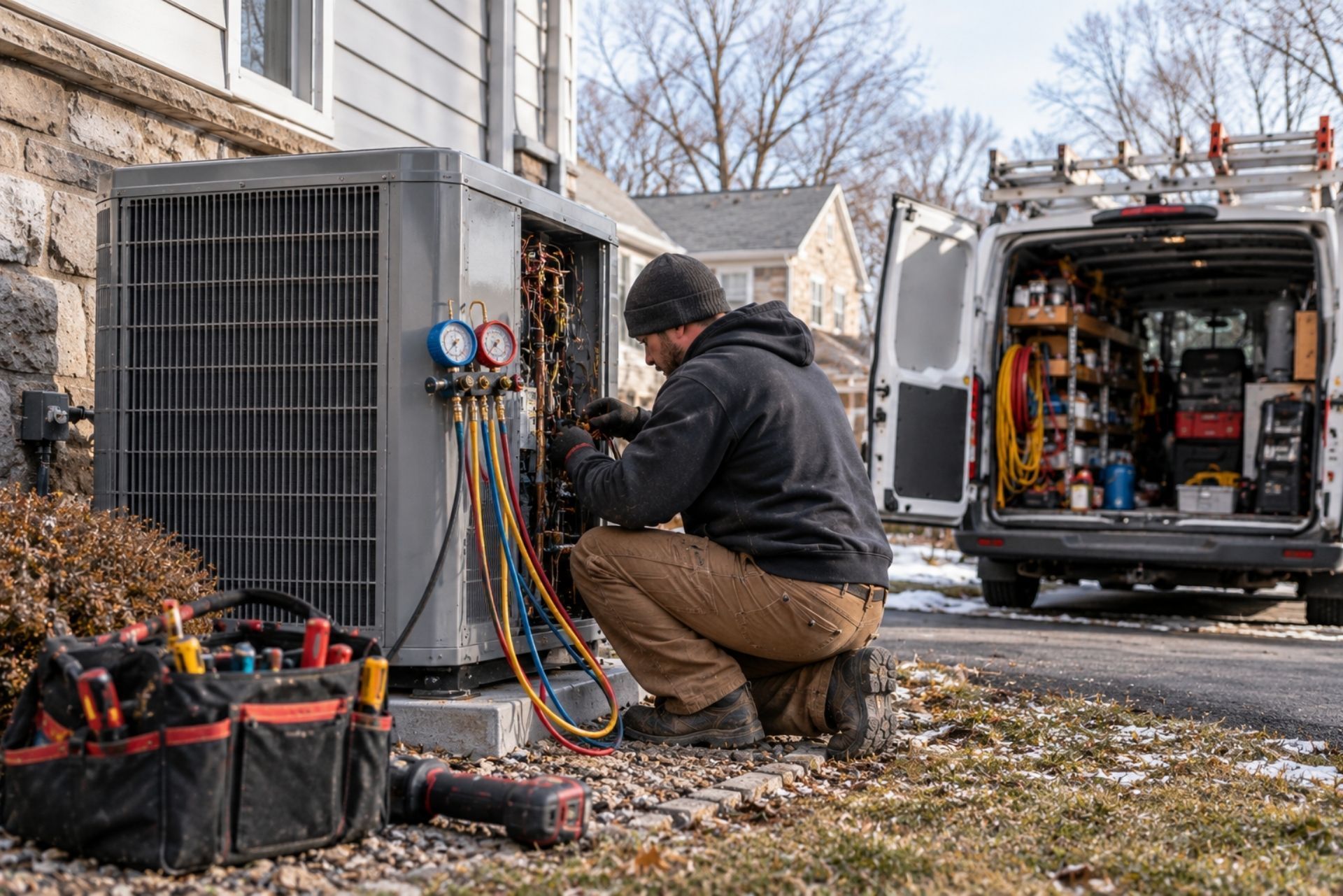
General liability is the policy that responds when your work hurts someone or damages their property. For HVAC contractors, the most serious version of that claim usually involves gas or carbon monoxide. A leak at a fitting you tightened, a flue you reconnected badly, or a heat exchanger you missed during a tune-up can all lead to a bodily injury or property damage claim.
Carbon monoxide claims often follow furnace work. Here's a scenario that comes up often: a tech replaces a furnace in October, and the venting looks fine. In January, a bird's nest or a poorly pitched vent pipe sends exhaust back into the house, and a family ends up in the ER. Even if your work wasn't the actual cause, you'll be named in the lawsuit, and your general liability policy pays for your defense.
A few policy details matter more for HVAC shops than for other trades:
Pollution exclusions: Many general liability forms exclude pollution. Ask whether carbon monoxide and other fumes from your work are carved back in, because a broad exclusion can wipe out the coverage you thought you had.
Per-occurrence limits: One CO incident can injure several people in one household. Your limit needs to handle that, not just a damaged ceiling.
Gas explosion and fire: A gas leak that ignites can damage neighboring properties too. Make sure your limits and any umbrella policy reflect that possibility.
The most common mistake we see is a shop buying a policy written for "general contractors" with no review of gas-related exclusions. Read the exclusions page before you sign, or have your agent walk you through it.
Written By
David Varrati
Owner, MVP Insurance
Owner, MVP Insurance
On this page
PCompleted operations coverage protects your business after the job is done and your crew has left the site. Without it, a claim from a furnace you installed in March might not be covered when the damage shows up in November. For HVAC work, delayed problems are common, not rare.
Consider how HVAC failures actually play out. A condensate line you routed slowly backs up and rots a subfloor over eight months. A refrigerant line set you brazed develops a pinhole leak that eventually floods a finished basement through the air handler pan. A gas connection holds for a season, then loosens with thermal cycling. In each case, the homeowner's claim arrives long after your invoice was paid.
Most commercial general liability policies include a products-completed operations aggregate, which is a separate pool of money for these after-the-fact claims. The detail people overlook is that the limit can be lower than you assume, or reduced by endorsement on some low-priced policies. If you install equipment for a living, that aggregate deserves as much attention as your per-occurrence limit.
Timing matters in the legal system too. Pennsylvania courts enforce deadlines strictly. The state Supreme Court recently upheld a firm one-year cutoff for lawsuits arising from home inspection reports, for example. That deadline applies to inspectors, not HVAC contractors. Construction-defect claims follow their own, often much longer, timelines, which is why keeping completed operations coverage in force year after year matters.
Contract disputes can also run alongside liability claims. The Superior Court broadened what counts as "performance" under CASPA, so contractors can sometimes recover interest and fees even when an owner's breach stopped the work. That's a payment issue, not an insurance one, but it's a good reason to keep clean job records, which also help when a completed operations claim comes in.
The Importance of Completed Operations Coverage
Completed operations coverage protects your business after the job is done and your crew has left the site. Without it, a claim from a furnace you installed in March might not be covered when the damage shows up in November. For HVAC work, delayed problems are common, not rare.
Consider how HVAC failures actually play out. A condensate line you routed slowly backs up and rots a subfloor over eight months. A refrigerant line set you brazed develops a pinhole leak that eventually floods a finished basement through the air handler pan. A gas connection holds for a season, then loosens with thermal cycling. In each case, the homeowner's claim arrives long after your invoice was paid.
Most commercial general liability policies include a products-completed operations aggregate, which is a separate pool of money for these after-the-fact claims. The detail people overlook is that the limit can be lower than you assume, or reduced by endorsement on some low-priced policies. If you install equipment for a living, that aggregate deserves as much attention as your per-occurrence limit.
Timing matters in the legal system too. Pennsylvania courts enforce deadlines strictly. The state Supreme Court recently upheld a firm one-year cutoff for lawsuits arising from home inspection reports, for example. That deadline applies to inspectors, not HVAC contractors. Construction-defect claims follow their own, often much longer, timelines, which is why keeping completed operations coverage in force year after year matters.
Contract disputes can also run alongside liability claims. The Superior Court broadened what counts as "performance" under CASPA, so contractors can sometimes recover interest and fees even when an owner's breach stopped the work. That's a payment issue, not an insurance one, but it's a good reason to keep clean job records, which also help when a completed operations claim comes in.
Protecting Your Assets with Service Van Coverage
Your service vans need commercial auto insurance. A personal auto policy generally won't cover a vehicle that's titled to the business, carries tools and equipment, and runs a daily route of service calls. If a tech rear-ends someone on Route 19 between calls and you only have a personal policy, expect a denial.
Commercial auto covers liability for injuries and damage your drivers cause, plus physical damage to the vans themselves if you add collision and comprehensive. HVAC fleets have a few specific needs:
- Hired and non-owned auto: This covers you when an employee runs an errand in their own truck, like a supply house pickup, and causes an accident.
- Upfit and permanently attached equipment: Ladder racks, shelving, and custom bins can add thousands to a van's value. Make sure they're scheduled so a total loss pays for them.
- Driver lists: Carriers rate on who drives. A tech with a recent DUI can change your premium for the whole fleet, so screen motor vehicle records before you hand over the keys.
Several carriers write HVAC fleets in Pennsylvania. Erie is a regional carrier familiar to many local contractors, Progressive writes plenty of commercial vans and small fleets, and Westfield often fits contractors who want to bundle auto with their liability package. Rates and appetite differ by carrier, and they change, so comparing several is usually worth the effort.
One mistake comes up often: owners put the business van on their personal policy to save money. When a claim reveals business use, the coverage fight that follows costs far more than the premium difference ever saved.
Tools in Transit and Inland Marine Insurance
Tools in transit coverage, usually written as an inland marine policy, protects your equipment while it's in the van, on a job site, or moving between the two. Standard commercial property insurance often stops at the shop door. A combustion analyzer stolen out of a van in a Cranberry Township parking lot generally won't be covered by your building policy.
HVAC tool kits are expensive. Think about what a typical service tech carries: a digital manifold or smart probe set, a combustion analyzer, a recovery machine, a vacuum pump, a micron gauge, a brazing rig, and a nitrogen setup. Install crews add core drills, press tools, and lifts. Lose one van's contents to a break-in and you can be looking at a five-figure replacement bill and a few days of lost service calls.
As of 2026, tools and equipment coverage averages roughly $495 a year. Your cost depends on how much equipment you schedule and your deductible. Some points to settle when setting it up:
- Scheduled vs. unscheduled items: List high-value tools individually. Use a blanket limit for the small hand tools that would be tedious to inventory.
- Replacement cost vs. actual cash value: Actual cash value pays the depreciated price of a five-year-old analyzer, which won't buy a new one.
- Theft from unattended vehicles: Some forms require visible signs of forced entry or limit coverage overnight. Know the conditions before a tech leaves gear in a van at home.
- Rented and borrowed equipment: If you rent a lift or crane for a rooftop unit, ask whether it's covered or whether you need to buy the rental company's protection.
Take photos of your equipment and keep serial numbers in a shared folder. When a theft claim comes in, that documentation shortens the process considerably.
Workers Comp for Install Crews and Subcontractors
Pennsylvania generally requires workers compensation as soon as you have employees, and that includes small install crews. Workers comp pays medical bills and lost wages when someone gets hurt on the job. It also protects you from most direct lawsuits by injured employees.
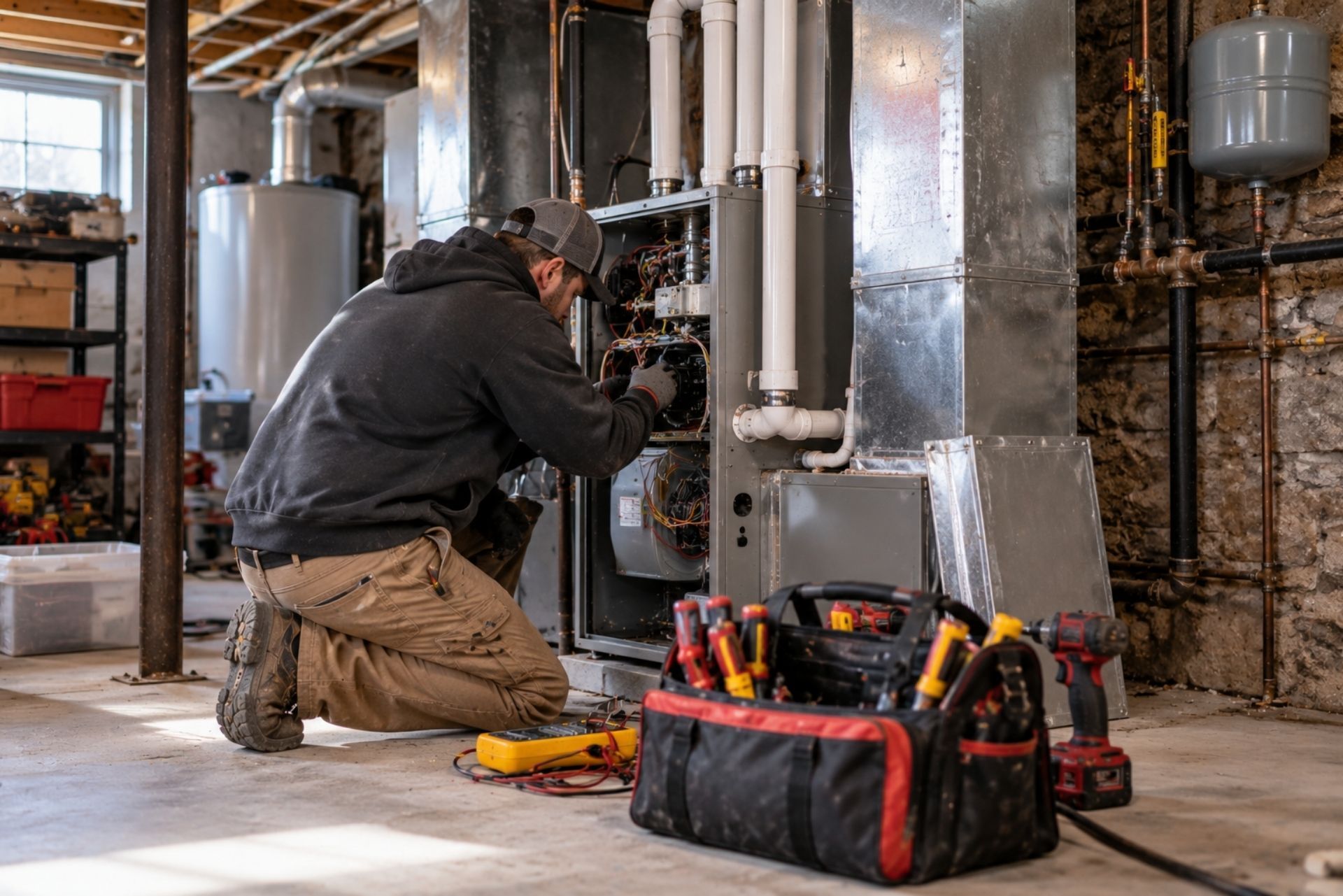
HVAC work gives a crew plenty of ways to get hurt. Back injuries from carrying condensers and furnaces up basement stairs are common. So are falls from ladders and roofs, heat exhaustion in summer attics, cuts from sheet metal, burns from brazing, and electrical shocks. One serious fall from a rooftop unit can run up medical and wage costs that a small shop simply couldn't absorb without coverage.
Pennsylvania HVAC contractors pay an average of about $2,189 a year for workers comp in 2026. Your actual premium depends heavily on payroll, the classification codes assigned to your employees, and your experience modification factor, which reflects your claim history. Office staff and field techs are classified differently, so make sure your payroll is split correctly. Lumping everyone into the field code inflates your bill.
Subcontractors are where shops get hurt at audit time. If you hire a ductwork sub or an electrician who doesn't carry their own workers comp, your carrier may treat that sub's payroll as yours and bill you for it. Collect a current certificate of insurance from every sub before they start, and set a reminder to collect a new one when it expires.
Owners and officers can sometimes exclude themselves from coverage. That's a decision to make carefully. If you still haul equipment and climb ladders yourself, an exclusion can save premium right up until the day you get hurt.
Comparing HVAC Insurance Limits and Coverage Options
Most HVAC contractors need four or five coverages working together, and each one handles a different kind of loss. The table below shows what each policy does, the limits contractors commonly choose, and the gap people most often miss. Limits vary by carrier, contract requirements, and the size of your operation.
| Coverage | What It Handles | Commonly Chosen Limits | Frequent Gap |
|---|---|---|---|
| General Liability | Injury or property damage from your work, including gas and CO incidents | $1M per occurrence / $2M aggregate | Pollution exclusions affecting CO claims |
| Completed Operations | Claims that arise after the job is finished | Separate aggregate, often matching GL | Reduced aggregate on some policies |
| Commercial Auto | Accidents involving service vans, plus van damage | $1M combined single limit is common for fleets | Employees' personal vehicles used for errands |
| Inland Marine (Tools) | Tools and equipment in vans and on job sites | Based on scheduled tool values | Actual cash value payouts, theft conditions |
| Workers Comp | Employee medical costs and lost wages | Statutory benefits plus employer's liability | Uninsured subcontractors at audit time |
| Umbrella | Extra limits above GL, auto, and employer's liability | $1M to $5M | Not matching underlying policy terms |
Commercial builders and property managers often set the limits for you through contract requirements. Read the insurance section of a contract before you bid, since meeting a higher limit or an additional insured requirement can affect your pricing.
Frequently Asked Questions About PA HVAC Insurance
These are the questions newer contractors and shop owners ask most often. The answers are short and practical.
Do I need a state license to do HVAC work in Pennsylvania? No, Pennsylvania has no statewide HVAC license. Many municipalities have their own registration or licensing rules, and residential contractors doing $5,000 or more a year generally register with the Attorney General's office.
Does general liability cover carbon monoxide poisoning claims? Usually, yes, if the injury results from your work and the policy doesn't exclude it through a broad pollution exclusion. Ask your agent specifically how your policy handles CO and fumes.
Will my personal auto policy cover my work van? Generally not, if the van is used for business, carries tools, or is titled to the company. You need commercial auto coverage for service vehicles.
Are my tools covered if they're stolen from my van? Only if you carry inland marine or tools coverage, because standard property policies typically end at your building. Check whether your policy requires signs of forced entry for theft claims.
Do I need workers comp if I only have one or two installers? Yes, Pennsylvania generally requires it once you have employees, even part-time ones. It covers their medical bills and lost wages if they're hurt on the job.
What happens if my subcontractor doesn't have insurance? Your workers comp carrier may charge you premium for that sub's payroll at audit, and you could be on the hook for their injuries. Always collect a current certificate of insurance before work starts.
Securing Your HVAC Business with MVP Insurance
A solid insurance setup for a Pennsylvania HVAC contractor comes down to matching each policy to a real exposure. That means general liability that responds to gas and CO claims, a completed operations limit that holds up long after the install, commercial auto for your vans, inland marine for the tools inside them, and workers comp that protects your crews. The gaps usually show up in the exclusions and conditions, not in the policy names on the declarations page.
MVP Insurance has helped clients since 2008, with offices at 108 E Grandview Ave in Zelienople, PA, (724) 453-1122, and 13823 Grant St in New Springfield, OH, (330) 707-9055. As an independent agency, MVP compares policies from carriers like Erie, Westfield, and Progressive, so you aren't locked into one company's pricing or appetite. You can learn more about how MVP works with the industries we serve and with contractors across Pennsylvania.MVP Insurance is licensed in Ohio (#37714) and Pennsylvania (#519263), NPN 10588293.
If your coverage hasn't been reviewed since you added a van, hired an install crew, or started doing more gas work, now is a good time to look at it. Start your quoteand let MVP shop the market for you. You spend your days making sure other people's systems run safely, and your insurance should be built with the same care.
MVP Insurance is a local, independent agency, licensed to serve individuals and businesses across Ohio and Pennsylvania.
We serve clients from our offices in New Springfield, Ohio and Zelienople, Pennsylvania and throughout Northeast Ohio and Western Pennsylvania, working with multiple carriers to help contractors, landlords and real estate investors, restaurants, retail shops, auto repair shops, professional offices and many other personal and commercial clients find coverage that fits.
Our Owners
Two friends who started an agency
Owner
Joshua Medure
I am a Penn State marketing graduate with more than ten years in insurance. My childhood friend David and I started MVP Insurance in Northeast Ohio because we wanted the people around us to have an agency that gives honest advice, real choices and someone who picks up the phone. I lead the agency’s insurance strategy, which means I read the policies so our clients do not have to. Away from the office, I coach youth football.

About the Author
Joshua Medure
Owner, MVP Insurance
I am a Penn State marketing graduate with more than ten years in insurance. My childhood friend David and I started MVP Insurance in Northeast Ohio because we wanted the people around us to have an agency that gives honest advice, real choices and someone who picks up the phone. I lead the agency’s insurance strategy, which means I read the policies so our clients do not have to. Away from the office, I coach youth football.
Personal Insurance in Ohio & Pennsylvania
Coverage for your home, your car, and your family
Protect the everyday things that mean the most to you.
Homeowners Insurance
Your home is one of your most valuable assets. We compare carriers to protect the house, your belongings, and your liability.
Car Insurance
We proactively shop the market to find the best combination of coverage and price for every car in your driveway.
Renters Insurance
Own a condo or rent your home? We insure your unit, your belongings, and your personal liability at a fair rate.
Umbrella Insurance
Extra liability protection above your home and auto policies. Large coverage limits for a small added cost each year.
Life Insurance
Protect the people who rely on you most, so they can keep their home and lifestyle if the unexpected happens.
Flood Insurance
Standard home policies do not cover flooding. We help you add flood coverage through the NFIP or a private carrier before the water rises.
Business Insurance in Ohio & Pennsylvania
No matter how big or small your business, we protect it
Practical coverage for your people, your property, and the work you do.
General Liability
Business Owners Policy

Professional Liability
Commercial Property

Workers Compensation
Commercial Auto
Industries We Serve
Insurance built around the work you do
Every industry carries different risks. We know the coverage each one needs and shop the carriers that write it well.
Contractors Insurance
General contractors, remodelers, roofers, and trade crews. We cover the liability, tools, vehicles, and workers your jobs depend on.
Plumber Insurance
Water damage claims follow plumbers everywhere. We cover your liability, your tools, your van, and your crew, job after job.

Restaurant Insurance
Kitchens, bars, and cafes face fire, spoilage, and slip risks. We package property, liability, and liquor coverage in one plan.
5-Star Rated on Google
What our clients say
Our clients say it best. Here is what they share about working with Josh, Dave, and the MVP team.
Contractors & Tradesmen
General contractors, roofers, electricians and plumbers. We cover liability, tools, vehicles and crews so every job stays protected.
Insurance Tips & News
Insurance tips for Ohio and Pennsylvania families and businesses
Practical ideas for protecting what matters to you.
Insurance Questions, Answered
Questions our clients ask
A little clarity can make your next step easier.
What does an independent insurance agency do?
An independent agency works with multiple insurance companies. We compare your options, explain the differences, and help you choose coverage that fits your needs.
Can MVP Insurance quote both my home and auto?
Yes. We can compare home and auto insurance options together. We explain available discounts and check how the policies work together.
Do you insure businesses in Ohio and Pennsylvania?
Yes. We help businesses in both states compare options for property, liability, employees, and commercial vehicles. The right policy depends on your work and the risks involved.
How do I import my current policy for a quote?
Use our Canopy policy import link to share your current policy information. Our team can then review your existing coverage and compare options with you.
How do I report a claim or make a payment?
Visit our Client Center for billing and claims information. You can also call either office for help finding the right carrier contact.
How often should I review my insurance?
Review your coverage each year and after a major change, such as a move, new vehicle, or business expansion. Tell us what changed so we can help you check your protection.


Covington office, Monday through Friday
Call
614 E. Boston St., Covington, LA 70433
58418 Tyler Drive, Slidell, LA 70461
Request Your Free Quote
Let's make insurance simple for you
Tell us what you need. We will help you explore your options.