
Pennsylvania teens move from a learner's permit to a junior license to a senior license. Each step requires a minimum amount of time, practice, or clean driving before the next one unlocks. Here's what each stage actually requires and what it means at home.
CG 20 37: Coverage After the Project is Finished
Can my 16-year-old drive their friends home from school in Pennsylvania? During the first six months of a junior license, they can carry only one passenger under 18 who isn't an immediate family member, unless a parent or guardian is in the car. After that window, the limit eases if your teen has stayed violation-free.
Does a teen with a learner's permit need to be on my car insurance? It depends on the carrier. Some require permit holders to be listed, and others don't rate them until they're licensed. Tell your agent when the permit is issued so there's no gap if something happens.
Can a junior license holder drive home from work after 11 PM? Yes. Pennsylvania's curfew includes an exception for travel to and from employment. Your teen should keep proof of their work schedule in the car in case they're stopped.
Pennsylvania's licensing rules work because they ease teens into risk instead of handing them full privileges on day one. Supervised hours, passenger caps, and the overnight curfew all target the situations where new drivers get hurt most. For families, those same rules shape the insurance conversation. A clean junior year, solid liability limits, and the right car assignment can keep your teen safer and your premium more manageable.
If your teen's road test is coming up, now is a good moment to see how different carriers would price your household. MVP Insurance is an independent agency with offices in Zelienople, PA and New Springfield, OH. We compare policies across multiple carriers so you don't have to. When you're ready, you can start your quote here, and we'll walk you through the options. MVP Insurance is licensed in Ohio (license #37714) and Pennsylvania (license #519263), NPN 10588293.
Pennsylvania still offers homeowners insurance below the national average, but recent increases have been steep, and Western PA homeowners have felt it through storms and rising rebuilding costs. Your location sets the starting point. Your deductible, your roof and home systems, and how you use your policy decide much of the rest.
The most useful step is seeing real numbers side by side instead of accepting a single renewal at face value. MVP Insurance is an independent agency with offices in Zelienople, PA and New Springfield, OH, and the team compares multiple carriers so you don't have to. When you're ready, start your quote here and get a clearer picture of what your home should cost to insure.
MVP Insurance is licensed in Ohio (license #37714) and Pennsylvania (license #519263), NPN 10588293.
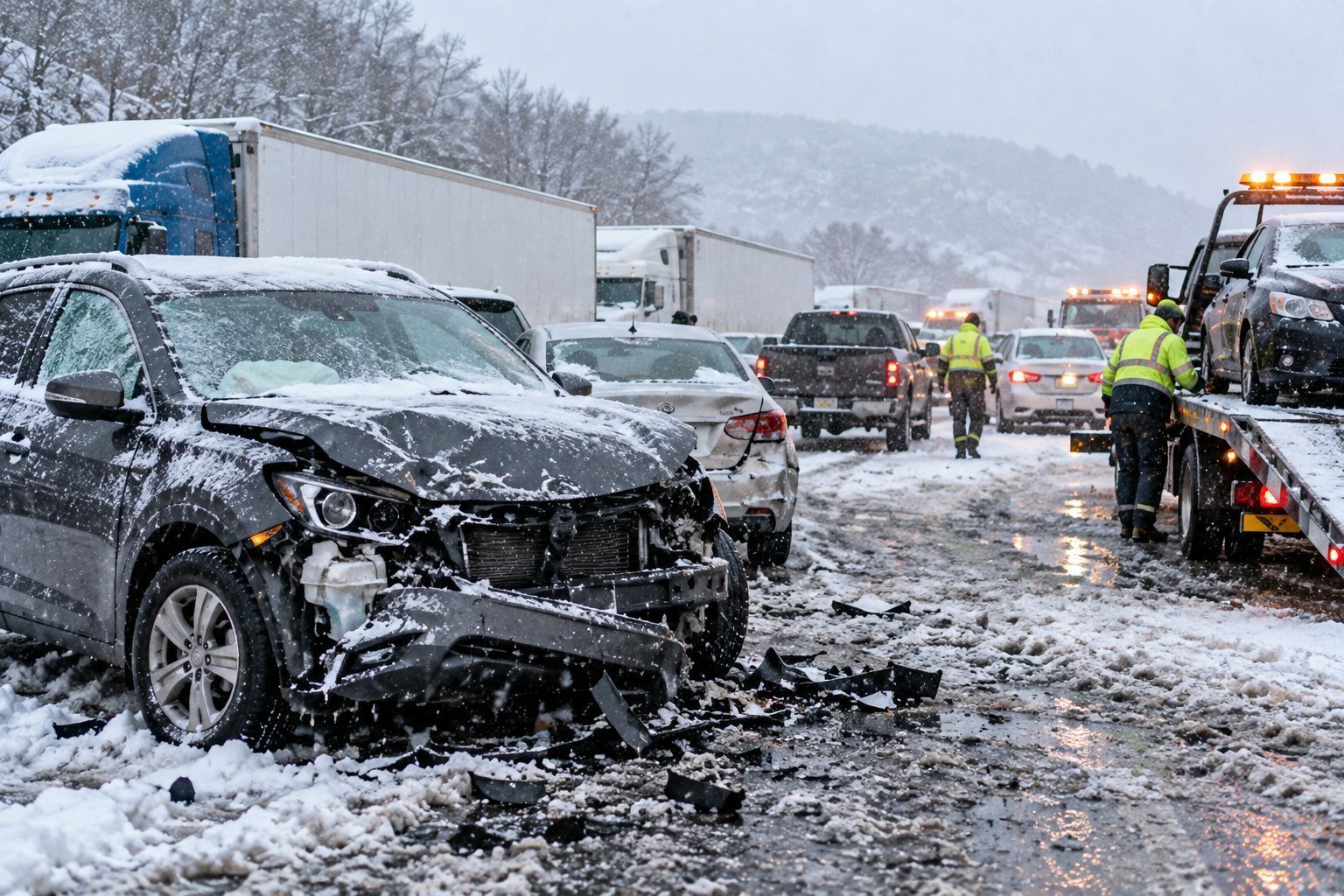
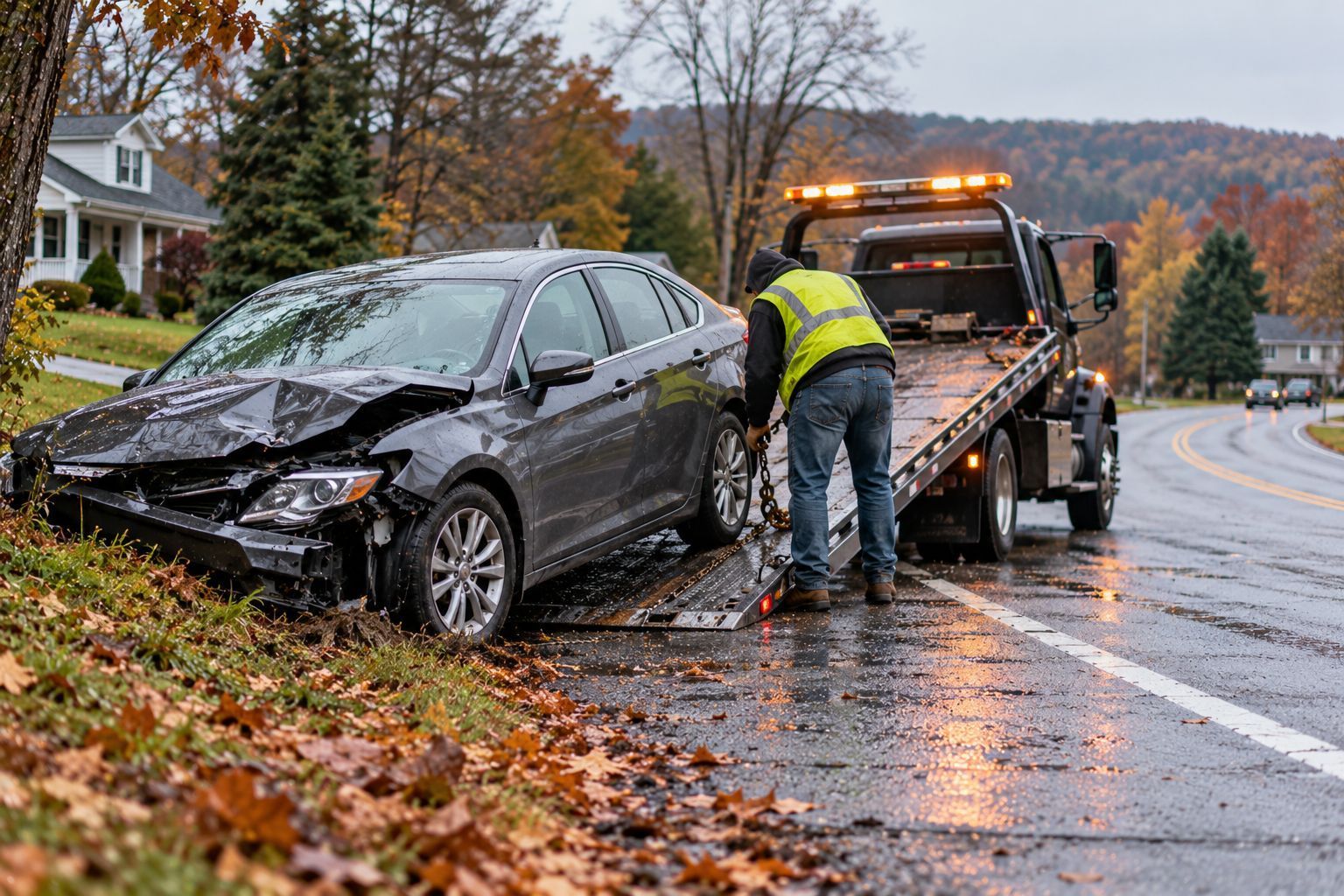
Most winter driving claims in Pennsylvania come down to three questions: who lost control first, whether each driver kept a safe distance for the conditions, and what your policy pays for once the car is off the road. On I-80 and I-79 pileups, fault is often split among several drivers. Towing and rental coverage only pays if you added it before the storm.
That last point catches more people than anything else. A single icy morning near Clearfield or Slippery Rock can leave you with a crumpled bumper, a tow bill, and two weeks without a car. Whether you pay for those costs yourself usually depends on decisions you made months earlier, at renewal.
Navigating Winter Driving Claims in Pennsylvania
Winter claims in Pennsylvania are harder to settle than summer fender-benders because snow and ice muddy the question of fault. Your policy has to answer two different stories: the multi-car pileup where six drivers point at each other, and the single-car slide into a guardrail where there's nobody else to blame. Each story triggers a different part of your coverage.
Pennsylvania is a "choice no-fault" state. Your own first-party medical benefits pay your injury bills regardless of who caused the crash. Your tort option (full or limited) controls whether you can sue another driver for pain and suffering. Property damage works differently. Damage to your car is paid by the at-fault driver's liability coverage or by your own collision coverage. That makes fault decisions on icy roads matter a great deal for your vehicle, your deductible, and your future premiums.
The single-car slide surprises people most often. If you hit black ice on Route 422 and spin into a ditch, nobody else is liable, so only your collision coverage pays to fix the car. Drivers who carry only state-minimum liability have no coverage at all for their own damage in that scenario. If you're unsure how your current setup handles these situations, it helps to review how pennsylvania car insurance is structured, including tort options, first-party benefits, and the add-ons that carry you through a breakdown or a body shop delay.
A good winter claim also depends on what you document at the scene. Take photos of road conditions, plow lines, and vehicle positions. Write down the names of the responding troopers, and note whether salt trucks had been through. Adjusters weigh that evidence heavily when they assign percentages.
Analyzing Multi-Vehicle Pileups on I-80 and I-79
Pileups on these two interstates usually start with one sudden visibility or traction change. They grow because following drivers can't stop in time. I-80 cuts across the high, exposed plateaus of central and northern Pennsylvania. I-79 runs north from Pittsburgh through Butler, Mercer, and Crawford counties toward Erie. Both corridors combine high speeds, heavy truck traffic, and weather that can change within a single mile.
Even outside deep winter, a crash on these roads can shut down travel for hours. In 2026, a 20-mile stretch of I-80 Westbound was closed for more than five hours on April 30 after a multi-vehicle crash near mile marker 159 in Centre County. When closures run that long, the claims that follow include stranded vehicles, secondary collisions, and drivers who need rental cars before the road even reopens.
The Impact of Lake-Effect Snow on Western PA Corridors
Lake-effect snow is the reason I-79 north of Pittsburgh can be dry at one exit and a whiteout at the next. Cold air crossing Lake Erie picks up moisture and dumps it in narrow, intense bands. Those bands hit Erie, Crawford, and Mercer counties hardest, and they can push farther inland.
Sudden squalls cause the classic chain-reaction pileup. Visibility collapses, the lead car brakes, and everyone behind is suddenly too close. In January 2026, a sudden lake-effect blizzard caused a pileup of nearly a dozen vehicles in the Poconos on January 12. That event shows these bursts aren't limited to the counties nearest the lake. Adjusters handling squall pileups often look at weather timing closely, because a band that arrived seconds before impact affects how much fault anyone can reasonably carry.
Chain Reaction Liability in Interstate Accidents
In a chain reaction, each impact is usually treated as its own collision. Car B may be at fault for hitting Car A, and Car C may be at fault for hitting Car B. If Car B gets pushed into Car A a second time, B's driver may argue that the second hit belongs to C. Sorting that out means figuring out which dents came from which impact.
This is where photos, dashcam footage, and witness statements earn their keep. Without them, adjusters from three or four different carriers negotiate percentages among themselves. Your claim can sit for weeks while they do. Report the claim promptly, even if you think you're blameless, so your own carrier can start defending your position.
How Fault Is Assigned on Ice
Ice does not excuse a crash in Pennsylvania. Fault is assigned based on whether each driver acted reasonably for the conditions, not on whether the road was slippery. Insurers and courts expect drivers to slow down, increase following distance, and stay off the road when it isn't safe. Saying "I hit ice" rarely moves an adjuster.
Pennsylvania's vehicle code requires drivers to travel at a speed that lets them stop within the "assured clear distance ahead." In practice, a driver who rear-ends someone on a snowy road is usually found largely at fault. The reasoning is that they should have left room for stopping on ice. Weather is treated as a known risk to plan for, not as a surprise.
The Failure to Control Vehicle Standard
The phrase that shows up again and again in winter crash reports is some version of "failure to maintain control." If your car slid across a lane, spun out, or left the road, the default assumption is that you were going too fast for conditions. That assumption holds even if you were under the posted speed limit. A 70 mph limit on I-80 means nothing when there's slush on the pavement.
Drivers can rebut this, but it takes evidence. A tire blowout, a sudden mechanical failure, or a vehicle that crossed into your lane first can shift responsibility. So can hazards nobody could have anticipated, like a fallen tree around a blind curve. Bald tires work against you, so worn tread can quietly add to your share of fault. Winter tires and good tread depth don't just prevent crashes. They also strengthen your position if a crash happens anyway.
Comparative Negligence in Slippery Conditions
Pennsylvania follows modified comparative negligence. You can recover damages from other drivers as long as your share of fault isn't greater than theirs combined. Your recovery is reduced by your own percentage. If you're found 30% at fault for a $10,000 loss, you'd typically recover $7,000 from the other side. Once you cross 50%, you can't recover from them at all.
Icy-road claims are full of split percentages. Say one driver was following too closely and another changed lanes abruptly on packed snow. Fault might land at 60/40 or 70/30. In a pileup, three or four drivers might each carry a slice. These percentages shape your claim history too, which is why it's worth disputing a split you think is wrong before it becomes final.
Towing and Rental Coverage During Winter Storms
Towing and rental help come from optional parts of your policy, not from liability coverage. If you skip them, a winter crash can leave you paying for the tow, storage, and weeks of transportation yourself. If the other driver is clearly at fault, their liability coverage should eventually pay these costs. "Eventually" can mean a long wait when fault is disputed in a pileup.
New Pennsylvania rules also affect what happens after the tow truck arrives. Act 46 of 2026 was signed July 20, 2026, and takes effect December 17, 2026. It adds Section 7332 to the Crimes Code to regulate unlawful towing and storage practices at accident scenes. Under the law, towers can't charge storage fees for any period when the owner was "unreasonably denied access" during posted business hours. They also have to accept major credit cards and insurance company checks instead of demanding cash only. That should make this winter's crash-scene towing a little less painful than in years past.
Emergency Roadside Service vs. Collision Towing
These two get confused all the time, and they pay for different situations.
- Emergency roadside service (sometimes called towing and labor) covers breakdowns: dead batteries on a zero-degree morning, flat tires, lockouts, or a winch-out when you've slid into a snowbank without damaging the car. It typically has a per-incident limit and is a low-cost add-on.
- Collision towing is part of your collision claim. When your car is damaged in a crash, the tow to a shop and reasonable storage are usually paid as part of the loss, subject to your deductible.
- Comprehensive can cover towing tied to non-collision losses, such as a tree limb crushing your hood during an ice storm.
A common mistake is assuming roadside service covers a crash tow, or that collision covers a simple winch-out. Check which one applies before you call, especially if you belong to an auto club as well.
Rental Reimbursement Limits and Duration
Rental reimbursement is usually written as a daily limit plus a maximum total per claim, something like a set dollar amount per day up to 30 days. As of this writing, carriers offer several tiers, and the price difference between the lowest and highest tier is usually small.
Winter is when those limits get tested. Body shops back up after every major storm, and parts delays can stretch repairs well past a week or two. If your daily limit doesn't cover a vehicle that can safely handle snow, you'll pay the difference out of pocket. Families who need an SUV or minivan should look hard at the higher tiers.
Comparison of Winter Coverage Options and Limits
The right setup for a Pennsylvania winter covers four situations: crashes you cause, crashes you don't, slides with no one else involved, and breakdowns. Here's how the main coverages line up.
| Coverage | What It Pays For in Winter | Typical Limit Structure | Required in PA? |
|---|---|---|---|
| Bodily injury liability | Injuries you cause to others in a pileup | Per person / per accident | Yes |
| Property damage liability | Other drivers' cars you damage | Per accident | Yes |
| First-party medical benefits | Your own injury bills, any fault | Set benefit amount | Yes |
| Collision | Your car after a crash or ice slide | Car's value minus deductible | No (lenders usually require it) |
| Comprehensive | Falling ice, trees, deer, flood | Car's value minus deductible | No |
| Roadside service | Breakdowns, winch-outs, jump-starts | Per incident cap | No |
| Rental reimbursement | A car while yours is repaired | Daily cap and max days | No |
| Uninsured/underinsured motorist | Injuries caused by drivers with little or no coverage | Per person / per accident | Must be offered; can be rejected in writing |
A few patterns show up repeatedly in winter claims. Drivers with older vehicles sometimes drop collision to save money, then slide off I-79 and discover they have no coverage for their own car. Others keep a high deductible they could easily handle in June but struggle to pay in January after holiday spending. And many carry rental reimbursement at the lowest tier without realizing it won't last through a post-storm repair backlog.
Underinsured motorist coverage deserves a second look for anyone who drives the interstates often. In a multi-vehicle crash, the at-fault driver's liability limit may be split among several injured people, leaving each with a fraction of what they need. Your own UIM coverage can fill that gap.
There's no single "correct" configuration. A retiree who rarely drives in storms needs a different balance than a commuter running I-80 from Brookville to State College five days a week. The point is to choose these limits deliberately, with winter in mind, rather than defaulting to whatever was on last year's declarations page.
Carrier Specifics for Pennsylvania Drivers
Carriers handle winter claims differently, from their rental tiers to how roadside service is dispatched and how quickly adjusters reach pileup scenes. That's why comparing several options matters more in Pennsylvania than simply renewing by habit. As an independent agency, MVP Insurance works with a range of carriers as an agent. It isn't any of these companies, and it compares them on the client's behalf.
Here's how several carriers available to Pennsylvania drivers tend to fit different needs:
- Erie has deep roots in western Pennsylvania and is familiar with lake-effect claim patterns along the I-79 corridor.
- Progressive and GEICO offer app-based claims reporting, which helps when you're documenting a scene from the shoulder of a snowy interstate.
- Westfield and Liberty Mutual offer a range of add-ons, including rental and roadside options that can be tailored to commuting needs.
- Dairyland often works for drivers who need nonstandard coverage after a prior winter claim or violation.
- Hagerty and J.C. Taylor specialize in collector vehicles, worth considering if you store a classic car for the winter and want it protected while it sits.
Each carrier sets its own rental reimbursement tiers, roadside limits, and deductible choices, and those details can change at renewal. Side-by-side comparison shows you more than a single quote will. It's also smart to check how each carrier handles accident forgiveness, since a winter claim where you carry partial fault could affect your rate.
When a claim does happen, having someone in your corner matters. MVP Insurance offers 24/7 claims support, which counts for a lot when you're standing on a closed stretch of I-80 at 2 a.m. MVP Insurance is licensed in Ohio (license #37714) and Pennsylvania (license #519263), NPN 10588293, with offices in Zelienople, PA and New Springfield, OH.
Winter is the season when policy gaps cost real money, so October is a smart time to check your collision, rental, and roadside coverage before the first squall hits. If you'd like an independent agency to compare carriers for you, you can start a quote here and get a clear picture of your options.
Frequently Asked Questions About Winter Claims
Who is at fault if I slide on ice and hit another car in Pennsylvania? Usually the driver who slid is found mostly at fault, because Pennsylvania expects drivers to adjust speed and following distance for icy roads. Fault can be shared if the other driver also acted carelessly, such as stopping suddenly or changing lanes unsafely.
Does my car insurance pay for a tow after a winter crash? If you have collision coverage, the tow after a crash is usually included in that claim, subject to your deductible. Breakdowns and winch-outs without damage are covered by roadside service, which is a separate add-on.
How long will rental reimbursement last after a pileup? It lasts until your policy's daily limit or maximum number of days runs out, whichever comes first. Repair shops get backed up after big storms, so a higher rental tier can keep you from paying out of pocket.
Search
Recent Posts
MVP Insurance is a local, independent agency, licensed to serve individuals and businesses across Ohio and Pennsylvania.
We serve clients from our offices in New Springfield, Ohio and Zelienople, Pennsylvania and throughout Northeast Ohio and Western Pennsylvania, working with multiple carriers to help contractors, landlords and real estate investors, restaurants, retail shops, auto repair shops, professional offices and many other personal and commercial clients find coverage that fits.
Our Owners
Two friends who started an agency
Owner
Joshua Medure
I am a Penn State marketing graduate with more than ten years in insurance. My childhood friend David and I started MVP Insurance in Northeast Ohio because we wanted the people around us to have an agency that gives honest advice, real choices and someone who picks up the phone. I lead the agency’s insurance strategy, which means I read the policies so our clients do not have to. Away from the office, I coach youth football.
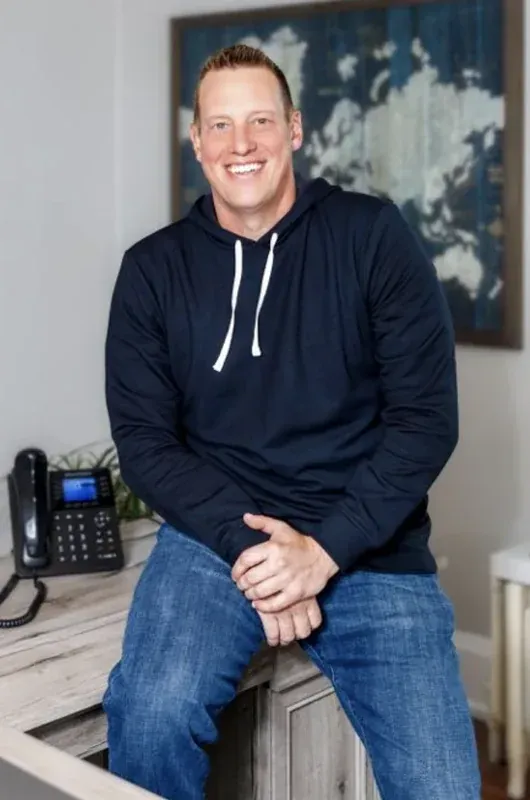

About the Author
David Varrati
Owner, MVP Insurance
I started MVP Insurance with my childhood friend Josh because we wanted people in Northeast Ohio and Western Pennsylvania to have an agency that explains things plainly and picks up the phone. I studied Political Science at Slippery Rock University and have spent more than ten years helping families and individuals protect what matters to them. When I am not in the office, you will find me coaching youth sports.