
Pennsylvania teens move from a learner's permit to a junior license to a senior license. Each step requires a minimum amount of time, practice, or clean driving before the next one unlocks. Here's what each stage actually requires and what it means at home.
CG 20 37: Coverage After the Project is Finished
Can my 16-year-old drive their friends home from school in Pennsylvania? During the first six months of a junior license, they can carry only one passenger under 18 who isn't an immediate family member, unless a parent or guardian is in the car. After that window, the limit eases if your teen has stayed violation-free.
Does a teen with a learner's permit need to be on my car insurance? It depends on the carrier. Some require permit holders to be listed, and others don't rate them until they're licensed. Tell your agent when the permit is issued so there's no gap if something happens.
Can a junior license holder drive home from work after 11 PM? Yes. Pennsylvania's curfew includes an exception for travel to and from employment. Your teen should keep proof of their work schedule in the car in case they're stopped.
Pennsylvania's licensing rules work because they ease teens into risk instead of handing them full privileges on day one. Supervised hours, passenger caps, and the overnight curfew all target the situations where new drivers get hurt most. For families, those same rules shape the insurance conversation. A clean junior year, solid liability limits, and the right car assignment can keep your teen safer and your premium more manageable.
If your teen's road test is coming up, now is a good moment to see how different carriers would price your household. MVP Insurance is an independent agency with offices in Zelienople, PA and New Springfield, OH. We compare policies across multiple carriers so you don't have to. When you're ready, you can start your quote here, and we'll walk you through the options. MVP Insurance is licensed in Ohio (license #37714) and Pennsylvania (license #519263), NPN 10588293.
Pennsylvania still offers homeowners insurance below the national average, but recent increases have been steep, and Western PA homeowners have felt it through storms and rising rebuilding costs. Your location sets the starting point. Your deductible, your roof and home systems, and how you use your policy decide much of the rest.
The most useful step is seeing real numbers side by side instead of accepting a single renewal at face value. MVP Insurance is an independent agency with offices in Zelienople, PA and New Springfield, OH, and the team compares multiple carriers so you don't have to. When you're ready, start your quote here and get a clearer picture of what your home should cost to insure.
MVP Insurance is licensed in Ohio (license #37714) and Pennsylvania (license #519263), NPN 10588293.
Pennsylvania follows modified comparative negligence. You can recover damages from other drivers as long as your share of fault isn't greater than theirs combined. Your recovery is reduced by your own percentage. If you're found 30% at fault for a $10,000 loss, you'd typically recover $7,000 from the other side. Once you cross 50%, you can't recover from them at all.
Icy-road claims are full of split percentages. Say one driver was following too closely and another changed lanes abruptly on packed snow. Fault might land at 60/40 or 70/30. In a pileup, three or four drivers might each carry a slice. These percentages shape your claim history too, which is why it's worth disputing a split you think is wrong before it becomes final.
Common Questions About Ohio BWC True-Up
These two get confused all the time, and they pay for different situations.
- Emergency roadside service (sometimes called towing and labor) covers breakdowns: dead batteries on a zero-degree morning, flat tires, lockouts, or a winch-out when you've slid into a snowbank without damaging the car. It typically has a per-incident limit and is a low-cost add-on.
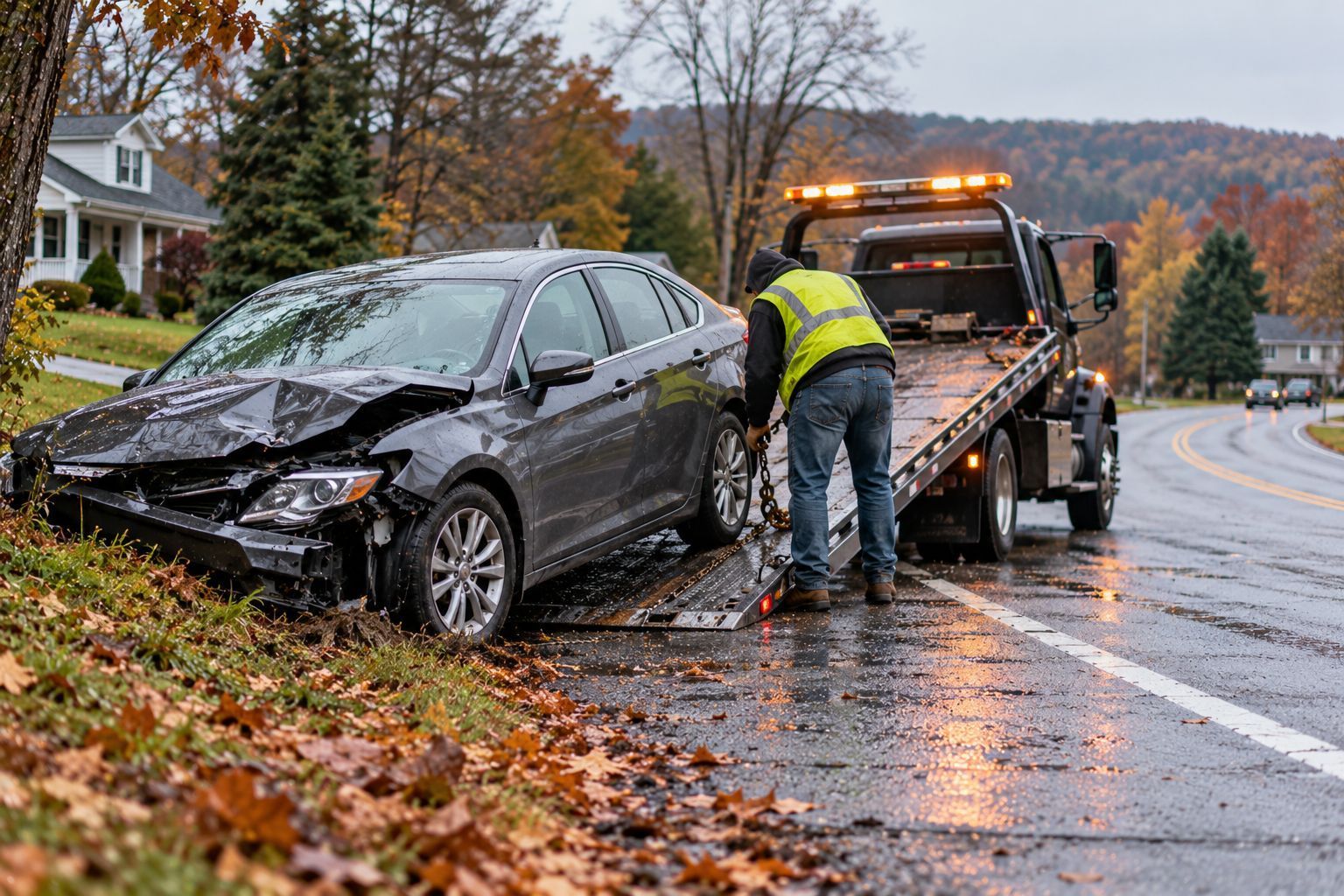
- Collision towing is part of your collision claim. When your car is damaged in a crash, the tow to a shop and reasonable storage are usually paid as part of the loss, subject to your deductible.
- Comprehensive can cover towing tied to non-collision losses, such as a tree limb crushing your hood during an ice storm.
A common mistake is assuming roadside service covers a crash tow, or that collision covers a simple winch-out. Check which one applies before you call, especially if you belong to an auto club as well.
Common Questions About Ohio Deer Accident Claims

Most Ohioans turning 65 do well with Plan G if they want near-total coverage, or Plan N if they prefer lower premiums and don't mind small copays. Enroll during your six-month Medigap window, add a standalone Part D drug plan, and lean on Ohio's free OSHIIP counseling for unbiased answers before you sign anything.
That's the short version. The longer version matters because the choices you make in your first few months on Medicare can follow you for decades. A plan that looks fine at 65 can feel expensive or restrictive at 75, and switching later isn't always as easy as people assume. This guide to Ohio Medicare Supplement plans walks through Plan G vs Plan N, open enrollment timing, switching plans later, Part D pairing, and where to find free help.
We see the same mistakes again and again at our offices in New Springfield and Zelienople: people missing their enrollment window, skipping drug coverage because they "don't take much," or picking a plan based on premium alone. None of these are hard to avoid once you know where the traps are. Here's what you need to know.
Understanding Ohio Medicare Supplement Plans
A Medicare Supplement plan, also called Medigap, is a private insurance policy that pays costs Original Medicare leaves behind, such as deductibles, coinsurance, and copays. You still have Original Medicare (Parts A and B). The supplement simply fills the holes so a hospital stay or cancer treatment doesn't come with a surprise bill.
Those holes are real. As of this writing, the Part A hospital deductible is $1,736 per benefit period in 2026, and Part B generally covers only 80% of approved outpatient costs, with no annual cap on your 20% share. A few rounds of chemotherapy or a knee replacement can push that 20% into five figures fast.
Ohio residents typically choose Medigap for two reasons. First, costs become predictable: you pay a monthly premium and very little else. Second, you can see any doctor or hospital in the country that accepts Medicare, with no networks or referrals. That second point matters a lot to snowbirds who winter in Florida, or anyone who wants the option of traveling to Cleveland Clinic or a specialist out of state.
Keep in mind that your Part B premium (generally $202.90 per month in 2026) is separate from your supplement premium. You pay both.
Comparing Plan G vs Plan N in Ohio
Plan G covers essentially everything except the annual Part B deductible, while Plan N charges a lower premium in exchange for small copays and a few gaps. Both are standardized, so a Plan G from one company carries identical benefits to a Plan G from another. The difference between insurers comes down to price, rate increase history, and service.
With Plan G, once you've met the Part B deductible each year, you're basically done paying for Medicare-approved care. Plan N works differently. It requires copays of up to $20 for some office visits and up to $50 for emergency room visits, and it doesn't cover Part B excess charges.
Excess charges are the piece people overlook. Some doctors don't accept Medicare's approved amount as full payment and can bill up to 15% more. In Ohio, that's allowed, so a Plan N policyholder could get stuck with that extra slice. It's usually modest, but if you see a lot of specialists, it adds up.
Here's how we generally frame it for clients: if you visit doctors frequently or want zero billing surprises, Plan G tends to make more sense. If you're healthy, see a doctor a few times a year, and want to keep monthly costs down, Plan N can save real money.
Ohio Medigap Coverage Comparison Table
| Benefit | Plan G | Plan N |
|---|---|---|
| Part A deductible | Covered | Covered |
| Part A coinsurance and hospital costs | Covered | Covered |
| Part B deductible | Not covered | Not covered |
| Part B coinsurance | Covered | Covered, minus copays |
| Office visit copay | None | Up to $20 |
| ER visit copay | None | Up to $50 |
| Part B excess charges | Covered | Not covered |
| Foreign travel emergency | 80% (plan limits apply) | 80% (plan limits apply) |
| Monthly premium | Higher | Lower |
Medigap Open Enrollment Timing
The ideal time to buy a supplement is during your six-month Medigap Open Enrollment Period. In Ohio, this one-time window starts the first month you're 65 or older and enrolled in Part B. During those six months, insurers can't use medical underwriting to turn you down or charge more because of pre-existing conditions.
That protection is enormous. Diabetes, a past heart attack, COPD, or a recent cancer diagnosis won't matter. You get the same rate as a perfectly healthy neighbor the same age.
The catch is that this window does not repeat each year. Once it closes, insurers in Ohio can ask health questions and decline you or price you higher based on your history. We've talked with people who delayed because they were healthy at 65, then developed a condition at 68 and found their options had narrowed considerably.
A few timing tips:
- Still working with employer coverage? Your window doesn't start until you enroll in Part B, so delaying Part B can preserve it. Confirm your employer plan qualifies first.
- Shop early. You can usually apply a few months before your Part B start date.
- Mark the end date. Put the six-month deadline on your calendar the day your Part B card arrives.
Can I Switch Plans Later?
Yes, you can apply to switch Medigap plans any time of year in Ohio, but you'll usually face medical underwriting unless you qualify for a guaranteed issue right. Underwriting means the new insurer reviews your health history and can accept you, decline you, or charge a higher rate.
Guaranteed issue rights come up in specific situations, such as losing employer retiree coverage or your insurer going out of business. One that's especially relevant this year: in 2026, people whose Medicare Advantage plans terminate have a 63-day window to buy a Medigap plan with guaranteed issue protection. If you got a non-renewal letter from your Advantage plan, don't let that clock run out.
When you do switch, Ohio law gives you a 30-day "free look" period on the new policy. You'll pay premiums on both policies during that month, which feels annoying, but it's your safety net. Never cancel your old plan until the new one is approved and active.
A common reason people want to switch is a rate increase on their current plan. Healthy clients can often move from Plan G to a lower-priced Plan G or to Plan N with another insurer. That's exactly the kind of comparison an independent agent can run for you across multiple companies at once.
Part D Pairing With Supplement Plans
Medigap plans don't include prescription drug coverage, so most Ohioans pair their supplement with a standalone Part D plan. Skipping it can trigger a late enrollment penalty that lasts as long as you have Part D, and it leaves you exposed if a new diagnosis comes with expensive medication.
The "I only take one generic" argument is the mistake we hear most. Part D is partly insurance against the future. If you're prescribed a brand-name blood thinner or an inhaler at 72, you'll want coverage already in place.
The good news is that drug costs now have a ceiling. Under the Inflation Reduction Act, the annual out-of-pocket cap for Part D is $2,100 in 2026. Looking ahead, the limit is projected to rise to $2,400 in 2027, with the maximum deductible projected at $700.
When choosing a Part D plan, look past the premium:
- List every medication, dosage, and your preferred pharmacy.
- Compare each plan's formulary and drug tiers.
- Check whether your pharmacy is "preferred" for lower copays.
- Review your plan every fall, since formularies change annually.
Free Counseling Through OSHIIP
OSHIIP, the Ohio Senior Health Insurance Information Program, is the state's free Medicare counseling service, generally offered through the Ohio Department of Insurance. Counselors provide free, unbiased, and objective Medicare guidance to residents across the state, and they don't sell insurance.
OSHIIP is a great resource for understanding how Medicare works, sorting out billing disputes, checking eligibility for help with drug costs, and comparing Part D options. Many people use it to get grounded before they talk to an agent, which makes those conversations far more productive.
The Ohio Department of Insurance puts it plainly: "With Medicare plans changing each year, Ohioans should review benefits, costs, and coverage details carefully." We agree. An annual review, whether with OSHIIP, an independent agent, or both, is one of the simplest ways to avoid overpaying.
Think of it this way: OSHIIP explains the rules, and an independent agency like MVP Insurance shops actual policies and premiums from multiple carriers on your behalf. Using both is a smart move.
Frequently Asked Questions About Ohio Medicare
Is Plan G or Plan N better for someone turning 65 in Ohio? Plan G suits people who want almost no out-of-pocket costs beyond the Part B deductible. Plan N suits healthy people who rarely see doctors and want lower premiums.
When should I buy a Medicare Supplement in Ohio? Buy during your six-month Medigap Open Enrollment Period, which starts once you're 65 and enrolled in Part B. That's when you can't be turned down for health reasons.
Does Medigap cover prescriptions? No. You'll need a separate Part D plan for medications.
Can I change my supplement plan if my premium goes up? You can apply anytime, but you'll usually answer health questions unless you have a guaranteed issue right.
Is OSHIIP really free? Yes. OSHIIP counseling is free to Ohio residents and doesn't sell any insurance products.
Where can I talk with someone locally? MVP Insurance has independent agency offices at 13823 Grant St, New Springfield, OH 44443, (330) 707-9055, and 108 E Grandview Ave, Zelienople, PA 16063, (724) 453-1122.
Choosing Your Ohio Medigap Plan With Confidence
The decisions that matter most here are about timing. Use your six-month open enrollment window, choose between Plan G's simplicity and Plan N's lower premium based on how often you actually see doctors, and add Part D even if your medicine cabinet is nearly empty. If your Medicare Advantage plan is ending, act inside that 63-day window.
Founded in 2008 by Josh Medure and David Varrati, MVP Insurance works for you, not the carrier, comparing options so you don't have to do the legwork. We can also review your Ohio personal insurance and life insurance in Ohio while you're planning for retirement. When you're ready, start your quote with our team in New Springfield or Zelienople, and we'll lay out your choices side by side.
MVP Insurance is licensed in Ohio (#37714) and Pennsylvania (#519263), NPN 10588293.
Search
Recent Posts

MVP Insurance is a local, independent agency, licensed to serve individuals and businesses across Ohio and Pennsylvania.
We serve clients from our offices in New Springfield, Ohio and Zelienople, Pennsylvania and throughout Northeast Ohio and Western Pennsylvania, working with multiple carriers to help contractors, landlords and real estate investors, restaurants, retail shops, auto repair shops, professional offices and many other personal and commercial clients find coverage that fits.
Our Owners
Two friends who started an agency
Owner
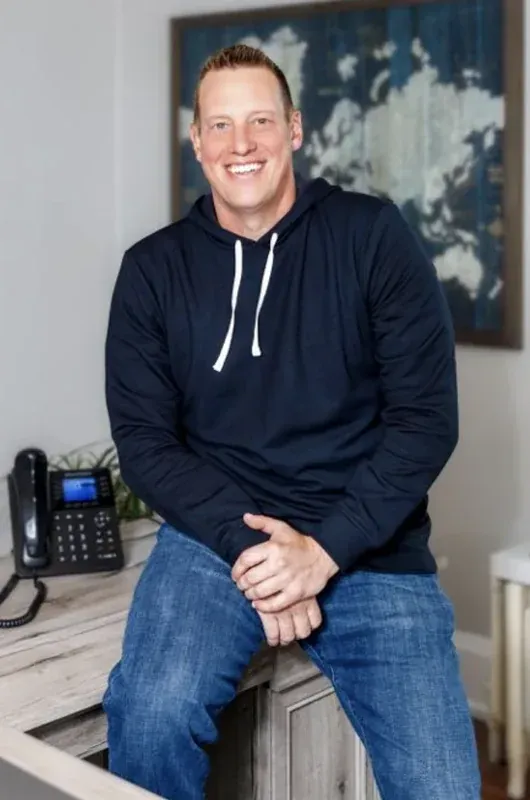
Joshua Medure
I am a Penn State marketing graduate with more than ten years in insurance. My childhood friend David and I started MVP Insurance in Northeast Ohio because we wanted the people around us to have an agency that gives honest advice, real choices and someone who picks up the phone. I lead the agency’s insurance strategy, which means I read the policies so our clients do not have to. Away from the office, I coach youth football.

About the Author
David Varrati
Owner, MVP Insurance
I started MVP Insurance with my childhood friend Josh because we wanted people in Northeast Ohio and Western Pennsylvania to have an agency that explains things plainly and picks up the phone. I studied Political Science at Slippery Rock University and have spent more than ten years helping families and individuals protect what matters to them. When I am not in the office, you will find me coaching youth sports.