

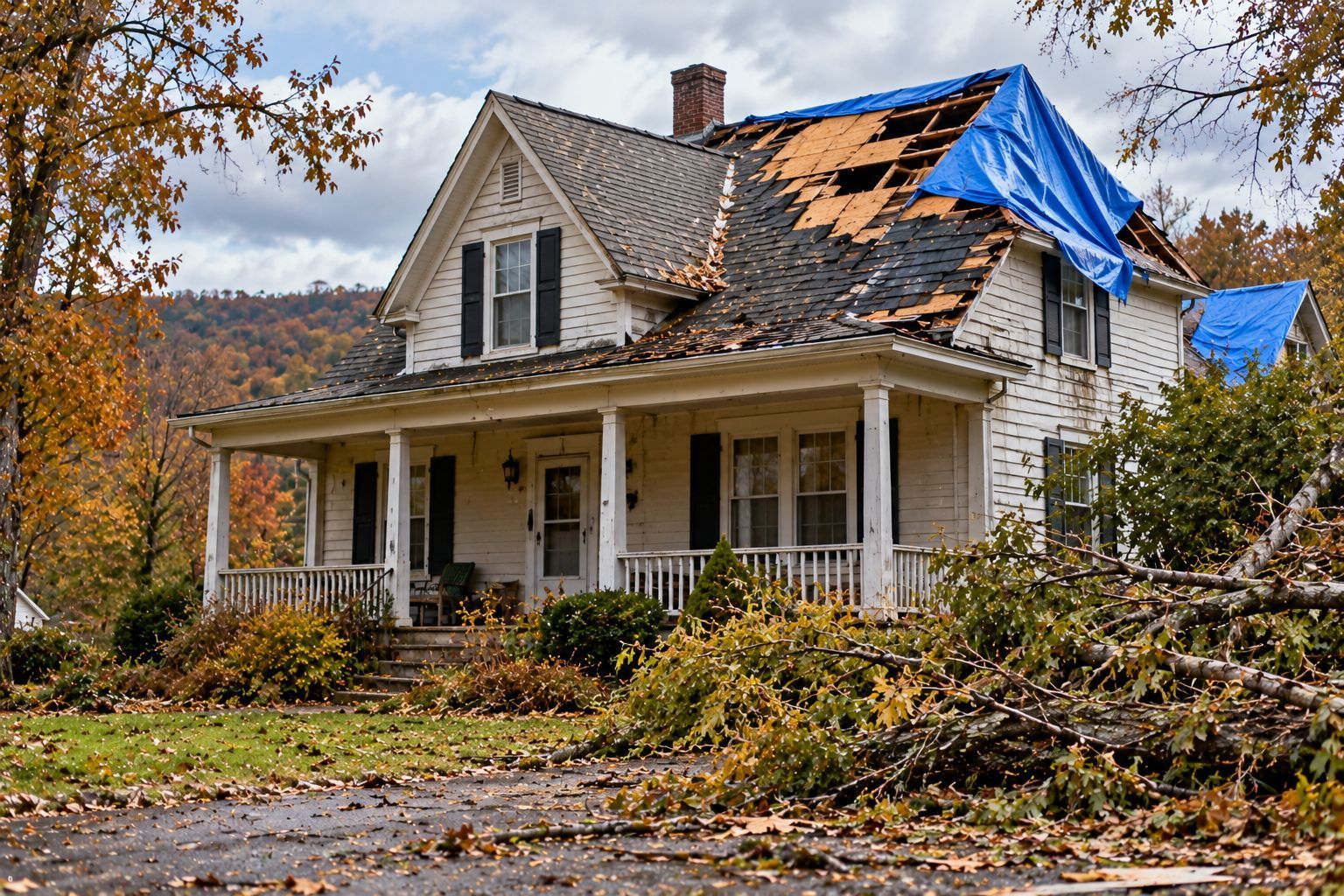
The Ohio Valley sits in a corridor where warm, humid air from the south meets colder systems from the west. The result is a steady run of thunderstorms, straight-line winds, hail, and heavy downpours that overwhelm older storm drains. For homeowners, that translates into very specific claims: shingles peeled off in a wind event, siding dented by hail, trees through the roof, and basements flooded by sewer backup.
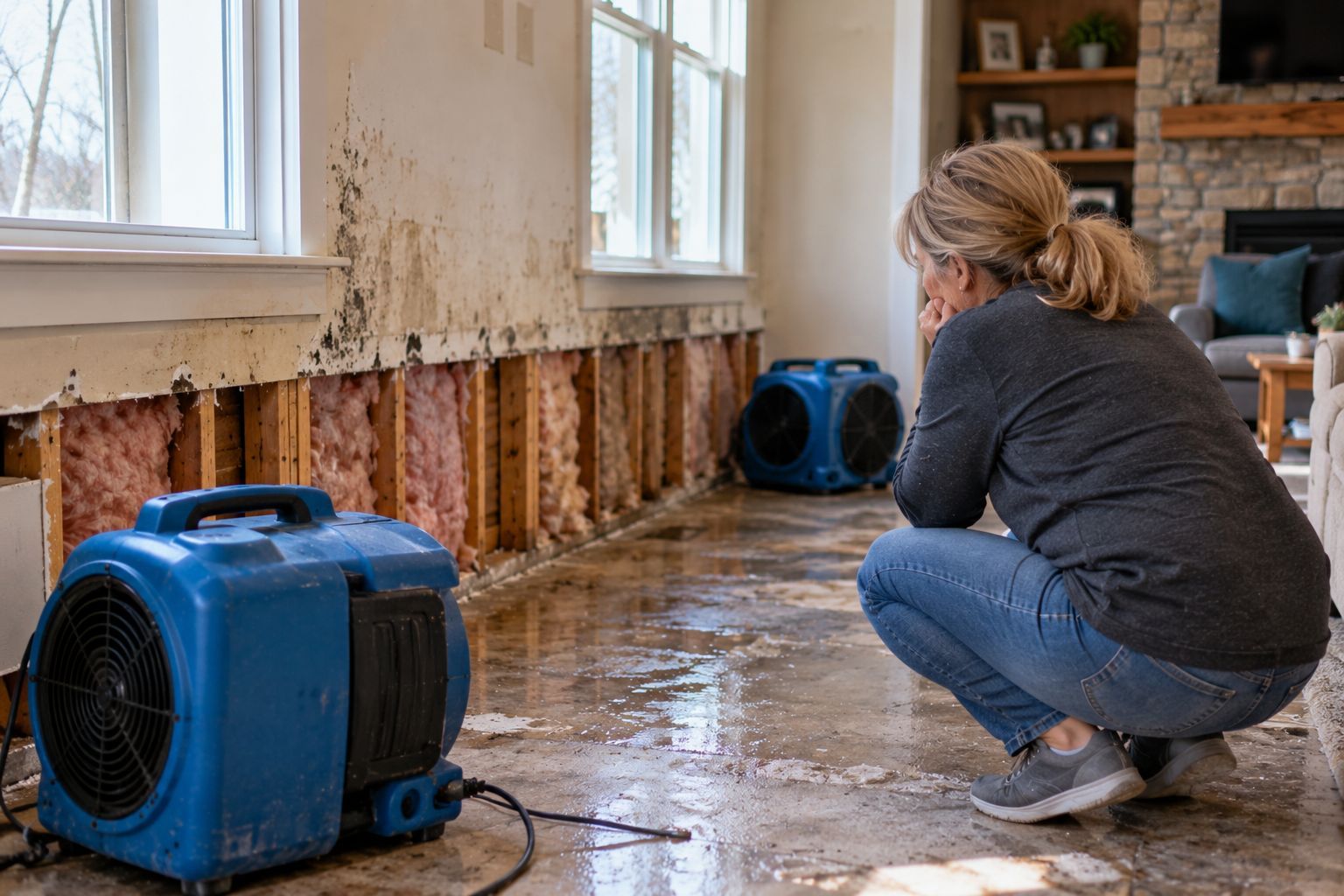
Sewer backup is a gap we see catch people off guard constantly. A standard policy usually excludes water that backs up through drains unless you've added a specific endorsement, and in a hillside neighborhood with aging municipal lines, one heavy storm can leave several inches of water in a finished basement. Carriers have watched these losses pile up across the region and priced accordingly.
Private flood products fill many of the NFIP's gaps: higher limits, additional living expenses if you're displaced, and sometimes replacement cost on contents. In lower-risk areas, a private policy may also come in under the NFIP price. Franklin Flood and American Bankers write flood coverage, and carriers like Erie, Westfield and Progressive are part of the broader mix an independent agent can access when building a full home insurance program. Coverage availability varies by carrier and address.
As an independent agent, MVP works with these carriers rather than for any one of them. That means comparing NFIP and private quotes side by side instead of defaulting to whichever product is easiest to write.
The NFIP's biggest drawback is its caps. Rebuilding a larger home in Sewickley or Chester County can easily cost more than the federal building limit, and the difference comes out of your pocket unless you add excess flood coverage. Basements are another sore spot. NFIP policies cover essentials like furnaces, water heaters and electrical panels below grade, but generally exclude finished walls, carpeting and most belongings stored there. For Pennsylvania homes with finished basements, that's a painful surprise after a claim.
There's also a policy-stability question. Congress has to reauthorize the program periodically. As of this writing, the NFIP is authorized through December 11, 2026. Past lapses have briefly halted new policy sales, and FEMA tracks the program's congressional reauthorization history for anyone who wants the details.
The Pennsylvania FAIR Plan is a last-resort insurer for property owners who can't get coverage from regular companies. It typically sells a bare-bones dwelling fire policy, not a full homeowners policy. You qualify after private carriers turn you down. You return to the standard market by fixing whatever made your property hard to insure.
That's the short version. The details matter a lot, though, because many people who end up on the FAIR Plan don't realize how much protection they gave up. A homeowner in Allegheny County with an older knob-and-tube wired house might assume they're "insured" in the usual sense. Then a pipe bursts, or someone slips on the porch steps, and they find out the policy never covered either one.
This guide walks through how the program works, who it serves, what the basic policy pays for, and where its ceilings sit. It also covers the practical steps that get a property back to a carrier that offers real homeowners coverage. If you're on the FAIR Plan now, or an agent just told you it might be your only option, the goal here is to help you understand what you're buying and how temporary it can be.
What is the Pennsylvania FAIR Plan?
The Pennsylvania FAIR Plan is a state-mandated insurance program that provides basic property coverage to owners who can't find a policy in the voluntary market. Properties usually end up there because of their location, their condition, or a history of claims. Think of it as a safety net under the regular insurance market, not a replacement for it.
FAIR stands for Fair Access to Insurance Requirements. The idea is simple: a house shouldn't go completely uninsured just because private companies consider it too risky. That matters for mortgage holders, for families whose biggest asset is their home, and for neighborhoods where a single uninsured fire can drag down property values on an entire block.
One point surprises people. The program doesn't run on tax dollars. The Pennsylvania FAIR Plan receives no taxpayer or government funding. Instead, an association of all property insurers licensed in the state pays for it. Every company writing property coverage in Pennsylvania shares in the plan's results, which is part of why the policies are deliberately limited. The plan exists to cover the core risk of losing the structure, not to compete with full-featured private policies.
For residential properties, the plan uses the DP-1 Basic Form dwelling fire policy. Commercial buildings and contents get the CP-0099 Standard Property Policy. If you've shopped for regular pennsylvania homeowners insurance before, the DP-1 will feel thin by comparison. It's a fire policy at heart, built for situations where nothing else is available.
That framing shapes everything else in this guide. The FAIR Plan works well as a temporary bridge. It doesn't work well as a long-term home for your coverage, and most people who treat it that way end up underinsured without knowing it.
Who Qualifies for Coverage Through the FAIR Plan?
You generally qualify if at least two standard carriers have declined to insure your property and the building meets basic safety and habitability standards. Being turned down by companies such as Erie or Westfield is the usual starting point. The plan isn't something you pick because you like it better.
The declinations typically come from a few recurring situations:
- High-crime areas: Some urban neighborhoods see enough vandalism, arson, or theft losses that private carriers avoid writing there.
- Higher-hazard locations: Properties in wildfire-exposed wooded areas, or other locations carriers rate as high hazard, can struggle to find voluntary coverage.
- Significant claims history: Several claims in a short window, especially water or fire losses, can push a property out of the standard market.
- Property condition: Old roofs, outdated electrical systems, aging heating equipment, or deferred maintenance often trigger declinations.
- Vacancy or unusual use: Vacant homes and properties in transition are frequent FAIR Plan applicants.
There's a catch. The FAIR Plan isn't a dumping ground for any structure at all. A property still has to be insurable in a basic sense. A house with a collapsing roof, open structural damage, or obvious fire hazards can be rejected or required to make repairs first. The plan may inspect the property, and inspection results can affect whether you're accepted and under what conditions.
The most common mistake here is accepting the first declination as the final word. Carriers set their own underwriting guidelines, and one company's "no" might be another's "yes, with conditions." Someone with a 25-year-old roof might be declined by one carrier and accepted by another that only cares about roof age past a different threshold. Before you settle on the FAIR Plan, make sure your property has been shopped widely, not just with the one or two companies you happen to know.
What Does the Basic Property Policy Cover?
The basic property policy covers a narrow list of perils, mainly fire and lightning, and it's far more limited than a standard HO-3 homeowners policy. It generally doesn't include personal liability or theft. To get those protections, you need a separate policy or an endorsement where one is available.
The DP-1 form was designed decades ago to protect the structure itself from catastrophic loss. That makes it fundamentally different from a homeowners policy, which bundles property, contents, liability, and living expenses into one package. When you hold a FAIR Plan policy, you're holding the dwelling-protection piece and very little else.
Standard Perils vs. Optional Add-ons
The core FAIR Plan basic property policy only covers damage resulting from fire and lightning. That's the foundation. Depending on the form and what you select, coverage can sometimes be extended to related perils such as internal explosion or smoke damage. Confirm exactly what your declarations page lists, because not every policy includes them.
Here's what usually sits outside the base policy:
- Theft and burglary of your belongings
- Water damage from burst pipes or appliance leaks
- Personal liability if someone is injured on your property
- Additional living expenses if you must move out during repairs
- Flood and earthquake, which most property policies exclude anyway
The gap that hurts people most is water damage. Pennsylvania winters freeze a lot of pipes, and a burst supply line in a finished basement can easily cause a five-figure loss. On a standard homeowners policy, that's a routine claim. On a basic fire policy, it may not be covered at all.
Understanding the Lack of Liability Protection
Liability is the biggest blind spot. If a guest trips on your front steps and breaks a wrist, or your dog bites a neighbor's child, a homeowners policy would normally pay their medical bills and your legal defense. The FAIR Plan basic policy doesn't do that.
The usual fix is a Difference in Conditions policy, often called a DIC or "wraparound." These policies are used to add back essential coverages like liability and theft that FAIR Plan policies leave out. In practice, a DIC sits alongside the FAIR Plan policy so the two together work more like a standard homeowners policy. The combination usually costs more and involves two separate policies and two claim processes, but it closes the gap that leaves most FAIR Plan households exposed.
What are the FAIR Plan Coverage Limits and Restrictions?
FAIR Plan limits are typically lower than what private carriers such as Progressive or Liberty Mutual can write, and they're capped at set dollar amounts for the dwelling and contents. As of this writing, residential limits top out at a combined maximum. Check those caps against your mortgage requirements and your home's actual rebuild cost.
Low limits catch people because home values and construction costs have climbed for years. A cap that looked generous a while ago can fall well short of rebuilding a larger home today, especially with current labor and material prices.
Maximum Policy Limits for Residential Properties
For 1-4 family dwellings, residential coverage is capped at a maximum of $500,000 for building and contents combined, based on the plan's published limits as of this writing. That number covers the structure and your belongings together, not each one separately.
Commercial limits run higher. Commercial property can reach up to $1,500,000 for fire-resistive or masonry non-combustible construction, with a $250,000 limit for commercial contents. Construction type matters a great deal on the commercial side, so a frame building won't necessarily qualify for that top figure.
Picture a family in Butler County with a home that costs $420,000 to rebuild and $120,000 in contents. That's $540,000 of value under a $500,000 combined ceiling. Even before any other gaps, they're short. Mortgage lenders often require dwelling coverage tied to replacement cost, so a capped policy can also create problems with your loan servicer.
Also look closely at how a loss gets valued. Basic dwelling forms often settle on actual cash value, which subtracts depreciation, instead of replacement cost. A 15-year-old roof destroyed by fire might be paid out at a fraction of what a new one costs.
Comparison of FAIR Plan vs. Standard Market Coverage
| Feature | FAIR Plan (DP-1) | Standard HO-3 Policy |
|---|---|---|
| Fire and lightning | Covered | Covered |
| Theft | Generally not included | Covered |
| Burst pipe water damage | Generally not included | Typically covered |
| Personal liability | Not included | Included |
| Living expenses after a loss | Generally not included | Included |
| Residential limit | $500,000 combined cap | Set by home value |
| Loss settlement | Often actual cash value | Often replacement cost |
| How to fill gaps | Add a DIC policy | Usually already built in |
How to Move Back to the Standard Insurance Market
You move back to the standard market by improving your property's risk profile. That means making repairs, updating old systems, and staying claims-free for a stretch of time. Once those improvements are done, you can reapply through an independent agent with carriers such as American Modern or Foremost, which often write homes that others pass on.
The FAIR Plan works best as a waiting room. Most of the reasons people land there can be fixed, and the fixes often pay for themselves in premium savings and broader coverage once you return to a regular policy.
Steps to Improve Your Property's Insurability
- Get the declination reasons in writing. Ask each carrier exactly why it said no. "Roof age," "electrical," and "prior water claims" each need a different fix, and guessing wastes money.
- Replace or repair the roof. An older roof is one of the most frequent reasons for declination. Keep invoices and the install date, since carriers will ask.
- Update electrical systems. Knob-and-tube wiring, fuse boxes, and certain older panels are red flags for many carriers. A licensed electrician's upgrade, with documentation, can open doors.
- Modernize plumbing and heating. Swapping out old galvanized pipes or replacing an aging furnace or boiler reduces the water and fire risks carriers worry about.
- Fix visible hazards. Loose railings, broken steps, peeling paint, and overgrown trees touching the roof all show up on inspection photos.
- Add protective devices. Monitored smoke alarms, water leak sensors, and deadbolts can help with both eligibility and rating.
- Stay claims-free. Many carriers look back several years on claims. Handling small repairs out of pocket instead of filing can help clean up your history over time.
- Occupy the home. If vacancy was the issue, documenting that someone now lives there full time changes your options significantly.
Save receipts, permits, and before-and-after photos for every improvement. Underwriters respond to evidence. A folder showing a 2025 roof, a new 200-amp panel, and updated PEX plumbing makes a much stronger case than "we fixed some things."
Timing matters, too. Don't wait for your FAIR Plan renewal notice to start shopping. Start reapplying a couple of months before your term ends so you have time to compare offers and line up the new policy to begin the day the old one expires. A gap of even one day can cause headaches with your mortgage company.
Working With an Independent Agent for High-Risk Property
An independent agent can shop your property with several carriers at once, including specialty companies like Frederick Mutual or Municipal Mutual that sometimes accept risks standard carriers won't. That makes the agent a practical bridge between the FAIR Plan and comprehensive coverage, especially when your house has a few quirks.
A captive agent can only offer one company's products. If that company's underwriting rules don't fit your house, the answer is simply no. An independent agent sees how different carriers treat the same issue, which is exactly what you need when your property sits in a gray area. One carrier might be strict about roof age but flexible on prior claims, while another is the reverse.
Smaller regional and mutual companies are worth a closer look here. They often underwrite with more local knowledge and can be more open to older Pennsylvania housing stock, such as century-old brick homes in river towns or farmhouses with additions built over several decades. Specialty carriers that focus on non-standard homes fill another niche. An agent who knows these markets can tell you quickly which ones fit your situation.
A good agent also helps in the meantime. If you have to stay on the FAIR Plan for a year while you finish repairs, they can arrange a DIC policy so you aren't carrying the liability risk alone. Then they can reshop the property once the work is done, without you starting from scratch.
MVP Insurance is an independent agency with offices in Zelienople, PA and New Springfield, OH. As an independent agent, MVP works with carriers such as Erie, Westfield, Foremost, American Modern, Frederick Mutual, and Municipal Mutual to compare options for Pennsylvania homeowners, including those with properties that are harder to place. If you're on the FAIR Plan or have just been declined, you can start a quote and have your property compared across multiple markets, so you can see what's realistic now and what improvements would open more doors. MVP Insurance holds Ohio license #37714 and Pennsylvania license #519263, NPN 10588293.
The FAIR Plan protects the structure when nobody else will. Treat it as a stopgap: pair it with liability protection, fix what got you declined, and keep pushing toward a policy that covers the way you actually live.
Frequently Asked Questions About Pennsylvania FAIR Plan Insurance
How much does the FAIR Plan cost?
There's no single price. Premiums depend on your property's location, construction, condition, and the limits you choose. Keep in mind that a FAIR Plan policy often covers far less than a homeowners policy, and adding a DIC policy for liability and theft raises your total cost.
Can I get liability insurance through the FAIR Plan?
No, the basic property policy doesn't include personal liability. Most homeowners get that protection by buying a separate Difference in Conditions (wraparound) policy from a private insurer to go alongside the FAIR Plan policy.
Does the FAIR Plan cover flood damage?
No, flood damage isn't covered by the FAIR Plan basic policy. If your home sits near a creek or river, or you just want the protection, you'll need a separate flood insurance policy.
Search
Recent Posts


MVP Insurance is a local, independent agency, licensed to serve individuals and businesses across Ohio and Pennsylvania.
We serve clients from our offices in New Springfield, Ohio and Zelienople, Pennsylvania and throughout Northeast Ohio and Western Pennsylvania, working with multiple carriers to help contractors, landlords and real estate investors, restaurants, retail shops, auto repair shops, professional offices and many other personal and commercial clients find coverage that fits.
Our Owners
Two friends who started an agency
Owner
Joshua Medure
I am a Penn State marketing graduate with more than ten years in insurance. My childhood friend David and I started MVP Insurance in Northeast Ohio because we wanted the people around us to have an agency that gives honest advice, real choices and someone who picks up the phone. I lead the agency’s insurance strategy, which means I read the policies so our clients do not have to. Away from the office, I coach youth football.


About the Author
David Varrati
Owner, MVP Insurance
I started MVP Insurance with my childhood friend Josh because we wanted people in Northeast Ohio and Western Pennsylvania to have an agency that explains things plainly and picks up the phone. I studied Political Science at Slippery Rock University and have spent more than ten years helping families and individuals protect what matters to them. When I am not in the office, you will find me coaching youth sports.