

Modernizing Home Systems for Lower Risk
Pennsylvania still offers homeowners insurance below the national average, but recent increases have been steep, and Western PA homeowners have felt it through storms and rising rebuilding costs. Your location sets the starting point. Your deductible, your roof and home systems, and how you use your policy decide much of the rest.
The most useful step is seeing real numbers side by side instead of accepting a single renewal at face value. MVP Insurance is an independent agency with offices in Zelienople, PA and New Springfield, OH, and the team compares multiple carriers so you don't have to. When you're ready, start your quote here and get a clearer picture of what your home should cost to insure.
MVP Insurance is licensed in Ohio (license #37714) and Pennsylvania (license #519263), NPN 10588293.
Defense costs are the part of a lawsuit nobody budgets for. Attorneys, expert witnesses, accident reconstructionists, and depositions add up fast, and a contested injury case can take a couple of years to resolve.
Most umbrella policies pay defense costs in addition to the policy limit, rather than eating into it, though wording varies by carrier. Many also provide defense for certain claims your underlying policy doesn't cover at all, such as some libel, slander, or false arrest allegations. That's a detail worth reviewing line by line before you buy, because it's often where two seemingly similar policies differ most.
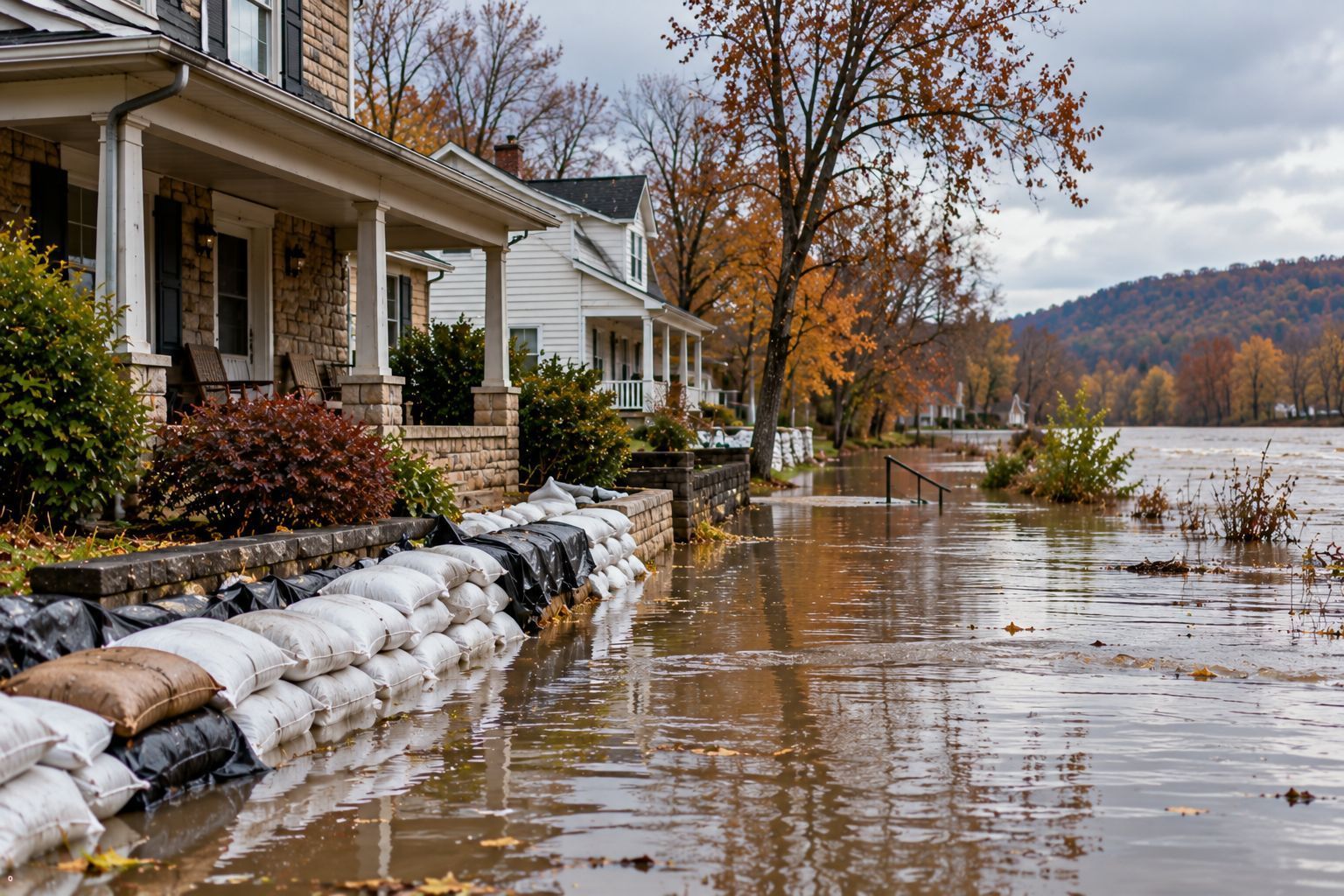
Under FEMA's Risk Rating 2.0, Pennsylvania flood premiums no longer depend mainly on which flood zone a map places your home in. Each policy is now priced on that specific building's risk: how close it sits to water, how high it's elevated, and what it would cost to rebuild. For many homeowners in Pennsylvania's river towns, that has meant steady annual increases. For others, it has meant a lower bill.
If you own a home in Wilkes-Barre, Sharpsburg, or anywhere near a Pennsylvania creek, the renewal notice can be confusing. Two neighbors on the same street can now pay very different amounts, and a home that was once outside the "high-risk" zone may suddenly carry a real flood price tag. The goal here is to explain why, how much an annual increase can be, and what your options are.
How NFIP Risk Rating 2.0 Calculates Pennsylvania Flood Premiums
Pennsylvania flood premiums are now calculated using your property's individual characteristics, not just its flood zone. FEMA looks at your distance to water, elevation, foundation type, and the cost to rebuild your home. It also considers several kinds of flooding. The result is a rate tied to your building's actual risk.
Under the old system, the Flood Insurance Rate Map did most of the work. FEMA has since moved to a method in which premiums are no longer determined solely by static Flood Insurance Rate Maps. Flood zones still matter for lender requirements, but they no longer set the price by themselves.
Rates are now built from a property's unique characteristics and a broader range of flood frequencies. That includes the smaller, more frequent floods that the old maps tended to ignore.
Key Factors Determining Your Pennsylvania Flood Insurance Rate
Your rate depends mostly on a handful of physical details about your house. Many owners don't know these details until a quote is underway.
- Distance to water: This means distance to a river, a stream, or even a drainage channel. A home 300 feet from a small creek can price higher than you'd expect.
- Foundation type: Basements and slab-on-grade homes generally cost more to insure than homes on piers or open crawlspaces. Floodwater reaches living space and mechanicals faster when the home sits lower.
- First-floor height: The higher your lowest finished floor sits above the ground, the lower the expected damage. An Elevation Certificate can document this. It sometimes lowers the rate, though it isn't always required anymore.
- Cost to rebuild: This is replacement cost, not market value. A 2,400-square-foot brick colonial in Allegheny County costs more to rebuild than a small bungalow, so it carries a higher premium.
- Prior claims and community programs: A history of claims raises costs. Pennsylvania communities enrolled in the Community Rating System can earn premium reductions ranging from 5% to 45%.
One mistake comes up often: homeowners assume a finished basement is covered like the rest of the house. NFIP basement coverage is limited. Drywall, carpet, and furniture down there are generally excluded. For a broader overview of coverage types, see our guide to pennsylvania flood insurance.
Statutory Annual Increase Caps for NFIP Policies
Most Pennsylvania primary residences on the NFIP are protected by an 18 percent annual cap on premium increases. Federal law limits how fast a renewal can climb toward its full risk-based rate, so homeowners aren't hit with a single overnight spike.
The cap applies to existing policies for most primary homes, as of this writing. Rate increases can be steeper for non-primary residences and some other property types. So a Poconos vacation cabin may move faster toward its full rate than your year-round home in Lancaster.
The catch is that the cap slows increases without stopping them. If your full risk-based rate is far above what you pay today, you'll see a raise every year until you reach it. In some northeastern Pennsylvania communities, that glide path could run a decade.
Two details trip people up:
- The cap is calculated on the premium itself. Certain fees and surcharges can push your total bill up a bit more than 18 percent.
- Letting a policy lapse can cost you the discounted rate you've been paying. Keep it active, even during a home sale or a refinance.
What Changed for River Towns Under the New System
River towns took the biggest hit, because the new system captures river flooding in far more detail. Communities along the Susquehanna, Allegheny, and Monongahela now see rates that reflect how often and how deeply water reaches individual blocks, not just whether a block falls inside a mapped zone.
The numbers in Luzerne and Wyoming counties show this clearly. Homeowners in riverine communities like Duryea and Noxen have seen projected total increases of over 600%, from roughly $700 to more than $5,000, with the increases spread over the coming decade by the annual cap. Along the Allegheny and Mon, older mill towns with homes built close to the bank face similar pressure.
The new methodology also weighs more than river overflow. It accounts for heavy rainfall, flash flooding from tributaries, and storm surge where it applies. That matters in western Pennsylvania, where hillside runoff can swamp basements far from a main river. Rates in this market typically run $600 to $1,200 for lower-risk inland properties and $1,500 to $4,000 or more for higher-risk homes near major rivers.
The Shift from Flood Zones to Individual Risk Profiles
Under the zone system, a home just outside an AE boundary might pay a small preferred rate while the home across the street paid thousands. Now both are priced on their own elevation and exposure. Some homes outside the old high-risk zones saw rates rise, and some inside them saw rates fall.
This shift reflects a statewide reality. In the state's words, "All 67 Pennsylvania counties have experienced destructive flooding... PID continues to prioritize flood insurance access for all Pennsylvanians beyond traditional high-risk zones." In other words, being outside a mapped zone doesn't mean you're dry.
Comparing NFIP Coverage Limits and State Requirements
The NFIP caps residential coverage at levels that sometimes fall short of a lender's requirement or a home's real rebuild cost. Here's how the standard limits typically compare with what Pennsylvania mortgage lenders ask for, as of this writing:
| Coverage Item | Standard NFIP Limit | Typical PA Lender Requirement |
|---|---|---|
| Building (residential) | Up to $250,000 | Lesser of loan balance, replacement cost, or $250,000 |
| Contents | Up to $100,000 | Usually not required |
| Basement contents | Very limited | Not required |
| Additional living expenses | Not included | Not required |
| When required | Optional outside high-risk zones | Required in high-risk zones for federally backed loans |
The gaps show up after a flood. The average NFIP claim payout in Pennsylvania over the ten years ending in 2026 was $40,512. Plenty of claims run higher, especially once a furnace, water heater, and electrical panel go under. If your rebuild cost exceeds $250,000, or you'd need a hotel for months, NFIP alone may leave you short.
Private Market Alternatives and Carrier Options
Private flood insurance can be a real alternative to the NFIP, and in some cases it offers higher limits or different pricing. An independent agent can compare private carriers such as Franklin Flood or American Bankers against your NFIP renewal. Their underwriting, coverage limits, and terms can differ quite a bit from the federal program.
Private policies may offer building limits above $250,000, coverage for additional living expenses, or broader basement coverage. Some price risk differently than FEMA, which can help homes with good elevation that still carry a high NFIP rate. Others decline riverfront properties outright, so private coverage isn't always available.
Pennsylvania is paying attention to this market as well. The state's Flood Insurance Premium Assistance Task Force is working on improving disclosures during home buying and expanding access to private flood insurance.
MVP Insurance works with these carriers as an independent agent rather than as the insurer. That means comparing options side by side before you decide whether to stay with the NFIP.
Frequently Asked Questions About nfip risk rating 2.0 in pennsylvania
Does my homeowners insurance cover flooding? No. Standard homeowners policies exclude flood damage from rising water, so you need a separate flood policy through the NFIP or a private carrier.
Why did my flood insurance premium go up? Most likely, your full risk-based rate under the new system is higher than what you were paying, and the 18 percent annual cap is phasing you toward it. Changes in rebuild cost or fees can also raise the bill.
Can I switch from NFIP to a private flood policy? Yes, many Pennsylvania homeowners can, and most lenders accept qualifying private flood policies. Before switching, keep in mind that returning to the NFIP later may mean losing any capped rate you had built up.
Making Sense of Your Next Flood Renewal
Risk Rating 2.0 changed how Pennsylvania flood insurance is priced. Your bill now reflects your own house: its elevation, foundation, rebuild cost, and exposure to several kinds of flooding. River towns along the Susquehanna, Allegheny, and Monongahela are feeling it most, though the annual cap keeps increases gradual for most primary homes. The smart move is to understand your full risk-based rate, keep your policy active, and see whether private coverage fits your situation.
If your renewal jumped or you're buying near water, you can start your quote with MVP Insurance. We're an independent agency with offices in Zelienople, PA and New Springfield, OH, and we'll compare NFIP and private options for you. MVP Insurance is licensed in Ohio (#37714) and Pennsylvania (#519263), NPN 10588293.
Search
Recent Posts


MVP Insurance is a local, independent agency, licensed to serve individuals and businesses across Ohio and Pennsylvania.
We serve clients from our offices in New Springfield, Ohio and Zelienople, Pennsylvania and throughout Northeast Ohio and Western Pennsylvania, working with multiple carriers to help contractors, landlords and real estate investors, restaurants, retail shops, auto repair shops, professional offices and many other personal and commercial clients find coverage that fits.
Our Owners
Two friends who started an agency
Owner
Joshua Medure
I am a Penn State marketing graduate with more than ten years in insurance. My childhood friend David and I started MVP Insurance in Northeast Ohio because we wanted the people around us to have an agency that gives honest advice, real choices and someone who picks up the phone. I lead the agency’s insurance strategy, which means I read the policies so our clients do not have to. Away from the office, I coach youth football.


About the Author
David Varrati
Owner, MVP Insurance
I started MVP Insurance with my childhood friend Josh because we wanted people in Northeast Ohio and Western Pennsylvania to have an agency that explains things plainly and picks up the phone. I studied Political Science at Slippery Rock University and have spent more than ten years helping families and individuals protect what matters to them. When I am not in the office, you will find me coaching youth sports.