
| Coverage | What It Pays For | Typical PA Limit Example |
|---|---|---|
| Dwelling (A) | Rebuilding the house itself | $300,000 (full rebuild cost) |
| Other Structures (B) | Detached garage, fence, shed | 10% of dwelling: $30,000 |
| Personal Property (C) | Furniture, clothes, electronics | 50% to 70% of dwelling: $150,000 to $210,000 |
| Loss of Use (D) | Hotel and meals while displaced | 20% to 30% of dwelling: $60,000 to $90,000 |
| Personal Liability (E) | Injuries or damage you cause others | $300,000 to $500,000 |
| Medical Payments (F) | Minor guest injuries, regardless of fault | $1,000 to $5,000 |
Pennsylvania drivers sign a car insurance policy every six or twelve months, but few know what the minimum coverage actually pays for. Most people learn the details only after a crash, a traffic stop, or a letter from PennDOT. Here is what the state requires, what those numbers mean in practice, and what happens if coverage lapses.
Pennsylvania Minimum Car Insurance Requirements
Pennsylvania minimum car insurance requirements include liability coverage of 15/30/5 and at least $5,000 in first party medical benefits. That means $15,000 for one person's injuries, $30,000 for all injuries in one accident, and $5,000 for property damage. You must also carry proof of insurance at all times.
Those are the legal floors, as of this writing. Every registered vehicle in the state needs this coverage, whether it is driven daily or sits in the driveway most of the week. The state confirms these liability minimums and the required medical benefit on its consumer insurance page.
The rules have two halves. Liability coverage pays for harm you cause to other people and their property. First party benefits pay for your own medical bills, no matter who caused the crash. A policy missing either piece does not meet state law, and that matters at registration time, during a traffic stop, and after an accident.
Keep in mind that "legal" and "adequate" are different things. The state minimum keeps you on the right side of the law, but it was not designed to cover the true cost of a serious accident in 2026. The rest of this guide explains where the gaps show up and what to think about before you settle on the minimum.
What 15/30/5 Means for Your Liability Coverage
The 15/30/5 shorthand means your policy pays up to $15,000 for bodily injury to any one person, $30,000 total for bodily injury per accident, and $5,000 for property damage you cause. These limits apply when you are at fault and someone else is hurt or their property is damaged. The state's 15/30/5 liability standard is typically the first thing an insurer checks when building a Pennsylvania policy.
Here is how the numbers work in a real scenario. Say you run a red light in Cranberry Township and hit a car carrying two people. The driver's hospital bills come to $22,000 and the passenger's come to $9,000. Your policy pays the driver only $15,000 (the per-person cap) and the passenger $9,000, for a total of $24,000. That leaves $7,000 the driver can come after you for personally.
Property damage is where the minimum falls short fastest. The $5,000 limit covers damage to another person's property, such as a vehicle or a building. A minor fender bender with a newer SUV can exceed that once you add sensors, cameras, and body work. Hit a storefront, a utility pole, or a late-model pickup, and you are likely paying the difference yourself.
Some insurers also offer a Combined Single Limit of $35,000, which satisfies the full liability requirement in one lump sum. That can be more flexible because the money is not split into separate buckets.
| Coverage | PA Minimum | Common Mid Limit | Common Higher Limit |
|---|---|---|---|
| Bodily injury, per person | $15,000 | $100,000 | $250,000 |
| Bodily injury, per accident | $30,000 | $300,000 | $500,000 |
| Property damage | $5,000 | $100,000 | $100,000+ |
| Who it fits | Legal floor only | Most families | Homeowners, higher earners |
One common mistake: people assume their own car is covered under liability. It isn't. Liability pays for other people's losses. Repairs to your vehicle require collision and comprehensive coverage, which the state does not require but a lender almost always will.
Understanding First Party Medical Benefits
Pennsylvania is a no-fault state, which means every auto policy must include at least $5,000 in first party medical benefits to pay your own injury costs, regardless of who caused the accident. This requirement comes straight from 75 Pa. C.S. § 1711, the statute on required medical benefits, and it applies to every policy written in the state.
The idea behind no-fault is speed. Instead of waiting months for an insurance company to decide who was to blame, your own policy starts paying your medical bills right away. That covers things like emergency room visits, X-rays, follow-up appointments, and physical therapy, up to your limit.
The catch is that $5,000 does not go very far. One ambulance ride, an ER workup, and a few weeks of physical therapy for a back injury can burn through it. Once the benefit is exhausted, the remaining bills typically shift to your health insurance, if you have it, with its own deductibles and copays.
For that reason, many drivers raise their first party benefit to $10,000, $25,000, or more. The premium difference is often modest compared with liability increases. It is a good fit for people with high-deductible health plans, self-employed drivers, and families with kids who ride in the car regularly.
Limited Tort vs Full Tort Options
Every Pennsylvania driver chooses between limited tort and full tort, and that choice affects your right to sue after an accident. It is one of the most misunderstood checkboxes on the application.
With limited tort, you can still recover medical bills and lost wages from an at-fault driver. What you give up is the right to sue for pain and suffering unless your injury meets the state's definition of a serious injury. Limited tort usually costs less, which is why many people choose it without realizing what they waived.
Full tort lets you seek compensation for pain and suffering without meeting a specific injury threshold. That matters for injuries like whiplash, a broken wrist, or a concussion that heals but disrupts your life for months. These injuries often fall short of "serious" under limited tort rules.
A quick comparison:
- Limited tort: lower premium, pain and suffering claims only for serious injuries
- Full tort: higher premium, full right to sue for pain and suffering
- Who chooses it: the selection usually applies to everyone covered under your policy, including family members
If you aren't sure which one you picked, look at your declarations page. People are often surprised to find limited tort selected years ago by default.
Proof of Financial Responsibility in PA
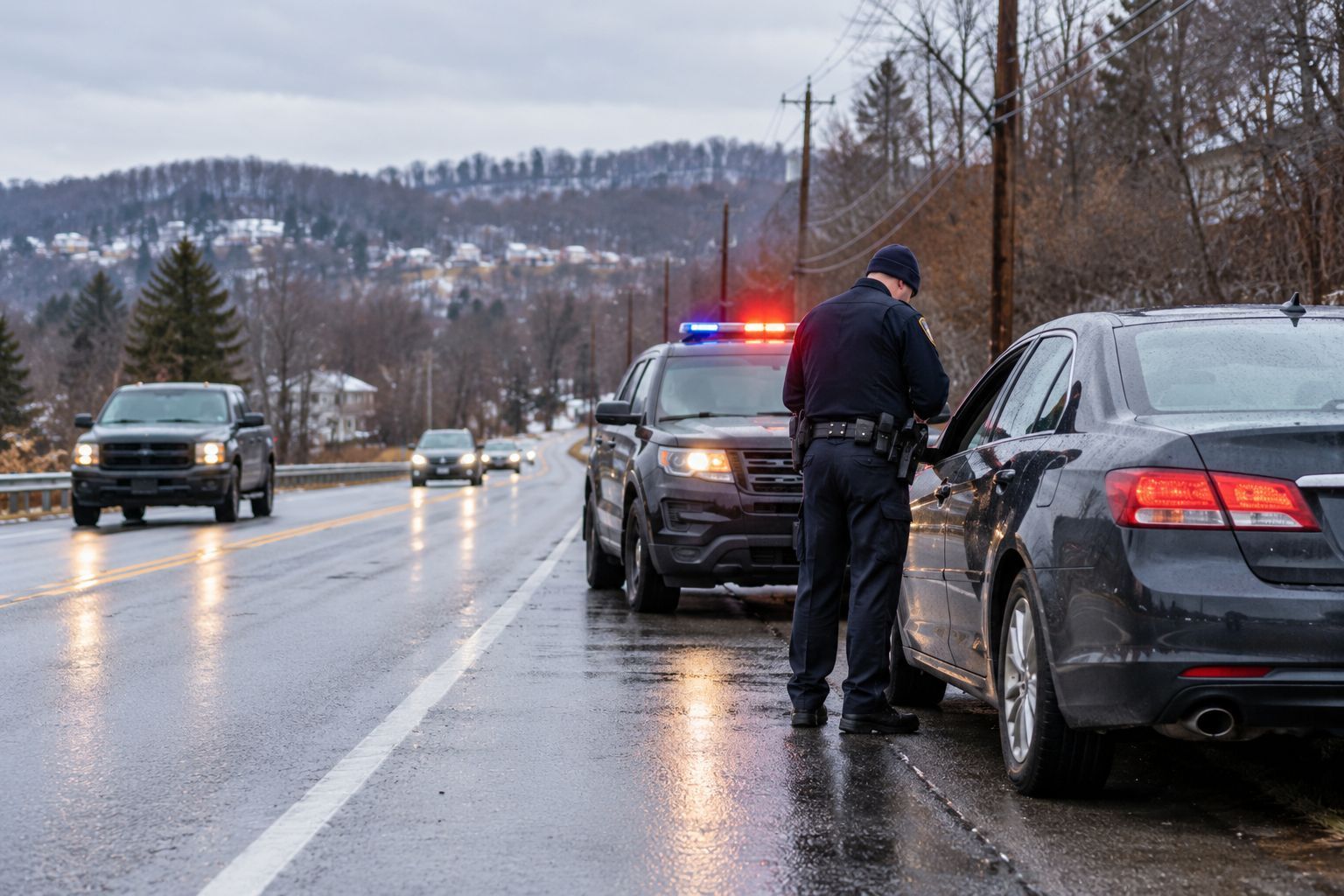
Pennsylvania requires drivers to carry an insurance identification card as proof of financial responsibility and to show it to police during a traffic stop, after a crash, or when registering a vehicle. Your insurer issues this card, and most carriers now offer a digital version in their app alongside a paper copy.
The card lists your insurer, policy number, effective dates, and the vehicle it covers. If an officer asks for it and you can't produce it, you may be cited even if you actually have a valid policy. In many cases you can clear that citation by showing proof later, but it is an avoidable hassle. Keep a current card in the glove box and on your phone.
Registration is the other checkpoint. Vehicle owners must self-certify that they have insurance during registration, and giving false information on that certification is a summary offense. PennDOT takes this seriously, and insurers report cancellations to the state.
Verification is also changing. Act 3 of 2026 set up an Online Verification System that lets PennDOT and law enforcement confirm insurance in real time. In practical terms, gaps that once went unnoticed for weeks are now much easier to spot.
A few habits help you stay covered and provable:
- Replace your ID card each time your policy renews, since old dates can trigger questions.
- Add new vehicles to your policy before you drive them off the lot.
- Keep insurance on any registered vehicle, even one in storage, unless you surrender the plate.
- Respond quickly to any PennDOT letter asking for proof of coverage.
That third point catches a lot of people. Dropping insurance on a second car while keeping the registration active is one of the most common ways Pennsylvania drivers end up with a suspension notice.
Penalties for Driving Uninsured in Pennsylvania
Driving uninsured in Pennsylvania can lead to fines, a three-month license suspension, a three-month registration suspension, vehicle impoundment, and restoration fees before you can legally drive again. The penalties stack, and they hit both the driver and the vehicle.
Here is what the state's insurance law fact sheet lays out for an uninsured conviction, as of this writing:
- Fine: a minimum mandatory fine of $300, plus court costs
- License suspension: three months
- Registration suspension: three months for the vehicle
- Impoundment: police may impound the vehicle, which brings towing and storage costs
- Restoration fees: you pay to restore both your license and your registration once the suspension ends
Lapses without a traffic stop count too. If your insurer cancels your policy and PennDOT learns the vehicle went uninsured, the state can impose a mandatory three-month suspension of your vehicle registration even if nobody drove the car.
There are two narrow exceptions. You can avoid a registration suspension if the lapse lasted less than 31 days and you prove the vehicle was not operated during that time. Separately, a vehicle owner can typically pay a $500 civil penalty instead of serving the three-month registration suspension, but only once in a 12-month period.
The hidden cost shows up later. After a lapse or an uninsured conviction, insurers often see you as higher risk, and premiums can climb for years. Losing your license for three months also makes getting to work hard in parts of western Pennsylvania where public transit is limited. The minimum policy is almost always far less expensive than the fallout.
Then there is the accident itself. If you cause a crash without insurance, you are personally responsible for the other driver's medical bills and repairs. That can mean wage garnishment or liens long after the suspension ends.
How Carriers Like Erie and Progressive Handle PA Policies
Every carrier licensed in Pennsylvania must meet the same 15/30/5 liability and $5,000 first party benefit minimums, but they differ in how they price coverage, package options, and handle tort selection. That's why comparing carriers matters more than comparing the minimum itself.
Erie has deep roots in Pennsylvania and tends to bundle auto with home coverage in ways that appeal to families. Progressive offers a wide range of options and is often a fit for drivers with a varied record or those who want to adjust coverage online. Westfield, a regional carrier, works through independent agents and frequently fits households looking for solid auto and home packages. None is right for everyone. Your driving history, vehicle, zip code, and credit-based insurance factors all shift which carrier comes in more favorably.
MVP Insurance's independent agents work with carriers like Erie, Progressive, and Westfield to find policies that meet Pennsylvania's state mandates and fit your situation. As an independent agency, MVP works with these carriers on your behalf rather than acting as the carrier itself. That means one conversation can produce several quotes to compare side by side, including how each handles first party benefits, tort options, and higher liability limits.
A few things worth asking any agent when you review quotes:
- What does it cost to raise liability to 100/300/100 compared with the minimum?
- How much more is full tort on this policy?
- What would $25,000 in first party benefits add?
- Does the carrier offer uninsured and underinsured motorist coverage at matching limits?
That last question is important. Plenty of drivers on Pennsylvania roads carry only the minimum, or nothing at all. Uninsured and underinsured motorist coverage protects you when the other driver can't pay. For a deeper look at coverage options across the state, see our guide to pennsylvania car insurance.
Meeting the state's minimum car insurance requirements is the starting line, not the finish. Liability at 15/30/5, $5,000 in medical benefits, a current ID card, and no lapses will keep you legal. Whether that is enough protection is a separate question, and for most households with a home, savings, or a steady paycheck, the answer is no.
If you'd like a second set of eyes on your current policy or want to compare options from several carriers at once, you can start your quote here with MVP Insurance. The team has offices in Zelienople, PA and New Springfield, OH, and serves drivers across both states. MVP Insurance is licensed in Ohio (license #37714) and Pennsylvania (license #519263), NPN 10588293.
Frequently Asked Questions About PA Insurance Laws
What is the minimum car insurance in PA?
Pennsylvania requires 15/30/5 liability coverage: $15,000 per person and $30,000 per accident for bodily injury, plus $5,000 for property damage. You also need at least $5,000 in first party medical benefits to cover your own injuries.
Can I drive without insurance if I own the car?
No. Owning a vehicle outright does not exempt you, since every registered vehicle in Pennsylvania must carry insurance whether it is paid off or financed. Only a lender's requirements for collision and comprehensive go away when the loan does.
How much is the fine for no insurance in PA?
As of this writing, driving without insurance carries a minimum fine of $300, plus court costs. Expect a three-month suspension of your license and registration, along with restoration fees, on top of the fine.
Search
Recent Posts

MVP Insurance is a local, independent agency, licensed to serve individuals and businesses across Ohio and Pennsylvania.
We serve clients from our offices in New Springfield, Ohio and Zelienople, Pennsylvania and throughout Northeast Ohio and Western Pennsylvania, working with multiple carriers to help contractors, landlords and real estate investors, restaurants, retail shops, auto repair shops, professional offices and many other personal and commercial clients find coverage that fits.
Our Owners
Two friends who started an agency
Owner
Joshua Medure
I am a Penn State marketing graduate with more than ten years in insurance. My childhood friend David and I started MVP Insurance in Northeast Ohio because we wanted the people around us to have an agency that gives honest advice, real choices and someone who picks up the phone. I lead the agency’s insurance strategy, which means I read the policies so our clients do not have to. Away from the office, I coach youth football.


About the Author
David Varrati
Owner, MVP Insurance
I started MVP Insurance with my childhood friend Josh because we wanted people in Northeast Ohio and Western Pennsylvania to have an agency that explains things plainly and picks up the phone. I studied Political Science at Slippery Rock University and have spent more than ten years helping families and individuals protect what matters to them. When I am not in the office, you will find me coaching youth sports.