

The Ohio Valley sits in a corridor where warm, humid air from the south meets colder systems from the west. The result is a steady run of thunderstorms, straight-line winds, hail, and heavy downpours that overwhelm older storm drains. For homeowners, that translates into very specific claims: shingles peeled off in a wind event, siding dented by hail, trees through the roof, and basements flooded by sewer backup.
Sewer backup is a gap we see catch people off guard constantly. A standard policy usually excludes water that backs up through drains unless you've added a specific endorsement, and in a hillside neighborhood with aging municipal lines, one heavy storm can leave several inches of water in a finished basement. Carriers have watched these losses pile up across the region and priced accordingly.
Private flood products fill many of the NFIP's gaps: higher limits, additional living expenses if you're displaced, and sometimes replacement cost on contents. In lower-risk areas, a private policy may also come in under the NFIP price. Franklin Flood and American Bankers write flood coverage, and carriers like Erie, Westfield and Progressive are part of the broader mix an independent agent can access when building a full home insurance program. Coverage availability varies by carrier and address.
As an independent agent, MVP works with these carriers rather than for any one of them. That means comparing NFIP and private quotes side by side instead of defaulting to whichever product is easiest to write.
The NFIP's biggest drawback is its caps. Rebuilding a larger home in Sewickley or Chester County can easily cost more than the federal building limit, and the difference comes out of your pocket unless you add excess flood coverage. Basements are another sore spot. NFIP policies cover essentials like furnaces, water heaters and electrical panels below grade, but generally exclude finished walls, carpeting and most belongings stored there. For Pennsylvania homes with finished basements, that's a painful surprise after a claim.
There's also a policy-stability question. Congress has to reauthorize the program periodically. As of this writing, the NFIP is authorized through December 11, 2026. Past lapses have briefly halted new policy sales, and FEMA tracks the program's congressional reauthorization history for anyone who wants the details.
Maximum Policy Limits for Residential Properties
Do I need insurance to boat on Lake Erie?
What is the difference between actual cash value and agreed value for my boat?
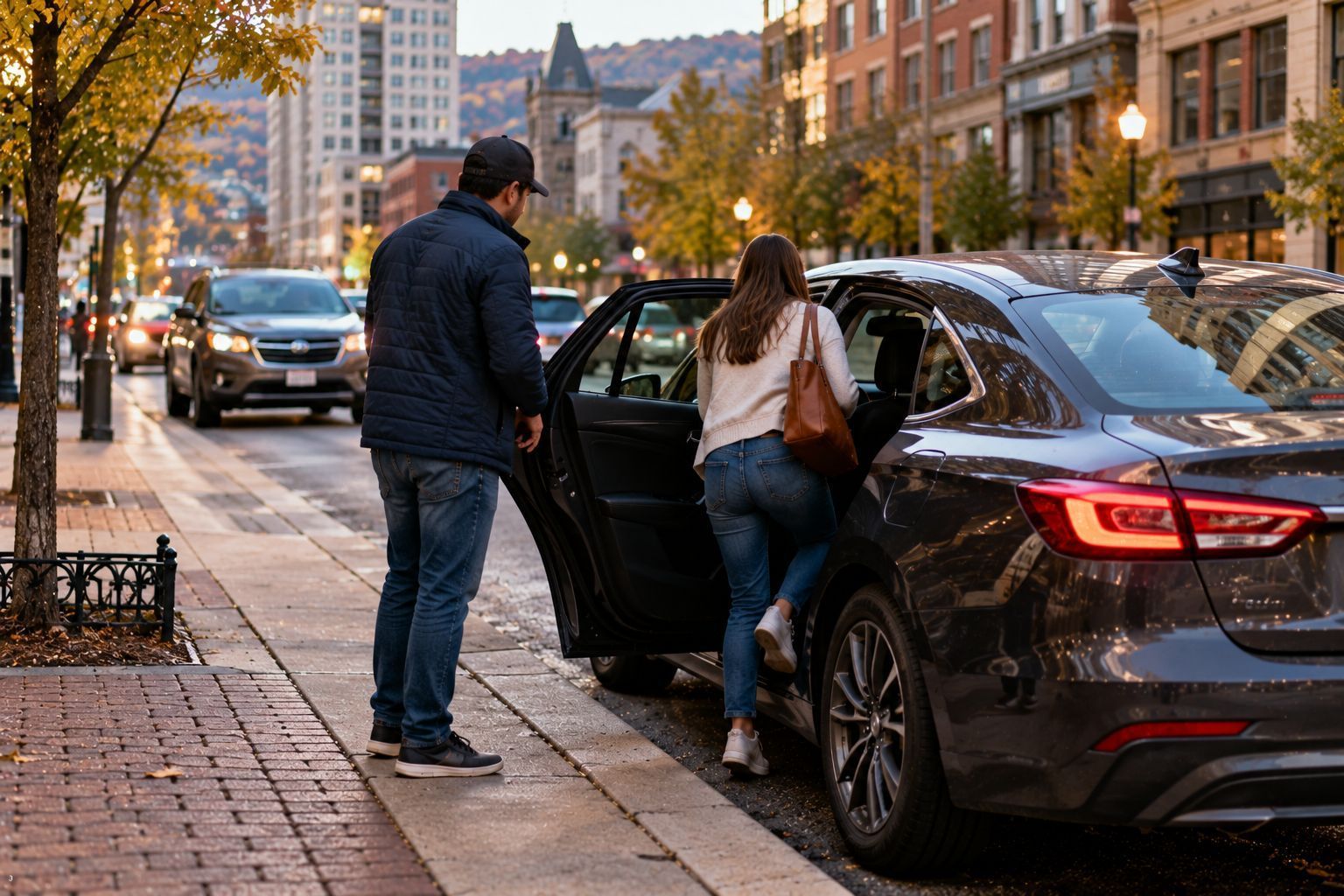
Rideshare driver insurance in Pennsylvania covers the stretch of time when your personal auto policy stops responding and the rideshare company's policy hasn't fully kicked in. Most drivers assume they're covered once the app is on. That's only partly true, and the difference shows up when a claim gets denied.
If you drive for Uber or Lyft anywhere from Cranberry to Center City, the coverage you carry depends on what the app is doing at that moment. Your policy limits, your deductible, and whether anyone pays for your own car can all change in the same 20-minute shift.
Understanding Rideshare Driver Insurance in Pennsylvania
Pennsylvania rideshare coverage works in layers. Your personal policy usually excludes driving for hire, and the rideshare company's insurance changes based on app status. A rideshare endorsement or similar coverage fills the space between those two, mainly when the app is on and you're waiting for a ride request.
The state treats rideshare companies as transportation network companies (TNCs) under Pennsylvania's Act 164 of 2016, which sets the coverage levels TNCs and drivers must maintain. That law creates the framework, but it doesn't guarantee your car gets fixed or that your own policy will cooperate. Knowing which layer applies at which moment is the whole game.
Coverage Gaps Between App Periods
Coverage gaps happen because rideshare insurance is split into three periods, and each period triggers a different policy. Pennsylvania follows a tiered framework based on driver activity, and the gaps tend to show up where one tier hands off to the next.
Here's how the periods break down:
- Period 0 (app off): You're a regular driver. Your personal auto policy applies as normal.
- Period 1 (app on, no request accepted): You're available and waiting. The TNC provides limited liability coverage only.
- Period 2 (request accepted, heading to pickup): The TNC's higher limits apply.
- Period 3 (passenger in the car): The TNC's higher limits continue until the ride ends.
The trouble is that many personal policies exclude any use of the vehicle for hire. Once you open the app, your own insurer may consider you "working," even if you're just parked at a Sheetz waiting for a ping. If something happens during that window, you could end up relying entirely on the TNC's thinner Period 1 coverage.
The Risk of Period 1 Coverage
Period 1 is where most drivers get hurt financially. During this window, TNC-provided insurance typically excludes collision or comprehensive coverage for the driver's own vehicle. So if you rear-end someone on McKnight Road while waiting for a request, the TNC's liability coverage may handle the other driver's damage, but your bumper, hood, and radiator are on you.
A common mistake we see is a driver assuming their full-coverage personal policy will step in. If that policy carries a livery or business-use exclusion, the insurer can deny the claim outright. Some drivers also don't disclose rideshare work at all, which can create bigger problems if an insurer later learns the car was being used commercially. Period 1 can easily make up a large share of a shift, so it's not a minor edge case.
What the Company Policy Pays
The company policy pays well during Periods 2 and 3, mostly on liability. Once a driver accepts a request or has a passenger aboard, the total third-party liability coverage minimum increases to $1 million. That limit protects you if you injure someone or damage their property while on a trip.
Your own vehicle is a different story. Uber and Lyft generally provide contingent collision and comprehensive coverage during Periods 2 and 3, and "contingent" is the key word. It typically applies only if you already carry collision and comprehensive on your personal policy. Drivers with liability-only personal coverage often find the TNC won't fix their car either.
Then there's the deductible. TNCs typically impose a high deductible for collision and comprehensive claims during active trips, frequently cited at $2,500 as of this writing. Picture a hail storm or a deer strike on a late-night ride through Butler County: a $3,000 repair might leave you paying most of it yourself. Some rideshare endorsements help bridge that deductible difference, which is one reason they're worth asking about.
A quick snapshot of how TNC coverage typically lines up:
| Period | Liability | Your Car |
|---|---|---|
| 1 (app on, waiting) | Limited TNC liability | Typically none |
| 2 (en route to pickup) | $1 million | Contingent, high deductible |
| 3 (passenger aboard) | $1 million | Contingent, high deductible |
Rideshare Endorsements for PA Drivers
A rideshare endorsement extends your personal auto policy so it keeps working when the app is on, especially during Period 1. Carriers such as Erie and Progressive offer versions of this add-on, though the exact wording and availability vary by carrier and by policy.
In practice, an endorsement removes or softens the for-hire exclusion during the waiting period. That means your collision and comprehensive coverage can respond if you're hit while idling between rides. Some endorsements also help cover the gap between your personal deductible and the TNC's higher one during Periods 2 and 3. Read the fine print, because not every endorsement handles that deductible gap the same way.
Cost is usually reasonable. Adding a rideshare endorsement generally increases premiums by 10% to 20%, depending on your carrier, driving record, and vehicle. Compare that to paying out of pocket for a totaled car during Period 1, and the math gets easy for most part-time and full-time drivers.
Endorsements are built for individual drivers. If you're running a small operation with multiple vehicles and hired drivers, commercial coverage is a different conversation. As of this writing, annual commercial fleet insurance for small rideshare operations (2 to 5 vehicles) in Pennsylvania typically ranges from $2,400 to $3,200 per vehicle.
Pennsylvania Car Insurance Requirements for Ridesharing
Pennsylvania requires every driver to carry state minimum coverage, and rideshare drivers need TNC coverage on top of it. The standard personal minimums are $15,000 per person and $30,000 per accident for bodily injury, $5,000 for property damage, and $5,000 in first-party medical benefits. Those limits are thin for anyone, and especially thin for someone driving strangers around at night.
Act 164 sets the TNC side. During Period 1, coverage must meet a lower liability threshold, and during Periods 2 and 3 it rises to $1 million. Pennsylvania's choice between full tort and limited tort also matters for rideshare drivers, since limited tort can restrict your ability to sue for pain and suffering after an accident. If you're on the road for hours a week, full tort is worth a serious look.
Legal changes in 2026 also affect how claims play out. In January, the state Supreme Court ruled that orders compelling arbitration are not immediately appealable, which forces rideshare injury claims into arbitration before appellate review. In March, the Superior Court required online arbitration agreements to state the jury-trial waiver in bold, prominent text. Separately, legislation introduced in June proposes a 20% cap on surge pricing above driver pay during large events.
For a broader look at personal coverage rules, see our page on pennsylvania car insurance.
| Coverage Option | Typical Limits | Covers Period 1? | Covers Your Car? |
|---|---|---|---|
| PA state minimum | 15/30/5 + $5,000 medical | No (for-hire exclusion) | No |
| Personal full coverage | Your chosen limits | Usually excluded | Not while app is on |
| TNC policy | Lower in P1, $1M in P2-3 | Liability only | Contingent in P2-3 |
| Rideshare endorsement | Matches your personal policy | Yes | Yes, per policy terms |
| Commercial auto | Set by policy | Yes | Yes |
Available Carriers for Rideshare Coverage in PA
Several carriers write coverage for Pennsylvania rideshare drivers, and MVP Insurance works with them as an independent agent rather than as the insurer itself. That means we compare options across companies instead of selling one company's product.
Carriers we work with that may fit rideshare drivers include:
- Erie: A strong regional presence in Pennsylvania, with rideshare options on personal auto policies.
- Progressive: Known for rideshare endorsements available to many drivers.
- Westfield: Personal auto coverage that may fit drivers with clean records.
- Liberty Mutual: Personal auto policies with add-on options worth comparing.
- GEICO: Another personal auto option to review alongside the others.
- Dairyland: Can be useful for drivers who need nonstandard coverage.
Eligibility rules differ. One carrier might cap the number of rideshare hours, another might exclude certain vehicle types, and a third may require a specific driving history. A spotty record or a newer driver on the policy can change which carrier makes sense.
That's where comparison matters. If you drive in western Pennsylvania or anywhere else in the state, MVP Insurance can review your current policy, spot a for-hire exclusion, and shop rideshare options across multiple carriers for you. Start your quote with our team in Zelienople, PA or New Springfield, OH, and we'll lay out your choices side by side. MVP Insurance is licensed in Ohio (#37714) and Pennsylvania (#519263), NPN 10588293.
Frequently Asked Questions About PA Rideshare Insurance
Does my regular car insurance cover me when I drive for Uber or Lyft in Pennsylvania? Usually not while the app is on. Most personal policies exclude driving for hire, so you'll typically need a rideshare endorsement to stay covered during the waiting period.
How much does a rideshare endorsement cost in PA? It generally adds about 10% to 20% to your premium as of this writing. Your exact price depends on your carrier, vehicle, and driving record.
What happens if I crash while waiting for a ride request? The rideshare company's limited liability coverage may pay for damage you cause to others, but it typically won't fix your own car. A rideshare endorsement can fill that gap so your collision and comprehensive coverage still apply.
Search
Recent Posts



MVP Insurance is a local, independent agency, licensed to serve individuals and businesses across Ohio and Pennsylvania.
We serve clients from our offices in New Springfield, Ohio and Zelienople, Pennsylvania and throughout Northeast Ohio and Western Pennsylvania, working with multiple carriers to help contractors, landlords and real estate investors, restaurants, retail shops, auto repair shops, professional offices and many other personal and commercial clients find coverage that fits.
Our Owners
Two friends who started an agency
Owner
Joshua Medure
I am a Penn State marketing graduate with more than ten years in insurance. My childhood friend David and I started MVP Insurance in Northeast Ohio because we wanted the people around us to have an agency that gives honest advice, real choices and someone who picks up the phone. I lead the agency’s insurance strategy, which means I read the policies so our clients do not have to. Away from the office, I coach youth football.


About the Author
David Varrati
Owner, MVP Insurance
I started MVP Insurance with my childhood friend Josh because we wanted people in Northeast Ohio and Western Pennsylvania to have an agency that explains things plainly and picks up the phone. I studied Political Science at Slippery Rock University and have spent more than ten years helping families and individuals protect what matters to them. When I am not in the office, you will find me coaching youth sports.