
A few practical notes from looking at a lot of Pennsylvania policies. Dwelling coverage is where most mistakes happen, because people anchor to market value or their mortgage balance instead of rebuild cost. A Pittsburgh-area home might sell for $220,000 but cost $320,000 to rebuild with today's labor and materials.
Personal property limits are usually set as a percentage, which sounds generous until you hit sub-limits. Jewelry, firearms, collectibles, and cash often have caps of a few thousand dollars unless you schedule them separately. If you own an engagement ring worth more than that cap, it's worth asking about.
Liability is the coverage people tend to skimp on, and it's often the least expensive to increase. Raising liability from $300,000 to $500,000 frequently costs much less than people expect, and if you have a pool, a trampoline, or a dog, the extra protection makes sense. Many families pair it with an umbrella policy for even more protection.
Endorsements fill the gaps the table doesn't cover: sewer and drain backup, equipment breakdown, service line coverage, and replacement cost on contents. Flood and earthquake require separate policies entirely.
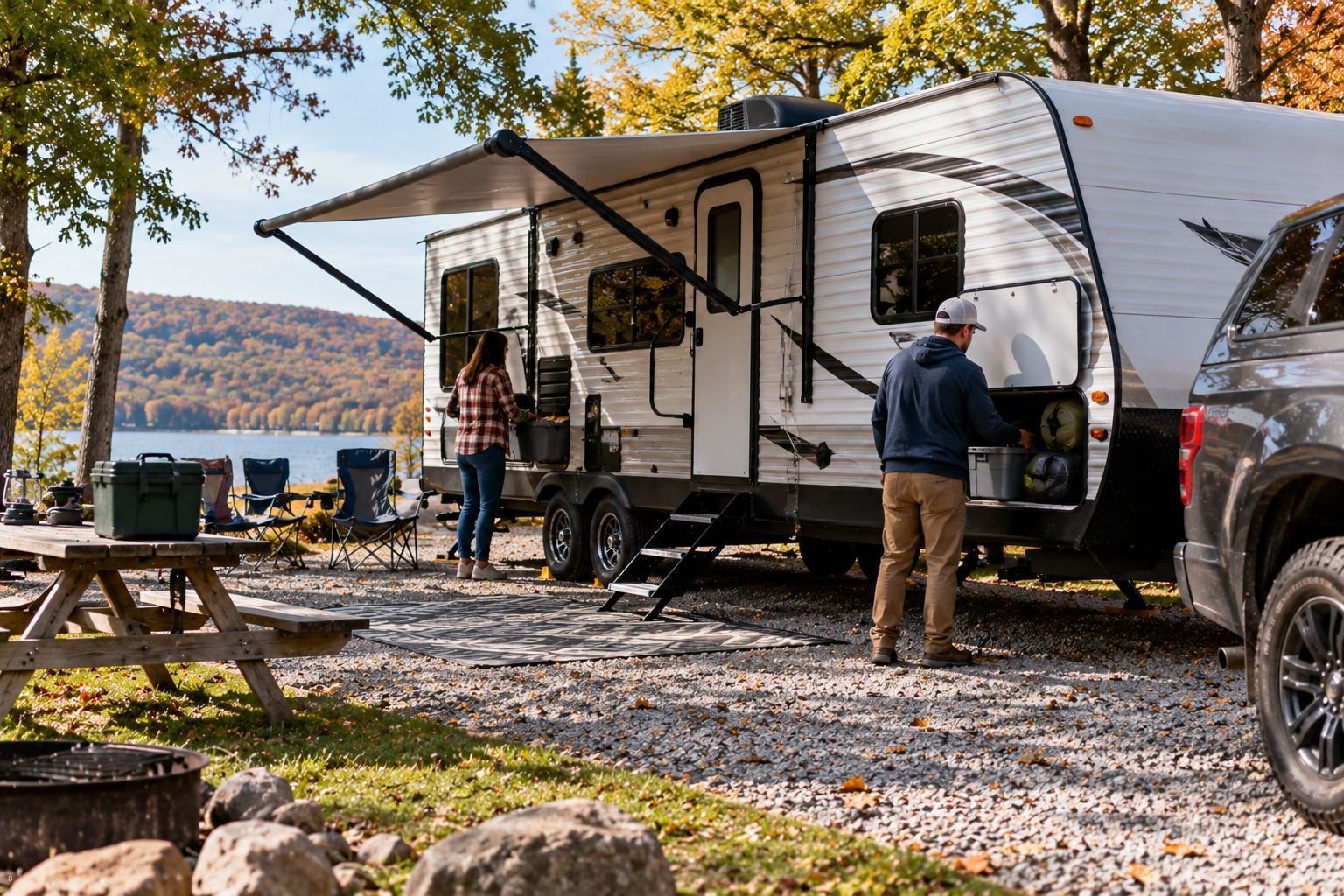
Most personal RV policies in Pennsylvania won't cover you once you rent your camper to someone else. Standard policies exclude business use, and peer-to-peer platform protection often leaves gaps in deductibles, mechanical damage and interior losses. Before you list, you need coverage written for rental activity, plus clear answers from your agent.
Plenty of Pennsylvania owners only use their motorhome or travel trailer for a few weeks each year. The rest of the time it sits in a driveway in Cranberry Township or a storage lot near State College. Renting it out on a sharing app looks like an easy way to cover the loan payment, and many owners do exactly that.
The appeal makes sense. The U.S. RV rental market is valued at roughly $931 million in 2026, and peer-to-peer listings make up a large share of the available rigs. That's a lot of private campers in the hands of strangers.
The insurance side is where owners get surprised. A renter backs your Class C into a campground post, or a family leaves a burst water line behind, and you find out your policy was never built for this. Here's how the coverage actually works for Pennsylvania camper owners, and what to sort out before your first booking.
Understanding RV Rentals and Camper Sharing in Pennsylvania
The short answer: a personal RV policy is written for personal use, and renting your camper is business use. Pennsylvania law and standard policy language both draw that line clearly. Platform coverage can fill some of the space, but its liability and physical damage protection often leaves owners holding part of the risk.
Pennsylvania even builds this distinction into its vehicle code. Under 75 Pa. C.S. § 9602, a recreational vehicle is defined as one used exclusively for personal pleasure and not in connection with any business endeavor. Once you start collecting rental income, you're operating outside that definition. Insurers read their own policies the same way.
The state also treats RVs differently from cars in other areas. Pennsylvania has a separate RV franchise law (Act 134) that sets RVs apart from the general automobile code for dealer licensing and consumer protection. That same source makes a point worth remembering as a private owner: "Rental dealers know more than the typical owner about how RVs work... that expertise can make a big difference in the quality of a family's vacation and the safety of the rig." Commercial rental outfits carry commercial insurance, train renters and maintain fleets. A private owner with one camper is competing with them while often carrying insurance meant for weekend trips.
Taxes matter too, and they signal how the state views rentals. Short-term RV rentals under 30 days are typically subject to the 6% state Hotel Occupancy Tax, with local add-ons such as Delaware County's 5% tax effective April 1, 2026. Pennsylvania is also shifting to a "point of destination" model for local sales tax, scheduled to take effect October 1, 2026, which bases the tax on where the vehicle is delivered. If the state treats your camper rental like lodging, your insurer will not treat it like a family vacation.
The practical fix is a policy designed for rental exposure. That might be a commercial RV policy, a rental endorsement where a carrier offers one, or a layered setup that works alongside platform protection. Looking at pennsylvania rv insurance options built with rentals in mind is the right starting point before you publish a listing.
Why a Personal RV Policy May Not Cover Renters
Your personal policy likely stops responding the moment money changes hands. Standard RV policies from carriers like Erie or Progressive include business use, livery or commercial use exclusions. Renting your camper to a stranger, even for one weekend, typically triggers them.
These exclusions exist because the risk changes completely. A personal policy is priced around you and the drivers you list: your driving record, your trips, your habits. A renter is someone the insurer never underwrote. They may have never driven a 30-foot motorhome, never towed a fifth wheel, and never dumped a black tank.
Many owners assume the exclusion only applies if they run a full rental business. That's a common and expensive mistake. Most personal RV policies contain livery or commercial use language that can void coverage simply because the vehicle is listed on a peer-to-peer rental platform. Some owners also believe that lending to a friend who "chips in for gas" is the same as renting. It may be treated very differently from a paid booking through an app, and the policy wording decides which side of the line you're on.
Pennsylvania law backs insurers on this point. Personal insurers in the state are explicitly allowed to exclude coverage for any loss or injury that happens while a vehicle is being shared on a peer-to-peer platform. In other words, your carrier doesn't need to stretch policy language to deny a rental claim. The state already gives them that room.
Here's how this tends to play out. A renter sideswipes another car on Route 422 heading to a lake. The other driver files against your camper. Your personal insurer reviews the claim, finds the booking record, and applies the business use exclusion. Now you're relying entirely on whatever the platform offers, and if that falls short, the difference can come out of your pocket.
There's a second risk owners overlook: non-disclosure. If you rent without telling your carrier, they may treat it as a material misrepresentation. That can lead to a nonrenewal or a cancellation, which then makes finding new coverage harder. Being upfront with your agent is the safer route, even if it means paying for a different policy type.
Common Platform Protection Gaps for Owners
Platform protection helps, but it rarely covers everything. Deductibles can be high, mechanical breakdowns are frequently excluded, and renter-caused interior damage often gets pushed to the security deposit instead of the insurance claim. Owners who treat platform coverage as complete protection tend to learn about the gaps after a messy return.
Mechanical issues are the biggest problem. Platform insurance typically excludes mechanical failures, and those failures account for 70% of rental disputes, based on 2026 industry data. Think of a renter who runs the generator dry, ignores a transmission warning light, or keeps driving on an overheating engine. Whether that counts as an accident or wear and tear becomes an argument, and mechanical damage usually loses that argument.
Interior damage is the other common gap. Broken appliances, stained upholstery, cracked countertops and torn awnings are often excluded from platform insurance and handled as security deposit matters. If a renter's dog shreds a $1,500 dinette cushion set and your deposit is $500, you're absorbing the rest or chasing the renter yourself.
Other gaps worth watching for:
- High deductibles: Owner deductibles on platform plans can run well into four figures, depending on the tier you pick.
- Loss of income: Your RV sits in a shop for six weeks, and the bookings you lose may not be reimbursed.
- Personal contents: Kitchen gear, bikes and electronics you leave in the camper may fall outside the policy.
- Off-platform rentals: A repeat renter who books with you directly gets no platform protection at all.
Liability Limits and State Minimum Requirements
Pennsylvania requires peer-to-peer car sharing platforms to make sure vehicles carry insurance meeting state minimum limits of 15/30/5 during the sharing period. That's $15,000 per person for bodily injury, $30,000 per accident, and $5,000 for property damage. Those numbers are minimums, not recommendations. A single serious injury crash involving a motorhome can blow past them quickly, and if a claim exceeds the available limits, an injured party may look to the owner's personal assets.
The Risk of Secondary Coverage Disputes
Some platform coverage is structured so that it responds only after other insurance. That's where disputes start. The platform points to your personal policy, your personal carrier points to its business use exclusion, and you're stuck in the middle while repair bills pile up. Knowing ahead of time which policy is primary during a rental is one of the most useful things you can learn before listing.
Comparing Rental Insurance Options in PA
Personal policies typically cover nothing during a paid rental, platform protection covers some of it with limits, and commercial or rental-specific policies come closest to full coverage. The right combination depends on how often you rent, the value of your RV, and whether you ever book renters directly.
| Coverage Area | Personal RV Policy | Platform Protection | Commercial / Rental RV Policy |
|---|---|---|---|
| Covers paid rentals | Usually no (business use exclusion) | Yes, during booked trips | Yes, written for rental use |
| Liability limits | Not available during rental | Varies by plan; must meet PA 15/30/5 minimum for sharing | Set by policy; higher limits typically available |
| Physical damage | Excluded during rental | Covered with deductible | Covered with deductible |
| Mechanical breakdown | Not covered | Typically excluded | Often excluded; ask about options |
| Interior damage by renter | Not covered | Often treated as deposit issue | May be covered depending on policy |
| Loss of rental income | No | Limited or none | Sometimes available |
| Off-platform bookings | No | No | Often yes |
| Owner's personal trips | Yes | No | Depends on policy setup |
A few patterns stand out. No single option covers mechanical breakdown cleanly, so a solid maintenance routine and a clear rental agreement do as much work as any policy. Platform plans only exist during a booked trip, so the moment a renter books with you by text message, you're outside that protection.
Owners who rent occasionally, maybe four or five weekends a summer, sometimes keep a personal policy for their own use and lean on the platform's top tier for rentals. That works only if the personal carrier knows about the rental activity and agrees to keep writing the policy. Owners renting more often, or renting a high-value Class A, are usually better served by a policy built around rental use from the start.
As an independent agency, MVP Insurance can compare how different carriers handle rental exposure instead of fitting you into one company's rules. Carrier appetite for rental RVs varies quite a bit, and a quick side-by-side comparison often reveals options an owner wouldn't find calling one company at a time.
What to Ask Before Listing Your Camper
Before your RV goes live, get direct answers from your agent about coverage during the rental period, especially physical damage and loss of use. The questions below cover the spots where claims most often fall apart.
Take this list to your agent and get the answers in writing where you can:
- Does my current policy exclude rental or business use? Ask for the exact exclusion wording.
- Who is primary during a rental: my policy or the platform's? Get clarity on which one pays first.
- What physical damage coverage applies while a renter has the RV? Ask about collision, comprehensive and the deductible you'd face.
- Is loss of use covered? If your camper sits in a body shop for two months in July, will anything replace lost bookings?
- Are my personal belongings inside the RV covered during a rental?
- What liability limits apply, and can I carry more than the state minimum?
- Does coverage change if I rent a towable versus a motorhome? Travel trailers and drivable RVs are often handled differently.
- Will listing the RV affect my renewal or my other policies? Some carriers look at your full account.
Verifying Off-Platform Coverage Extensions
Repeat renters love to skip the app fees. Someone rents your Jayco for a long weekend, loves it, and texts you about booking directly next year. It feels like a win until you realize the platform's protection disappears the moment the transaction leaves the app.
If you plan to accept direct bookings at all, ask your agent whether any policy you're considering extends to rentals arranged privately. Some commercial RV policies do. Many platform plans do not. Don't accept a direct booking until that question is answered.
Documenting Condition and Rental Agreements
Good records decide a lot of disputes before they reach an adjuster. Take timestamped photos and video of the exterior, interior, tires, roof and awning before and after every trip. Record the odometer, generator hours and fuel levels. A walk-through video with the renter at pickup is even better, since it shows they saw the condition firsthand.
Your rental agreement should spell out who can drive, where the RV can go, pet rules, smoking rules, and how damage beyond the deposit will be handled. It should also require renters to report problems right away, including warning lights and leaks. Since mechanical issues drive so many rental disputes, a clause that makes renters stop and call you when a dashboard light comes on can save an engine and a lot of arguing.
Pennsylvania RV Insurance FAQs
Does my Erie policy cover renting my RV?
A standard personal Erie RV policy typically includes a business use exclusion, so paid rentals generally aren't covered. Talk with your agent about rental-specific or commercial options before you list. MVP works with Erie as an independent agent and can review how your policy is written.
What happens if a renter crashes my camper in PA?
Platform protection usually responds first if the booking went through the app, subject to its deductibles and exclusions. Your personal policy will likely deny the claim under its business use exclusion, so any gap in limits or excluded damage could fall on you.
Is platform insurance enough for full protection?
Usually not. Platform plans often exclude mechanical failures and interior damage, carry high deductibles, and don't cover off-platform bookings, so many owners pair them with a policy built for rental use.
Renting your camper can absolutely pay off, but only if the insurance matches what the RV is actually doing. A personal policy protects your family trips, not a stranger's week at Presque Isle. Platform coverage closes part of the gap, and the rest comes down to the right policy, clear rental terms and good records.
If you're thinking about listing your RV this season, it helps to have someone compare rental-friendly coverage across several carriers before your first booking. MVP Insurance, an independent agency with offices in Zelienople, PA and New Springfield, OH, can shop those options for you. When you're ready, start your quote and get your coverage lined up before the calendar fills.
MVP Insurance is licensed in Ohio (license #37714) and Pennsylvania (license #519263), NPN 10588293.
Search
Recent Posts
MVP Insurance is a local, independent agency, licensed to serve individuals and businesses across Ohio and Pennsylvania.
We serve clients from our offices in New Springfield, Ohio and Zelienople, Pennsylvania and throughout Northeast Ohio and Western Pennsylvania, working with multiple carriers to help contractors, landlords and real estate investors, restaurants, retail shops, auto repair shops, professional offices and many other personal and commercial clients find coverage that fits.
Our Owners
Two friends who started an agency
Owner
Joshua Medure
I am a Penn State marketing graduate with more than ten years in insurance. My childhood friend David and I started MVP Insurance in Northeast Ohio because we wanted the people around us to have an agency that gives honest advice, real choices and someone who picks up the phone. I lead the agency’s insurance strategy, which means I read the policies so our clients do not have to. Away from the office, I coach youth football.


About the Author
David Varrati
Owner, MVP Insurance
I started MVP Insurance with my childhood friend Josh because we wanted people in Northeast Ohio and Western Pennsylvania to have an agency that explains things plainly and picks up the phone. I studied Political Science at Slippery Rock University and have spent more than ten years helping families and individuals protect what matters to them. When I am not in the office, you will find me coaching youth sports.