

Every Pennsylvania driver chooses between limited tort and full tort, and that choice affects your right to sue after an accident. It is one of the most misunderstood checkboxes on the application.
With limited tort, you can still recover medical bills and lost wages from an at-fault driver. What you give up is the right to sue for pain and suffering unless your injury meets the state's definition of a serious injury. Limited tort usually costs less, which is why many people choose it without realizing what they waived.
Full tort lets you seek compensation for pain and suffering without meeting a specific injury threshold. That matters for injuries like whiplash, a broken wrist, or a concussion that heals but disrupts your life for months. These injuries often fall short of "serious" under limited tort rules.
A quick comparison:
- Limited tort: lower premium, pain and suffering claims only for serious injuries
- Full tort: higher premium, full right to sue for pain and suffering
- Who chooses it: the selection usually applies to everyone covered under your policy, including family members
If you aren't sure which one you picked, look at your declarations page. People are often surprised to find limited tort selected years ago by default.
| Coverage | What It Pays For | Typical PA Limit Example |
|---|---|---|
| Dwelling (A) | Rebuilding the house itself | $300,000 (full rebuild cost) |
| Other Structures (B) | Detached garage, fence, shed | 10% of dwelling: $30,000 |
| Personal Property (C) | Furniture, clothes, electronics | 50% to 70% of dwelling: $150,000 to $210,000 |
| Loss of Use (D) | Hotel and meals while displaced | 20% to 30% of dwelling: $60,000 to $90,000 |
| Personal Liability (E) | Injuries or damage you cause others | $300,000 to $500,000 |
| Medical Payments (F) | Minor guest injuries, regardless of fault | $1,000 to $5,000 |
Every carrier licensed in Pennsylvania must meet the same 15/30/5 liability and $5,000 first party benefit minimums, but they differ in how they price coverage, package options, and handle tort selection. That's why comparing carriers matters more than comparing the minimum itself.
Erie has deep roots in Pennsylvania and tends to bundle auto with home coverage in ways that appeal to families. Progressive offers a wide range of options and is often a fit for drivers with a varied record or those who want to adjust coverage online. Westfield, a regional carrier, works through independent agents and frequently fits households looking for solid auto and home packages. None is right for everyone. Your driving history, vehicle, zip code, and credit-based insurance factors all shift which carrier comes in more favorably.
MVP Insurance's independent agents work with carriers like Erie, Progressive, and Westfield to find policies that meet Pennsylvania's state mandates and fit your situation. As an independent agency, MVP works with these carriers on your behalf rather than acting as the carrier itself. That means one conversation can produce several quotes to compare side by side, including how each handles first party benefits, tort options, and higher liability limits.
A few things worth asking any agent when you review quotes:
- What does it cost to raise liability to 100/300/100 compared with the minimum?
- How much more is full tort on this policy?
- What would $25,000 in first party benefits add?
- Does the carrier offer uninsured and underinsured motorist coverage at matching limits?
That last question is important. Plenty of drivers on Pennsylvania roads carry only the minimum, or nothing at all. Uninsured and underinsured motorist coverage protects you when the other driver can't pay. For a deeper look at coverage options across the state, see our guide to pennsylvania car insurance.
Meeting the state's minimum car insurance requirements is the starting line, not the finish. Liability at 15/30/5, $5,000 in medical benefits, a current ID card, and no lapses will keep you legal. Whether that is enough protection is a separate question, and for most households with a home, savings, or a steady paycheck, the answer is no.
If you'd like a second set of eyes on your current policy or want to compare options from several carriers at once, you can start your quote here with MVP Insurance. The team has offices in Zelienople, PA and New Springfield, OH, and serves drivers across both states. MVP Insurance is licensed in Ohio (license #37714) and Pennsylvania (license #519263), NPN 10588293.

Business email compromise in Pennsylvania usually starts with an ordinary invoice and ends with an empty account. A vendor you've paid for years sends a note saying their bank changed, your bookkeeper updates the wire details, and the money disappears within hours. Most owners assume their bank or their general liability policy will make them whole. Usually, neither one does.
The scale is larger than many owners realize. Pennsylvania ranks 6th in the nation for internet crime complaints, with more than 31,000 reports and losses topping $538 million. The businesses hit hardest tend to be small manufacturers, contractors, property managers and medical offices: companies that pay large invoices regularly and run lean accounting teams.
The sections below explain how these schemes work, why the legal rules tend to leave the loss with you, and which insurance can pay it back.
Understanding Business Email Compromise in Pennsylvania
Business email compromise in Pennsylvania happens when criminals impersonate a vendor, supplier or executive to redirect payments into accounts they control. Banks rarely reimburse these losses because the account holder technically authorized the transfer. The bank followed a valid instruction, even though a fake invoice tricked the person who sent it.
That distinction surprises nearly everyone the first time they hear it. To you, it feels like theft. To your bank, it looks like a payment you approved, entered through your own credentials, and sent to the account number you supplied. Nobody broke into the bank's systems.
BEC is also a bigger problem than ransomware for many small firms, even though ransomware gets more headlines. National BEC losses surpassed $20 billion in 2025. Unlike a data breach, a BEC scheme often leaves no damage you can see. There's no locked screen and no ransom note, so the first sign of trouble may be a real vendor calling weeks later to ask why you haven't paid.
How Fake Vendor Invoices Work
The most convincing schemes don't start with a stranger's email. They start inside a real conversation.
Attackers often use a technique called thread hijacking. They compromise a vendor's email account, usually through a phishing link or a reused password, and then wait. They read invoices and learn who approves payments and how people write. When a legitimate invoice goes out, they step in with a follow-up from the real address, or from a lookalike domain that differs by a single letter.
A typical sequence looks like this:
- Access: The vendor's mailbox is breached, or a spoofed domain is registered (for example, "acme-supp1y.com" instead of "acme-supply.com").
- Observation: The attacker quietly sets up forwarding rules and studies payment cycles, sometimes for weeks.
- Timing: A real invoice for a real job is sent, so the amount and project details check out.
- The switch: A second email says the vendor "moved banks" or that an auditor requires new remittance details.
- Pressure: The message often mentions a late fee or a held shipment to discourage a phone call.
The tactics keep getting more polished. In some high-value cases, criminals have run live deepfake video calls featuring a fake version of a vendor's CFO to "confirm" the new banking details. Your staff aren't careless. The scam is built so that everything looks correct.
Why Banks Rarely Reimburse BEC Losses
The short answer is that the law treats a wire you send as your wire, even if someone lied to you to get it.
Commercial wire transfers in Pennsylvania fall under Article 4A of the Uniform Commercial Code, which the state adopted in Title 13 of its statutes. Under that framework, a bank is generally protected when it executes a payment order that was authorized by the customer, or one that was verified using a commercially reasonable security procedure you agreed to in your treasury agreement. If your employee logged in, passed the token or callback check, and sent the wire, the bank did what the contract requires.
Article 4A doesn't care why you sent the money. A fraudulent invoice doesn't turn an authorized transfer into an unauthorized one. Banks also aren't required to match the beneficiary's name against the account number, so a wire labeled "Acme Supply" can legally land in an account owned by someone else.
Recovery still happens sometimes, mostly when speed is on your side. If you report within hours, your bank can send a recall request and the receiving bank may freeze what's left. Once the funds move overseas or get split across mule accounts, the odds drop sharply. Plan as though the bank won't pay, because typically it won't.
The Coverage That Responds to BEC
Insurance can pay BEC losses back, but only if you've bought the right pieces. A general liability policy won't do it.
General liability covers bodily injury and property damage you cause to others. Losing your own money to a scam falls completely outside it. A commercial property policy won't help either, since there's no physical loss. Even a basic crime policy can fall short: standard computer fraud and funds transfer fraud wording often applies only when someone without authority manipulates your systems, not when your own employee is fooled into hitting "send."
That gap is why Social Engineering Fraud endorsements exist. They're written for losses where an employee is tricked into sending money, a situation that standard policies may exclude. The coverage specifically addresses cases where a worker is deceived into transferring funds voluntarily, which describes almost every fake invoice claim.
For most small and midsize companies, the practical approach is a policy built around pennsylvania cyber liability insurance with a social engineering endorsement added, or a crime policy that includes one. When you review a quote, watch for sublimits. Social engineering coverage is often capped well below the policy's headline limit, and some insurers require proof of a callback verification procedure before they'll pay.
Comparing Cyber Liability and Crime Insurance Policies
| Coverage | Covers employee tricked into wiring funds? | Typical limit structure | Common conditions |
|---|---|---|---|
| General liability | No | Not applicable | Excludes your own financial loss |
| Standard crime (employee theft) | No | Full policy limit | Applies to dishonest employees, not deceived ones |
| Crime: computer/funds transfer fraud | Usually no | Full policy limit | Often requires unauthorized system access |
| Cyber liability (base form) | Sometimes, by endorsement | Varies by carrier | Focuses on breach response and data |
| Social engineering endorsement | Yes | Sublimit, often lower than main limit | Callback verification frequently required |
Carriers such as Erie and Westfield offer commercial packages in Pennsylvania where cyber and crime options can be added, though available endorsements and sublimits vary by carrier and change over time. Because the wording differs so much, comparing quotes side by side matters more here than with most coverage lines.
Protecting Your Pennsylvania Business from Fraud
The most effective defense costs nothing: never act on banking changes that arrive by email. Build that rule into your process so no single person can skip it.
Steps that stop most fake invoice schemes:
- Call back on a known number. Use the phone number in your vendor file or on a past contract, never the one in the email asking for the change.
- Require two people for bank changes. One employee updates the details, and a second verifies them before the first payment goes out.
- Hold the first payment. Send a small test amount, or wait 48 hours on any newly changed account, and confirm receipt by phone.
- Turn on multi-factor authentication for every mailbox, especially owners, accounting staff and anyone who approves payments.
- Audit mailbox rules monthly. Hidden forwarding and auto-delete rules are a common sign of a compromised account.
- Flag external email. Banner warnings on outside messages make lookalike domains easier to spot.
- Train for the deepfake era. Teach staff that a video call or a familiar voice doesn't count as verification on its own.
Write your callback procedure down and keep a record each time you follow it. That paper trail protects your cash, and it can also satisfy the verification condition in a social engineering endorsement when you file a claim.
Frequently Asked Questions About Business Email Compromise
Can I get my money back after a BEC wire fraud? Sometimes, if you act within hours. Call your bank's fraud line right away to request a recall, then file a report at the FBI's IC3 portal. After that, recovery depends heavily on whether you carry social engineering coverage.
How much does social engineering fraud insurance cost? As of this writing, pricing depends on your revenue, industry, payment volume and controls such as MFA and callback procedures. It's typically added as an endorsement to a cyber or crime policy rather than bought on its own, and the cost of the endorsement is usually modest compared with a single lost wire.
Is my bank liable if I paid a fake invoice? Usually not. Under Pennsylvania's version of UCC Article 4A, a transfer you initiated and verified counts as authorized, even when a fraudulent invoice tricked you into sending it.
Search
Recent Posts



MVP Insurance is a local, independent agency, licensed to serve individuals and businesses across Ohio and Pennsylvania.
We serve clients from our offices in New Springfield, Ohio and Zelienople, Pennsylvania and throughout Northeast Ohio and Western Pennsylvania, working with multiple carriers to help contractors, landlords and real estate investors, restaurants, retail shops, auto repair shops, professional offices and many other personal and commercial clients find coverage that fits.
Our Owners
Two friends who started an agency
Owner
Joshua Medure
I am a Penn State marketing graduate with more than ten years in insurance. My childhood friend David and I started MVP Insurance in Northeast Ohio because we wanted the people around us to have an agency that gives honest advice, real choices and someone who picks up the phone. I lead the agency’s insurance strategy, which means I read the policies so our clients do not have to. Away from the office, I coach youth football.
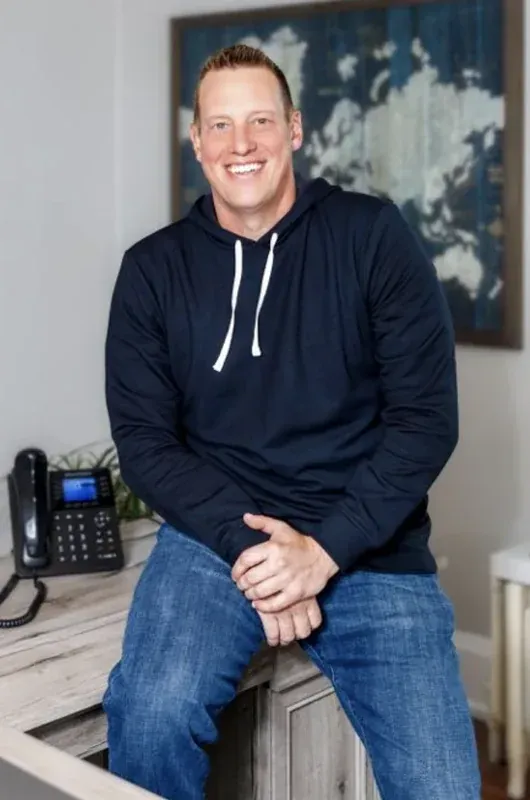

About the Author
David Varrati
Owner, MVP Insurance
I started MVP Insurance with my childhood friend Josh because we wanted people in Northeast Ohio and Western Pennsylvania to have an agency that explains things plainly and picks up the phone. I studied Political Science at Slippery Rock University and have spent more than ten years helping families and individuals protect what matters to them. When I am not in the office, you will find me coaching youth sports.