
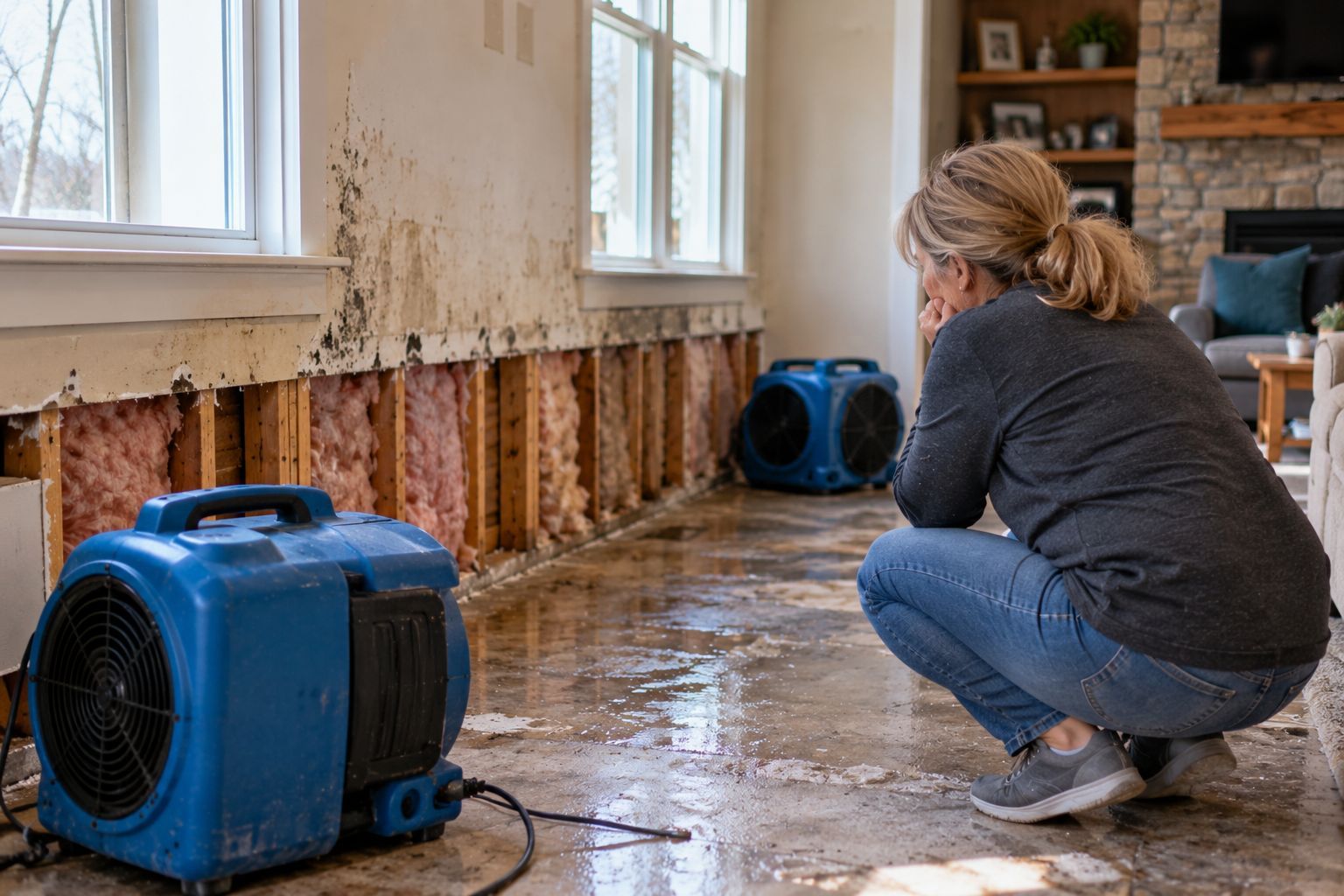
The Ohio Valley sits in a corridor where warm, humid air from the south meets colder systems from the west. The result is a steady run of thunderstorms, straight-line winds, hail, and heavy downpours that overwhelm older storm drains. For homeowners, that translates into very specific claims: shingles peeled off in a wind event, siding dented by hail, trees through the roof, and basements flooded by sewer backup.
Sewer backup is a gap we see catch people off guard constantly. A standard policy usually excludes water that backs up through drains unless you've added a specific endorsement, and in a hillside neighborhood with aging municipal lines, one heavy storm can leave several inches of water in a finished basement. Carriers have watched these losses pile up across the region and priced accordingly.
Misclassification is the most common expensive mistake we see. A business gets lumped into one high-rated code, even though half the staff works in an office. Pennsylvania generally rates a business by its governing classification, but separate codes can apply when operations meet the PCRB's rules for division.
Take a small HVAC company where the owner's spouse handles billing full time. That clerical payroll may qualify for a far lower code than the field technicians' code. Review the classification page of your policy every year. If the description doesn't match what your people actually do, ask questions before the audit.
Your experience modifier compares your claims history to that of similar businesses. A 1.00 mod is average. A 0.85 mod cuts your premium by 15%, and a 1.25 mod raises it by 25%. Mods generally use three years of claims, excluding the most recent year, so today's injury affects your bill for years.
Frequency hurts more than severity. Five small medical-only claims often damage a mod more than one larger claim. Pennsylvania offers medical-only claim handling, but small injuries still need to be reported properly, so check how claims are counted before you decide how to handle minor incidents.
Frequently Asked Questions About PA Workers Comp Costs
It helps to think of Act 72 as three gates the worker has to pass through, in order:
- A written contract exists. No contract, no independent contractor status. A handshake deal or a text thread won't hold up.
- The worker is free from your control. They must be free from control or direction over the performance of services both under the contract and in fact. That second part trips people up: a contract saying "contractor controls the work" means nothing if your foreman is telling them how to frame the wall.
- The worker runs an independently established business. This is where the criteria above come in: proprietary interest, profit or loss, separate location, and so on.
The "in fact" language deserves attention. Investigators look at what happens on the job site, not just what the contract says. If you set their schedule, supervise their methods, and they can't send someone else in their place, the control prong fails no matter how polished the agreement is.
Payroll" for workers comp means more than base wages. It generally includes overtime pay (with the premium portion often excluded), bonuses, commissions, holiday and vacation pay, and certain other compensation. Business owners often miscount this, and the error shows up at audit.
Corporate officers follow special rules. For policies effective April 1, 2026, officer payroll ranges from $70,044 to $280,800 per year for rating purposes. An officer who pays themselves very little still gets rated at the minimum, and high earners get capped at the maximum. That ceiling rose sharply this year, so owners who pay themselves well may see more of their salary counted than they did in past years.
Required Documentation for a Clean Audit
A General Liability policy pays when your business injures someone else or damages their property. A Business Owners Policy (BOP) includes that same liability protection and adds coverage for your own building, equipment, and inventory, plus lost income after a covered loss. For most Pennsylvania small businesses, the choice depends on how much physical property you have at risk.
That's the short version. The details are where owners get tripped up. Most people don't ask which policy they need until a landlord, general contractor, or client demands a certificate of insurance by Friday. Here's how each policy works in Pennsylvania, who can get a BOP, and how to decide what fits.
General Liability vs Business Owners Policy for Pennsylvania Businesses
General Liability covers third parties: customers, vendors, and members of the public who are hurt or whose property is damaged because of your business. A BOP takes that liability coverage and packages it with commercial property insurance and business income coverage for your own assets. One protects you from other people's claims. The other protects you from those claims and from your own losses.
The confusion comes from how the two overlap. A BOP contains general liability, so the real comparison is "general liability alone" versus "general liability plus property and income coverage in one package." Think of GL as one ingredient and the BOP as the full meal.
Here's how that plays out for two Pennsylvania businesses:
- A freelance bookkeeper in Cranberry Township works from a laptop at client offices. Her biggest exposure is knocking over a client's monitor or a client tripping over her bag. General Liability alone may cover her risks well.
- A boutique on Main Street in Zelienople has a leased storefront, display fixtures, a point-of-sale system, and thousands of dollars in inventory. A burst pipe in January could ruin the stock and close the shop for weeks. GL would do nothing for that loss. A BOP would respond.
Both owners need liability protection. Only one has enough physical property at stake to justify bundling. Comparing a business owners policy and general liability for a Pennsylvania small business comes down to one question: what would it cost you to replace everything you own and survive a month without revenue?
What Does Pennsylvania General Liability Insurance Include?
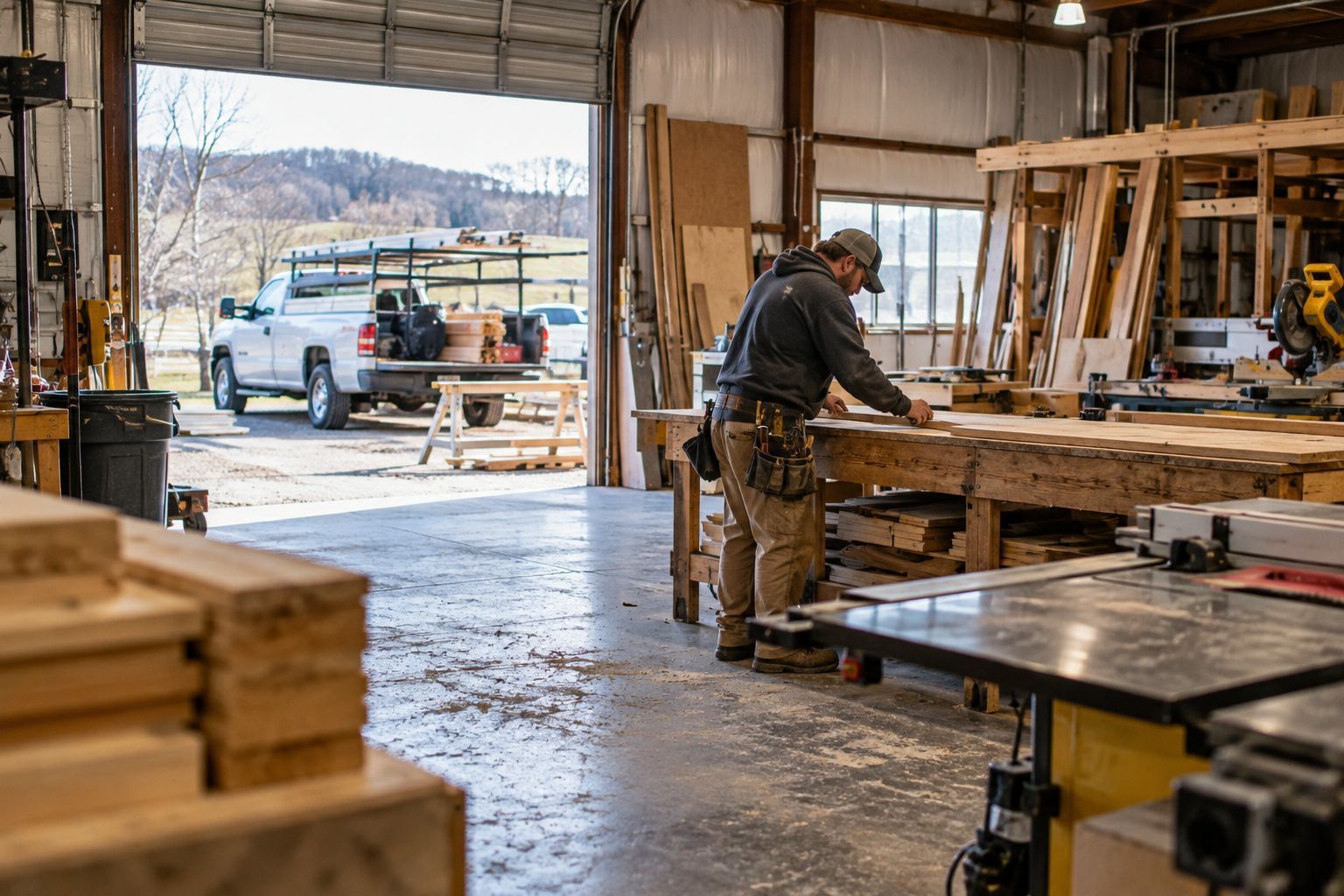
General Liability is the foundation for most Pennsylvania contractors and service providers. It covers lawsuits and claims tied to bodily injury or property damage your work causes to someone else. If you're a roofer, painter, electrician, landscaper, or cleaning company, this is usually the first policy a client or GC asks to see.
A standard commercial general liability policy typically includes four main parts:
- Bodily injury. A customer slips on a wet floor in your shop, or a homeowner trips over an extension cord you left across a hallway.
- Property damage. Your crew cracks a client's granite countertop while installing cabinets, or a plumber's mistake floods a finished basement.
- Personal and advertising injury. Claims of libel, slander, or copyright infringement in your marketing, such as using a photo in an ad without permission.
- Products and completed operations. Damage or injury that shows up after the job is finished. A deck you built collapses six months later, or a product you sold causes harm.
The policy also typically pays legal defense costs, even when the claim turns out to be groundless. That part gets overlooked. A meritless lawsuit can still run up legal bills that would sink a small operation.
What GL doesn't cover matters just as much. It won't pay for your own tools if they're stolen from your truck. It won't cover injuries to your employees, because that's workers' compensation. Under the Pennsylvania Workers' Compensation Act, any business with one or more employees, including part-time workers or family members, must carry that coverage. GL also won't cover professional mistakes like bad advice or design errors, and it won't cover vehicle accidents. Contractors often assume their GL policy covers a ladder falling off their truck onto a parked car. It doesn't. That's a commercial auto claim.
What Does a Pennsylvania Business Owners Policy (BOP) Cover?
A BOP combines general liability, commercial property insurance, and business interruption coverage into one policy with one premium. Insurers design these packages for small, lower-risk businesses, and buying the coverages together often costs less than buying them separately. State officials have described a BOP as a bundled package built specifically to protect small businesses, and the appeal is easy to see: consolidating risks into a single, manageable premium means fewer renewal dates, fewer gaps between policies, and one place to start a claim.
The liability portion of a BOP works much like a standalone GL policy. The difference is everything else in the package. For a closer look at the specific coverage options, see our page on the
pennsylvania business owners policy.
Commercial Property Protection
This part covers the physical things your business owns: the building if you own it, plus furniture, computers, machinery, inventory, and fixtures. Covered perils usually include fire, theft, vandalism, windstorm, hail, and some types of water damage. Many owners who lease space still need this coverage. Your lease probably makes you responsible for your own contents and possibly for improvements you've made, like a new counter or custom shelving.
There are a few nuances people miss:
- Replacement cost vs. actual cash value. Replacement cost pays to buy new equipment. Actual cash value subtracts depreciation, which can leave you well short on a five-year-old espresso machine.
- Flood and earthquake are excluded. Western Pennsylvania river towns learn this the hard way. Flood needs a separate policy.
- Off-premises property. A laptop stolen from your car may need an endorsement to be covered.
Business Interruption and Loss of Income
If a covered loss forces you to close, business income coverage replaces lost net income and helps pay ongoing expenses like rent, payroll, and loan payments while you rebuild. Picture a Butler County bakery after a kitchen fire. The ovens are replaceable, but six weeks without sales could end the business. Most BOPs also include extra expense coverage, which pays for things like renting temporary space so you can reopen sooner. Coverage usually applies only when the closure comes from a covered property loss, not from a slow season or a supplier's problems.
Who Qualifies for a BOP in Pennsylvania?
Not every business can buy a BOP. Carriers reserve these packages for small businesses with predictable, moderate risk, and each insurer sets its own underwriting rules. Erie, Westfield, and Progressive all offer small business packages, but a company that qualifies with one may not qualify with another.
Underwriters typically look at these factors:
- Business size. Most BOP programs are built for businesses with a limited number of employees. Many carriers draw the line somewhere under 100, and some draw it much lower.
- Annual revenue. Carriers usually cap the gross sales they'll accept under a BOP. Fast-growing businesses can outgrow eligibility between renewals.
- Industry type. Offices, retail shops, restaurants with limited cooking, small wholesalers, and many artisan contractors tend to fit. High-hazard operations like roofing above a certain height, demolition, heavy manufacturing, or bars with late hours and live entertainment often don't.
- Square footage and building details. The building's age, construction, wiring, roof condition, and fire protection all matter. An 1890s brick storefront in a borough downtown may need updated electrical before some carriers will write it.
- Claims history. Multiple recent claims can push you out of BOP eligibility and into separate policies.
Industry classification is where many Pennsylvania owners run into trouble. A handyman who mostly does drywall repair might qualify easily, but if he adds furnace work or tree removal, his classification changes and so does his eligibility. Describing your business accurately on the application matters a great deal. A misclassified business can face a denied claim or a midterm cancellation when the carrier finds out what the operation actually does.
If you don't qualify for a BOP, you're not stuck. You can usually buy general liability and commercial property as separate policies, sometimes through a commercial package policy that offers more flexibility for larger or riskier operations.
When Do You Need Both Coverages?
You generally don't buy a BOP and a separate General Liability policy at the same time. The BOP already includes general liability, so buying both would mean paying twice for the same protection. The real decision is whether you need liability alone or liability plus property coverage, and that depends on what you own.
Choose a BOP when you have physical assets that would hurt to lose. That includes an office, retail space, a warehouse, inventory, specialized equipment, or a commercial building you own. If a fire, theft, or burst pipe would leave you scrambling to replace things and cover bills, the property and income parts of a BOP earn their keep.
General Liability on its own often makes sense for:
- Solo consultants, freelance writers, and designers working from home
- Mobile service providers whose main tools are a phone and a laptop
- Contractors who need a certificate for a job but keep tools covered elsewhere through an inland marine or tools policy
- Brand-new businesses that haven't bought equipment or signed a lease yet
There's one common mistake worth flagging. Home-based business owners often assume their homeowners policy covers their business equipment and client visits. Most homeowners policies sharply limit or exclude business property and business liability. A Pittsburgh-area photographer with $15,000 in cameras and lighting at home could find the claim mostly denied after a break-in.
Your needs also change over time. A consultant who starts with GL may sign an office lease two years later, and that's the time to move to a BOP rather than adding a separate property policy. Reviewing coverage whenever your setup changes keeps you from paying for gaps or overlaps.
Comparing Coverage Limits and State Requirements
Pennsylvania doesn't legally require most small businesses to carry General Liability or a BOP. Workers' compensation is the main mandatory commercial coverage once you have an employee, and commercial vehicles need auto insurance. In practice, though, contracts and leases set the rules. Landlords, general contractors, municipalities, and corporate clients routinely require specific liability limits and often ask to be named as additional insureds.
Here's how standard limits typically compare. Actual options vary by carrier and business.
| Feature | General Liability | Business Owners Policy |
|---|---|---|
| Per-occurrence liability limit | $1M is typical | $1M is typical |
| Aggregate liability limit | $2M is typical | $2M is typical |
| Your business property | Not covered | Covered up to chosen limit |
| Lost income after covered loss | Not covered | Usually included |
| Building coverage (if owned) | Not covered | Available |
| Who it suits | Solo, mobile, low-asset | Storefronts, offices, inventory holders |
| Required by PA law? | No | No |
| Often required by contracts or leases? | Yes | Yes (landlords especially) |
The liability limits look the same because the BOP's liability section works like standalone GL. The difference is everything below that row.
Read your lease and client contracts before you buy. Many commercial leases in Pennsylvania require tenants to carry property coverage for their improvements and contents, plus a waiver of subrogation. Some general contractors require primary and noncontributory wording or a per-project aggregate. If your policy doesn't match the contract language, you can lose the job or end up personally liable for the shortfall. When a contract calls for limits above $1M/$2M, an umbrella policy usually costs less than raising the base limits.
Selecting the Right Carrier for Your PA Small Business
The right carrier depends on your industry, your building, and your claims history, and no single insurer is the right fit for everyone. One company may price a restaurant favorably but turn down a landscaper. Another may welcome contractors but avoid older buildings. That's why comparing several carriers usually produces a better match than calling one company directly.
MVP Insurance works as an independent agent with carriers such as Liberty Mutual, Frederick Mutual, and Farmers of McCandless, along with Erie, Westfield, and Progressive. MVP isn't the insurance company. It works for the business owner, shopping coverage across those carriers and explaining the differences in plain language. For a family-owned shop in Beaver County or a contractor in Allegheny County, that might mean finding a regional mutual that understands local risks rather than settling for whatever a national call center offers.
When you compare quotes, look past the premium:
- Property valuation: Is it replacement cost or actual cash value?
- Deductibles: Does the property deductible differ from the liability deductible?
- Endorsements: Check for equipment breakdown, spoilage, employee dishonesty, and hired or non-owned auto.
- Business income: Is there a time limit, and how long is the waiting period?
- Claims service: Can you reach someone after hours when a pipe bursts at 2 a.m.?
Data handling matters too. Pennsylvania insurance licensees must have comprehensive data security programs in place by April 15, 2026 under the state's Insurance Data Security Act. The financial details and employee information you share during underwriting should be protected accordingly.
Frequently Asked Questions About PA Business Insurance
How much does a BOP cost compared to General Liability in Pennsylvania?
A BOP typically costs more than General Liability alone because it covers more, but it often costs less than buying liability and property policies separately. Your actual price depends on your industry, location, property values, revenue, and claims history, so comparing quotes from several carriers is the most reliable way to see real numbers.
Do I really need business insurance if Pennsylvania doesn't require it?
For most businesses, yes. One injury lawsuit or fire could cost far more than years of premiums, and many leases and client contracts won't let you operate without proof of coverage. If you have even one employee, Pennsylvania law requires workers' compensation regardless.
Can I switch from General Liability to a BOP in the middle of my policy term?
Usually yes. Most carriers let you cancel a GL policy and start a BOP at any time, with any unused premium typically refunded on a prorated basis. Line up the new policy's start date with the old one's cancellation so you never have a day without coverage.
Search
Recent Posts

MVP Insurance is a local, independent agency, licensed to serve individuals and businesses across Ohio and Pennsylvania.
We serve clients from our offices in New Springfield, Ohio and Zelienople, Pennsylvania and throughout Northeast Ohio and Western Pennsylvania, working with multiple carriers to help contractors, landlords and real estate investors, restaurants, retail shops, auto repair shops, professional offices and many other personal and commercial clients find coverage that fits.
Our Owners
Two friends who started an agency
Owner
Joshua Medure
I am a Penn State marketing graduate with more than ten years in insurance. My childhood friend David and I started MVP Insurance in Northeast Ohio because we wanted the people around us to have an agency that gives honest advice, real choices and someone who picks up the phone. I lead the agency’s insurance strategy, which means I read the policies so our clients do not have to. Away from the office, I coach youth football.


About the Author
David Varrati
Owner, MVP Insurance
I started MVP Insurance with my childhood friend Josh because we wanted people in Northeast Ohio and Western Pennsylvania to have an agency that explains things plainly and picks up the phone. I studied Political Science at Slippery Rock University and have spent more than ten years helping families and individuals protect what matters to them. When I am not in the office, you will find me coaching youth sports.