

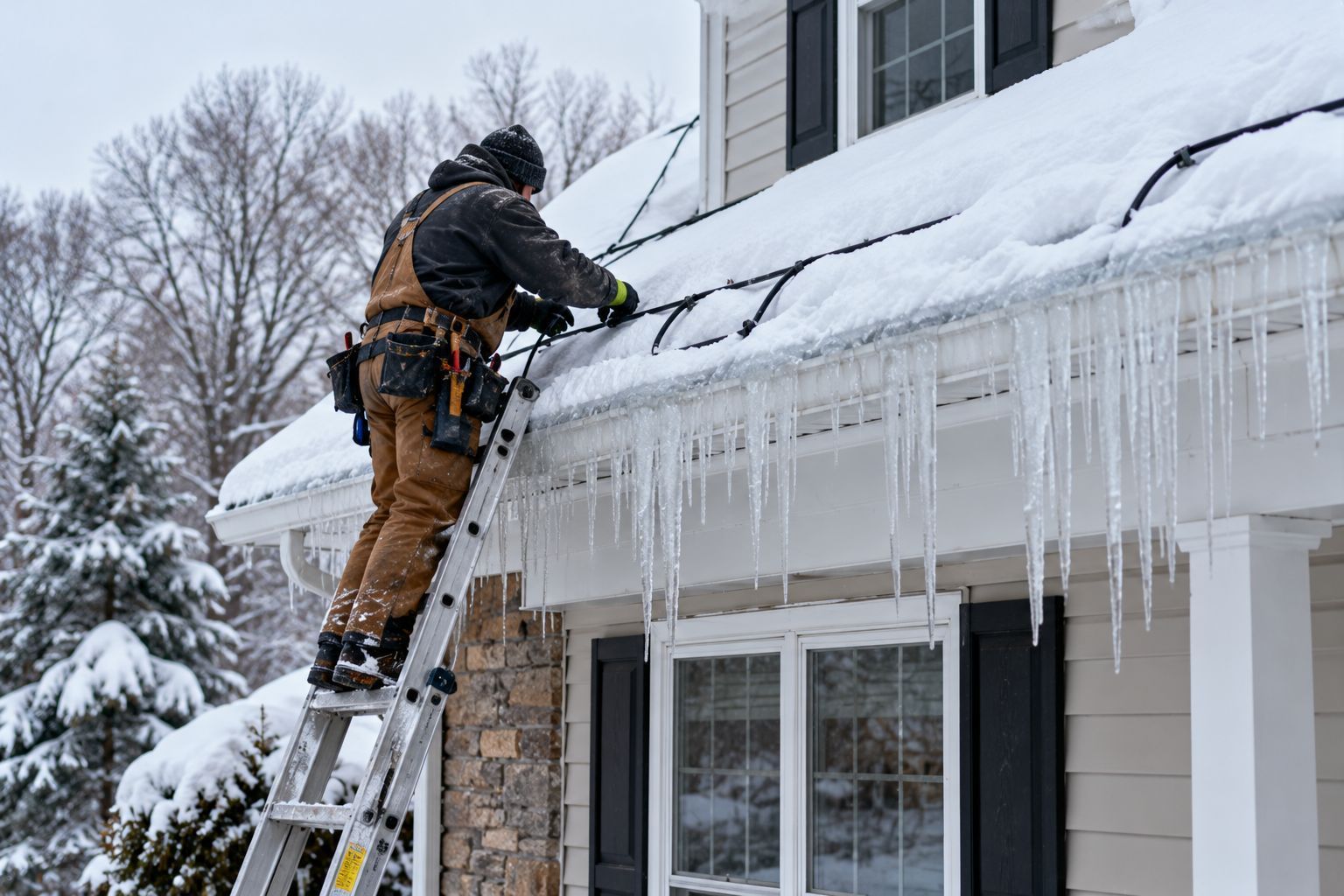
How to Prevent Ice Dams on a Pennsylvania Home
You prevent ice dams by keeping the roof surface cold enough that snow doesn't melt and refreeze at the eaves. That comes down to proper attic ventilation, adequate insulation, and, for homes that get heavy lake-effect or mountain snow, heat cables at the roof edge. Your pennsylvania homeowners insurance typically covers the resulting water damage inside, but not the cost of removing the dam itself.
Here's how ice dams form. Warm air leaks from your living space into the attic and heats the underside of the roof deck. The snow above it melts, and the meltwater runs down the roof until it reaches the overhang, which sits outside the heated envelope and stays at outdoor temperature. The water refreezes there, the ridge of ice grows, and the next round of meltwater pools behind it and backs up under the shingles.
Western Pennsylvania homes are especially vulnerable. Snow from Lake Erie bands, freeze-thaw cycles that swing across 32°F several times a week, and older housing stock with thin attic insulation all add to the risk. A 1950s Cape Cod in Butler County with knee walls and a finished upstairs is a classic case. If your house has icicles hanging thick along one side every February, treat that as an early warning.
Code also plays a role on newer roofs. As of January 1, 2026, Pennsylvania adopted the 2021 International Code Series as the basis for its Uniform Construction Code. In areas where ice damming is a recognized risk, state code requires roof ice barriers to extend from the eave's edge to at least 24 inches inside the exterior wall line. The 2021 IRC applies that 24-inch rule across all roof slopes, so it no longer calls for 36 inches on steeper pitches. That membrane won't stop a dam from forming. It buys you protection when water backs up.
The Role of Attic Ventilation and Insulation
Ventilation and insulation work as a team. Insulation keeps heat in the house, and ventilation flushes out whatever heat still gets into the attic. If you fix only one, you've solved half the problem.
Start with airflow. Soffit vents under the eaves pull cold outside air into the attic, and a ridge vent along the peak lets warm, moist air escape. That steady flow keeps the roof deck close to the outdoor temperature, so the snow melts evenly in the sun instead of from below. Two problems show up again and again:
- Blocked soffits: Blown-in insulation often gets packed right against the soffit openings. Foam or cardboard baffles (rafter vents) keep a clear channel open.
- Mixed vent types: A gable fan or box vents combined with a ridge vent can short-circuit airflow, so air gets pulled in from the wrong place and the eaves stay stagnant.
- Bath fans venting into the attic: These dump warm, wet air straight onto the roof deck. Run them outside through the roof or a wall.
Next comes insulation and air sealing. Seal the gaps first: attic hatches, recessed lights, plumbing stacks, chimney chases, and top plates over interior walls. Then add insulation on top. Under the 2021 code most of Pennsylvania falls in climate zones 4 and 5, where the target for new attics is R-49. That works out to roughly 14 to 16 inches of blown fiberglass or cellulose. Insulation code changes carry real cost considerations for builders, but for an existing home, topping up an attic is usually one of the more affordable fixes.
Utility programs can soften the cost. Under Phase 5 of Act 129, PPL Electric offers rebates starting June 1, 2026 of up to $500 for attic insulation and $200 for air sealing. PECO customers have incentive programs too, although gas-specific rebates were reduced as of October 1, 2026.
Using Heat Cables for Severe PA Winters
Heat cables are a backup, not a cure. They're worth installing when a home keeps getting dams even after you've done the attic work, or when the roof design makes a cold deck nearly impossible.
Low-slope sections, valleys where two rooflines meet, and dormers that dump snow onto a lower roof all collect heavy accumulation. Homes in the Zelienople area and around New Springfield often see lake-effect bands stack up a foot or more of snow overnight, and north-facing eaves there can stay frozen for weeks.
The standard setup is a zig-zag pattern of self-regulating cable clipped to the shingles along the eaves, with a run through the gutter and down each downspout. The cable doesn't melt the whole roof. It opens drainage channels so meltwater has somewhere to go instead of pooling. To work, the zig-zag has to reach at least 6 inches beyond the plane of the exterior wall, which covers the zone where meltwater usually refreezes. If you stop the cable at the gutter line, the dam just forms a little higher up.
A few practical points:
- Use self-regulating cable rated for roofs, not pipe tape from the plumbing aisle.
- Plug it into a GFCI-protected outdoor outlet. A dedicated circuit is safer for long runs.
- Turn it on before a big storm, not after the ice has already built up.
- Inspect the clips each fall. Loose cable that scrapes across shingles can damage them.
Heat cables use electricity and need yearly checks. Think of them as targeted protection for problem spots, not something to wrap around the whole house.
What Homeowners Insurance Pays When Water Gets In
Most Pennsylvania homeowners policies cover the interior damage an ice dam causes: stained and sagging ceilings, soaked drywall, warped hardwood, ruined carpet and pad, and damaged furniture or electronics. A typical claim starts with a brown spot on the bedroom ceiling and ends with drywall replacement, insulation removal, mold prevention, and repainting two rooms so the colors match.
Dwelling coverage pays for the structure, including drywall, flooring, trim, and built-ins. Personal property coverage handles your belongings. If water makes a room unusable, loss-of-use coverage may pay for a hotel stay. Your deductible applies to every claim, so a small leak can end up costing you more than the policy pays.
Policy details vary from one carrier to another. Here's how the common options generally compare:
| Coverage Area | Erie | Westfield | Frederick Mutual |
|---|---|---|---|
| Interior water damage from ice dams | Typically covered | Typically covered | Typically covered |
| Personal property | Included, RCV often available | Included, RCV options | Included, terms vary |
| Mold remediation | Limited, sublimits apply | Limited, sublimits apply | Limited, check endorsement |
| Ice dam removal | Not covered | Not covered | Not covered |
| Roof repair from ice weight | Possible, policy dependent | Possible, policy dependent | Possible, policy dependent |
MVP Insurance works with these carriers as an independent agent, which makes it easier to compare how each one handles water claims, mold sublimits, and replacement cost before you need them.
Understanding Sudden and Accidental Discharg
Water claims depend on one phrase: sudden and accidental. When an ice dam forces meltwater under the shingles during a January thaw and it drips through your ceiling, that usually qualifies. It happened quickly, and you didn't cause it on purpose.
The problem shows up when damage looks gradual. Adjusters look for rot in the roof decking, old water rings in the drywall, or mold that took months to grow. If the evidence points to a leak you ignored over several winters, the claim can get denied or reduced. Take photos, report damage quickly, and keep receipts for emergency drying.
Exclusions for Maintenance and Ice Dam Removal
Insurers won't pay to chip, steam, or rake the ice off your roof. That falls under maintenance, just like cleaning gutters. A few policies may cover removal costs only when it's necessary to stop ongoing damage after a covered loss, so read your wording carefully.
Other common exclusions include wear and tear, poor installation, and neglect. One mistake we see a lot: homeowners climbing up with a hatchet and cutting through shingles. That damage is on you. Hire a pro who uses steam.
Frequently Asked Questions About Ice Dams
Does insurance pay for ice dam removal?
Usually not. Removing the ice is treated as maintenance, although a few policies will pay for it when it's needed to prevent further covered damage.
Is water damage from ice dams covered in Pennsylvania?
Yes, in most cases. Standard Pennsylvania homeowners policies typically cover sudden interior damage to drywall, floors, and belongings, after your deductible, as long as the problem doesn't stem from long-term neglect.
How much insulation do I need in a PA attic to stop ice dams?
Aim for about R-49 under the 2021 code, roughly 14 to 16 inches of blown insulation. Seal air leaks first, or the extra depth won't do much.
The pattern holds every winter: seal the attic, insulate it well, keep the airflow moving from soffit to ridge, and add heat cable only where the roof still needs help. Those steps prevent most dams, and good coverage handles the rest. If you'd like to know how your current policy would respond to a ceiling leak, start a quote with MVP Insurance. Our offices in Zelienople, PA and New Springfield, OH compare carriers on your behalf, and 24/7 claims support is available when water shows up at 2 a.m. MVP Insurance holds Ohio license #37714, Pennsylvania license #519263, and NPN 10588293.
Search
Recent Posts



MVP Insurance is a local, independent agency, licensed to serve individuals and businesses across Ohio and Pennsylvania.
We serve clients from our offices in New Springfield, Ohio and Zelienople, Pennsylvania and throughout Northeast Ohio and Western Pennsylvania, working with multiple carriers to help contractors, landlords and real estate investors, restaurants, retail shops, auto repair shops, professional offices and many other personal and commercial clients find coverage that fits.
Our Owners
Two friends who started an agency
Owner
Joshua Medure
I am a Penn State marketing graduate with more than ten years in insurance. My childhood friend David and I started MVP Insurance in Northeast Ohio because we wanted the people around us to have an agency that gives honest advice, real choices and someone who picks up the phone. I lead the agency’s insurance strategy, which means I read the policies so our clients do not have to. Away from the office, I coach youth football.


About the Author
David Varrati
Owner, MVP Insurance
I started MVP Insurance with my childhood friend Josh because we wanted people in Northeast Ohio and Western Pennsylvania to have an agency that explains things plainly and picks up the phone. I studied Political Science at Slippery Rock University and have spent more than ten years helping families and individuals protect what matters to them. When I am not in the office, you will find me coaching youth sports.