

Frequently Asked Questions About Mine Subsidence
Raising your deductible is the fastest lever you have. Moving a standard deductible from $500 to $1,000 or $2,500 can reduce your premium by up to 25%. On a $1,600 annual premium, that could mean saving a few hundred dollars a year.
The trade-off is simple: you take on more of the small losses. Before raising it, ask yourself whether you could write a check for the new deductible tomorrow without touching credit cards. If yes, a higher deductible usually pays off within a few claim-free years. Also check whether your policy has a separate wind or hail deductible, sometimes set as a percentage of dwelling coverage, since that can be much larger than the flat amount you remember choosing.
How does credit score affect my PA rate?
Pennsylvania allows insurers to use a credit-based insurance score when setting rates, and stronger credit generally means a lower premium. Paying bills on time and keeping balances low can help your rate over time.
Does my location near a fire station matter?
Yes. Homes closer to a staffed fire station and a working hydrant usually get better pricing because fire damage tends to be less severe when help arrives quickly.
How often should I review my policy limits?
Review them at every renewal and any time you renovate, add a big purchase, or finish a basement. With rebuilding costs rising, a limit that fit three years ago may now fall short.
Coverage through the association is not unlimited. As of this writing, most property and casualty claims are typically capped at $300,000 per claim [https://govt.westlaw.com/pac/Document/N92524E00342611DA8A989F4EECDB8638?viewType=FullText&originationContext=documenttoc&transitionType=CategoryPageItem&contextData=(sc.Default)]. Workers' compensation is the big exception, with no cap on covered benefits.
That $300,000 figure catches people off guard [https://govt.westlaw.com/pac/Document/N92524E00342611DA8A989F4EECDB8638?viewType=FullText&originationContext=documenttoc&transitionType=CategoryPageItem&contextData=(sc.Default)]. Picture a homeowner with a $550,000 dwelling limit whose house burns down a week after their insurer is ordered into liquidation. Their policy promised more than half a million dollars, but the guaranty association will typically pay up to its cap. The rest becomes a claim against the failed insurer's estate, which may pay a portion years later, or nothing.
A few other rules shape what you'll actually receive:
- Unearned premium refunds are limited. If you prepaid for months of coverage you never got, the return of that premium is capped at $10,000 per policy.
- Large businesses face exclusions. PPCIGA excludes first-party claims from any insured whose net worth exceeded $25 million as of December 31 of the year before the insolvency. Bigger companies are expected to absorb losses themselves.
- Duplicate recovery isn't allowed. If another policy covers the same loss, you generally have to pursue that coverage first.
For most families, the cap is high enough to handle a typical auto accident or a burst pipe claim. The pain shows up with total losses on higher-value homes, serious injury liability claims, and commercial property losses.
One detail deserves extra attention. Sinkhole endorsements typically cover structures and personal property, not the land itself. Stabilizing the void, grouting, or filling the hole may remain your expense even after a claim is approved.
There's also movement at the state level. House Bill 589 would create a state-run program offering up to $150,000 in coverage for natural sinkholes and landslides, started with a $10 million General Fund appropriation and intended to become self-sustaining through premiums. As of this writing, the bill remained under consideration in the Senate after passing the House in September 2025. Supporters described it as recognizing that the commercial insurance industry is not stepping up to cover these costs, and the proposal would offer premium credits to communities that adopt mitigation practices.
| Requirement | Motorized Boats & PWCs | Non-Motorized (Kayak, Canoe, SUP) | Insurance Impact |
|---|---|---|---|
| Registration | Required for all | Required at PFBC or state park access (or launch permit) | Proof often needed to bind a policy |
| Safety Certificate | Required for PWCs; motorboats over 25 hp if born 1982 or later | Not required | Can help eligibility and may earn credits |
| Age Limits | No PWC or 25+ hp boat at 11 or younger | No state minimum | Underage operation can complicate claims |
| BAC Limit | 0.08% (0.02% under 21) | Same limits apply | BUI can lead to cancellation or non-renewal |
| Accident Reporting | 48 hours for injury/death; 10 days for $2,000+ damage | Same rules apply | Late reporting can weaken your claim |
| Typical Coverage Need | Liability, physical damage, towing | Liability, theft | Lenders and marinas often require coverage |
| Coverage | State Minimum | Common Higher Choice |
|---|---|---|
| Bodily injury (per person) | Low required floor | Several times the minimum |
| Bodily injury (per accident) | Low required floor | Matched to your assets |
| Property damage | Very low floor | High enough to replace a newer vehicle |
| Medical benefits | Required | Higher limits often added |
| Feature | Original Medicare + Medigap | Medicare Advantage |
|---|---|---|
| Doctor choice | Any provider taking Medicare | Usually a network |
| Monthly premium | Higher | Often lower |
| Costs when you get care | Low, predictable | Copays and coinsurance |
| Drug coverage | Separate Part D plan | Often included |
| Travel coverage | Nationwide | Limited outside network |
| Health questions | None during 6-month open enrollment | Generally none |
| Switching later | Easy to move to Advantage | Medigap may require underwriting |
Pennsylvania Statute of Limitations and Claim Deadlines
Here's where minimum-limit policies hurt people. Property damage minimums haven't kept pace with what cars cost. Hit a new pickup truck or a luxury SUV, and you can blow past a minimum limit before the tow truck arrives. Anything above your limit becomes your personal responsibility.
There's some good news on the pricing side. State insurance officials have pointed to a stabilizing market that "will help keep more money in Pennsylvanians' pockets." And as of this writing, the accident surcharge threshold rose to $2,350 effective July 1, 2026, which means insurers can't raise your premium for a single accident with costs below that amount. Small claims shouldn't scare you away from reporting.
What you pay for life insurance in Pennsylvania comes down to timing, health, and honest disclosure. Buying younger locks in a lower level premium, improving one health marker can move you up a class, and quitting nicotine opens up nonsmoker rates. Hobbies and occupations add cost, but how much depends on which carrier reviews your file, so comparison matters more for you than for most applicants.
If you want to see what the numbers look like for you, MVP Insurance can compare options across multiple carriers from our offices in Zelienople, PA and New Springfield, OH. You can start your quote in a few minutes and get a side-by-side view without calling each insurer yourself. MVP Insurance holds Ohio license #37714, Pennsylvania license #519263, and NPN 10588293.
The right policy is the one your family can count on and you can comfortably afford for the full term.
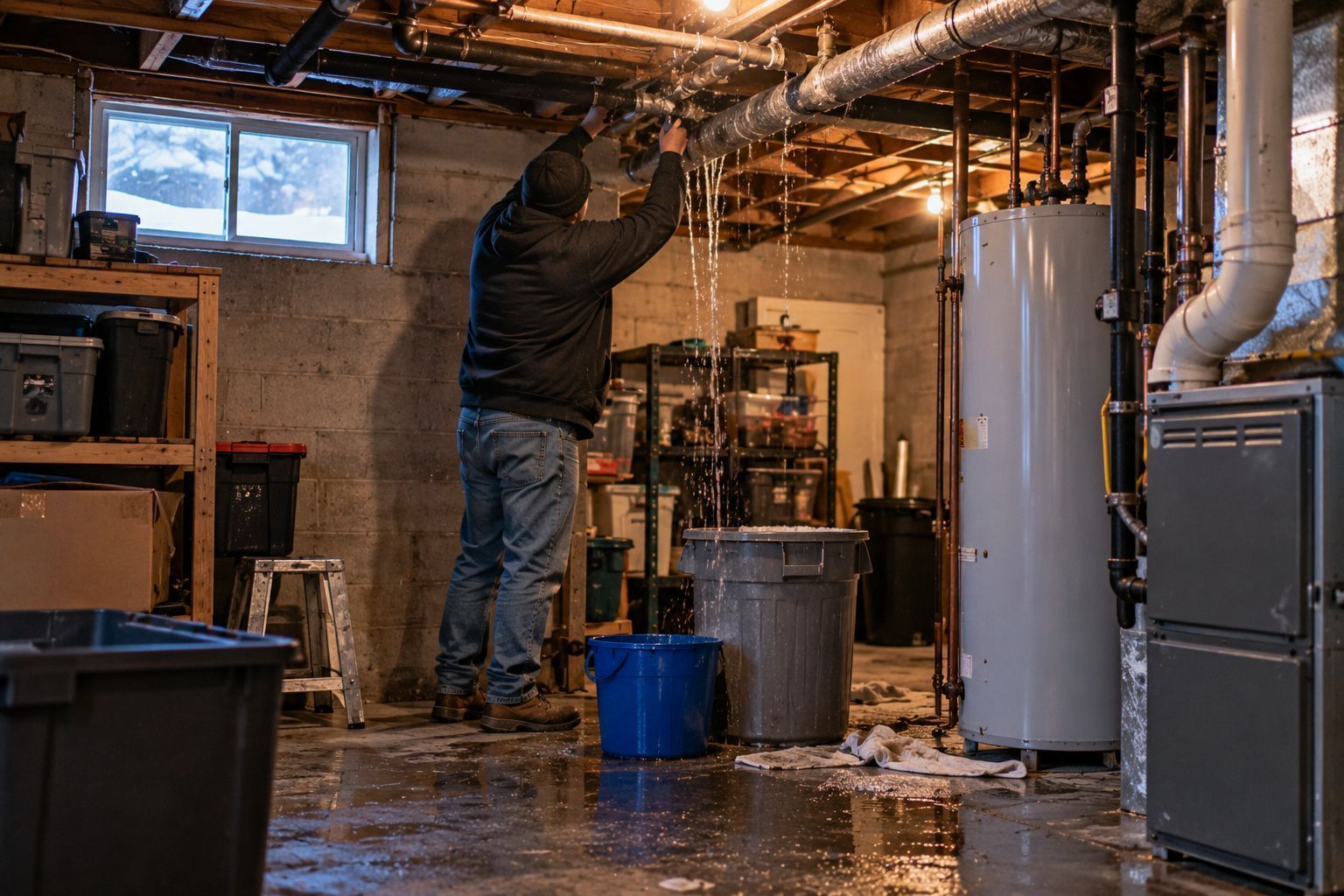
Most Pennsylvania homeowners policies cover water damage from a frozen pipe that bursts suddenly. That coverage depends on whether you kept the house reasonably heated, whether the leak was sudden rather than slow, and how much your policy allows for mold cleanup. The order of your first few steps after a burst also affects how smoothly the claim goes.
Frozen pipes are one of the most common and most expensive winter claims in the state. Pennsylvania ranks seventh nationally for frozen pipe insurance losses. Old housing stock, unheated crawlspaces and January cold snaps all contribute. Here is how coverage works, where claims get denied, and what to do in the first hour.
Does Homeowners Insurance Cover Frozen Pipes in Pennsylvania?
Yes, in most cases. A standard policy typically pays for water damage when a frozen pipe bursts suddenly and accidentally. You must have taken reasonable steps to keep the home heated. Exclusions apply to slow leaks, neglect and mold beyond your sublimit. Your pennsylvania homeowners insurance policy wording decides the details.
Heat Maintenance Conditions for PA Homeowners
You keep frozen pipe coverage by keeping the heat on or shutting off and draining the water. Carriers such as Erie and Westfield, like most companies writing homes in the state, build this condition into their policies. If you skip both and a pipe freezes, the claim can be denied.
The standard language asks you to use "reasonable care" to maintain heat in the structure. That phrase can feel vague, so many insurers translate it into a number. Most Pennsylvania insurers typically expect a minimum interior temperature of around 55°F. A thermostat set at 50°F to save on gas bills during a trip can become a sticking point when an adjuster reviews the loss.
Vacant and unoccupied homes face stricter rules. If a property sits empty, you must either maintain heat or shut off the water supply and drain all systems to preserve coverage. This applies to an estate home waiting to sell, a rental between tenants, or a camp you close for the season.
We see the same mistakes every winter:
- Shutting the main valve but never draining the lines, which leaves water sitting in pipes
- Relying on an aging furnace with no remote temperature alert
- Assuming a relative "checking in" counts as occupancy when the house has been empty for weeks
- Turning heat way down in a closed-off addition or finished garage
If you plan to leave a home for more than a few days in winter, tell your agent first. Some situations call for a vacancy endorsement or a different policy form.
Sudden vs Gradual Leaks: Understanding the Difference
Insurance pays for the sudden burst, not for damage that built up slowly. A pipe that freezes, splits and floods your basement overnight fits the definition of covered damage. Rot, seepage or corrosion that existed before the freeze generally does not, even if the freeze finally broke the pipe.
The adjuster's job is to separate the two. The burst might be covered while the older damage behind it is excluded. That means a partial payment, which surprises a lot of homeowners.
How Carriers Define Sudden Pipe Bursts
Carriers usually describe a covered loss as a sudden and accidental discharge of water from a plumbing or heating system. In plain terms, the water escaped quickly and without warning. A copper line in an exterior wall that cracks during a single-digit night is the classic example.
Timing matters to the adjuster. Fresh water staining, saturated drywall and a visible split in the pipe all point to a recent event. So do moisture readings consistent with a single release. Reporting promptly helps preserve that evidence.
Signs of Gradual Water Damage Exclusions
Gradual damage leaves fingerprints that adjusters know how to read. Common signs include:
- Dark, layered water rings on ceilings or subfloors
- Soft, crumbling wood or delaminated plywood under a sink or tub
- Rusted fittings or green corrosion around joints
- Established mold colonies that clearly predate the burst
- A history of high water bills or a prior unrepaired drip
Suppose a slow drip under your kitchen sink rotted the cabinet base over two years, and then the pipe froze and split. Expect the cabinet rot to be treated separately from the fresh flooding. Fixing small leaks quickly matters for coverage as well as maintenance.
Mold Limits and Remediation Following a Burst Pipe
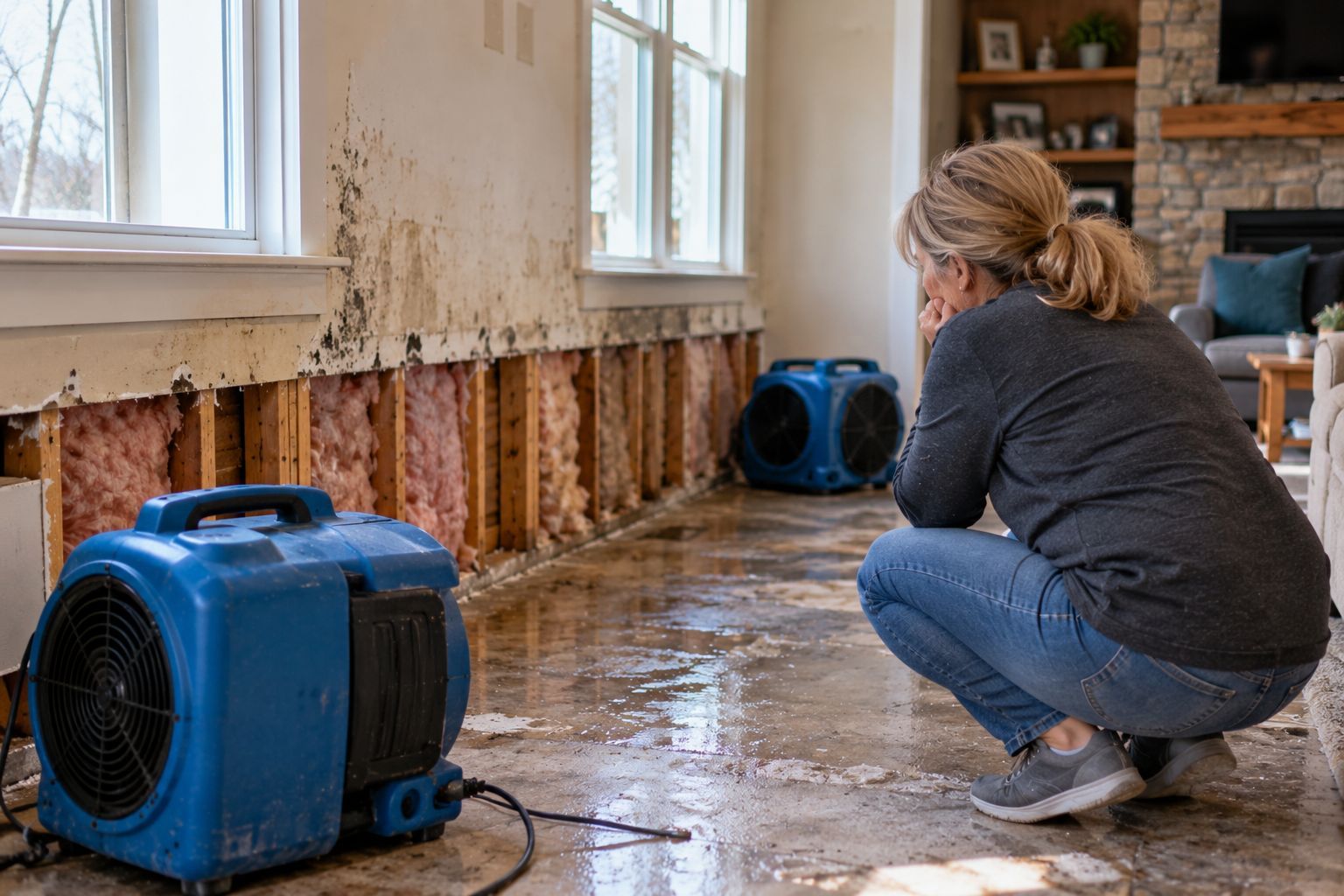
Mold coverage after a burst pipe exists in many policies, but it is usually capped well below your dwelling limit. Standard Pennsylvania homeowners policies typically cap mold remediation at a sublimit of $5,000 or $10,000, as of this writing. That money may need to cover testing, removal and rebuilding affected materials.
This gap catches people off guard. A homeowner with $350,000 in dwelling coverage may assume mold cleanup is fully protected. In reality, a basement remediation that involves tearing out finished walls, running air scrubbers and retesting can exceed a $5,000 cap quickly. The water damage itself may be paid in full while the mold portion runs out.
Mold coverage also depends on its cause. If the mold resulted from a covered sudden burst and you acted promptly, it generally falls under the sublimit. Mold from long-term humidity, a slow leak or water you left sitting for days is often excluded entirely. Waiting a week to call anyone gives mold time to establish. It can also give the carrier a reason to argue neglect.
A few practical points:
- Start drying immediately with fans, dehumidifiers or a professional mitigation company
- Keep receipts for every drying expense, since mitigation costs are often reimbursable
- Ask your agent what your mold sublimit is now, before winter, and whether a higher limit is available
Pennsylvania Carrier Comparison for Water Damage Coverage
Carriers differ more in the details of water coverage than in the basic promise. Each one covers sudden bursts under a standard policy. The differences show up in optional endorsements, mold limits, and how they handle vacant homes and older plumbing. The table below summarizes typical approaches. Your actual policy form and endorsements always control.
| Carrier | Sudden Burst Coverage | Common Add-Ons | Things to Ask About |
|---|---|---|---|
| Erie | Typically included | Water backup, higher limits | Heat requirements, mold sublimit |
| Westfield | Typically included | Water backup endorsement | Vacancy rules, older plumbing |
| Progressive | Typically included | Water backup, equipment breakdown | Policy form and mold cap |
| Liberty Mutual | Typically included | Water backup, increased limits | Deductible options for water losses |
| Frederick Mutual | Typically included | Endorsements vary by policy | Rural or seasonal home rules |
An independent agency like MVP Insurance works with these carriers as an agent, not as the insurer. Because MVP is independent, it can compare these differences side by side. That can make a real difference if you own an older farmhouse, a seasonal cottage or a home with galvanized pipes. Water backup coverage is usually separate from burst pipe coverage, so ask about both.
What to Do First After a Pipe Freezes and Bursts
Shut off the water first, then document everything, then call your agent. The order matters because every minute of running water adds damage. Damage you could have stopped may not be paid. The average payout for a frozen pipe claim in Pennsylvania typically runs from $10,000 to $23,500 in 2026. Some state data puts average claim costs from $23,500 to over $30,000, so speed protects real money.
- Shut off the main water valve. It is usually in the basement where the water line enters, often near the meter. Find it before winter and tag it so everyone in the house knows where it is.
- Cut power to wet areas if water is near outlets, appliances or the electrical panel, as long as you can do it safely.
- Document the damage. Take photos and video of the burst pipe, standing water, ceilings, flooring and damaged belongings before you move anything. Wide shots plus close-ups work well.
- Start mitigation. Remove standing water, pull up soaked rugs, and run fans and dehumidifiers. Keep damaged items for the adjuster unless they create a hazard.
- Contact an independent agent at MVP Insurance. MVP offers 24/7 claims support and can help you report the loss and explain what your policy is likely to cover.
- Vet contractors carefully. After major freezes, scammers target homeowners, so verify any contractor is legitimate and ask for proof of insurance.
Remember that your water utility is not responsible for pipes inside your home. Pennsylvania American Water states that internal plumbing is the responsibility of the homeowner. If you believe a valid claim was wrongly denied, Pennsylvania law allows homeowners to sue for interest, punitive damages and attorney fees over bad-faith denials.
Preventing Frozen Pipes During Western PA Winters
Prevention is cheaper than any claim, and most of it takes an afternoon. In places like Zelienople, cold air settles into older homes with fieldstone foundations and uninsulated crawlspaces. Lake-effect cold and wind push across the line toward New Springfield and the rest of the region. Pipes along exterior walls, in garages and under kitchen sinks on outside walls are the usual failure points.
Start with insulation. Foam pipe sleeves from a hardware store cost little and slip over exposed lines in basements, crawlspaces and attics. For pipes that froze in past winters, consider UL-listed heat tape and follow the manufacturer's installation instructions carefully. Seal gaps where cable, dryer vents or hose bibs pass through the rim joist, because a pencil-sized draft can freeze a nearby pipe.
When forecasts drop into the single digits, change a few habits:
- Let faucets on exterior walls drip slowly, hot and cold, overnight
- Open sink cabinet doors so warm room air reaches the plumbing
- Keep the thermostat steady day and night rather than dropping it while you sleep
- Disconnect garden hoses and shut off and drain outdoor spigots in the fall
- Keep the garage door closed if water lines run through it
Pennsylvania American Water advises that preparing and regularly checking on your pipes during extremely cold days helps avoid costly repairs. A smart thermostat or water leak sensor that sends alerts to your phone is worth considering, especially if you travel. Some carriers also recognize these devices when pricing a policy.
Frequently Asked Questions About Frozen Pipe Claims
Does my policy cover the cost of the actual pipe repair?
Often not fully. Many policies pay for the water damage the burst caused, plus tearing out and replacing walls or floors to reach the pipe. The cracked section of pipe itself is often treated as a maintenance item, so read your policy wording or ask your agent.
Is mold covered if it grows after a pipe bursts?
Usually yes, up to a sublimit, if the mold came from a covered sudden burst and you started drying quickly. As of this writing, that cap is typically $5,000 or $10,000 in Pennsylvania. Mold from slow leaks or neglect is usually excluded.
What if my heat went out while I was on vacation?
If you left the thermostat at a reasonable temperature and the furnace failed unexpectedly, the claim is generally still covered. Problems arise if the heat was turned off or set very low, or if the home was effectively vacant without the water shut off and drained. Asking a neighbor to check the house and using a temperature alert both help support your claim.
A frozen pipe claim in Pennsylvania comes down to three things: whether you kept the heat on, whether the leak was sudden, and how much mold coverage you carry. Most homeowners only learn their policy's limits after the basement floods. A five-minute review in October costs far less than finding a $5,000 mold cap in February.
If you're not sure what your current policy says about heat requirements, water backup or mold, MVP Insurance can compare options from several carriers for you. You can start a quote here with the team in Zelienople, PA or New Springfield, OH. MVP Insurance is licensed in Ohio (license #37714) and Pennsylvania (license #519263), NPN 10588293.
Find your main shutoff valve tonight. It's the one step that can protect your home before you ever need to call anyone.
Search
Recent Posts

MVP Insurance is a local, independent agency, licensed to serve individuals and businesses across Ohio and Pennsylvania.
We serve clients from our offices in New Springfield, Ohio and Zelienople, Pennsylvania and throughout Northeast Ohio and Western Pennsylvania, working with multiple carriers to help contractors, landlords and real estate investors, restaurants, retail shops, auto repair shops, professional offices and many other personal and commercial clients find coverage that fits.
Our Owners
Two friends who started an agency
Owner
Joshua Medure
I am a Penn State marketing graduate with more than ten years in insurance. My childhood friend David and I started MVP Insurance in Northeast Ohio because we wanted the people around us to have an agency that gives honest advice, real choices and someone who picks up the phone. I lead the agency’s insurance strategy, which means I read the policies so our clients do not have to. Away from the office, I coach youth football.


About the Author
David Varrati
Owner, MVP Insurance
I started MVP Insurance with my childhood friend Josh because we wanted people in Northeast Ohio and Western Pennsylvania to have an agency that explains things plainly and picks up the phone. I studied Political Science at Slippery Rock University and have spent more than ten years helping families and individuals protect what matters to them. When I am not in the office, you will find me coaching youth sports.