

A few practical notes from looking at a lot of Pennsylvania policies. Dwelling coverage is where most mistakes happen, because people anchor to market value or their mortgage balance instead of rebuild cost. A Pittsburgh-area home might sell for $220,000 but cost $320,000 to rebuild with today's labor and materials.
Personal property limits are usually set as a percentage, which sounds generous until you hit sub-limits. Jewelry, firearms, collectibles, and cash often have caps of a few thousand dollars unless you schedule them separately. If you own an engagement ring worth more than that cap, it's worth asking about.
Liability is the coverage people tend to skimp on, and it's often the least expensive to increase. Raising liability from $300,000 to $500,000 frequently costs much less than people expect, and if you have a pool, a trampoline, or a dog, the extra protection makes sense. Many families pair it with an umbrella policy for even more protection.
Endorsements fill the gaps the table doesn't cover: sewer and drain backup, equipment breakdown, service line coverage, and replacement cost on contents. Flood and earthquake require separate policies entirely.
You can't move your house away from the Ohio River or rewrite the last five years of storm data, but you do have real control over several rating factors. The three with the most impact are your deductible, the condition and security of your home, and your claims history.
Claims history deserves more attention than it gets. Insurers share loss data, and a couple of small claims within a few years can raise your rate more than one large claim. We regularly see homeowners file for a $1,800 water stain repair on a $1,000 deductible, collect $800, and then pay far more than that in higher premiums over the next several renewals. As a rule of thumb, save your policy for losses that would genuinely strain your finances.
Raising your deductible is the fastest lever you have. Moving a standard deductible from $500 to $1,000 or $2,500 can reduce your premium by up to 25%. On a $1,600 annual premium, that could mean saving a few hundred dollars a year.
The trade-off is simple: you take on more of the small losses. Before raising it, ask yourself whether you could write a check for the new deductible tomorrow without touching credit cards. If yes, a higher deductible usually pays off within a few claim-free years. Also check whether your policy has a separate wind or hail deductible, sometimes set as a percentage of dwelling coverage, since that can be much larger than the flat amount you remember choosing.
Modernizing Home Systems for Lower Risk
Navigating Pennsylvania Carriers as an Independent Agency
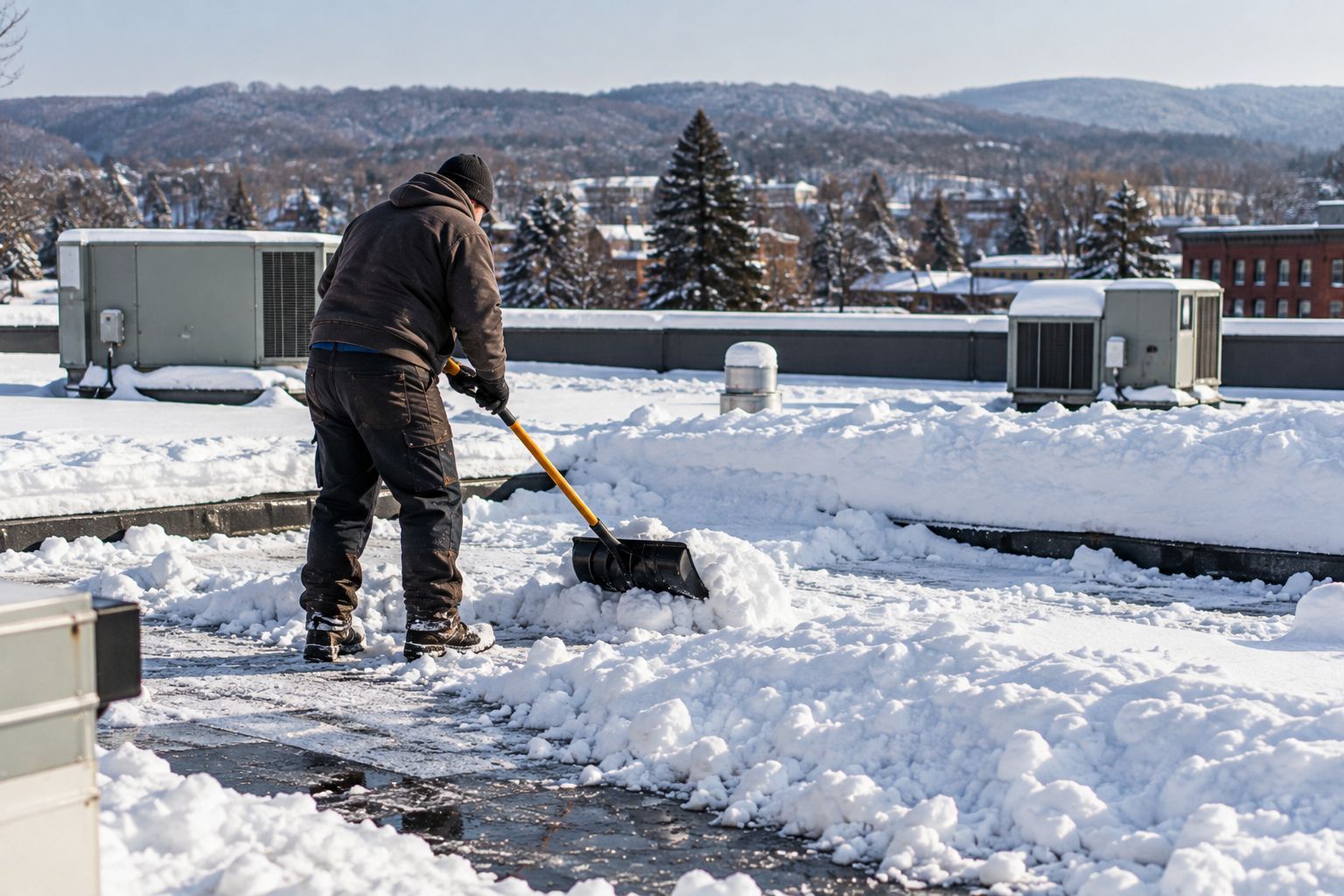
Most Pennsylvania homeowners and business policies pay for roof collapse caused by the weight of ice, snow or sleet. The policy covers the structural damage and the interior losses that follow. It typically does not cover routine shoveling, and claims can be denied when neglect or poor maintenance contributed to the failure.
That short answer leaves out the details that decide whether a claim actually pays. A brick split-level in Butler County and a 40,000-square-foot flat-roof warehouse near Harrisburg face very different risks, and their policies treat them differently. Here is how snow load claims in Pennsylvania play out in practice, from coverage triggers to removal costs.
How Weight of Ice and Snow Coverage Works in Pennsylvania
Coverage triggers when accumulated ice, snow or sleet becomes heavier than the roof was built to carry and the structure fails. On most Pennsylvania policies, "weight of ice, snow or sleet" is a named peril, usually tied to collapse coverage. Once the peril applies, the policy pays for the roof, framing, ceilings and damaged contents inside.
What counts as "too heavy" depends on where you live. Pennsylvania does not set a uniform statewide ground snow load. Under 34 Pa. Code § 403.21, local officials set the design criteria, which is why design loads range from 25 psf in Findlay Township to 30 psf in East Donegal Township. An adjuster will compare the actual snow load against what your roof was designed and permitted to handle.
Partial damage is where many people get tripped up. A collapse usually needs an actual caving in or sudden falling. Sagging rafters, cracked plaster or a slow leak may fall under other provisions, or under none at all. Adjusters also look for rot, prior repairs left undone, and unpermitted additions. Any of these can shift the cause from "weight of snow" to "wear and tear," which policies exclude.
Snow Load Risks for Flat Commercial Roofs
Flat and low-slope commercial roofs carry the most risk because snow has nowhere to go. A pitched residential roof sheds some of its load. A flat roof holds every inch until it melts, and slush that refreezes overnight adds weight without anyone noticing.
Drainage is usually what starts the problem. When internal drains or scuppers freeze or clog with leaves from fall, meltwater ponds and turns to ice. Ice dams at parapet walls trap even more water behind them. Drifting along rooftop units and higher walls can pile snow several times deeper in one corner than across the rest of the deck.
Watch for the warning signs FEMA lists for roof overstress:
- Sagging ceiling tiles or sprinkler heads
- Popping or creaking sounds from the structure
- Doors or windows that suddenly stick or no longer close properly
Business owners should read the conditions section of their policy closely. Pennsylvania commercial property insurance policies often include maintenance requirements, such as keeping drains clear and repairing known roof defects. If you ignore a documented ponding issue for two winters, expect the carrier to raise it during the claim.
Coverage for Snow and Ice Removal Costs
Insurance typically pays for damage after a collapse. That includes tearing out and hauling away the wreckage under debris removal coverage. It rarely pays to shovel a roof before anything breaks, unless your policy specifically says so. Preventive removal is treated as maintenance, the same as cleaning gutters.
Coverage varies by policy form and endorsement, so this table shows general tendencies rather than guarantees:
| Carrier | Debris removal after collapse | Preventive snow removal |
|---|---|---|
| Erie | Typically included, subject to limits | Generally not covered |
| Westfield | Typically included, subject to limits | Generally not covered |
| Liberty Mutual | Typically included, subject to limits | Generally not covered |
Debris removal often comes with a sublimit or a percentage cap. On a large commercial loss, that cap can run out quickly, so check the number before winter.
Preventative Maintenance vs. Emergency Removal
As of this writing, professional roof snow removal in Pennsylvania typically runs $190 to $735 per visit for a standard commercial roof. Larger buildings are usually priced per square foot. Philadelphia rates generally fall between $0.48 and $0.89, and Harrisburg rates between $0.45 and $0.83. That is out of pocket, but it costs far less than a deductible plus lost business income.
Emergency removal is a different situation. Some policies treat reasonable steps taken to protect property from further loss after damage begins as covered expenses. Keep invoices, photos and timestamps for every visit.
Frequently Asked Questions About Snow Load Claims
Does insurance cover roof shoveling in Pennsylvania? Usually not. Shoveling a roof before damage occurs is treated as routine maintenance. Removal after a collapse, or to prevent further loss once damage has started, may be covered.
Is roof collapse covered by Erie in PA? Erie policies generally cover collapse caused by the weight of ice, snow or sleet. The exact terms depend on your policy form and endorsements. Exclusions for wear, neglect or faulty construction still apply.
What if my roof only sagged and didn't fully collapse? Many policies require an actual collapse. A sagging roof may not qualify on its own. Document the damage right away and report it, because waiting can complicate the claim.
Snow load claims tend to come down to three things: whether the roof actually failed, whether the weight exceeded the local design load, and whether maintenance was kept up. Flat commercial roofs need the most attention, and removal costs are usually yours until something breaks. If you're unsure how your policy handles collapse or debris removal, MVP Insurance can compare options across multiple carriers for you. Start a quote with our team in Zelienople, PA or New Springfield, OH. MVP Insurance holds Ohio license #37714, Pennsylvania license #519263, and NPN 10588293.
Search
Recent Posts



MVP Insurance is a local, independent agency, licensed to serve individuals and businesses across Ohio and Pennsylvania.
We serve clients from our offices in New Springfield, Ohio and Zelienople, Pennsylvania and throughout Northeast Ohio and Western Pennsylvania, working with multiple carriers to help contractors, landlords and real estate investors, restaurants, retail shops, auto repair shops, professional offices and many other personal and commercial clients find coverage that fits.
Our Owners
Two friends who started an agency
Owner
Joshua Medure
I am a Penn State marketing graduate with more than ten years in insurance. My childhood friend David and I started MVP Insurance in Northeast Ohio because we wanted the people around us to have an agency that gives honest advice, real choices and someone who picks up the phone. I lead the agency’s insurance strategy, which means I read the policies so our clients do not have to. Away from the office, I coach youth football.


About the Author
David Varrati
Owner, MVP Insurance
I started MVP Insurance with my childhood friend Josh because we wanted people in Northeast Ohio and Western Pennsylvania to have an agency that explains things plainly and picks up the phone. I studied Political Science at Slippery Rock University and have spent more than ten years helping families and individuals protect what matters to them. When I am not in the office, you will find me coaching youth sports.