
Rising Rebuilding Costs in Zelienople and Beyond
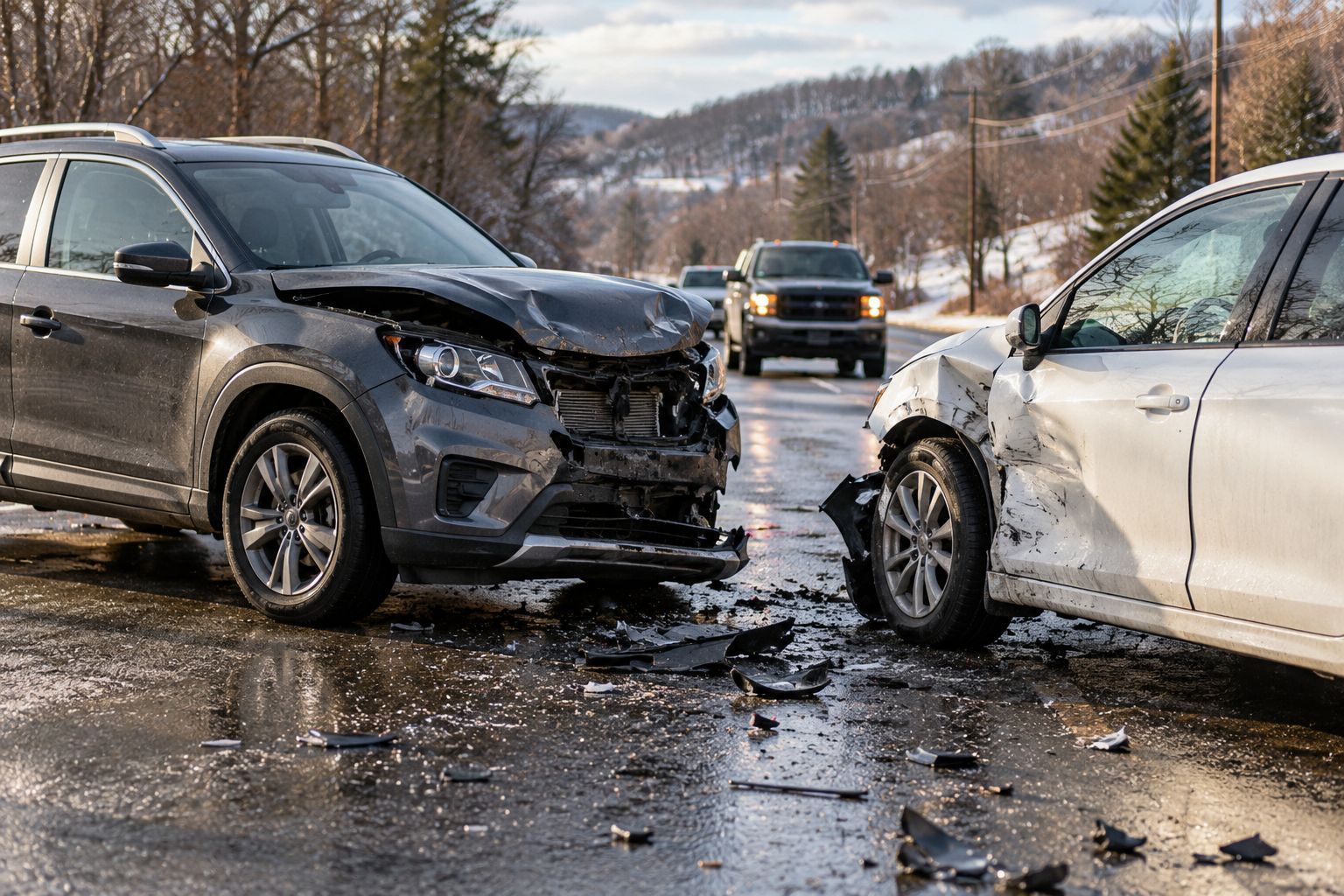
Full tort lets you sue an at-fault driver for pain and suffering after any car accident injury in Pennsylvania. Limited tort costs less, but it restricts that right to injuries the law considers "serious," with a few exceptions. Both options still let you recover medical bills and lost wages, so the real question is how much your pain is worth to you.
Most Pennsylvania drivers make this choice once, on a form they barely read, and never think about it again until they're sitting in a doctor's office after a crash. That's the wrong moment to discover what you signed. The sections below cover what each option means, where the legal lines fall, what the savings actually look like, and how to pick the one that fits your household.
Full Tort vs Limited Tort in Pennsylvania: The Primary Differences
Full tort keeps your unrestricted right to sue an at-fault driver for pain, suffering, and other non-monetary losses, no matter how minor the injury. Limited tort gives up that right unless your injury qualifies as "serious" under state law or an exception applies. Either way, you can still pursue out-of-pocket losses like medical bills and lost income.
Pennsylvania is one of a small group of "choice no-fault" states, which is why this decision exists at all. Every driver who buys a policy here must pick one option, and if you never sign a selection form, the law defaults you to full tort. The choice applies to you, your spouse, and relatives living in your household who are covered under your policy, not just the named driver.
The gap between the two plays out in everyday claims. Picture a rear-end collision on Route 19 that leaves you with whiplash and three months of physical therapy. Under full tort, you can pursue compensation for the pain, the missed softball season, and the nights you couldn't sleep. Under limited tort, that same claim usually stops at your medical bills and lost wages.
What You Give Up With Limited Tort
Choosing limited tort means waiving your right to seek money for non-economic damages, things like pain, suffering, emotional distress, and loss of enjoyment of life, unless your injury clears a high legal bar. You keep your right to recover economic damages, but the part of an injury claim that often carries the most value is off the table for most accidents.
Economic damages are the easy part to measure: hospital bills, prescriptions, physical therapy, lost paychecks, and property damage. Your own first-party medical benefits and the at-fault driver's liability coverage can address many of these. Non-economic damages are harder to put a number on, yet in a typical soft-tissue injury case they frequently make up the larger share of a settlement.
Here's a mistake we see often: a driver assumes limited tort only matters for big wrecks. In reality, it hits hardest in moderate cases. A herniated disc, a broken wrist that heals, or months of chronic back pain may disrupt your life without ever qualifying as "serious." Those are exactly the injuries where a limited tort policyholder walks away with bills covered and nothing for the suffering.
It also affects your family. If your teenager is a passenger in a friend's car and gets hurt, the tort option on your household policy can shape what they're allowed to claim.
Understanding the Serious Injury Threshold
Under Pennsylvania law, a "serious injury" is a personal injury resulting in death, serious impairment of a bodily function, or permanent serious disfigurement. That definition is the gatekeeper for every limited tort claim: clear it and you can sue for pain and suffering just like a full tort policyholder; fall short and that door stays closed.
The categories sound simple, but they get argued over constantly:
- Death: The clearest category. A fatal crash meets the threshold.
- Serious impairment of a bodily function: Courts look at which function was affected, how badly, and for how long. Temporary limitations that resolve with treatment often don't qualify, while lasting loss of use of a limb or organ system may.
- Permanent serious disfigurement: Think significant scarring, especially on the face, or visible deformity that won't heal.
Who decides? Often the insurance adjuster first, then a judge or jury if the case goes further. That uncertainty is the hidden cost of limited tort. Even when an injury feels serious to you, you may spend months gathering medical records and expert opinions just to prove you're allowed to ask for pain and suffering damages in the first place. Full tort policyholders skip that fight entirely.
Exceptions to the Limited Tort Restriction
Limited tort doesn't block every pain-and-suffering claim. Pennsylvania law carves out situations where you're treated as if you had full tort, even if your injury isn't serious. Knowing these can matter a lot after an accident, because many people with limited tort assume they have no claim when they actually do.
The main exceptions include cases where the at-fault driver:
- Was driving drunk or impaired: If that driver is convicted of DUI or accepts Accelerated Rehabilitative Disposition (ARD) for the offense, you can pursue full damages.
- Was operating a vehicle registered in another state: Get hit by a car with Ohio or New York plates and the limited tort restriction generally doesn't apply to your claim against that driver.
- Intended to injure themselves or someone else: Deliberate acts fall outside the protection.
- Was uninsured: If the responsible driver failed to carry required coverage, the restriction can drop away.
There's also an exception if you were injured while riding as an occupant of a commercial vehicle, such as a bus or taxi, as long as you weren't the owner or driver of that vehicle.
The catch: you can't plan around exceptions. You don't get to choose who hits you. An exception might rescue a claim, but it shouldn't be the reason you pick limited tort.
How Much Limited Tort Saves on Premiums
Limited tort typically saves around 12 to 15 percent on the bodily injury liability portion of a policy, with some carriers offering up to 20 percent. It does not cut your whole bill by that much. Because liability is only one piece of a full coverage policy, the dollar savings on your total premium is usually smaller than people expect.
To put that in perspective, the average full coverage premium in Pennsylvania runs about $1,900 a year, or roughly $158 a month, as of this writing. Collision, comprehensive, medical benefits, and uninsured motorist coverage all make up part of that total. A 15 percent reduction on just the liability slice might translate to a modest monthly difference, sometimes the cost of a couple of coffees.
Rates have also been relatively steady lately. The state reported a 0.5 percent average decrease in approved auto rate filings, and regulators blocked more than $85.3 million in proposed personal auto increases in the first half of the year. In a stable market, the pressure to strip down coverage just to keep payments manageable tends to ease.
Comparing Tort Options Across Carriers
The savings from limited tort isn't the same at every company. Each insurer prices the option differently, so the gap between full and limited tort on one quote might be noticeably wider or narrower on another. That's why looking at a single carrier's numbers can give you a distorted picture.
Independent agencies like MVP Insurance work with carriers including Erie, Westfield, Progressive, and Frederick Mutual as an independent agent, pulling quotes side by side with both tort options priced out. Seeing the actual dollar difference for your vehicles, drivers, and zip code makes the decision far more concrete. Sometimes a household finds full tort with one carrier costs about the same as limited tort with another, which removes the tradeoff altogether.
Tort Option Comparison Table
This side-by-side view covers the differences that matter most when you're filling out your selection form.
| Category | Full Tort | Limited Tort |
|---|---|---|
| Right to sue for pain and suffering | Yes, for any injury | Only for serious injuries or exceptions |
| Recover medical bills and lost wages | Yes | Yes |
| Serious injury requirement | None | Must prove death, serious impairment, or permanent serious disfigurement |
| Premium cost | Higher | Typically 12-15% less on the liability portion |
| Applies to household members | Yes | Yes |
| Exceptions (DUI, out-of-state driver, etc.) | Not needed | Can restore full rights |
| Default if no form is signed | Yes | No |
| Risk of disputed claims | Low | Higher, since the threshold is often contested |
The pattern is pretty clear once it's laid out. Full tort costs more but keeps every option open. Limited tort trades a slice of savings for a restriction that only shows up when you're hurt.
Who Should Choose Each Tort Option?
Full tort is generally the recommended choice for maximum protection, and most drivers who can fit it into their budget are better served by it. Limited tort makes sense mainly for budget-conscious households that fully understand they're accepting the risk of losing pain-and-suffering claims for most injuries.
Full tort tends to fit:
- High-mileage commuters: More time on the road means more exposure to accidents. For someone driving Route 8 or the Turnpike every day, the premium difference is a small price for keeping full legal protection.
- Families with children or teen drivers: Your tort choice follows your household, including kids riding with friends.
- People with physically demanding jobs or active lifestyles: A "non-serious" injury can still sideline a carpenter, nurse, or weekend athlete for months.
- Anyone who can absorb the extra cost: If the difference is a few dollars a month, the math rarely favors giving up your rights.
Limited tort may fit drivers who rarely drive, have tight budgets where every dollar counts, and have genuinely weighed what they'd give up. Some retirees who drive only locally a few times a week fall into this group.
One more tip: review this choice at every renewal. A new job with a longer commute or a newly licensed teen can change the answer quickly. You can see how the choice fits into a full policy on our pennsylvania car insurance page.
Frequently Asked Questions About Pennsylvania Tort Law
Can I switch from limited tort to full tort? Yes. You can change your tort option at renewal or, with most carriers, mid-policy by signing a new selection form, and the change applies going forward, not to accidents that already happened.
What happens if I never chose a tort option? If you didn't sign a tort selection form, Pennsylvania law treats you as having full tort. Check your declarations page to see which option is currently listed.
Does limited tort affect my own medical coverage? No. Your first-party medical benefits pay for your treatment regardless of which tort option you pick. Limited tort only restricts your ability to sue another driver for pain and suffering.
Choosing between these two options comes down to one honest question: if a moderate injury upended your life for six months, would you want the right to be compensated for it? For most Pennsylvania families, full tort is worth the modest extra cost, while limited tort is a reasonable trade only for drivers who understand exactly what they're giving up. The savings are real but smaller than many assume, and they vary from one carrier to the next.
If you'd like to see both options priced side by side, start your quote with MVP Insurance. As an independent agency with offices in Zelienople, PA and New Springfield, OH, we compare carriers for you so the decision is based on real numbers. MVP Insurance is licensed in Ohio (#37714) and Pennsylvania (#519263), NPN 10588293.
Search
Recent Posts


MVP Insurance is a local, independent agency, licensed to serve individuals and businesses across Ohio and Pennsylvania.
We serve clients from our offices in New Springfield, Ohio and Zelienople, Pennsylvania and throughout Northeast Ohio and Western Pennsylvania, working with multiple carriers to help contractors, landlords and real estate investors, restaurants, retail shops, auto repair shops, professional offices and many other personal and commercial clients find coverage that fits.
Our Owners
Two friends who started an agency
Owner
Joshua Medure
I am a Penn State marketing graduate with more than ten years in insurance. My childhood friend David and I started MVP Insurance in Northeast Ohio because we wanted the people around us to have an agency that gives honest advice, real choices and someone who picks up the phone. I lead the agency’s insurance strategy, which means I read the policies so our clients do not have to. Away from the office, I coach youth football.


About the Author
David Varrati
Owner, MVP Insurance
I started MVP Insurance with my childhood friend Josh because we wanted people in Northeast Ohio and Western Pennsylvania to have an agency that explains things plainly and picks up the phone. I studied Political Science at Slippery Rock University and have spent more than ten years helping families and individuals protect what matters to them. When I am not in the office, you will find me coaching youth sports.