
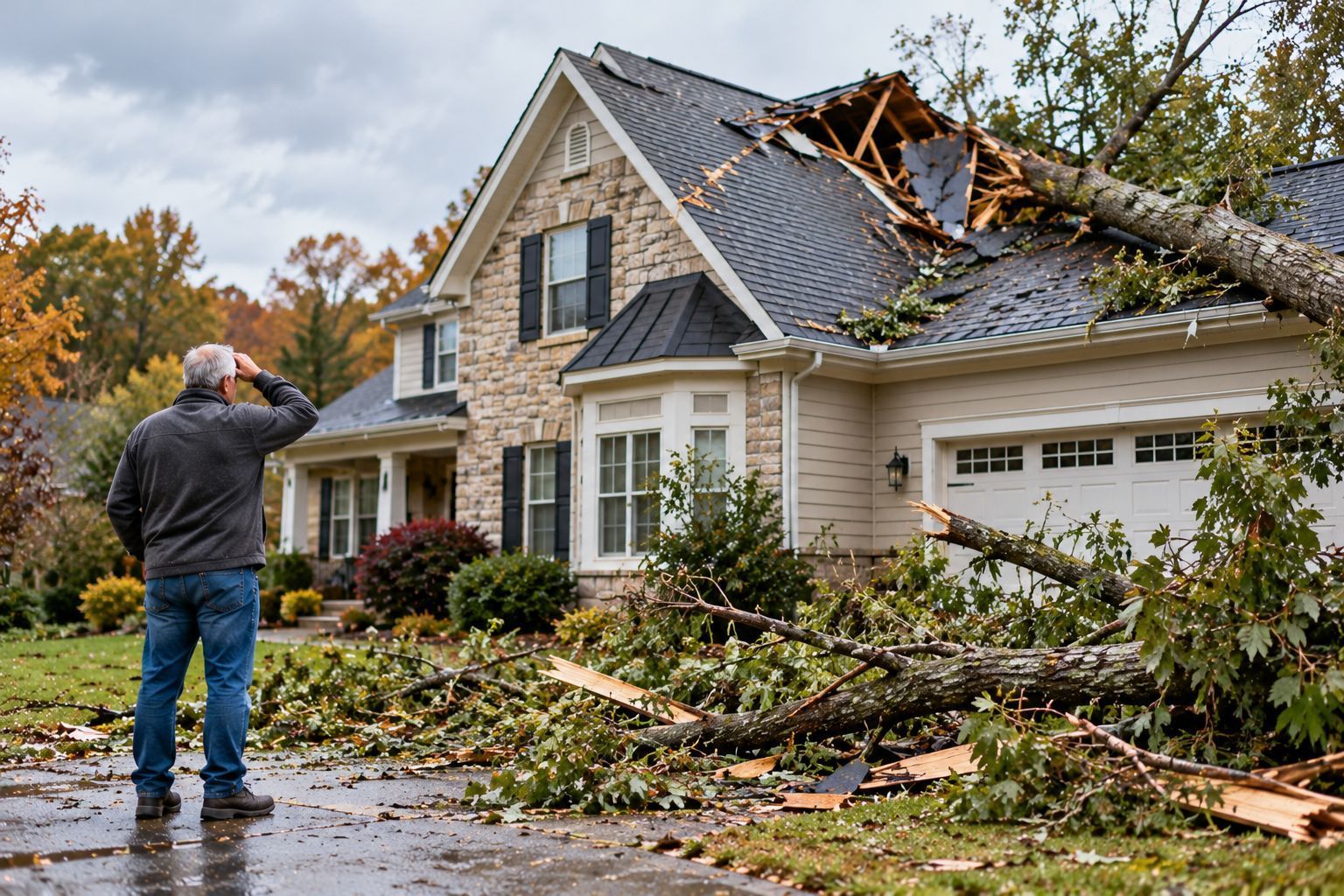
The Ohio Valley sits in a corridor where warm, humid air from the south meets colder systems from the west. The result is a steady run of thunderstorms, straight-line winds, hail, and heavy downpours that overwhelm older storm drains. For homeowners, that translates into very specific claims: shingles peeled off in a wind event, siding dented by hail, trees through the roof, and basements flooded by sewer backup.
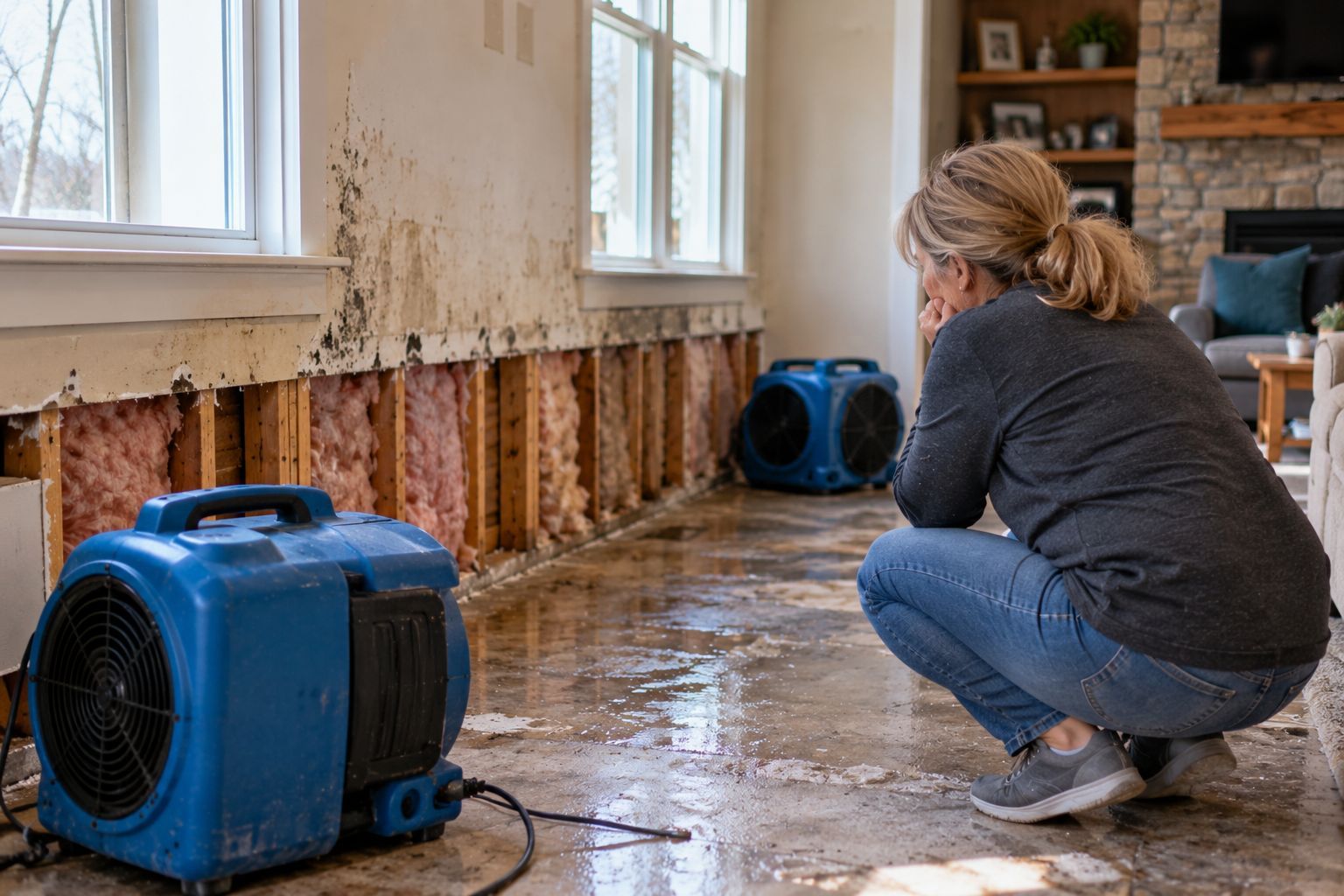
Sewer backup is a gap we see catch people off guard constantly. A standard policy usually excludes water that backs up through drains unless you've added a specific endorsement, and in a hillside neighborhood with aging municipal lines, one heavy storm can leave several inches of water in a finished basement. Carriers have watched these losses pile up across the region and priced accordingly.
Misclassification is the most common expensive mistake we see. A business gets lumped into one high-rated code, even though half the staff works in an office. Pennsylvania generally rates a business by its governing classification, but separate codes can apply when operations meet the PCRB's rules for division.
Take a small HVAC company where the owner's spouse handles billing full time. That clerical payroll may qualify for a far lower code than the field technicians' code. Review the classification page of your policy every year. If the description doesn't match what your people actually do, ask questions before the audit.
Your experience modifier compares your claims history to that of similar businesses. A 1.00 mod is average. A 0.85 mod cuts your premium by 15%, and a 1.25 mod raises it by 25%. Mods generally use three years of claims, excluding the most recent year, so today's injury affects your bill for years.
Frequency hurts more than severity. Five small medical-only claims often damage a mod more than one larger claim. Pennsylvania offers medical-only claim handling, but small injuries still need to be reported properly, so check how claims are counted before you decide how to handle minor incidents.
Frequently Asked Questions About PA Workers Comp Costs
Payroll" for workers comp means more than base wages. It generally includes overtime pay (with the premium portion often excluded), bonuses, commissions, holiday and vacation pay, and certain other compensation. Business owners often miscount this, and the error shows up at audit.
Corporate officers follow special rules. For policies effective April 1, 2026, officer payroll ranges from $70,044 to $280,800 per year for rating purposes. An officer who pays themselves very little still gets rated at the minimum, and high earners get capped at the maximum. That ceiling rose sharply this year, so owners who pay themselves well may see more of their salary counted than they did in past years.
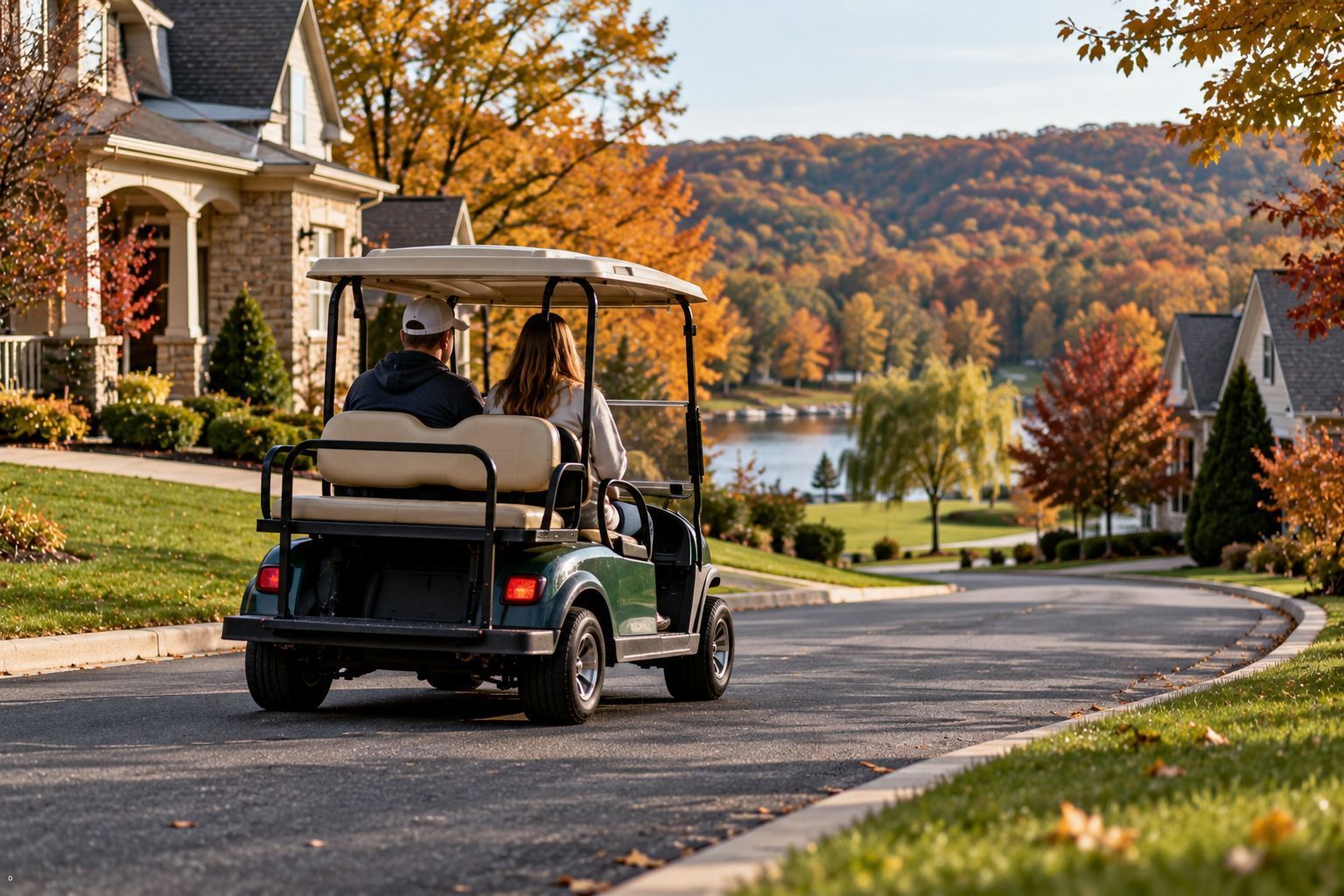
Golf cart insurance in Pennsylvania matters because your homeowners policy usually stops protecting you the moment the cart leaves your yard. Once you drive onto a shared road, a neighborhood street or a community path, you need a dedicated cart policy for liability, medical payments and damage to the cart itself.
That surprises a lot of people. Golf carts have become everyday transportation in planned communities, lake neighborhoods and campgrounds from Butler County to the Poconos. Families use them to visit neighbors, haul gear to the clubhouse and give the grandkids a ride after dinner. They feel like oversized lawn equipment, so most owners assume the home policy covers them.
The cart still weighs several hundred pounds, can carry four people and often reaches close to 20 mph. A tip-over on a gravel lane or a collision with a pedestrian at the pool parking lot can produce a claim that looks a lot like a car accident. The cost can be similar too.
This guide covers where Pennsylvania lets you drive a cart and how local rules change the picture. It also explains why private roads still expose you, how coverage options compare, and how to set limits that protect what you own.
Understanding Golf Cart Insurance in Pennsylvania
Golf cart insurance in Pennsylvania protects you when your cart leaves your own lot. Standard homeowners policies typically exclude motorized vehicles on public roads and shared community spaces. A specialty cart policy fills that gap with bodily injury liability, property damage liability and optional coverage for the cart itself.
A homeowners policy builds its liability coverage around your "residence premises." A cart parked in your garage or used to move mulch around your backyard usually fits inside that definition. The trouble starts when the cart rolls down the driveway toward a friend's house, the community pond or the club's tee box.
A dedicated cart policy follows the vehicle instead of the address. Here is what a typical policy can include:
- Bodily injury liability: pays for injuries you cause to other people, including legal defense if you're sued
- Property damage liability: covers damage you cause to someone else's car, fence, mailbox or landscaping
- Medical payments: helps with injuries to your passengers regardless of fault
- Physical damage: comprehensive and collision for theft, fire, vandalism or crash damage to the cart
- Uninsured motorist: protects you if a driver without adequate insurance hits your cart
As of this writing, standalone policies typically run around $120 to $325 per year for basic liability and medical benefits. Adding physical damage coverage, custom parts or lift kits raises the premium. That's a modest cost compared to a single injury claim. Even a minor fracture with a few weeks of physical therapy can reach five figures quickly.
Some owners add a golf cart endorsement to an existing policy instead of buying a standalone one. That can work, but endorsements vary widely in where they apply. Read the territory language before you assume it covers a street ride.
Where Golf Carts Can Legally Drive in PA
Pennsylvania generally does not allow golf carts on public roads. A cart may cross a highway at designated points. Driving along a street is limited to places where state law and a local ordinance specifically allow it, usually lower-speed roads under 25 mph. Everything else stays off-limits.
The state defines a golf cart narrowly. Under the vehicle code, it's a self-propelled vehicle designed for sporting, maintenance or recreational purposes with a top speed of 20 mph. The code's golf cart chapter makes it generally unlawful to operate a golf cart on any highway in Pennsylvania. In Pennsylvania law, "highway" covers far more than interstates. It includes ordinary publicly maintained roads.
There are a few narrow exceptions:
- Crossing a road: The law requires you to come to a complete stop, yield to all traffic and cross at a 90-degree angle. Picture a cart path that crosses a township road between the 9th and 10th holes.
- Maintenance use: Carts used to maintain golf courses or campuses are exempt from registration if they travel no more than one mile on public roads and the same entity owns both sides of the street.
- Age limit: State law prohibits anyone under 12 from operating a golf cart, no matter where they drive it.
Low-Speed Vehicles are a separate category. An LSV must have a 17-digit VIN, travel between 20 and 25 mph, and meet Federal Motor Vehicle Safety Standard 500. It also needs headlights, turn signals, mirrors, a windshield, seat belts and a parking brake. Once titled and registered with PennDOT, these Neighborhood Electric Vehicles can use roads with speed limits up to 25 mph. Bolting on a light kit doesn't make your cart an LSV, though. The VIN and federal compliance come from the manufacturer.
Municipal and Local Community Rules
Local rules add another layer. Some townships and boroughs are weighing ordinances that would open certain streets to carts, often paired with permits, inspections or decals. In March 2026, North Strabane Township supervisors began considering an ordinance to allow golf carts within high-density HOA neighborhoods like Meadow Lake. Royalton Borough put golf cart laws on its July 21, 2026 council agenda to address local operation concerns.
Gated communities and HOAs often set their own rules on top of whatever the municipality allows. Common requirements include:
- Registering the cart with the association and displaying a sticker
- A minimum driver age higher than the state's 12
- Proof of liability insurance, sometimes with a stated minimum limit
- Curfews or headlight requirements after dusk
- Restrictions on passengers riding on rear seats or cargo beds
Read your HOA covenants before your first ride. Associations increasingly ask for a certificate of insurance. If your declarations page shows only a homeowners policy, it may not satisfy the requirement.
Why Homeowners Coverage Stops at the Property Line
Homeowners coverage for your golf cart usually ends at your property line. Standard Pennsylvania HO-3 policies cover motorized vehicles on your residence premises and exclude them almost everywhere else. A ride to the neighbor's house or the community pool can leave you with no liability coverage at all.
The state's own consumer materials explain that homeowners policies typically exclude liability for motorized vehicles once they leave the residence premises. Insurers write these exclusions because a home policy prices household risks like slip-and-falls and dog bites. It doesn't price traffic exposure. Some policies make a limited exception for carts used on a golf course while golfing. Driving through the neighborhood is a different situation, and those exceptions usually don't stretch to cover it.
The most common mistake looks like this. An owner buys a used cart, calls nobody, and assumes the house covers it because the cart is stored in the garage. A year later, a teenage nephew clips a parked SUV on the community road. The homeowners claim gets denied under the motor vehicle exclusion, and the bill goes straight to the owner.
Physical damage is a separate gap. Some home policies treat a cart like personal property while it's stored on premises, but theft from the clubhouse lot or a rollover on a hill usually falls outside that protection. Check how your current policy handles both.
The property line problem is one reason a cart belongs in your broader plan for pennsylvania personal insurance. Your home, auto, umbrella and cart policies should fit together, with no blind spots where one ends and the next is supposed to begin.
The Risk of Liability on Private Roads
Many owners figure private roads are safe territory. Most private roads in a lake community or HOA are still not your "residence premises." The road belongs to the association or is held in common, so your homeowners exclusion still applies.
The legal exposure doesn't shrink either. A neighbor walking a dog on an unpaved lane, a child on a bike or a guest stepping out of a parked car can all bring a negligence claim if your cart hurts them. Pennsylvania courts look at whether the driver acted reasonably. Whether a road is private or public changes which traffic laws apply, but it doesn't change whether you caused the injury.
Without a cart policy, you defend that lawsuit with your own money and pay any judgment from your own assets. Personal umbrella policies often won't step in either, because many require an underlying policy covering the vehicle before the umbrella will respond. One uninsured ride can expose your savings, your home equity and your future wages.
Comparing Pennsylvania Golf Cart Coverage Options
A solid cart policy combines liability for others, medical payments for your passengers, and physical damage for the cart itself. Each piece covers a different kind of loss, and dropping one to trim the premium can leave a real gap. This table shows how they compare.
| Coverage | What It Pays For | Who Benefits | Typical Example |
|---|---|---|---|
| Liability (bodily injury & property damage) | Injuries and damage you cause to others, plus legal defense | People and property outside your cart | Your cart hits a pedestrian at the community pool lot |
| Guest medical payments | Medical bills for passengers, regardless of fault | You and your riders | A grandchild falls off the rear seat on a sharp turn |
| Physical damage (comprehensive & collision) | Repair or replacement of your cart | You, as the owner | The cart is stolen from a clubhouse or rolls into a ditch |
| Uninsured motorist | Your injuries when an at-fault driver lacks coverage | You and your passengers | A car without insurance sideswipes you at a crossing |
| Custom parts & accessories | Lift kits, upgraded seats, stereos, lights | You | Aftermarket wheels stolen overnight |
Liability is the piece most HOAs require and the piece that protects your assets. Medical payments matter more than people expect. Carts lack doors and often seat belts, so passenger injuries from sudden stops and turns are among the most common cart claims.
Physical damage coverage makes sense if your cart is newer or heavily customized. A modern lithium-battery cart with upgrades can cost as much as a used car. On an older cart worth a few thousand dollars, some owners skip collision and keep comprehensive for theft and storm damage.
Available Carriers for Specialized Cart Policies
Several carriers write dedicated golf cart coverage in Pennsylvania. Some offer it as a standalone policy, and others offer it as an add-on to an existing auto or home policy. MVP Insurance works with these carriers as an independent agent, so you can compare their forms side by side instead of calling each company yourself.
Carriers that write golf cart or specialty vehicle coverage include:
- Erie: often a good fit for households already carrying Erie home and auto, since a cart can sit alongside existing policies
- Progressive: writes golf cart policies with options for liability, medical payments, comprehensive, collision and custom equipment
- Foremost: known for specialty and recreational vehicle coverage, including carts used in seasonal or lake communities
- American Modern: focuses on specialty personal lines, including recreational vehicles and secondary-home situations
These carriers differ in ways that matter in real life. Some cover only carts used near a primary residence. Others extend to a seasonal home or campground. Some won't write modified carts that exceed 20 mph or carts registered as LSVs. Some require the operator to hold a driver's license even where the law doesn't.
Underwriting questions also vary. Expect to answer whether the cart is gas or electric, its value and modifications, where you store it, who drives it and whether you use it for any business purpose. A landscaper or resort hauling equipment needs commercial coverage, not a personal cart policy.
Because MVP Insurance shops these carriers on your behalf, you can see where each one draws its lines before a claim forces the question. That beats finding out from a denial letter.
Determining Your Coverage Limits and Requirements
As of this writing, your cart liability limits should reflect your total assets at risk. For most owners, that means matching the liability limits on your primary auto policy. A cart accident can cause the same injuries a car accident can, so it deserves the same protection.
Start with what you own. Add your home equity, savings, investment accounts and other property a court could reach in a judgment. If your auto policy carries $250,000 per person and $500,000 per accident for bodily injury, carry similar limits on the cart. Carrying state-minimum-style limits on a cart while your car has much higher ones is a mismatch that shows up often.
Matching limits also helps if you carry a personal umbrella. Many umbrella policies require specific underlying limits on every vehicle, and a cart insured below that threshold can create a gap the umbrella won't fill. Ask whether your umbrella schedules golf carts at all.
Then check outside requirements:
- HOA or community minimums: Some associations require a stated liability limit and a certificate naming the association.
- Lender requirements: If you financed the cart, the lender will likely require comprehensive and collision.
- LSV registration: A titled and registered Low-Speed Vehicle needs coverage that satisfies Pennsylvania's motor vehicle insurance rules, which differs from a basic cart policy.
- Household drivers: List everyone who drives the cart, including teens and visiting family, so a claim isn't challenged over an unlisted operator.
Review limits when life changes, such as buying a lake home, adding a teen driver or upgrading the cart. Coverage that fit a $4,000 used cart may not fit a $15,000 street-ready model.
Frequently Asked Questions About PA Golf Cart Insurance
Does my home insurance cover my golf cart on the street? Usually not. Standard homeowners policies typically cover a cart only on your own property, so liability coverage ends once you drive onto a public or shared road.
Do I need a driver's license to drive a golf cart in PA? State law sets the minimum operator age at 12 for golf carts. Your township, HOA or insurer may require a valid license, and anyone driving a registered Low-Speed Vehicle on public roads needs one.
Is golf cart insurance required by law? Pennsylvania doesn't generally require insurance on a standard golf cart, but registered LSVs must carry coverage. Many HOAs and communities also require proof of liability insurance before you can drive inside their gates.
A golf cart feels like a toy until something goes wrong. The rules here are tighter than most people expect: carts generally stay off public highways except to cross, local ordinances are still evolving, and private roads still leave you open to lawsuits. Your homeowners policy almost certainly stops at your property line, so a dedicated cart policy with liability limits that match your auto coverage is the practical fix.
If you'd like help sorting out cart coverage alongside your home and auto, MVP Insurance can compare options from several carriers for you. You can start your quote here or reach the team at the Zelienople, PA or New Springfield, OH office. MVP Insurance is licensed in Ohio (#37714) and Pennsylvania (#519263), NPN 10588293.
Search
Recent Posts
MVP Insurance is a local, independent agency, licensed to serve individuals and businesses across Ohio and Pennsylvania.
We serve clients from our offices in New Springfield, Ohio and Zelienople, Pennsylvania and throughout Northeast Ohio and Western Pennsylvania, working with multiple carriers to help contractors, landlords and real estate investors, restaurants, retail shops, auto repair shops, professional offices and many other personal and commercial clients find coverage that fits.
Our Owners
Two friends who started an agency
Owner
Joshua Medure
I am a Penn State marketing graduate with more than ten years in insurance. My childhood friend David and I started MVP Insurance in Northeast Ohio because we wanted the people around us to have an agency that gives honest advice, real choices and someone who picks up the phone. I lead the agency’s insurance strategy, which means I read the policies so our clients do not have to. Away from the office, I coach youth football.


About the Author
David Varrati
Owner, MVP Insurance
I started MVP Insurance with my childhood friend Josh because we wanted people in Northeast Ohio and Western Pennsylvania to have an agency that explains things plainly and picks up the phone. I studied Political Science at Slippery Rock University and have spent more than ten years helping families and individuals protect what matters to them. When I am not in the office, you will find me coaching youth sports.