

Frequently Asked Questions About Mine Subsidence
Raising your deductible is the fastest lever you have. Moving a standard deductible from $500 to $1,000 or $2,500 can reduce your premium by up to 25%. On a $1,600 annual premium, that could mean saving a few hundred dollars a year.
The trade-off is simple: you take on more of the small losses. Before raising it, ask yourself whether you could write a check for the new deductible tomorrow without touching credit cards. If yes, a higher deductible usually pays off within a few claim-free years. Also check whether your policy has a separate wind or hail deductible, sometimes set as a percentage of dwelling coverage, since that can be much larger than the flat amount you remember choosing.
How does credit score affect my PA rate?
Pennsylvania allows insurers to use a credit-based insurance score when setting rates, and stronger credit generally means a lower premium. Paying bills on time and keeping balances low can help your rate over time.
Does my location near a fire station matter?
Yes. Homes closer to a staffed fire station and a working hydrant usually get better pricing because fire damage tends to be less severe when help arrives quickly.
How often should I review my policy limits?
Review them at every renewal and any time you renovate, add a big purchase, or finish a basement. With rebuilding costs rising, a limit that fit three years ago may now fall short.
Coverage through the association is not unlimited. As of this writing, most property and casualty claims are typically capped at $300,000 per claim [https://govt.westlaw.com/pac/Document/N92524E00342611DA8A989F4EECDB8638?viewType=FullText&originationContext=documenttoc&transitionType=CategoryPageItem&contextData=(sc.Default)]. Workers' compensation is the big exception, with no cap on covered benefits.
That $300,000 figure catches people off guard [https://govt.westlaw.com/pac/Document/N92524E00342611DA8A989F4EECDB8638?viewType=FullText&originationContext=documenttoc&transitionType=CategoryPageItem&contextData=(sc.Default)]. Picture a homeowner with a $550,000 dwelling limit whose house burns down a week after their insurer is ordered into liquidation. Their policy promised more than half a million dollars, but the guaranty association will typically pay up to its cap. The rest becomes a claim against the failed insurer's estate, which may pay a portion years later, or nothing.
A few other rules shape what you'll actually receive:
- Unearned premium refunds are limited. If you prepaid for months of coverage you never got, the return of that premium is capped at $10,000 per policy.
- Large businesses face exclusions. PPCIGA excludes first-party claims from any insured whose net worth exceeded $25 million as of December 31 of the year before the insolvency. Bigger companies are expected to absorb losses themselves.
- Duplicate recovery isn't allowed. If another policy covers the same loss, you generally have to pursue that coverage first.
For most families, the cap is high enough to handle a typical auto accident or a burst pipe claim. The pain shows up with total losses on higher-value homes, serious injury liability claims, and commercial property losses.
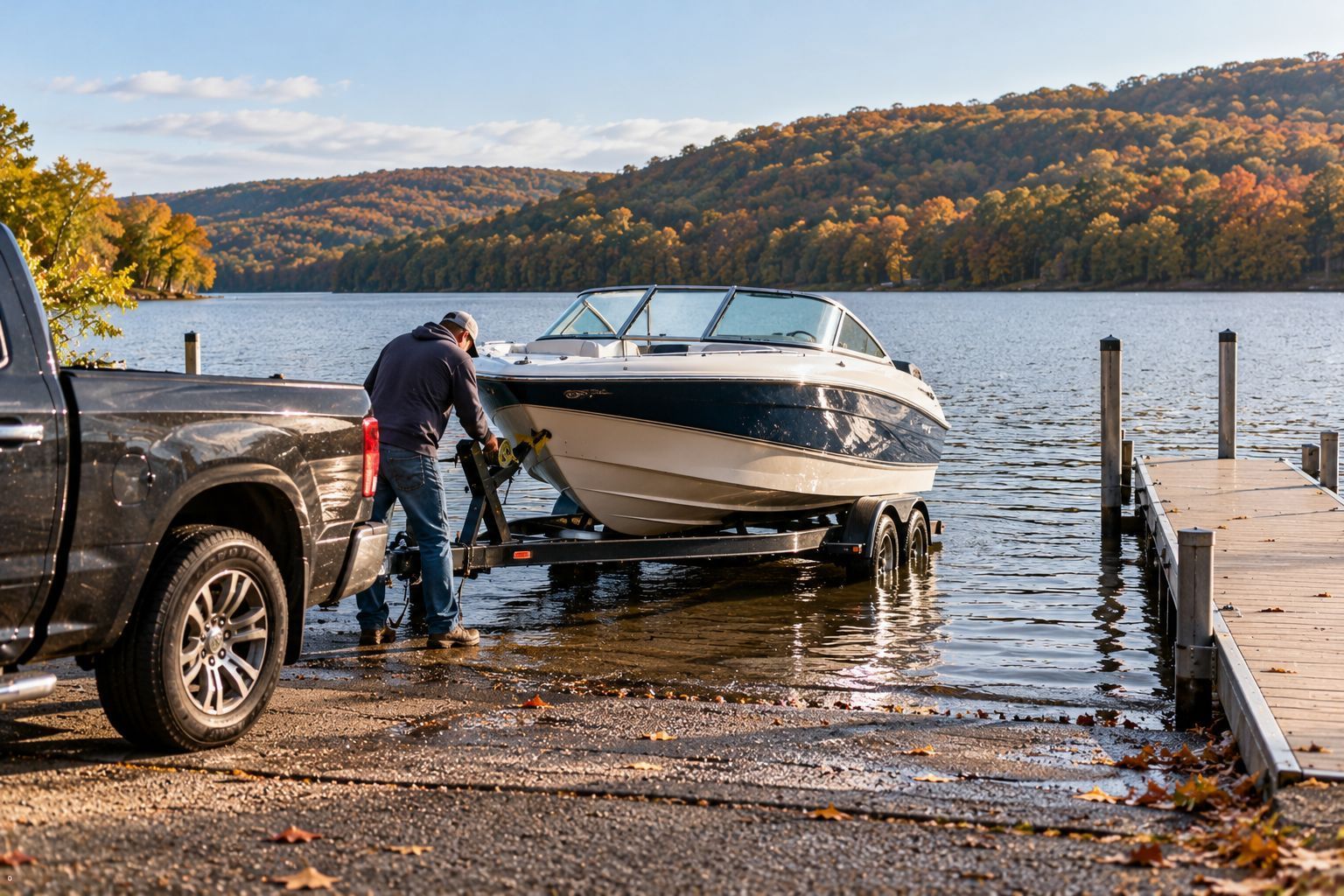
A day on Lake Arthur or the Allegheny feels simple until a wake damages someone's dock or a passenger gets hurt. That is usually when boat owners first learn how much state law shapes their insurance options. The rules below cover what Pennsylvania expects of you and why carriers pay close attention.
Pennsylvania Boating Laws for Insurance Buyers
Pennsylvania doesn't require boat insurance by statute. Still, following the state's Boating Safety Education, registration, and BUI laws is critical for protecting yourself from liability. Compliance also determines whether you can secure pennsylvania boat insurance on solid terms through an independent agency like MVP, since carriers review your legal standing before they write a policy.
Lenders and marinas also tend to require coverage even though the state doesn't. If you financed your boat or rent a slip, you probably already have a contractual obligation to carry it. For anyone shopping for a policy, the sections below explain the laws that matter most to underwriters and how each one connects to your coverage.
Boating Safety Education Certificates
Pennsylvania doesn't issue a "boating license," but many operators must carry a Boating Safety Education Certificate issued by the Pennsylvania Fish and Boat Commission (PFBC). The certificate shows you completed an approved safety course. It never expires, so once you earn it, you keep it.
From an insurance standpoint, the certificate does two jobs. It keeps you legal on the water, which matters if an accident leads to an investigation. Many carriers also look favorably on operators who have completed formal training, and some offer credits on the premium for it. Paying for the course once and keeping the card in your boat bag is one of the easiest ways to strengthen your position with an underwriter.
Who Is Required to Carry a Boating Safety Education Certificate?
As of this writing, operators born on or after January 1, 1982 need the certificate to run a motorboat with more than 25 horsepower. Anyone operating a personal watercraft (PWC), such as a jet ski, needs one regardless of age. Pennsylvania also sets age limits:
- Age 11 and younger: Cannot operate any PWC or a motorboat over 25 horsepower.
- Ages 12 to 15: Can operate a PWC with a certificate, but cannot carry passengers who are 15 or younger.
- Born before 1982: Not required for standard motorboats, though still required for PWCs.
The rules are also changing to keep up with new technology. On October 21, 2026, the Pennsylvania Senate passed Senate Bill 476, which updates the definition of personal watercraft to include electric vessels like e-foils and jetboards. If the bill becomes law, riders of those craft will need safety certificates too. Its sponsor called it a way to ensure everyone operating motorized watercraft, "regardless of the technology," has basic safety knowledge.
A common mistake we see is a parent letting a teenager take the family PWC out with friends. If the teen breaks the passenger rule and someone gets hurt, the family faces a legal violation on top of the claim, and that complicates everything that follows.
Pennsylvania Boat Registration Requirements
Every motorboat in Pennsylvania must be registered with the PFBC, no matter its size. Unpowered boats like kayaks, canoes, and paddleboards don't need registration if you use them only on private water. If you launch them from a Fish and Boat Commission access area or a state park, though, you need either a registration or a launch permit. In practice, that covers most paddlers in the state.
Registration numbers and decals must be displayed on the bow of powered boats. Your registration card should stay on board whenever the boat is in use. Officers check for it during routine safety stops, and missing paperwork is one of the more common citations on busy summer weekends.
If you just bought a boat and want to get on the water right away, authorized issuing agents can provide a 60-day temporary registration while your permanent application is processed. That temporary paperwork is often enough to get your insurance moving too.
Insurance and registration go hand in hand. Carriers like Erie or Progressive may require proof of registration before they bind a policy. They use the registration to confirm ownership, the hull identification number, and the vessel's details, which keeps the policy matched to the right boat. An unregistered boat raises questions about who owns it and how it's used. Those questions can slow down a quote or create trouble during a claim.
One overlooked detail: when you sell or trade a boat, update both your registration and your policy at the same time. We've seen owners keep paying premiums on a boat they sold months earlier, while their new boat sat uninsured.
Alcohol Limits and Boating Under the Influence (BUI)
In Pennsylvania, you can be charged with boating under the influence if your blood alcohol concentration reaches 0.08%. That's the same legal limit that applies to driving a car. For operators under 21, the limit is much stricter at 0.02%, which means even one drink can put a young operator over.
The PFBC takes enforcement seriously, especially around holiday weekends. Its officers join a national campaign called Operation Dry Water each summer. During the 2025 season, the Commission recorded 27 BUI arrests, including one operator with a BAC of 0.198%, more than twice the legal limit. Sun, wind, and constant motion make alcohol hit harder on the water than many people expect.
The insurance consequences of a BUI can outlast the legal ones. Carriers such as Westfield or Foremost may cancel a policy midterm or decline to renew it after a BUI conviction. Even if your current carrier keeps you, the conviction will show up on future applications. That can limit your options or push you toward carriers that charge more for higher-risk operators.
Claims are another concern. If you cause an accident while impaired, your liability coverage may still respond to injured third parties, depending on the policy language. Your own physical damage claim, however, could face much closer scrutiny. Many policies contain exclusions or conditions tied to illegal operation. The simplest rule: name a sober operator before the cooler opens.
Liability After a Boating Accident
If you're involved in a boating accident in Pennsylvania, you're legally required to stop, help anyone in danger as long as it's safe to do so, and share your name, address, and boat registration with others involved. Leaving the scene of an accident with injuries is a serious offense. The state also requires formal reporting:
- Within 48 hours: Report any accident involving a death, a disappearance, or an injury needing treatment beyond first aid. These must go to the PFBC within 48 hours.
- Within 10 days: File a Boating Accident Report if property damage exceeds $2,000, as of this writing.
- Right away: Notify your insurance carrier, even if you aren't sure who was at fault.
That last step matters more than people think. Insurers expect prompt notice, and waiting weeks can make it harder to document the scene, gather witness statements, and defend you if the other party sues.
Fault in a boating accident often comes down to navigation rules, speed, lookout, and whether everyone was operating legally. That's why the laws above connect so closely to liability. An operator without a required certificate or one over the BAC limit will have a hard time arguing they weren't negligent.
When you're found at fault, liability coverage pays for injuries to other people and damage to their property, up to your policy limits. Think of a passenger on another boat who breaks a wrist in a collision, or a neighbor's dock that gets crushed when you misjudge a landing. Liability coverage can also pay for your legal defense if you're sued. Many policies cover injuries to your own guests as well, which is important because passengers are often the ones who get hurt.
Comparison of PA Boating Requirements and Insurance Impact
The table below shows how Pennsylvania's main boating requirements differ by vessel type and why each one matters to a carrier. Requirements reflect state rules as of this writing.
| Requirement | Motorized Boats & PWCs | Non-Motorized (Kayak, Canoe, SUP) | Insurance Impact |
|---|---|---|---|
| Registration | Required for all | Required at PFBC or state park access (or launch permit) | Proof often needed to bind a policy |
| Safety Certificate | Required for PWCs; motorboats over 25 hp if born 1982 or later | Not required | Can help eligibility and may earn credits |
| Age Limits | No PWC or 25+ hp boat at 11 or younger | No state minimum | Underage operation can complicate claims |
| BAC Limit | 0.08% (0.02% under 21) | Same limits apply | BUI can lead to cancellation or non-renewal |
| Accident Reporting | 48 hours for injury/death; 10 days for $2,000+ damage | Same rules apply | Late reporting can weaken your claim |
| Typical Coverage Need | Liability, physical damage, towing | Liability, theft | Lenders and marinas often require coverage |
Notice that alcohol limits and accident reporting rules apply to paddlers too. Many kayak owners assume boating law doesn't affect them. A collision with a swimmer or another paddler can still lead to a liability claim. Non-motorized boats sometimes have limited coverage under a homeowners policy, so it's worth knowing where those limits stop.
Standard Coverage Options from Independent Carriers
Most Pennsylvania boat policies are built from the same core pieces, though carriers package them differently. As an independent agency, MVP works with carriers such as American Modern, Hagerty, and GEICO to compare those packages side by side. MVP is not the carrier; it's the agent that shops the options for you. Here's what is typically available:
- Physical damage: Pays to repair or replace your boat after a collision, fire, theft, vandalism, or storm. Agreed value policies pay a set amount for a total loss, while actual cash value policies factor in depreciation.
- Liability: Covers injuries and property damage you cause to others, along with legal defense costs.
- Medical payments: Pays medical bills for you and your passengers after an accident, regardless of fault. This helps cover smaller injuries quickly, without anyone needing to sue.
- Uninsured boater coverage: Protects you when the at-fault boater has no insurance, which is common because Pennsylvania doesn't require it.
- Specialized equipment: Covers fishing gear, electronics like fish finders and GPS units, and other personal property on board. Standard limits are often lower than owners expect.
- Towing and on-water assistance: Pays for a tow if you break down or run aground.
- Trailer coverage: Protects the trailer itself, which isn't always included automatically.
The gap we see most often involves gear. An angler with a bass boat might have several thousand dollars in rods, reels, and electronics on board, yet only a small equipment limit. After a theft from a marina lot, the difference comes out of their pocket. Collector and classic boat owners face a similar issue, and a specialist like Hagerty may offer agreed value terms that fit a restored wooden runabout better than a standard policy.
Think about how you use your boat when choosing limits. Families who tow tubers, owners who carry guests often, and anyone boating on crowded water like Lake Erie or Raystown should consider higher liability limits.
Frequently Asked Questions About PA Boating Laws
Do I need a license to drive a boat in PA?
Pennsylvania doesn't issue a boating license. Instead, you need a Boating Safety Education Certificate to operate a PWC at any age, or a motorboat over 25 horsepower if you were born on or after January 1, 1982.
Is boat insurance required by law in Pennsylvania?
No, state law doesn't require boat insurance. Still, lenders usually require it if you finance a boat, and many marinas require proof of liability coverage before you can rent a slip.
Does a BUI affect my car insurance rates?
It can. A BUI conviction may appear in the background checks carriers run, and some auto insurers treat it as a sign of risky behavior, which can affect your rates or eligibility. It will almost certainly affect your boat insurance options.
Taken together, these rules form a clear picture for anyone researching Pennsylvania boating laws for insurance buyers. Get your safety certificate, keep your registration current, stay sober at the helm, and report accidents on time. Each step protects you legally and keeps more coverage options available when you shop.
If you'd like help finding a policy that fits how you actually use your boat, MVP Insurance can compare options from several carriers for you. With offices in Zelienople, PA and New Springfield, OH, the team works for you rather than any single insurer. When you're ready, start your quote and get a clear look at your choices before the season starts.
MVP Insurance is licensed in Ohio (license #37714) and Pennsylvania (license #519263), NPN 10588293.
Search
Recent Posts



MVP Insurance is a local, independent agency, licensed to serve individuals and businesses across Ohio and Pennsylvania.
We serve clients from our offices in New Springfield, Ohio and Zelienople, Pennsylvania and throughout Northeast Ohio and Western Pennsylvania, working with multiple carriers to help contractors, landlords and real estate investors, restaurants, retail shops, auto repair shops, professional offices and many other personal and commercial clients find coverage that fits.
Our Owners
Two friends who started an agency
Owner
Joshua Medure
I am a Penn State marketing graduate with more than ten years in insurance. My childhood friend David and I started MVP Insurance in Northeast Ohio because we wanted the people around us to have an agency that gives honest advice, real choices and someone who picks up the phone. I lead the agency’s insurance strategy, which means I read the policies so our clients do not have to. Away from the office, I coach youth football.


About the Author
David Varrati
Owner, MVP Insurance
I started MVP Insurance with my childhood friend Josh because we wanted people in Northeast Ohio and Western Pennsylvania to have an agency that explains things plainly and picks up the phone. I studied Political Science at Slippery Rock University and have spent more than ten years helping families and individuals protect what matters to them. When I am not in the office, you will find me coaching youth sports.