
Pennsylvania still offers homeowners insurance below the national average, but recent increases have been steep, and Western PA homeowners have felt it through storms and rising rebuilding costs. Your location sets the starting point. Your deductible, your roof and home systems, and how you use your policy decide much of the rest.
The most useful step is seeing real numbers side by side instead of accepting a single renewal at face value. MVP Insurance is an independent agency with offices in Zelienople, PA and New Springfield, OH, and the team compares multiple carriers so you don't have to. When you're ready, start your quote here and get a clearer picture of what your home should cost to insure.
MVP Insurance is licensed in Ohio (license #37714) and Pennsylvania (license #519263), NPN 10588293.
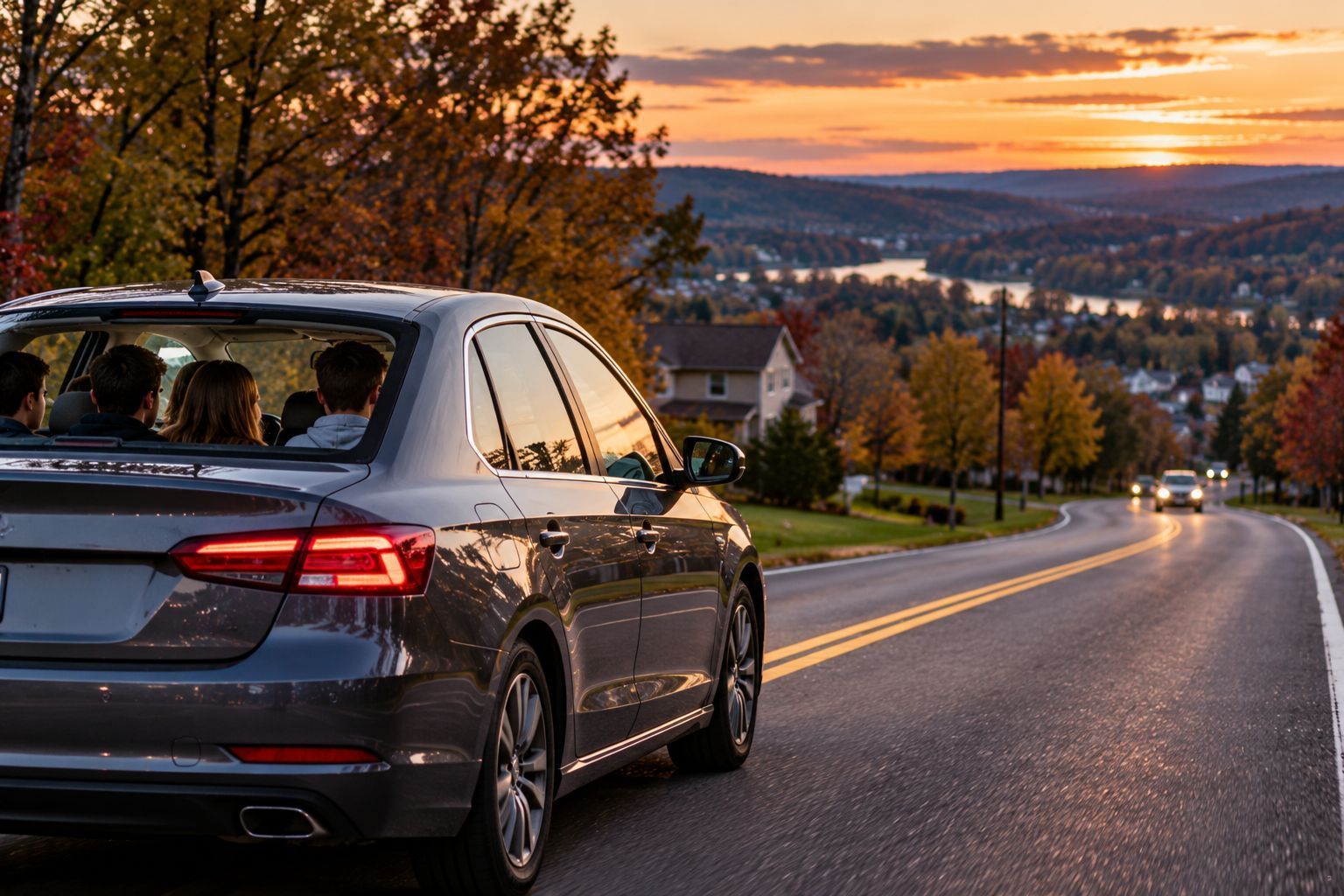
Pennsylvania teen driver laws move new drivers through three stages: a learner's permit, a junior license, and a senior license. Along the way, teens face supervised practice hours, passenger limits, and an 11 PM to 5 AM curfew. Each stage also affects how insurers price your family's policy, so the rules and the premium go hand in hand.
If you have a 15- or 16-year-old in the house, you probably have two questions: when can my kid drive alone, and what will it cost to insure them? Both answers depend on where your teen sits in the state's licensing process. A permit holder riding with a parent looks very different to an insurance company than a junior license holder taking the car to a Friday night shift.
The stakes are real. Between 2021 and 2025, Pennsylvania recorded 79,625 crashes involving drivers aged 16 to 19, resulting in 486 deaths. Those numbers explain why the state builds in so many guardrails. They also explain why insurers charge what they do. The good news is that families who understand the rules can plan ahead, keep their teen safer, and avoid some expensive surprises on the policy side.
Understanding Pennsylvania Teen Driver Laws and the GDL System
Pennsylvania's Graduated Driver License system reduces accidents by limiting when, how, and with whom new drivers can drive while they build experience. Teens practice under adult supervision first. They then drive alone with passenger and nighttime restrictions, and they earn full privileges only after time and a clean record show they're ready.
The state describes it as a three-stage process designed to phase in driving privileges as experience is gained. The logic is simple. Most teen crashes don't come from a lack of book knowledge. They come from inexperience combined with risky conditions: darkness, distracted friends in the back seat, bad weather, and phones.
GDL tackles each of those risk factors one at a time. Supervised hours build judgment before a teen ever drives solo. Passenger caps cut down on distraction. The curfew keeps new drivers off the road during the hours when fatigue and impaired drivers are most common.
Phones get their own layer of protection now. Paul Miller's Law, effective as of June 2025, prohibits using handheld interactive wireless devices while driving. That applies to every driver, but it hits teens hardest because texting and scrolling are such ingrained habits. A citation under that law can also show up when your insurer reviews the household's driving record, so it's worth discussing before your teen gets behind the wheel.
Access to the system has also widened. Legislative amendment HB 472 introduced specific pathways to make it easier for minors experiencing homelessness to obtain learner's permits and licenses, which helps teens who lack a stable home address or a parent available to sign forms.
Graduated License Stages: From Learner's Permit to Senior License
Pennsylvania teens move from a learner's permit to a junior license to a senior license. Each step requires a minimum amount of time, practice, or clean driving before the next one unlocks. Here's what each stage actually requires and what it means at home.
The Learner's Permit Phase Requirements
The permit stage is all supervised driving. Your teen generally becomes eligible at 16. They need a parent or guardian's consent, a physical exam, and a passing score on the knowledge test. While on a permit, they can only drive with a licensed adult in the front seat.
Time matters here. A young driver must hold their learner's permit for at least six months before they can take the road test for a junior license. Even if your teen feels ready in month three, the clock won't move.
Many families ask whether a permit holder needs to be on the policy. Rules vary by carrier. Some insurers don't charge for permit drivers but still want to know about them. Calling your agent when the permit is issued avoids a messy conversation later if your teen has a fender bender in a parking lot.
Junior License Restrictions and Training Hours
Before the road test, the practice log has to be complete. Under Act 81, permit holders must finish 65 hours of adult-supervised skill-building, including 10 hours at night and 5 hours in poor weather. A parent or guardian certifies those hours.
Don't treat the log as paperwork to backfill the night before the test. The 5 weather hours are often the hardest to get, especially if your teen's permit window runs through summer. Plan a few rainy drives on purpose, along with at least one trip in early dark during the colder months.
Once your teen passes, the junior license allows solo driving with the passenger and curfew limits covered below. This is the point where most insurers require the teen to be listed and rated on the policy.
Moving to a Senior Driver License
The senior license removes the junior restrictions. Teens can generally qualify earlier by completing approved driver education and keeping a clean record for a full year on the junior license. Otherwise, the junior license typically converts automatically at 18.
That clean year is about more than paperwork. A crash or conviction during the junior period can delay the upgrade. It can also follow your family's premium for several years. Driver's ed pays off twice: it speeds up the senior license, and many carriers credit it at renewal.
Passenger Limits for Pennsylvania Junior License Holders
For the first six months on a junior license, your teen may carry only one passenger under 18 who is not an immediate family member. Siblings don't count against that limit. Two friends from the soccer team do, unless a parent or guardian is riding along.
This rule exists because teen crash risk climbs with every peer in the car. Friends talk, play music, and sometimes egg each other on. Even well-behaved passengers pull a new driver's attention away from the road at exactly the wrong moments, like merging onto Route 19 at rush hour or turning left across traffic.
Parents often run into trouble with carpools. Picture a common situation: your 16-year-old offers to drive two neighbor kids to school because it's convenient for everyone. If that's within the first six months, it breaks the law. A violation can lead to a citation and points, and a crash under those circumstances creates a harder conversation with your insurer. Your liability coverage still applies to injured passengers, but a citation on the record will likely raise your rates at renewal.
After six months, the limit loosens if your teen keeps a clean record. Even then, many families set their own rules beyond the legal minimum. A few that work well:
- No passengers on highways until your teen has a few months of solo miles
- One friend maximum for the full first year, regardless of what the law allows
- Phone in the glovebox whenever passengers are in the car, since friends make distraction worse
Write your rules down. A simple family driving agreement turns arguments into reminders.
Nighttime Rules and Curfews for Young Drivers
Junior license holders cannot drive between 11 PM and 5 AM unless an exception applies. The curfew stays in place until your teen earns a senior license, and it applies even if the trip is short and local.
Night driving combines nearly every risk new drivers struggle with. Visibility drops and fatigue builds. More impaired drivers are on the road after 11, and teens tend to overestimate how alert they feel. The 10 nighttime practice hours during the permit stage help, but they don't replace solo experience.
Pennsylvania recognizes that teens have real obligations, so the curfew includes exceptions. The common ones are:
- Employment: driving to or from a job, which covers the restaurant shift that ends at midnight
- Volunteer service: traveling for public or charitable service, including volunteer fire company activities
- School or organized activities: certain school-sponsored or official events that run late
- Accompanied driving: a parent, guardian, or licensed adult in the vehicle
If your teen relies on an exception, have them keep documentation in the car, such as a work schedule or a note from a supervisor. An officer who pulls over a 16-year-old at 11:45 PM will want to know why they're on the road. A clear answer makes that stop much shorter.
From an insurance standpoint, the curfew is one more reason to keep a teen's record spotless. A curfew citation adds a violation to the household record. If your teen works late shifts, tell your agent. It won't change the curfew, but it helps them understand how often your teen drives and which vehicle they use.
Comparing PA Minimum Coverage and Recommended Limits
As of this writing, Pennsylvania requires at least $15,000 per person and $30,000 per accident in bodily injury liability, $5,000 in property damage liability, and $5,000 in first-party medical benefits. That's enough to register a car legally. For a household with a teen driver, it is rarely enough.
Think about what a serious teen crash actually costs. A single hospitalization can blow through $15,000 in days. Hit a newer pickup truck and $5,000 in property damage coverage won't come close to replacing it. Whatever your policy doesn't pay, the other party can pursue from you personally. That puts savings, home equity, and future earnings at risk.
| Coverage | PA Minimum | Common Choice for Teen Households |
|---|---|---|
| Bodily injury (per person) | $15,000 | $100,000 to $250,000 |
| Bodily injury (per accident) | $30,000 | $300,000 to $500,000 |
| Property damage | $5,000 | $100,000 or more |
| Medical benefits | $5,000 | $10,000 or more |
| Uninsured/underinsured motorist | Optional (can be rejected) | Match your liability limits |
| Umbrella policy | Not required | $1 million or more |
The table shows typical choices, not legal requirements. Pennsylvania drivers also choose between limited tort and full tort. Limited tort lowers premiums but restricts your right to sue for pain and suffering after many injuries. With a new driver in the house, plenty of families decide full tort is worth the extra cost.
One mistake we see often is parents raising their own limits but leaving a teen's older car on minimums because "it's just a beater." Liability coverage follows the driver's risk, not the car's value. Whether your kid drives a 2009 sedan or a new SUV, the people they could injure are covered by the same liability limits.
What They Mean for Your Car Insurance Rates
Adding a teen raises your premium significantly. As of this writing, adding a 16-year-old to a parent's policy typically increases annual premiums by $1,500 to $3,000. Where your family lands in that range depends on your carrier, your vehicles, your ZIP code, and your teen's record.
The wider market offers a little relief. Auto insurance rates in Pennsylvania began stabilizing in 2026, with approved filings showing an average 0.5% rate decrease. That's helpful context, but it won't offset the jump from adding an inexperienced driver. The teen surcharge comes from the driver, not from statewide trends.
Carriers weigh teen risk differently, and that's where shopping makes a real difference. Erie, Westfield, and Progressive all write Pennsylvania auto policies. Each prices factors like driver training, grades, vehicle type, and telematics participation in its own way. One family might see the smallest increase with Erie because of how it rates multi-car households. Another might do better with Progressive's usage-based program if their teen drives carefully and not very far.
Several factors tend to move the number:
- Vehicle assignment: A teen rated as the main driver of a sports car costs more than one assigned to an older sedan.
- Academic performance: Many carriers reward strong grades with lower rates.
- Driver training: Completing approved driver's ed often earns a credit.
- Clean record: One speeding ticket during the junior period can erase every other saving.
For a broader look at how Pennsylvania policies are built and priced, our guide to pennsylvania car insurance covers the basics beyond teen drivers.
How to Manage the Cost of Adding a Teen to Your Policy
The most effective way to manage the cost is to compare several carriers at the moment your teen gets licensed, instead of accepting whatever your current insurer quotes. MVP Insurance works as an independent agent with companies like Western Reserve and Liberty Mutual, along with Erie, Westfield, and Progressive. That lets us compare options side by side for your household.
Timing matters more than most parents realize. The best time to review your policy is before the junior license road test, not after the renewal bill arrives. That gives you room to decide which car your teen will drive, whether to add an umbrella policy, and which carrier treats your family's profile most favorably.
A few practical moves that consistently help:
- Keep your teen on your policy. A separate policy for a 16-year-old almost always costs more than adding them to yours.
- Choose the car carefully. A midsize sedan with good safety ratings typically rates better than a sporty coupe or a large pickup.
- Ask about grade-based and training credits. Have report cards and driver's ed certificates ready when you call.
- Consider telematics. Usage-based programs reward smooth braking, limited late-night driving, and no phone use. That habit also lines up with Paul Miller's Law.
- Revisit deductibles on older cars. Dropping collision on a low-value vehicle can offset part of the teen surcharge.
Be careful with one shortcut. Some parents assume they can leave a licensed teen off the policy because the teen "rarely drives." Most carriers require every licensed household member to be listed or formally excluded. A crash involving an unlisted driver can lead to a denied or disputed claim. That's a far bigger problem than a higher premium.
Frequently Asked Questions About PA Teen Driving
Can my 16-year-old drive their friends home from school in Pennsylvania? During the first six months of a junior license, they can carry only one passenger under 18 who isn't an immediate family member, unless a parent or guardian is in the car. After that window, the limit eases if your teen has stayed violation-free.
Does a teen with a learner's permit need to be on my car insurance? It depends on the carrier. Some require permit holders to be listed, and others don't rate them until they're licensed. Tell your agent when the permit is issued so there's no gap if something happens.
Can a junior license holder drive home from work after 11 PM? Yes. Pennsylvania's curfew includes an exception for travel to and from employment. Your teen should keep proof of their work schedule in the car in case they're stopped.
Pennsylvania's licensing rules work because they ease teens into risk instead of handing them full privileges on day one. Supervised hours, passenger caps, and the overnight curfew all target the situations where new drivers get hurt most. For families, those same rules shape the insurance conversation. A clean junior year, solid liability limits, and the right car assignment can keep your teen safer and your premium more manageable.
If your teen's road test is coming up, now is a good moment to see how different carriers would price your household. MVP Insurance is an independent agency with offices in Zelienople, PA and New Springfield, OH. We compare policies across multiple carriers so you don't have to. When you're ready, you can start your quote here, and we'll walk you through the options. MVP Insurance is licensed in Ohio (license #37714) and Pennsylvania (license #519263), NPN 10588293.
Search
Recent Posts
MVP Insurance is a local, independent agency, licensed to serve individuals and businesses across Ohio and Pennsylvania.
We serve clients from our offices in New Springfield, Ohio and Zelienople, Pennsylvania and throughout Northeast Ohio and Western Pennsylvania, working with multiple carriers to help contractors, landlords and real estate investors, restaurants, retail shops, auto repair shops, professional offices and many other personal and commercial clients find coverage that fits.
Our Owners
Two friends who started an agency
Owner
Joshua Medure
I am a Penn State marketing graduate with more than ten years in insurance. My childhood friend David and I started MVP Insurance in Northeast Ohio because we wanted the people around us to have an agency that gives honest advice, real choices and someone who picks up the phone. I lead the agency’s insurance strategy, which means I read the policies so our clients do not have to. Away from the office, I coach youth football.


About the Author
David Varrati
Owner, MVP Insurance
I started MVP Insurance with my childhood friend Josh because we wanted people in Northeast Ohio and Western Pennsylvania to have an agency that explains things plainly and picks up the phone. I studied Political Science at Slippery Rock University and have spent more than ten years helping families and individuals protect what matters to them. When I am not in the office, you will find me coaching youth sports.