
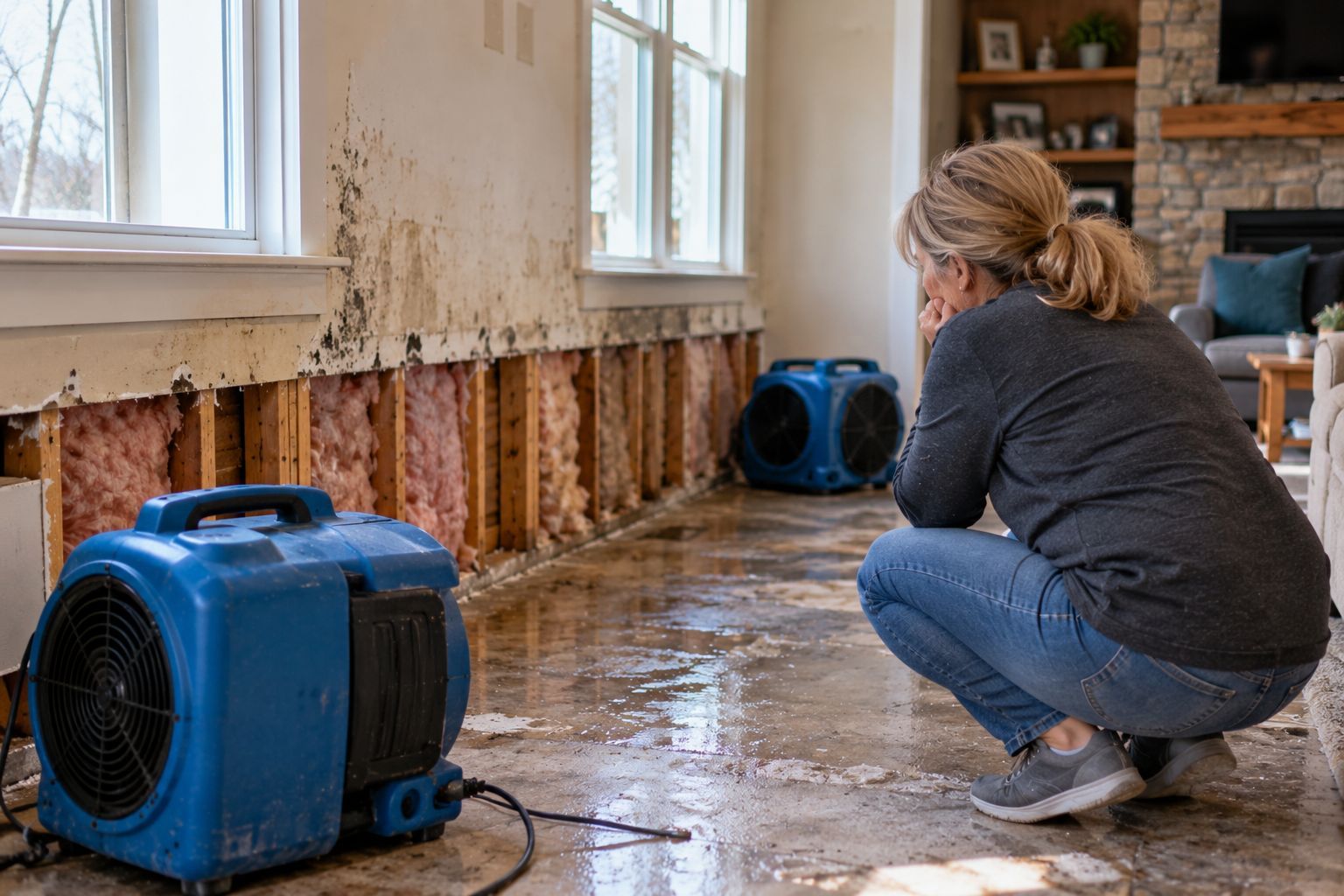
The Ohio Valley sits in a corridor where warm, humid air from the south meets colder systems from the west. The result is a steady run of thunderstorms, straight-line winds, hail, and heavy downpours that overwhelm older storm drains. For homeowners, that translates into very specific claims: shingles peeled off in a wind event, siding dented by hail, trees through the roof, and basements flooded by sewer backup.
Sewer backup is a gap we see catch people off guard constantly. A standard policy usually excludes water that backs up through drains unless you've added a specific endorsement, and in a hillside neighborhood with aging municipal lines, one heavy storm can leave several inches of water in a finished basement. Carriers have watched these losses pile up across the region and priced accordingly.
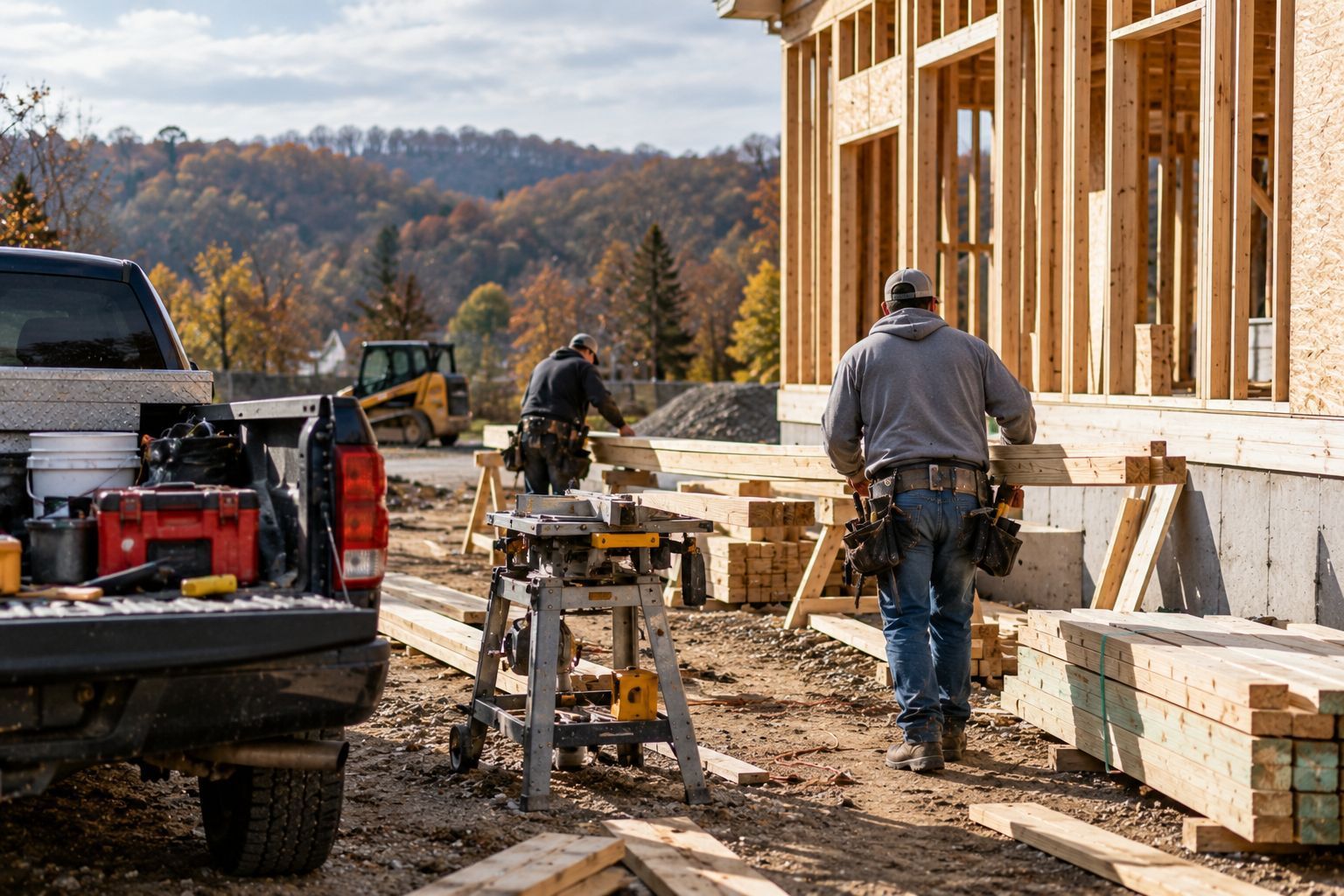
Pennsylvania business owners usually discover workers comp pricing the hard way, often at renewal or during an audit. The math behind the bill is more predictable than most people expect. Once you understand the formula, you can tell whether a quote makes sense and where you might be overpaying.
How Much Does Workers Comp Cost for Pennsylvania Small Businesses
Pennsylvania small businesses typically pay $0.50 to $10.00 per $100 of payroll for workers comp. Low-risk office work sits at the bottom of that range, and roofing, logging, and heavy construction sit near the top. Most employers in the state must carry this coverage by law, even if they have only one part-time worker.
That range is wide because "small business" covers everyone from a two-person accounting firm in Cranberry to a ten-person framing crew in Butler County. A bookkeeping office with $150,000 in payroll might owe only a few hundred dollars a year. A roofing contractor with the same payroll could face a bill in the five figures.
Carrying pennsylvania workers comp insurance is not optional for most employers here. Pennsylvania has no small-employer exemption based on headcount. A single W-2 employee generally triggers the requirement, and the state treats uninsured employers seriously, with penalties that can include criminal charges.
The cost environment for 2026 is relatively mild. The Pennsylvania Insurance Department approved a 1.22% average decrease in workers' compensation loss costs effective April 1, 2026. That doesn't mean every policy drops by 1.22%. Some class codes went down more, some went up, and your own claims history matters far more than the statewide average.
So the honest answer to "how much will I pay?" is this: it depends on three numbers you can actually find. Those numbers are your payroll, your class code rate, and your experience modifier. The next section shows how they fit together.
How Payroll and Class Codes Set the Premium
Your workers comp premium comes from a simple formula: (Payroll ÷ 100) × Class Code Rate × Experience Modifier. Carriers then add state assessments and fees, and they apply any credits you qualify for. If you know those three inputs, you can estimate your premium within a reasonable margin before you ever request a quote.
A class code is a four-digit identifier that groups jobs by risk level. Clerical office work, retail sales, carpentry, and trucking each have their own code, and each code carries a rate. A riskier job gets a higher rate, so every $100 of payroll costs more to insure.
Here's a worked example using figures that apply as of this writing. The 2026 loss cost for Office/Clerical (Code 953) is roughly $0.050 per $100 of payroll. Private carriers multiply loss costs by a Loss Cost Multiplier (LCM), which typically falls between 1.20 and 1.80 in Pennsylvania this year.
- Payroll: $200,000 in clerical wages
- Units of $100: 2,000
- Rate: $0.050 × 1.50 LCM = $0.075
- Experience mod: 1.00 (neutral)
- Estimated premium: 2,000 × $0.075 × 1.00 = $150
That $150 figure falls below what most carriers will actually charge, and the minimum premium section covers why. Run the same math for a contractor code with a rate many times higher, and you'll see why trades pay so much more.
The Role of the Pennsylvania Compensation Rating Bureau (PCRB)
Pennsylvania doesn't use the NCCI system that most states rely on. Instead, the Pennsylvania Compensation Rating Bureau (PCRB) collects claims data, maintains the state's class codes, and files loss costs with the Insurance Department each year. Those filed loss costs are the starting point for every private carrier's rates.
That's why Pennsylvania class codes don't match what you'd see in a neighboring state. A business with operations in both Pennsylvania and Ohio can't simply reuse its classifications across the line. The PCRB also publishes rating values like officer payroll limits and assessment factors, which flow directly into your premium.
Calculating Total Remuneration and Payroll Limits
Payroll" for workers comp means more than base wages. It generally includes overtime pay (with the premium portion often excluded), bonuses, commissions, holiday and vacation pay, and certain other compensation. Business owners often miscount this, and the error shows up at audit.
Corporate officers follow special rules. For policies effective April 1, 2026, officer payroll ranges from $70,044 to $280,800 per year for rating purposes. An officer who pays themselves very little still gets rated at the minimum, and high earners get capped at the maximum. That ceiling rose sharply this year, so owners who pay themselves well may see more of their salary counted than they did in past years.
Understanding Minimum Premiums for PA Small Businesses
Every workers comp policy has a floor price, called the minimum premium. Even a business that reports zero payroll for the year will owe it. Carriers like Erie and Westfield set these minimums to cover the basic costs of issuing and servicing a policy: underwriting, filings, audits, claims setup, and administration.
Go back to the clerical example above. The formula produced $150, but no carrier is going to write and service a policy for that amount. The minimum premium kicks in, and that becomes your actual cost. For many very small offices, the minimum premium is the whole story, and the class code math barely matters.
Minimums vary by carrier and by class code, so they aren't one statewide number. Higher-risk codes tend to carry higher minimums. That's one reason a quote can look surprisingly high for a business with almost no payroll, such as a startup contractor who hasn't hired yet but needs a certificate to bid on jobs.
A few situations where minimum premiums matter most:
- New businesses that estimate low first-year payroll
- Seasonal operations with a few months of wages
- Owner-operated companies where officers are the only covered workers
- Businesses needing proof of coverage to satisfy a contract or general contractor
The State Workers' Insurance Fund (SWIF) also builds minimums into its payment rules. For policies over $2,000, SWIF requires a down payment of 25% of the premium or the minimum premium, whichever is greater. If your calculated premium sits right around a carrier's minimum, comparing several carriers matters, because minimums differ more than people expect.
Comparing Pennsylvania Workers Comp Requirements and Limits
A Pennsylvania workers comp policy has two parts. Part One pays statutory benefits to injured employees, with no dollar cap you get to choose. Part Two, employer's liability, protects you if you're sued over a workplace injury, and that part does have limits, usually written at 100/500/100.
| Coverage Area | What It Pays | Pennsylvania Limit |
|---|---|---|
| Medical benefits | Reasonable, necessary treatment for a work injury | No dollar cap (statutory) |
| Wage loss benefits | A portion of pre-injury wages while unable to work | Capped at the state maximum weekly rate |
| 2026 maximum weekly rate | Highest weekly benefit for injuries in 2026 | $1,394.00 |
| Employer's liability: each accident | Lawsuits tied to one accident | $100,000 standard |
| Employer's liability: disease, policy limit | Total for occupational disease claims | $500,000 standard |
| Employer's liability: disease, each employee | Disease claims per worker | $100,000 standard |
The maximum weekly figure ties to the 2026 Statewide Average Weekly Wage of $1,394.00, which serves as the cap on weekly compensation for injuries this year. Higher-wage employees can hit that ceiling, and that limits how much any one lost-time claim costs on the wage side.
Medical is where claims get expensive. A back injury that leads to surgery, physical therapy, and months off work can easily run into six figures. Because Pennsylvania medical benefits have no policy cap, that risk sits with the carrier, and it's priced into your class code rate.
The 100/500/100 employer's liability limits work for many small businesses. If you contract with a general contractor, a hospital system, or a municipality, read the contract carefully. Many contracts require higher limits, often paired with an umbrella policy, and missing that requirement can cost you the job.
Ways to Bring the Bill Down
The most reliable ways to lower your workers comp cost are fewer injuries, faster return to work, and correct classification. Pennsylvania also offers a specific reward for organized safety work: a state-certified safety committee earns a 5 percent premium reduction. Most other savings come from fixing paperwork errors and protecting your claims history.
A written safety program doesn't need to be elaborate. For a landscaping crew, it might cover mower guards, eye protection, heat breaks, and ladder use. For a restaurant, it might cover knife handling, wet floors, and burns. The goal is fewer claims, because claims drive your experience mod, and your mod multiplies your entire premium.
Formal return-to-work programs get far less attention than they deserve. When an injured employee can come back on light duty, such as answering phones, doing inventory, or training new hires, the wage loss portion of the claim stops growing. A claim that closes in three weeks hurts your mod much less than one that drags on for six months.
The safety committee credit requires real effort, so plan for it. Your committee has to be certified through the Pennsylvania Department of Labor & Industry, meet regularly, and keep records. Once you're certified, you can apply the 5% reduction annually as long as you maintain it. Small businesses with a claim-free record that are too small for an experience mod may also qualify for a 5% credit through the Merit Rating Plan.
Contractors should also look at the Pennsylvania Construction Classification Premium Adjustment Program. Under updated thresholds effective October 1, 2026, contractors paying over $38.40 per hour can earn credits between 5% and 30%. Higher wages mean more premium for the same work, and this program offsets that.
The Importance of Accurate Class Code Assignments
Misclassification is the most common expensive mistake we see. A business gets lumped into one high-rated code, even though half the staff works in an office. Pennsylvania generally rates a business by its governing classification, but separate codes can apply when operations meet the PCRB's rules for division.
Take a small HVAC company where the owner's spouse handles billing full time. That clerical payroll may qualify for a far lower code than the field technicians' code. Review the classification page of your policy every year. If the description doesn't match what your people actually do, ask questions before the audit.
Managing Your Experience Modifier (E-Mod) Score
Your experience modifier compares your claims history to that of similar businesses. A 1.00 mod is average. A 0.85 mod cuts your premium by 15%, and a 1.25 mod raises it by 25%. Mods generally use three years of claims, excluding the most recent year, so today's injury affects your bill for years.
Frequency hurts more than severity. Five small medical-only claims often damage a mod more than one larger claim. Pennsylvania offers medical-only claim handling, but small injuries still need to be reported properly, so check how claims are counted before you decide how to handle minor incidents.
The Impact of Annual Premium Audits
The premium you pay at the start of the policy is only an estimate. It's based on payroll you projected when you applied. At the end of the term, the carrier audits your actual payroll records, recalculates the premium, and either bills you the difference or refunds the overage.
Audits surprise people when the business grew faster than expected. Say a contractor estimated $250,000 in payroll, then took on a big project and finished the year at $400,000. The carrier will bill the premium on that extra $150,000 at the contractor's class rate, and that bill can arrive months after the money was spent.
Officer payroll has become an audit trap this year. With the officer cap now at $280,800, owners who take larger salaries may find more of their pay counted than in prior years. One observation captures it well: "It's no longer enough to look at the rate; you have to look at how much of your own salary is being taxed by the carrier."
Here's how to avoid an ugly audit bill:
- Update your carrier mid-term if payroll changes significantly.
- Track wages by class code throughout the year, not just at audit time.
- Collect certificates of insurance from every subcontractor. Uninsured subs often get added to your payroll at audit.
- Keep clean records of overtime so the premium portion can be excluded where the rules allow.
Remember the state assessment, too. The Administration Fund assessment factor was revised to 2.18% effective April 1, 2026, and it gets recalculated on audited premium as well.
Carrier Options for Pennsylvania Small Businesses
Pennsylvania small businesses can choose among many private carriers, plus SWIF as a backstop for hard-to-place risks. Pricing varies widely because each carrier applies its own loss cost multiplier, minimum premiums, and appetite for certain industries. Comparing several carriers is often the single biggest lever on price.
MVP Insurance works as an independent agent with carriers like Progressive, Liberty Mutual, and NEXT, along with regional names such as Erie and Westfield. Each carrier has strengths. NEXT tends to focus on small businesses and fast online issuance. Regional carriers often compete hard for established Main Street businesses with clean histories. A carrier that prices restaurants aggressively may show little interest in roofing contractors.
LCMs typically range from 1.20 to 1.80 among private insurers this year, so the spread between carriers is not small. On the same $0.050 clerical loss cost, a 1.20 multiplier produces a $0.060 rate, while 1.80 produces $0.090, a 50% difference for identical coverage. For a business with significant payroll in a higher-rated code, that spread can mean thousands of dollars.
Because MVP is independent, it shops those options on your behalf rather than representing one company. That matters when your business changes. A carrier that fit you at five employees may not fit at fifteen, and moving at renewal becomes much easier when someone already has your loss runs and payroll history in hand.
Frequently Asked Questions About PA Workers Comp Costs
Is workers comp required for family members in PA?
It depends on how the business is set up. Family members who are paid employees generally must be covered. Pennsylvania does allow certain exclusions, such as some relatives of sole proprietors and certain executive officers who file the proper election, so confirm your specific setup before excluding anyone.
How often do rates change in Pennsylvania?
The PCRB files new loss costs every year, and they usually take effect April 1. For 2026, loss costs dropped by an average of 1.22%, but your individual rate also shifts with your experience mod and your carrier's multiplier.
Can I pay my premium monthly?
Yes, most carriers offer installment plans, and some offer pay-as-you-go billing tied to each payroll run. Pay-as-you-go can also shrink audit surprises, since premiums track your actual wages throughout the year.
Workers comp in Pennsylvania isn't a mystery once you see the moving parts. Payroll and class codes set the base, your experience mod scales it up or down, and minimum premiums set a floor that very small businesses often hit. From there, the savings come from accurate classifications, a solid safety record, the 5% safety committee credit, and a carrier whose pricing fits your industry.
If you'd like a second set of eyes on your current policy or a fresh comparison across multiple carriers, start your quote here. MVP Insurance is an independent agency with offices in Zelienople, PA and New Springfield, OH, licensed in Ohio (#37714) and Pennsylvania (#519263), NPN 10588293. A short review now can save you from an expensive audit next spring.
Search
Recent Posts


MVP Insurance is a local, independent agency, licensed to serve individuals and businesses across Ohio and Pennsylvania.
We serve clients from our offices in New Springfield, Ohio and Zelienople, Pennsylvania and throughout Northeast Ohio and Western Pennsylvania, working with multiple carriers to help contractors, landlords and real estate investors, restaurants, retail shops, auto repair shops, professional offices and many other personal and commercial clients find coverage that fits.
Our Owners
Two friends who started an agency
Owner
Joshua Medure
I am a Penn State marketing graduate with more than ten years in insurance. My childhood friend David and I started MVP Insurance in Northeast Ohio because we wanted the people around us to have an agency that gives honest advice, real choices and someone who picks up the phone. I lead the agency’s insurance strategy, which means I read the policies so our clients do not have to. Away from the office, I coach youth football.


About the Author
David Varrati
Owner, MVP Insurance
I started MVP Insurance with my childhood friend Josh because we wanted people in Northeast Ohio and Western Pennsylvania to have an agency that explains things plainly and picks up the phone. I studied Political Science at Slippery Rock University and have spent more than ten years helping families and individuals protect what matters to them. When I am not in the office, you will find me coaching youth sports.