

Modernizing Home Systems for Lower Risk
Pennsylvania still offers homeowners insurance below the national average, but recent increases have been steep, and Western PA homeowners have felt it through storms and rising rebuilding costs. Your location sets the starting point. Your deductible, your roof and home systems, and how you use your policy decide much of the rest.
The most useful step is seeing real numbers side by side instead of accepting a single renewal at face value. MVP Insurance is an independent agency with offices in Zelienople, PA and New Springfield, OH, and the team compares multiple carriers so you don't have to. When you're ready, start your quote here and get a clearer picture of what your home should cost to insure.
MVP Insurance is licensed in Ohio (license #37714) and Pennsylvania (license #519263), NPN 10588293.
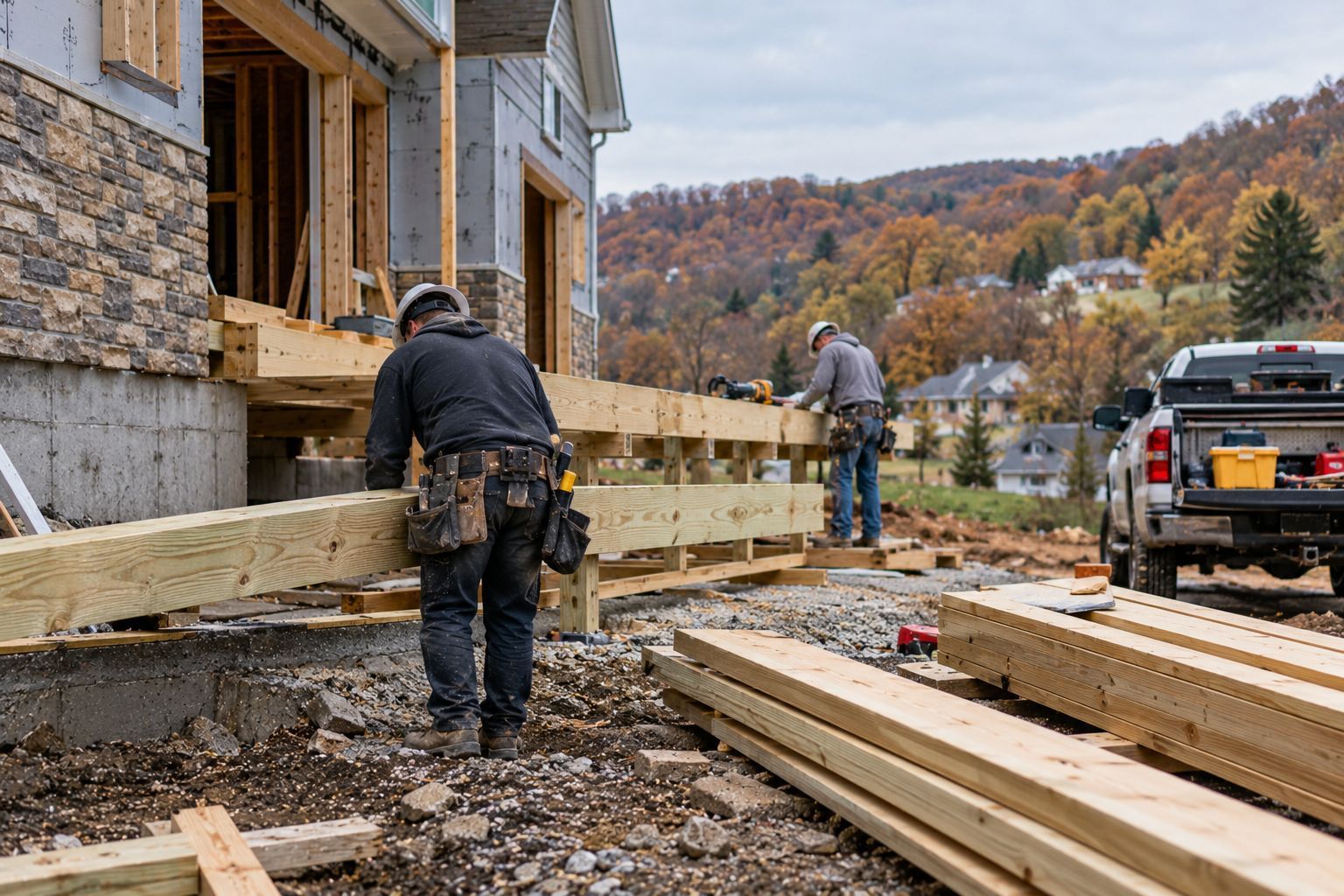
Who needs workers comp in Pennsylvania? Nearly every employer with even one employee does, whether that person works full-time, part-time, or only during the busy season. A few narrow exceptions exist for certain corporate officers, LLC members, religious objectors, and farm employers. If you've hired help, assume you need coverage until a specific rule says otherwise.
That short answer covers most businesses. The details are where owners get tripped up. We've seen a roofer skip coverage because his crew was "just weekend help." We've seen a family bakery assume a daughter on payroll didn't count. Both assumptions were wrong. Below is how the rules play out in practice, what the exclusion forms actually do, and what happens to employers who decide to take their chances.
Who Needs Workers Comp in Pennsylvania?
Under the Pennsylvania Workers' Compensation Act, nearly all employers with at least one employee must carry workers' compensation coverage. That includes full-time, part-time, and seasonal workers. The number of hours someone works and how long they stay on payroll don't change the requirement. If they're your employee, they need to be covered.
Employer Rules for Part-Time and Family Workers
Pennsylvania doesn't treat part-time workers differently from full-time staff for coverage purposes. A college student who works 12 hours a week at your coffee shop has the same protection as your 40-hour manager. The same goes for the seasonal landscaper you bring on from April to October. Coverage attaches to the employment relationship. The schedule doesn't matter.
This is the mistake we hear about most often. An owner figures a policy is only for "real" employees, then a part-timer slips on a wet floor or cuts a hand on a slicer. Those are routine claims. Without coverage, they become a direct bill to the business.
Family members follow the same logic. If your spouse, son, or niece is on payroll and doing work for the business, they're generally an employee who needs coverage. Being related doesn't create an exemption. Some family arrangements can qualify for exclusion, such as an owner who is also a corporate officer. Those exclusions depend on the business structure, though, not on the family tie.
Independent contractors are a separate question, and misclassifying an employee as a contractor won't protect you if the state sees the relationship differently. Pennsylvania looks at who controls the work, not what the paperwork says. If you're unsure how your mix of workers should be insured, our overview of pennsylvania workers comp insurance walks through the basics of how policies are built and priced.
The state is paying closer attention, too. In September 2026, the Department of Labor & Industry launched an initiative targeting compliance in the home care industry, which accounts for 40% of wage and compliance complaints. Industries that rely heavily on part-time staff tend to draw this kind of scrutiny first.
Executive Officer Exclusions and Exemptions
Yes, some owners can opt out of coverage for themselves. Pennsylvania allows certain executive officers of corporations and members of LLCs to elect exclusion from workers' compensation. This choice is voluntary and only applies to the people who qualify. It never removes the obligation to cover your regular employees.
For corporations, an executive officer who wants to be excluded typically files Form LIBC-509, the executive officer exclusion election. For LLCs, members use Form LIBC-513 to elect exclusion. The paperwork is usually submitted to the insurance carrier, and the exclusion generally takes effect only once it's properly filed. A verbal understanding with your agent won't do it.
A few points owners tend to overlook:
- Exclusion is personal. Each officer or member files for themselves. One partner's exclusion doesn't cover the other.
- It cuts both ways. If you exclude yourself and get hurt on the job, you won't collect workers' comp benefits. Your health insurance may deny a work-related injury, which leaves a gap.
- Sole proprietors and partners are different. They generally aren't required to cover themselves, though they can choose to buy coverage.
- Some contracts require it anyway. General contractors and commercial clients often demand proof that owners are covered before they'll let you on a jobsite.
We often suggest that owners in physical trades think twice before excluding themselves. A contractor who falls from a ladder faces the same medical bills as an employee would.
Religious and Agricultural Exemptions
Pennsylvania offers a narrow religious exemption for members of recognized religious sects that conscientiously object to insurance benefits, such as some Amish and Old Order Mennonite communities. Both the employer and the employees must belong to the sect and waive benefits, and the exemption requires state approval.
Agriculture has its own threshold. Farm employers must cover agricultural laborers who earn $1,200 or more per year or work at least 30 days for one employer. A family orchard that hires pickers for a two-week harvest might fall below that line. A dairy with a year-round hired hand almost certainly won't.
Penalties for Going Without Coverage
Going without coverage in Pennsylvania is a crime, not just a paperwork problem. Employers who fail to insure can face criminal prosecution, significant fines, and potential jail time. Each day without coverage can be treated as a separate offense, so penalties stack up quickly. Knowingly avoiding coverage is treated more harshly than an honest lapse.
The financial exposure is often worse than the fines. If an employee is hurt while you're uninsured, you remain liable for all medical bills and wage loss benefits. Workers' comp wage benefits in Pennsylvania aren't small. As of this writing, the maximum weekly compensation rate for injuries on or after January 1, 2026, is $1,394.00. A serious back injury with surgery and months off work can climb into six figures quickly.
The injured worker doesn't simply go without. Employees of uninsured businesses can seek benefits through the Uninsured Employers Guaranty Fund, known as the UEGF. The Department of Labor & Industry can then pursue the employer for reimbursement of everything the fund paid, plus interest and penalties. In other words, the state pays the worker first and then comes after you.
Uninsured employers can also lose some of the legal protections that come with coverage. Normally, workers' comp is the employee's exclusive remedy, which shields the business from lawsuits. Without a policy, an injured employee may be able to sue you directly.
Courts are also reading compensable injuries broadly. Pennsylvania rulings as of October 2026 hold that injuries during mandatory 15-minute breaks are compensable under the "personal comfort doctrine," because a short break doesn't give enough autonomy to sever the employment relationship. An employee who trips in the parking lot on break could still have a valid claim.
Pennsylvania Workers Comp Coverage Comparison Table
Here's how the rules typically apply across common business setups. Your exact situation can vary, but this gives you a fast read on where you stand.
| Business Type | Coverage Required? | Owner Coverage | Notes |
|---|---|---|---|
| Sole proprietor, no employees | No | Optional | Must cover any hired employees |
| Sole proprietor with employees | Yes | Optional | Part-time and seasonal staff count |
| Partnership | Yes, for employees | Optional for partners | Partners aren't automatically covered |
| Corporation | Yes | Officers may exclude | Exclusion via Form LIBC-509 |
| LLC | Yes, for employees | Members may exclude | Exclusion via Form LIBC-513 |
| Family business | Yes, for family on payroll | Depends on structure | Relationship alone isn't an exemption |
| Farm or agricultural employer | Yes, above threshold | Optional | $1,200/year or 30 days per laborer |
| Religious sect employer | Exemption possible | N/A | Requires state approval and waivers |
Coverage limits work differently from auto or liability policies. Part one of a workers' comp policy pays statutory benefits with no dollar cap, so the state law sets what's owed. Part two, employers' liability, carries stated limits, and many Pennsylvania employers carry higher limits when contracts require them.
Carrier Options for Pennsylvania Employers
Pennsylvania employers have several carrier options, and the right fit depends on your industry, payroll, and claims history. MVP Insurance is an independent agency, not an insurance company. We work as an independent agent with carriers such as Erie, Westfield, Progressive, and Frederick Mutual to compare workers' comp options for Pennsylvania businesses.
That matters because carriers price risk differently. One may be comfortable with roofing contractors while another prefers offices and retail. A restaurant with a clean three-year claims history might see very different quotes from one carrier to the next. Shopping the same risk across several markets is often the fastest way to find coverage that fits without paying for things you don't need.
A few things that help any carrier quote accurately:
- Your estimated annual payroll, broken out by job type
- Accurate classification codes for the work your employees actually do
- Your claims history for the past three years, if you've been insured before
- Any officer or member exclusions you plan to file
Getting classifications wrong is a common and expensive mistake. If clerical staff get lumped in with field workers, you'll overpay. If field workers are coded as clerical, a payroll audit at year-end can produce a large surprise bill. We regularly review classifications for this reason.
Frequently Asked Questions About PA Workers Comp
Do I need workers comp for one employee?
Yes. Pennsylvania requires coverage once you have a single employee, whether that person works full-time, part-time, or seasonally.
Can I exclude myself as a business owner?
Often, yes. Corporate executive officers can elect exclusion with Form LIBC-509, and LLC members can use Form LIBC-513, while sole proprietors and partners generally aren't required to cover themselves.
What happens if I don't have insurance?
You can face criminal charges, fines, and possible jail time, and you'll be responsible for an injured worker's medical bills and lost wages. If the Uninsured Employers Guaranty Fund pays the claim, the state can pursue you for repayment plus interest and penalties.
The pattern behind all of this is simple. If someone works for you and isn't a qualifying owner, they almost certainly need coverage, no matter their hours or last name. Exclusions exist, but they're narrow, they require the right form, and they leave you personally exposed if you get hurt. Going without coverage may look like savings until the first claim arrives.
The state's own Labor Day report puts the goal plainly: Pennsylvanians should "get support if they are hurt on the job through no fault of their own." A properly set up policy does that for your employees and protects your business at the same time.
If you're hiring your first employee, adding seasonal help, or questioning whether your current classifications are right, it's worth having someone compare your options. MVP Insurance, with offices in Zelienople, PA and New Springfield, OH, can shop multiple carriers for you, and you can start a quote here. MVP Insurance is licensed in Ohio (license #37714) and Pennsylvania (license #519263), NPN 10588293.
Search
Recent Posts



MVP Insurance is a local, independent agency, licensed to serve individuals and businesses across Ohio and Pennsylvania.
We serve clients from our offices in New Springfield, Ohio and Zelienople, Pennsylvania and throughout Northeast Ohio and Western Pennsylvania, working with multiple carriers to help contractors, landlords and real estate investors, restaurants, retail shops, auto repair shops, professional offices and many other personal and commercial clients find coverage that fits.
Our Owners
Two friends who started an agency
Owner
Joshua Medure
I am a Penn State marketing graduate with more than ten years in insurance. My childhood friend David and I started MVP Insurance in Northeast Ohio because we wanted the people around us to have an agency that gives honest advice, real choices and someone who picks up the phone. I lead the agency’s insurance strategy, which means I read the policies so our clients do not have to. Away from the office, I coach youth football.


About the Author
David Varrati
Owner, MVP Insurance
I started MVP Insurance with my childhood friend Josh because we wanted people in Northeast Ohio and Western Pennsylvania to have an agency that explains things plainly and picks up the phone. I studied Political Science at Slippery Rock University and have spent more than ten years helping families and individuals protect what matters to them. When I am not in the office, you will find me coaching youth sports.