

Pennsylvania teens move from a learner's permit to a junior license to a senior license. Each step requires a minimum amount of time, practice, or clean driving before the next one unlocks. Here's what each stage actually requires and what it means at home.
CG 20 37: Coverage After the Project is Finished
Can my 16-year-old drive their friends home from school in Pennsylvania? During the first six months of a junior license, they can carry only one passenger under 18 who isn't an immediate family member, unless a parent or guardian is in the car. After that window, the limit eases if your teen has stayed violation-free.
Does a teen with a learner's permit need to be on my car insurance? It depends on the carrier. Some require permit holders to be listed, and others don't rate them until they're licensed. Tell your agent when the permit is issued so there's no gap if something happens.
Can a junior license holder drive home from work after 11 PM? Yes. Pennsylvania's curfew includes an exception for travel to and from employment. Your teen should keep proof of their work schedule in the car in case they're stopped.
Pennsylvania's licensing rules work because they ease teens into risk instead of handing them full privileges on day one. Supervised hours, passenger caps, and the overnight curfew all target the situations where new drivers get hurt most. For families, those same rules shape the insurance conversation. A clean junior year, solid liability limits, and the right car assignment can keep your teen safer and your premium more manageable.
If your teen's road test is coming up, now is a good moment to see how different carriers would price your household. MVP Insurance is an independent agency with offices in Zelienople, PA and New Springfield, OH. We compare policies across multiple carriers so you don't have to. When you're ready, you can start your quote here, and we'll walk you through the options. MVP Insurance is licensed in Ohio (license #37714) and Pennsylvania (license #519263), NPN 10588293.
Pennsylvania still offers homeowners insurance below the national average, but recent increases have been steep, and Western PA homeowners have felt it through storms and rising rebuilding costs. Your location sets the starting point. Your deductible, your roof and home systems, and how you use your policy decide much of the rest.
The most useful step is seeing real numbers side by side instead of accepting a single renewal at face value. MVP Insurance is an independent agency with offices in Zelienople, PA and New Springfield, OH, and the team compares multiple carriers so you don't have to. When you're ready, start your quote here and get a clearer picture of what your home should cost to insure.
MVP Insurance is licensed in Ohio (license #37714) and Pennsylvania (license #519263), NPN 10588293.
Pennsylvania follows modified comparative negligence. You can recover damages from other drivers as long as your share of fault isn't greater than theirs combined. Your recovery is reduced by your own percentage. If you're found 30% at fault for a $10,000 loss, you'd typically recover $7,000 from the other side. Once you cross 50%, you can't recover from them at all.
Icy-road claims are full of split percentages. Say one driver was following too closely and another changed lanes abruptly on packed snow. Fault might land at 60/40 or 70/30. In a pileup, three or four drivers might each carry a slice. These percentages shape your claim history too, which is why it's worth disputing a split you think is wrong before it becomes final.
These two get confused all the time, and they pay for different situations.
- Emergency roadside service (sometimes called towing and labor) covers breakdowns: dead batteries on a zero-degree morning, flat tires, lockouts, or a winch-out when you've slid into a snowbank without damaging the car. It typically has a per-incident limit and is a low-cost add-on.
- Collision towing is part of your collision claim. When your car is damaged in a crash, the tow to a shop and reasonable storage are usually paid as part of the loss, subject to your deductible.
- Comprehensive can cover towing tied to non-collision losses, such as a tree limb crushing your hood during an ice storm.
A common mistake is assuming roadside service covers a crash tow, or that collision covers a simple winch-out. Check which one applies before you call, especially if you belong to an auto club as well.
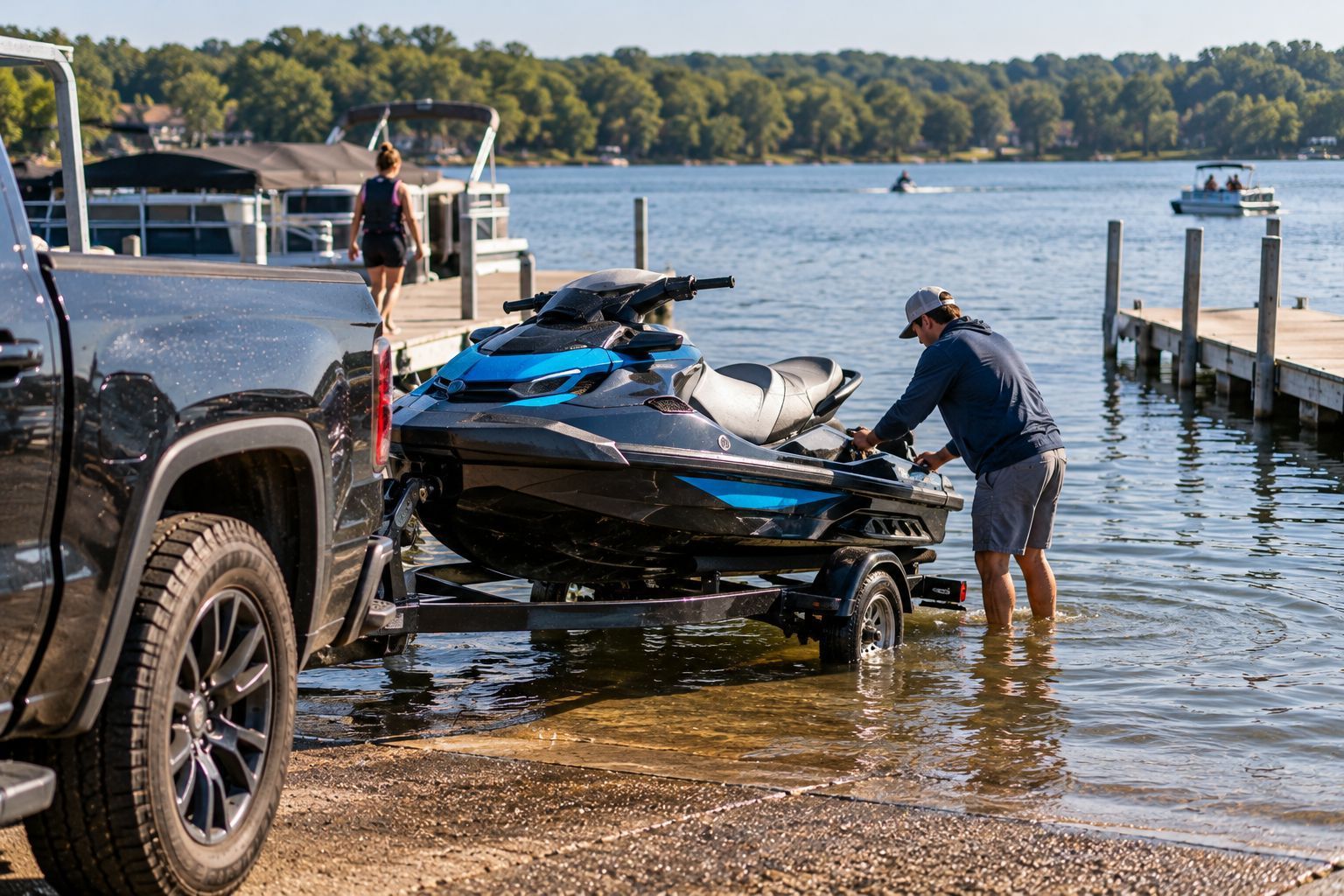
Insuring a jet ski in Ohio comes down to four things: carrying enough liability coverage even though the state doesn't require it, knowing who can legally operate the craft, understanding how rentals at Lake Milton and Berlin Lake shift risk onto you, and adding physical damage coverage that pays when a PWC disappears off its trailer.
Most people think about insurance the week they buy the ski, then never again until something goes wrong. That timing is backwards. The claims that hurt Ohio owners usually aren't the dramatic crashes. They're the quieter problems: a 14-year-old nephew borrowing the ski without an adult aboard, a rented ski clipping a dock, or a trailer that's gone from the driveway one Sunday morning in July.
Northeast Ohio adds its own wrinkles. Lake Milton and Berlin Lake sit close enough to Youngstown, Akron, and the Pennsylvania line that weekend traffic gets heavy, and the mix of rental riders, families, and anglers creates real collision exposure. Here's how each piece fits together.
The Essentials of Insuring a Jet Ski in Ohio
Insuring a jet ski in Ohio means building a policy around three risks: injuring someone or damaging their property, having an underage or uncertified rider at the controls, and losing the machine to theft or damage, including while it sits on a trailer. Rental riders at Lake Milton and Berlin Lake face a fourth layer: the contract they sign.
Ohio doesn't force recreational boaters to buy coverage, so the decisions are mostly yours. That freedom is where people get into trouble. Owners assume their homeowners policy picks up the slack, or they buy liability-only coverage to satisfy a lender and never think about theft.
A sensible Ohio PWC policy typically addresses:
- Liability for injuries and property damage you cause on the water
- Medical payments for you and your passengers, regardless of fault
- Physical damage (collision and comprehensive) for the ski itself
- Trailer coverage, which is sometimes included and sometimes an add-on
- Permissive operator rules, so you know who can ride and still be covered
- Uninsured boater coverage, because plenty of riders on these lakes carry nothing
The legal side matters just as much as the policy. Ohio's age limits and education rules determine whether an operator is legal, and an illegal operator can complicate a claim fast. If an insurer finds the rider at the time of a loss was barred by state law from operating the craft, expect hard questions about whether the policy responds.
Think of it this way: the law tells you who can ride, the policy tells you what's paid when something goes wrong, and the gap between those two is where most bad surprises live.
Personal Watercraft Liability and Coverage Limits
Ohio doesn't require insurance for recreational watercraft at the state level, but liability coverage is still the most important part of any PWC policy. It's the piece that protects your savings, your home equity, and your future wages if you hurt someone or wreck their property. Lenders and marinas often require it anyway, so many owners end up carrying it regardless.
Jet skis are small, but the injuries they cause aren't. A PWC has no brakes, and riders who let off the throttle lose steering on many older models. Common liability claims include striking a swimmer near a beach area, rear-ending another ski while wake jumping, slamming into a moored pontoon, and passenger injuries when someone gets thrown off on a sharp turn. A single serious injury claim can climb well past six figures once medical bills and lost wages stack up.
That's why the minimum limit a lender asks for is rarely the right number. If you own a home, consider liability limits that match what you'd carry on your auto policy, and think about an umbrella policy that sits on top. Check that your umbrella actually lists watercraft as covered, since some exclude PWCs or require a minimum underlying limit.
As of this writing, liability-only PWC policies typically run around $100 to $150 a year, while full coverage averages roughly $300 to $500. Your price depends on the ski's value, horsepower, your boating history, and where you store it. If you want to see how jet skis fit into a broader policy built for Ohio waters, our page on ohio boat insurance walks through the options in more detail: ohio boat insurance.
Common PWC Coverage Options Comparison
| Coverage | What It Pays For | Who It Protects | Typical Notes |
|---|---|---|---|
| Liability | Injuries or damage you cause to others | Other people, their property | Most important coverage; set limits to match your assets |
| Medical Payments | Medical bills for you and passengers | You, your riders | Pays regardless of fault, usually smaller limits |
| Collision | Damage to your ski from a crash | Your PWC | Subject to a deductible |
| Comprehensive | Theft, vandalism, fire, storm damage | Your PWC (and trailer if listed) | Key coverage for trailer theft |
| Uninsured Boater | Your injuries caused by an uninsured rider | You, your riders | Useful on busy lakes |
| Trailer Coverage | Physical damage to the trailer | Your trailer | May need to be scheduled separately |
Age Rules for Operators in Ohio
Ohio sets firm age limits for personal watercraft. Children under 12 are prohibited from operating a PWC, full stop, even with a parent sitting right behind them. Riders aged 12 to 15 may operate one only when they hold a boater education certificate and a supervisor age 18 or older is physically onboard the vessel.
That "onboard" detail trips up a lot of families. Standing on the dock watching doesn't count. Following on a second ski doesn't count either. The adult needs to be on the same craft, which matters because most jet skis seat two or three people at most.
From an insurance view, these rules affect claims in ways families rarely consider. Picture a 13-year-old taking the ski out solo at Berlin Lake and clipping a fishing boat. The operator was illegal under state law, and many PWC policies limit or exclude coverage when the operator is violating age or licensing laws. Even if the insurer pays the injured party, you may face a fight over your own damage, and the incident can follow you at renewal.
A few practical habits help:
- Keep a written list of who's allowed to ride your ski, and share it with your insurance agent
- Store the key separately so younger kids can't take the ski out on impulse
- Tell visiting friends that your ski comes with rules, not just a full tank
- Confirm your policy's definition of permissive operator before lending it out
Once a rider turns 16 and has completed boater education, they may operate a PWC independently under Ohio law.
Education Requirements for Different Age Groups
Age isn't the only test. Anyone born on or after January 1, 1982, must hold a NASBLA-approved boater education certificate to operate a craft powered by more than 10 horsepower in Ohio. Every jet ski on the market clears that bar many times over, so in practice the rule covers essentially every PWC rider born in 1982 or later.
That means a 44-year-old adult needs the certificate just as much as a 15-year-old does. People born before 1982 are exempt, which is why you'll still see some riders in their 50s and 60s operating without one.
Carry the card, or at least know where it is. Boaters who are required to hold a certificate must be able to present it to law enforcement within 72 hours of being stopped. A photo saved on your phone makes life easier if an officer flags you down near a ramp.
There's also an insurance angle. Completing a boater course shows an underwriter you've had formal training, and some carriers factor that into pricing. Even when it doesn't change the premium, it removes a question mark if you ever file a claim.
Lake Milton and Berlin Lake Rentals
Renting a jet ski at Lake Milton or Berlin Lake shifts much of the financial risk onto you, the renter. The rental agreement usually makes you responsible for damage to the ski and for injuries you cause, and your personal auto or homeowners policy may not step in to cover the gap.
Start with eligibility. At Lake Milton, PWC renters typically must be at least 18 years old with a valid driver's license. Ohio also gives rental customers born after 1981 a shortcut: they can take a 10-question abbreviated exam and must score 90% or higher to operate a rental PWC for the day. That temporary permission helps tourists and first-timers, but it doesn't make an inexperienced rider safer.
Lake Milton has specific trouble spots. No-wake zones are strictly enforced between the I-76 and Mahoning Avenue bridges and within 300 feet of any shoreline. New riders who miss those markers get ticketed, and they also tend to throw wakes into docks and moored boats, which creates damage claims. Berlin Lake is larger and busier on summer weekends, with long open stretches that tempt riders to push speed near other traffic.
Read the rental contract before you sign. Watch for:
- Damage deposits and full-repair clauses that make you pay the entire repair bill
- Waivers that release the rental operator from liability, leaving you as the target if someone sues
- Optional damage protection, which may limit your out-of-pocket cost for the ski itself but rarely covers your liability to others
- Operator restrictions, since letting an unlisted friend drive can void the agreement's protections
Here's the gap most renters miss. Your homeowners policy may extend a small amount of liability to rented watercraft, but those limits are often thin and horsepower restrictions frequently apply. If you rent several times a season, ask your agent whether a non-owned watercraft endorsement or an umbrella policy makes more sense.
Protecting Against Theft From Trailers
Jet skis get stolen most often while they're sitting on trailers, in driveways, storage lots, or marina parking areas. A PWC on a trailer is a compact, high-value package that a thief can hitch and tow in under a minute. Recovering that loss requires comprehensive coverage on the ski and, ideally, the trailer listed on your policy too.
The numbers aren't encouraging. Roughly 59,000 recreational vehicles, including PWCs, were stolen in the U.S. in 2025, and about 63% remain unrecovered. Once a ski leaves your property, the odds suggest you won't see it again.
Liability-only policies do nothing here. That's the most common mistake we see with PWC owners: they buy minimal coverage to satisfy a marina, then discover after a theft that nothing pays for the machine. If your ski is worth more than you'd comfortably lose, comprehensive coverage belongs on the policy. Also check whether your trailer is covered automatically, scheduled separately, or excluded, along with accessories like covers, life vests, and tow ropes.
Prevention matters too, both for keeping your ski and for documenting a claim. The Ohio Department of Natural Resources advises owners to engrave or mark all detachable equipment with a unique identifier and to photograph the Hull Identification Number and trailer VIN. A few other habits that work:
- Use a coupler lock and a wheel lock, not just one
- Park the trailer tongue facing a wall or garage so it's hard to hitch
- Chain the trailer to a fixed object in storage lots
- Keep receipts and photos of the ski, trailer, and upgrades in cloud storage
- Avoid leaving a loaded trailer overnight in a hotel or restaurant lot on trips
Good records speed up a claim considerably. An adjuster who sees the HIN photo, the purchase receipt, and pictures of the aftermarket sound system can settle much faster than one working from memory.
Carrier Options for Ohio Jet Ski Owners
Ohio PWC owners have several solid carrier choices, and the right fit depends on your ski's value, how you use it, and what else you insure. As an independent agency, MVP Insurance works with a range of carriers as an agent, rather than being tied to any single insurer. That lets us compare how each one handles watercraft before you commit.
Carriers we work with for watercraft and related coverage include:
- Erie, often a good match for owners who want to bundle a PWC with home and auto
- Westfield, an Ohio-rooted carrier familiar with local exposures
- Progressive, which writes a large share of standalone PWC policies
- GEICO, a common option for owners wanting straightforward watercraft coverage
- Western Reserve, a regional carrier with a strong Ohio presence
- American Modern, known for specialty and recreational vehicle policies
- Foremost, another specialty option for recreational toys
Policies differ in ways that don't show up on a quote summary. Some pay agreed value on newer skis, while others pay actual cash value after depreciation. Trailer coverage, towing assistance, and how they treat permissive operators also vary. One carrier might automatically extend coverage to a licensed friend, while another restricts it to listed drivers.
That's where comparing matters. Rather than calling each insurer yourself, an independent agent can line up the coverage details side by side and point out where one policy leaves a gap another one closes. If you also own a pontoon or fishing boat, it's worth seeing whether a single carrier can handle all of it cleanly.
Frequently Asked Questions About Ohio Jet Ski Insurance
Do I need insurance for a jet ski in Ohio?
Ohio doesn't require insurance for recreational watercraft at the state level. Still, lenders usually require it if you financed the ski, many marinas require it to use their slips, and liability coverage protects you from lawsuits if someone gets hurt.
Does my home insurance cover my jet ski on a trailer?
Usually not in any meaningful way. Standard Ohio homeowners policies typically provide very limited watercraft coverage, often capped around $1,000, which won't replace a stolen ski or pay a serious injury claim, so a separate PWC policy is the safer route.
How old do you have to be to drive a jet ski at Berlin Lake?
Berlin Lake follows Ohio state law: no one under 12 may operate a PWC, and riders aged 12 to 15 need a boater education certificate plus an adult 18 or older aboard. Renters generally must be at least 18, so check the rental's rules before you go.
Getting this right isn't complicated once you see the pieces. Carry real liability limits even though Ohio doesn't demand them, follow the age and education rules so a claim never hinges on an illegal rider, read rental contracts at Lake Milton and Berlin Lake before you sign, and add comprehensive coverage so a trailer theft doesn't become a total loss.
If you'd like a second set of eyes on your PWC coverage, MVP Insurance can compare options across multiple carriers and explain the differences in plain language. With offices in New Springfield, OH and Zelienople, PA, we know these lakes and the people who ride them. When you're ready, start your quote and we'll handle the comparison work.
MVP Insurance is licensed in Ohio (#37714) and Pennsylvania (#519263), NPN 10588293.
Search
Recent Posts



MVP Insurance is a local, independent agency, licensed to serve individuals and businesses across Ohio and Pennsylvania.
We serve clients from our offices in New Springfield, Ohio and Zelienople, Pennsylvania and throughout Northeast Ohio and Western Pennsylvania, working with multiple carriers to help contractors, landlords and real estate investors, restaurants, retail shops, auto repair shops, professional offices and many other personal and commercial clients find coverage that fits.
Our Owners
Two friends who started an agency
Owner
Joshua Medure
I am a Penn State marketing graduate with more than ten years in insurance. My childhood friend David and I started MVP Insurance in Northeast Ohio because we wanted the people around us to have an agency that gives honest advice, real choices and someone who picks up the phone. I lead the agency’s insurance strategy, which means I read the policies so our clients do not have to. Away from the office, I coach youth football.


About the Author
David Varrati
Owner, MVP Insurance
I started MVP Insurance with my childhood friend Josh because we wanted people in Northeast Ohio and Western Pennsylvania to have an agency that explains things plainly and picks up the phone. I studied Political Science at Slippery Rock University and have spent more than ten years helping families and individuals protect what matters to them. When I am not in the office, you will find me coaching youth sports.