

The Ohio Valley sits in a corridor where warm, humid air from the south meets colder systems from the west. The result is a steady run of thunderstorms, straight-line winds, hail, and heavy downpours that overwhelm older storm drains. For homeowners, that translates into very specific claims: shingles peeled off in a wind event, siding dented by hail, trees through the roof, and basements flooded by sewer backup.
Sewer backup is a gap we see catch people off guard constantly. A standard policy usually excludes water that backs up through drains unless you've added a specific endorsement, and in a hillside neighborhood with aging municipal lines, one heavy storm can leave several inches of water in a finished basement. Carriers have watched these losses pile up across the region and priced accordingly.
Misclassification is the most common expensive mistake we see. A business gets lumped into one high-rated code, even though half the staff works in an office. Pennsylvania generally rates a business by its governing classification, but separate codes can apply when operations meet the PCRB's rules for division.
Take a small HVAC company where the owner's spouse handles billing full time. That clerical payroll may qualify for a far lower code than the field technicians' code. Review the classification page of your policy every year. If the description doesn't match what your people actually do, ask questions before the audit.
Your experience modifier compares your claims history to that of similar businesses. A 1.00 mod is average. A 0.85 mod cuts your premium by 15%, and a 1.25 mod raises it by 25%. Mods generally use three years of claims, excluding the most recent year, so today's injury affects your bill for years.
Frequency hurts more than severity. Five small medical-only claims often damage a mod more than one larger claim. Pennsylvania offers medical-only claim handling, but small injuries still need to be reported properly, so check how claims are counted before you decide how to handle minor incidents.
Frequently Asked Questions About PA Workers Comp Costs
It helps to think of Act 72 as three gates the worker has to pass through, in order:
- A written contract exists. No contract, no independent contractor status. A handshake deal or a text thread won't hold up.
- The worker is free from your control. They must be free from control or direction over the performance of services both under the contract and in fact. That second part trips people up: a contract saying "contractor controls the work" means nothing if your foreman is telling them how to frame the wall.
- The worker runs an independently established business. This is where the criteria above come in: proprietary interest, profit or loss, separate location, and so on.
The "in fact" language deserves attention. Investigators look at what happens on the job site, not just what the contract says. If you set their schedule, supervise their methods, and they can't send someone else in their place, the control prong fails no matter how polished the agreement is.
Payroll" for workers comp means more than base wages. It generally includes overtime pay (with the premium portion often excluded), bonuses, commissions, holiday and vacation pay, and certain other compensation. Business owners often miscount this, and the error shows up at audit.
Corporate officers follow special rules. For policies effective April 1, 2026, officer payroll ranges from $70,044 to $280,800 per year for rating purposes. An officer who pays themselves very little still gets rated at the minimum, and high earners get capped at the maximum. That ceiling rose sharply this year, so owners who pay themselves well may see more of their salary counted than they did in past years.
Required Documentation for a Clean Audit
Yes. With key person coverage, the business applies for the policy, pays the premiums, and is the beneficiary. In a cross-purchase buy-sell setup, the individual owners own policies on each other instead.
If a covered loss forces you to close, business income coverage replaces lost net income and helps pay ongoing expenses like rent, payroll, and loan payments while you rebuild. Picture a Butler County bakery after a kitchen fire. The ovens are replaceable, but six weeks without sales could end the business. Most BOPs also include extra expense coverage, which pays for things like renting temporary space so you can reopen sooner. Coverage usually applies only when the closure comes from a covered property loss, not from a slow season or a supplier's problems.
Can I change the key person if they leave the company?
Generally, no. Death benefits are typically received income tax-free if the business met IRC Section 101(j) notice and consent rules before the policy was issued and files Form 8925 each year. Proceeds paid to a named beneficiary are also generally exempt from the Pennsylvania Inheritance Tax.
Key person coverage and a funded buy-sell agreement both answer the same question: what happens to this business if someone essential dies? The business owns the policy and collects the benefit, premiums typically aren't deductible, and the payout stays income tax-free when Section 101(j) paperwork is done correctly and on time. Choose term or permanent coverage based on how long the risk actually lasts, and revisit valuations and face amounts as the company grows.
If your buy-sell agreement hasn't been reviewed in a few years, or you've never put a number on your key people, now is a sensible time. MVP Insurance, with offices in Zelienople, PA and New Springfield, OH, can compare options from multiple carriers so you don't have to. Start a quote and get a clear picture of what coverage would cost.
MVP Insurance is licensed in Ohio (#37714) and Pennsylvania (#519263), NPN 10588293.
Term coverage is usually the practical fit for protecting against the loss of a key employee during a specific window, like the life of an equipment loan or the years before a planned retirement. If your top salesperson is 45 and plans to work 15 more years, a 20-year term policy covers that period with room to spare.
Buy-sell funding is less clear-cut. If owners plan to stay until death or a late sale, permanent coverage can make sense because term policies often expire right when older owners are most likely to die. Cash value in a whole life policy can also help fund a lifetime buyout at retirement. Universal life gives flexibility, but owners need to review in-force illustrations every few years. Underfunded universal life policies have caused real problems for businesses that assumed coverage would last.
Conversion privileges are worth checking on any term policy. They let you switch to permanent coverage later without new medical underwriting, which matters if the insured's health changes.
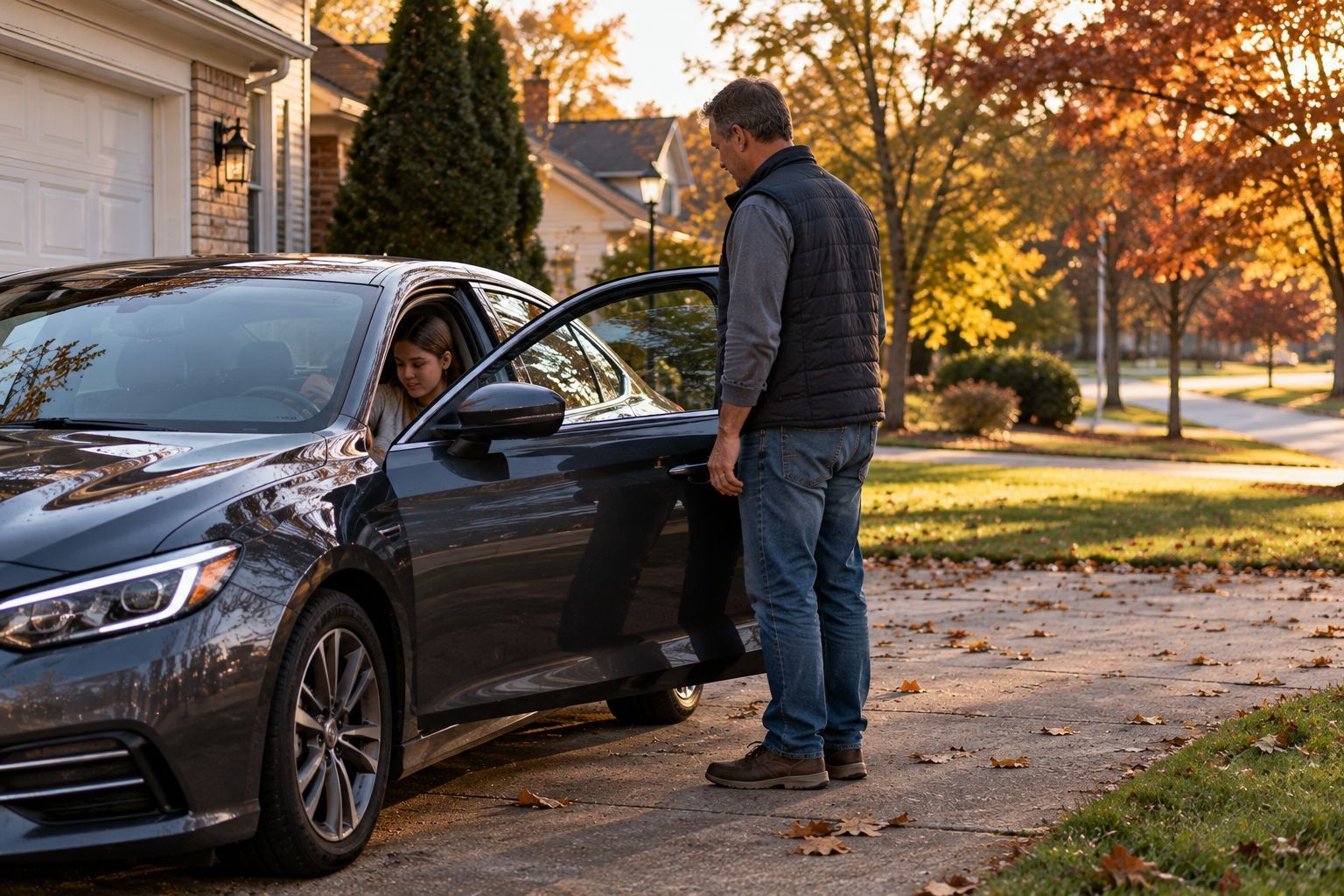
Ohio teen driver laws follow a graduated path. A teen can get a temporary instruction permit at 15 and a half, hold it for at least six months, then earn a probationary license at 16 after driver education and 50 practice hours. Until 18, curfews, passenger limits and a full ban on phone use apply.
That is the short version. The details matter, because each stage changes who can sit in the passenger seat, what time the car needs to be home, and how your insurance carrier treats the new driver in your household. For families in the Mahoning Valley, Columbus suburbs or anywhere else in the state, getting these rules right keeps a teen legal and keeps a policy clean.
The stakes are real. Drivers under 24 make up only 13% of Ohio's licensed drivers but are involved in 31% of all crashes. And in 2025, the state recorded 110 fatal crashes involving teen drivers, with at-fault teen fatal crashes up 18% from the year before. Below is a stage-by-stage breakdown, followed by what happens on the insurance side once your teen gets the keys.
Ohio Teen Driver Laws for Temporary Permits and Probationary Licenses
Ohio uses a multi-stage system: a temporary permit at age 15 and a half, then a probationary license at 16 once a teen completes 50 hours of supervised driving and a state-approved driver education course. Full, unrestricted privileges don't arrive until 18. Each stage builds experience under tighter supervision before loosening the rules.
Most families underestimate how long this takes. If your teen wants to drive on their 16th birthday, the permit needs to be in hand by 15 and a half, and driver education should start soon after. Waiting until spring of sophomore year usually pushes the license back by months.
Requirements for the Temporary Instruction Permit Identification Card (TIPIC)
Teens can apply for the TIPIC at 15 years and six months, and must hold it for at least six consecutive months before taking the road test. The application happens at a deputy registrar or BMV location and includes a knowledge test and vision screening.
Supervision rules depend on age:
- Under 16: The teen must drive with a licensed parent, guardian or certified instructor in the front seat.
- 16 and older: The teen may drive with any licensed driver age 21 or older, except between midnight and 6:00 a.m., when a parent or guardian is required.
Driver education also starts during this phase. Ohio requires 24 hours of classroom or online instruction plus 8 hours of behind-the-wheel training at a licensed driving school. Demand has grown since a 2025 law change expanded training requirements, and the number of licensed instructors grew by 50% to more than 1,900. Booking early still helps, especially for summer sessions.
Transitioning to an Ohio Probationary Driver License
Once your teen turns 16, has held the permit for six months, finished driver education and logged 50 practice hours, they can schedule the maneuverability and road tests. A parent or guardian signs off on the practice hours, so keep an honest log as you go rather than reconstructing it the night before.
Many families now track hours digitally. The state's RoadReady Ohio app was downloaded over 81,000 times in its first year, helping families build verified habits before the test. Passing earns the probationary license, which carries its own restrictions until 18.
Ohio Teen Driving Curfews and Nighttime Restrictions
Ohio drivers under 18 generally cannot drive between midnight and 6 a.m. unless a parent or guardian is in the car or they're traveling to or from work or a school activity. The tightest limits apply during the first 12 months of holding a license, and they ease slightly after that.
Here's how the curfew typically plays out:
- First 12 months of the probationary license: No driving from midnight to 6 a.m. without a parent or guardian, unless the trip is for work, school or a school-sponsored activity.
- After the first year, still under 18: The window narrows. For 17-year-olds in their second year of driving, the curfew runs from 1:00 a.m. to 5:00 a.m.
- Age 18: Curfew restrictions end.
The work and school exceptions trip up a lot of families. A teen closing at a restaurant at 12:30 a.m. is generally covered for the drive home, but an officer may ask for proof. Keeping a signed note from the employer or school in the glovebox, along with a work schedule, saves an awkward roadside conversation.
The exception also covers only the trip itself. A teen who leaves work at midnight and stops at a friend's house before heading home has stepped outside it. Night driving carries far more risk for inexperienced drivers, which is exactly why the law treats these hours differently.
Passenger Limits and Electronic Device Restrictions for Minors
For the first 12 months of a probationary license, an Ohio teen can carry only one non-family passenger unless a parent or guardian is in the vehicle. And for every driver under 18, any use of a mobile device behind the wheel is prohibited.
The passenger rule exists because each extra teenager in the car raises the crash risk for a new driver. Siblings and other family members don't count toward the limit, so a 16-year-old can drive two younger brothers to practice without breaking the law. Picking up two friends from school is a different story during that first year.
The device ban is stricter than what adults face. Teens under 18 can't use a phone or other electronic wireless device while driving at all, and that includes hands-free calls and Bluetooth. The narrow exception covers contacting emergency services. Some families set up the phone's driving focus mode so texts are silenced automatically, which removes the temptation instead of relying on willpower.
Seat belt rules apply too: every occupant needs a belt, and the number of passengers can't exceed the number of belts. From an insurance angle, distraction-related crashes are among the most common teen claims. A rear-end collision at a stoplight while glancing at a text can mean a liability claim, a damaged family car and a surcharge that follows the household for years. A phone ban written into a family driving agreement tends to stick better than a lecture.
Adding a Teen Driver to Your Ohio Car Insurance Policy
Call your independent agent and add your teen to your Ohio car insurance policy as soon as they get their probationary license. Coverage gaps happen when parents assume the teen is automatically covered, and an independent agent can compare options from carriers such as Erie, Westfield and Progressive.
Timing matters more than most people realize. If your teen passes the road test on a Tuesday and drives to school Wednesday, you want them listed before that first solo trip. Many carriers expect you to report a newly licensed household driver promptly, and an unlisted driver can complicate a claim.
Expect a premium increase. As of this writing, adding a teen to a parent's policy in Ohio typically raises the annual premium by about $1,400 to $1,500. A standalone policy for a 16-year-old with full coverage can run upwards of $2,900 a year, which is why most families keep teens on the household policy.
A few common mistakes we see:
- Low liability limits. A teen driver raises the household's exposure, and state minimum limits rarely cover a serious at-fault crash.
- Not assigning the teen to the right vehicle. Rating a teen on an older sedan instead of the newest SUV can affect the premium.
- Skipping available credits. Good student credits and completed driver training may lower the cost with some carriers.
- Forgetting to update when a teen leaves for college. A student away at school without a car may be rated differently.
Comparing Ohio Auto Insurance Carrier Options
Each carrier rates young drivers differently, so the same family can see noticeably different quotes. MVP Insurance works with carriers like Erie, Westfield and Progressive as an independent agent, which means comparing several options side by side rather than accepting one company's number.
Erie and Westfield are regional carriers with a strong presence in Ohio, and many families with homes and multiple cars bundle with them. Progressive offers usage-based programs that track driving behavior, which can reward a careful teen. The right fit depends on your vehicles, your home policy and your teen's record, so it's worth seeing real quotes before deciding.
Summary of Ohio Graduated Driver Licensing Requirements
Ohio's graduated system has two restricted phases before full privileges: the temporary permit and the probationary license. The permit focuses on supervised practice, while the probationary license allows solo driving with curfews and passenger limits until 18.
| Requirement | Temporary Permit (TIPIC) | Probationary License |
|---|---|---|
| Minimum age | 15 years, 6 months | 16 |
| Time in phase | At least 6 months | Until age 18 |
| Practice hours | 50 hours logged before road test | Not applicable |
| Driver education | 24 hours classroom/online + 8 hours behind the wheel | Must be complete to qualify |
| Supervision | Parent, guardian or instructor (under 16); licensed driver 21+ (16 and older) | Solo driving allowed |
| Nighttime rule | Parent or guardian required midnight to 6 a.m. | Midnight to 6 a.m. first year; 1 a.m. to 5 a.m. for 17-year-olds in year two |
| Passengers | Supervising driver required | One non-family passenger in first 12 months unless parent present |
| Phone use | Prohibited | Prohibited under 18 |
Print this table and keep it on the fridge. Teens remember the license date and forget the restrictions, and a visual reminder helps.
Frequently Asked Questions About Ohio Teen Driving
When can my teen get a permit in Ohio?
Your teen can apply for a temporary instruction permit at 15 years and six months. They need to hold it for at least six months before taking the road test.
Does my teen need insurance with a permit?
A permit holder is generally covered under the parents' auto policy while driving the family car, so a separate policy isn't typically needed. Still, let your agent know when your teen gets a permit, and plan to formally add them once they're licensed.
What happens if a teen breaks curfew?
A curfew violation can lead to a citation, court involvement and possible license suspension or extended restrictions through the BMV. It can also show up on the teen's driving record, which carriers review at renewal.
These rules are designed to give new drivers time to build skill in lower-risk conditions, and the families who treat them as a floor rather than a ceiling usually have the smoothest path to 18. Learn the stages, enforce the curfew and phone ban at home, and sort out insurance before the first solo drive. Following Ohio teen driver laws closely also keeps the driving record clean, which pays off for years in premiums.
If your teen is about to get licensed, MVP Insurance can compare options across several carriers and walk you through coverage choices. With offices in Zelienople, PA and New Springfield, OH, we're happy to help you
start your quote and add your new driver the right way. MVP Insurance is licensed in Ohio (#37714) and Pennsylvania (#519263), NPN 10588293.
Search
Recent Posts



MVP Insurance is a local, independent agency, licensed to serve individuals and businesses across Ohio and Pennsylvania.
We serve clients from our offices in New Springfield, Ohio and Zelienople, Pennsylvania and throughout Northeast Ohio and Western Pennsylvania, working with multiple carriers to help contractors, landlords and real estate investors, restaurants, retail shops, auto repair shops, professional offices and many other personal and commercial clients find coverage that fits.
Our Owners
Two friends who started an agency
Owner
Joshua Medure
I am a Penn State marketing graduate with more than ten years in insurance. My childhood friend David and I started MVP Insurance in Northeast Ohio because we wanted the people around us to have an agency that gives honest advice, real choices and someone who picks up the phone. I lead the agency’s insurance strategy, which means I read the policies so our clients do not have to. Away from the office, I coach youth football.


About the Author
David Varrati
Owner, MVP Insurance
I started MVP Insurance with my childhood friend Josh because we wanted people in Northeast Ohio and Western Pennsylvania to have an agency that explains things plainly and picks up the phone. I studied Political Science at Slippery Rock University and have spent more than ten years helping families and individuals protect what matters to them. When I am not in the office, you will find me coaching youth sports.