

A few practical notes from looking at a lot of Pennsylvania policies. Dwelling coverage is where most mistakes happen, because people anchor to market value or their mortgage balance instead of rebuild cost. A Pittsburgh-area home might sell for $220,000 but cost $320,000 to rebuild with today's labor and materials.
Personal property limits are usually set as a percentage, which sounds generous until you hit sub-limits. Jewelry, firearms, collectibles, and cash often have caps of a few thousand dollars unless you schedule them separately. If you own an engagement ring worth more than that cap, it's worth asking about.
Liability is the coverage people tend to skimp on, and it's often the least expensive to increase. Raising liability from $300,000 to $500,000 frequently costs much less than people expect, and if you have a pool, a trampoline, or a dog, the extra protection makes sense. Many families pair it with an umbrella policy for even more protection.
Endorsements fill the gaps the table doesn't cover: sewer and drain backup, equipment breakdown, service line coverage, and replacement cost on contents. Flood and earthquake require separate policies entirely.
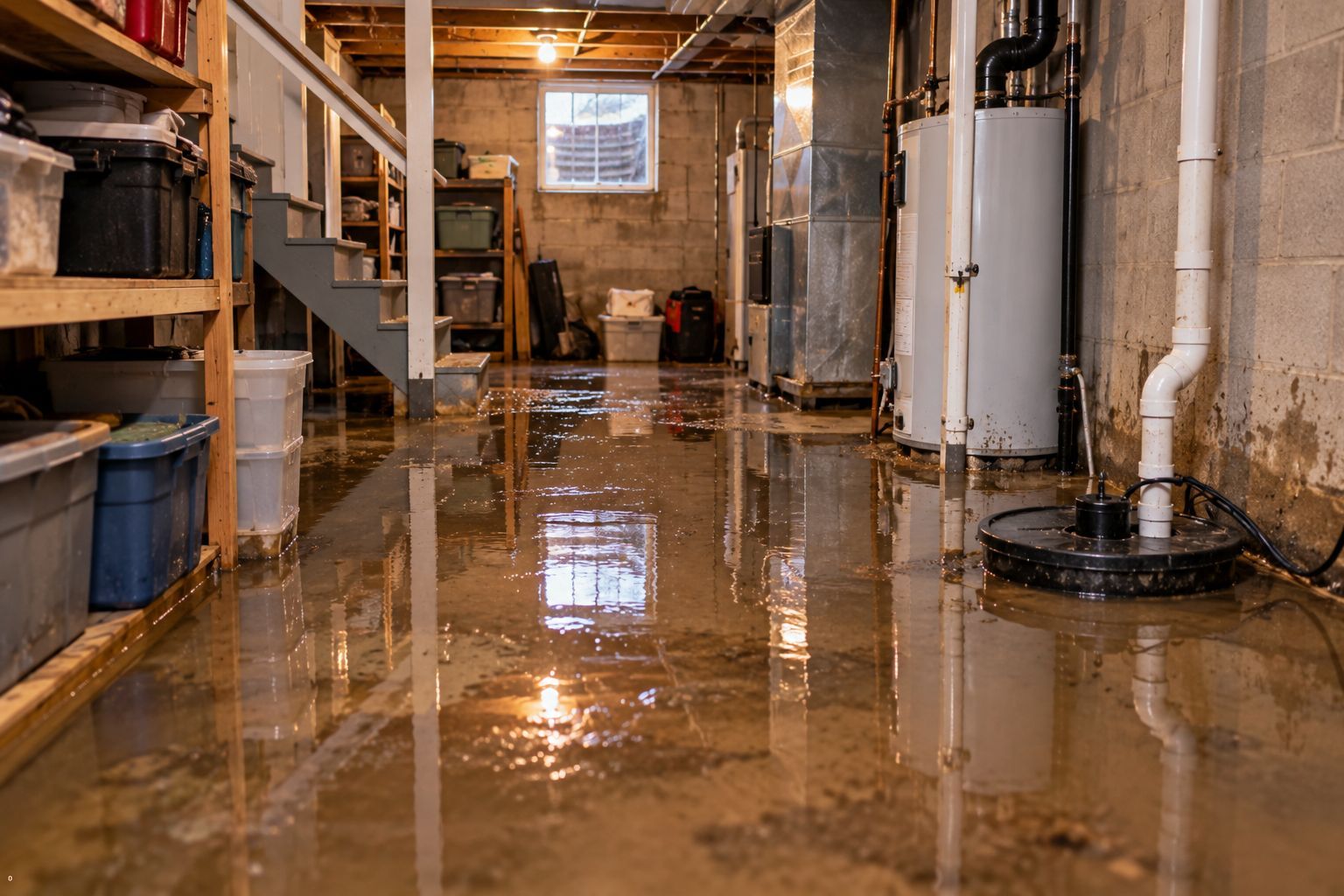
Most Pennsylvania homeowners find out what their flood policy leaves out of the basement at the worst possible time, standing in six inches of muddy water. Basements get very different treatment from the rest of the house, and the fine print surprises plenty of people who assumed "flood insurance" meant everything below the first floor. Here's how basement flood coverage actually works in Pennsylvania, so you can plan before the next storm.
What Flood Insurance Covers in a Pennsylvania Basement
Flood insurance in a Pennsylvania basement covers the structure and a short list of essential equipment: the foundation, furnace, water heater, sump pump, electrical panel, and a few connected appliances like a washer, dryer, and freezer. It generally excludes finished walls, flooring, furniture, and most personal belongings stored down there.
That gap catches people off guard because so many Pennsylvania homes use the basement as real living space. A family room in Cranberry, a home office in Butler County, or a teenager's bedroom in an older Pittsburgh-area house can all look like part of the home. A standard flood policy views them very differently. If you're reviewing your options for pennsylvania flood insurance, the basement is where you should spend the most time reading.
The definition matters, too. The NFIP treats a basement as any area with its floor below ground level on all sides, and that includes sunken rooms and crawlspaces. So a split-level family room that sits a few steps down can fall under basement rules even if you've never called it a basement. Walkout basements with one side at grade usually don't meet that definition, which is one reason two neighbors on the same street can have very different coverage.
Building vs Contents Limits for Basement Areas
Building coverage pays for structural parts of the basement and equipment that serves the house, while contents coverage pays for a small group of appliances. As of this writing, NFIP residential policies typically cap building coverage at $250,000 and contents coverage at $100,000. Those caps apply to the whole home, though, and only certain basement items qualify under each one.
The key rule is FEMA's phrase that building coverage below grade is limited to "items required to service the building" that are connected to a power source. In practice, that means machinery the house needs to function, plugged in or hardwired. A spare dehumidifier sitting in a box doesn't count.
Essential Equipment Covered Under Building Limits
These items generally fall under building coverage when a covered flood damages them:
- Foundation walls, anchorage, and slab: the structural shell of the basement
- Furnaces, boilers, and heat pumps: including connected ductwork
- Water heaters: tank or tankless
- Central air conditioners: and their basement components
- Electrical panels and outlets: plus related wiring
- Sump pumps and well pumps: including well water tanks
- Fuel tanks: and the fuel in them
- Unfinished drywall and insulation: in walls and ceilings, typically not finished paint or paneling
- Stairways and staircases: attached to the building
Items Covered Under Personal Property Limits
Contents coverage in a basement is narrow. It's generally limited to washers, dryers, and food freezers connected to a power source, along with the food inside the freezer. You need a separate contents policy for any of this to apply, and plenty of homeowners skip it because a lender only requires building coverage. If your laundry room is in the basement and you don't carry contents coverage, a flood could leave you paying for a new washer and dryer out of pocket.
Finished Basement Exclusions and Limitations
Flood insurance does not cover finished basement improvements. Carpeting, laminate or tile flooring, wood paneling, drop ceilings, built-in bars, painted walls, and furniture are all excluded under a standard NFIP policy, even when the flood itself is a covered event. The foundation underneath stays covered. The livable upgrades on top of it don't.
Here's how that plays out in a real claim. Say a homeowner in Beaver County spent $40,000 finishing the basement with luxury vinyl plank, a sectional, a TV, and a guest bedroom. After a flash flood, the adjuster may approve the furnace, water heater, and electrical panel, along with cleanup of the structure. The flooring, the couch, the electronics, the bed, and the paneling sit outside the policy. That homeowner could be looking at tens of thousands in uncovered loss despite paying flood premiums for years.
A few common mistakes make this worse:
- Storing family photos, holiday decorations, and documents in basement totes, assuming contents coverage will help
- Finishing the basement after buying the policy and never telling the agent
- Assuming a homeowners policy will pick up what flood leaves behind (standard homeowners policies exclude flood)
Private flood insurers in Pennsylvania often fill part of this gap. Many offer basement endorsements that cover finished walls, floors, and personal property the NFIP excludes. Some also pay replacement cost for basement belongings instead of actual cash value, which matters a lot when depreciation would otherwise shrink a payout on a five-year-old sofa.
Coverage for Sump Pumps and Water Heaters
Water heaters and sump pumps are generally covered as essential equipment under building coverage when a flood damages them. Both serve the building and connect to power, so they meet the NFIP's test. If floodwater fries your sump pump motor or ruins your gas water heater's burner assembly, the replacement typically falls under your building limit, subject to your deductible.
The catch is the cause of loss. Flood insurance responds to a general flood, meaning surface water from rising rivers, heavy rain, or mudflow affecting a wider area. If your sump pump simply fails on a rainy night and water backs up into the basement while the neighborhood stays dry, that's usually not a flood claim. It's a water backup issue, and you'd need a sump pump or water backup endorsement on your homeowners policy to cover it. This is one of the most frequent denials we see Pennsylvania homeowners run into, and it's worth confirming you have both types of protection.
For the flood side, Pennsylvania homeowners have a few routes. NFIP policies are often written through companies like American Bankers, while private markets include options like Franklin Flood, which may offer higher limits or basement enhancements. Buying an NFIP policy has also gotten easier: as of October 2026, FEMA launched a self-service digital option for purchasing NFIP policies online. Online purchase is convenient, but it won't flag that your finished basement needs separate attention.
A practical tip: photograph your water heater, sump pump, and furnace labels now. Model numbers and install dates make an adjuster's job faster and support your replacement cost.
Comparing Flood Coverage Options for PA Homeowners
The biggest coverage differences between NFIP and private flood policies show up in finished surfaces and belongings, while structural items and essential machinery are treated fairly similarly. The table below gives a general picture. Specific policies vary, so read the declarations page for your own home.
| Basement Item | Standard NFIP | Private Flood (Typical) |
|---|---|---|
| Foundation and slab | Covered | Covered |
| Furnace, boiler, heat pump | Covered (building) | Covered |
| Water heater | Covered (building) | Covered |
| Sump pump | Covered (building) | Covered |
| Electrical panel | Covered (building) | Covered |
| Washer, dryer, freezer | Covered (contents) | Covered |
| Unfinished drywall | Usually covered | Covered |
| Carpet, flooring, paneling | Not covered | Often available by endorsement |
| Furniture and electronics | Not covered | Often available by endorsement |
| Valuation of belongings | Actual cash value | Often replacement cost |
| Sump failure without flood | Not covered | Not covered (needs homeowners endorsement) |
If your basement is bare concrete with a furnace and a washer, the NFIP may handle most of what's down there. If it's a finished living space, a private policy or a combination approach usually deserves a look. Pennsylvania also created a
dedicated Flood Insurance Ombudsman through the Insurance Department to help residents understand exactly these kinds of coverage gaps.
How Independent Agents Help Navigate Basement Claims
An independent agent helps you understand basement limits before a loss and guides you through the claim after one. Because an independent agency isn't tied to a single company, it can compare how different policies treat finished space, equipment, and belongings, then show you where the gaps are.
MVP Insurance works as an independent agent with carriers such as Erie, Westfield, and Frederick Mutual, along with flood options like Franklin Flood and American Bankers. That mix lets the team pair a flood policy with the right homeowners endorsements, like sump pump and water backup coverage, so the two policies cover more of the basement together. The agency serves Pennsylvania homeowners from its office in Zelienople, PA, and works with clients across the state line from New Springfield, OH.
After a flood, claims get messy fast. Adjusters need photos, receipts, and proof of when equipment was installed. Some homeowners hire public adjusters, and Pennsylvania's HB 1972, passed in October 2026, modernizes protections for residents who hire public adjusters, including clearer contracts and cancellation windows. Having your agent involved early helps you decide whether you even need one.
Your basement probably holds the equipment that keeps your home running, and maybe the room your family uses most. Building coverage protects the structure and machinery, contents coverage handles a few appliances, and finished space needs extra planning. If you'd like a clear look at where your basement stands, you can start a quote with MVP Insurance and have the team compare options for you. MVP Insurance holds Ohio license #37714, Pennsylvania license #519263, and NPN 10588293.
Frequently Asked Questions About PA Basement Flood Insurance
Does flood insurance cover my basement couch? No, a standard NFIP policy does not cover furniture in a basement. Some private flood policies offer basement endorsements that can cover it.
Are my furnace and water heater protected? Yes, both are generally covered under building coverage when a flood damages them. They qualify because they serve the house and connect to a power source.
What is the difference between building and contents coverage? Building coverage pays for the structure and essential equipment like the foundation, furnace, and sump pump. Contents coverage pays for belongings, but in a basement it's limited to items like a washer, dryer, and freezer.
Search
Recent Posts

MVP Insurance is a local, independent agency, licensed to serve individuals and businesses across Ohio and Pennsylvania.
We serve clients from our offices in New Springfield, Ohio and Zelienople, Pennsylvania and throughout Northeast Ohio and Western Pennsylvania, working with multiple carriers to help contractors, landlords and real estate investors, restaurants, retail shops, auto repair shops, professional offices and many other personal and commercial clients find coverage that fits.
Our Owners
Two friends who started an agency
Owner
Joshua Medure
I am a Penn State marketing graduate with more than ten years in insurance. My childhood friend David and I started MVP Insurance in Northeast Ohio because we wanted the people around us to have an agency that gives honest advice, real choices and someone who picks up the phone. I lead the agency’s insurance strategy, which means I read the policies so our clients do not have to. Away from the office, I coach youth football.


About the Author
David Varrati
Owner, MVP Insurance
I started MVP Insurance with my childhood friend Josh because we wanted people in Northeast Ohio and Western Pennsylvania to have an agency that explains things plainly and picks up the phone. I studied Political Science at Slippery Rock University and have spent more than ten years helping families and individuals protect what matters to them. When I am not in the office, you will find me coaching youth sports.