

The Ohio Valley sits in a corridor where warm, humid air from the south meets colder systems from the west. The result is a steady run of thunderstorms, straight-line winds, hail, and heavy downpours that overwhelm older storm drains. For homeowners, that translates into very specific claims: shingles peeled off in a wind event, siding dented by hail, trees through the roof, and basements flooded by sewer backup.
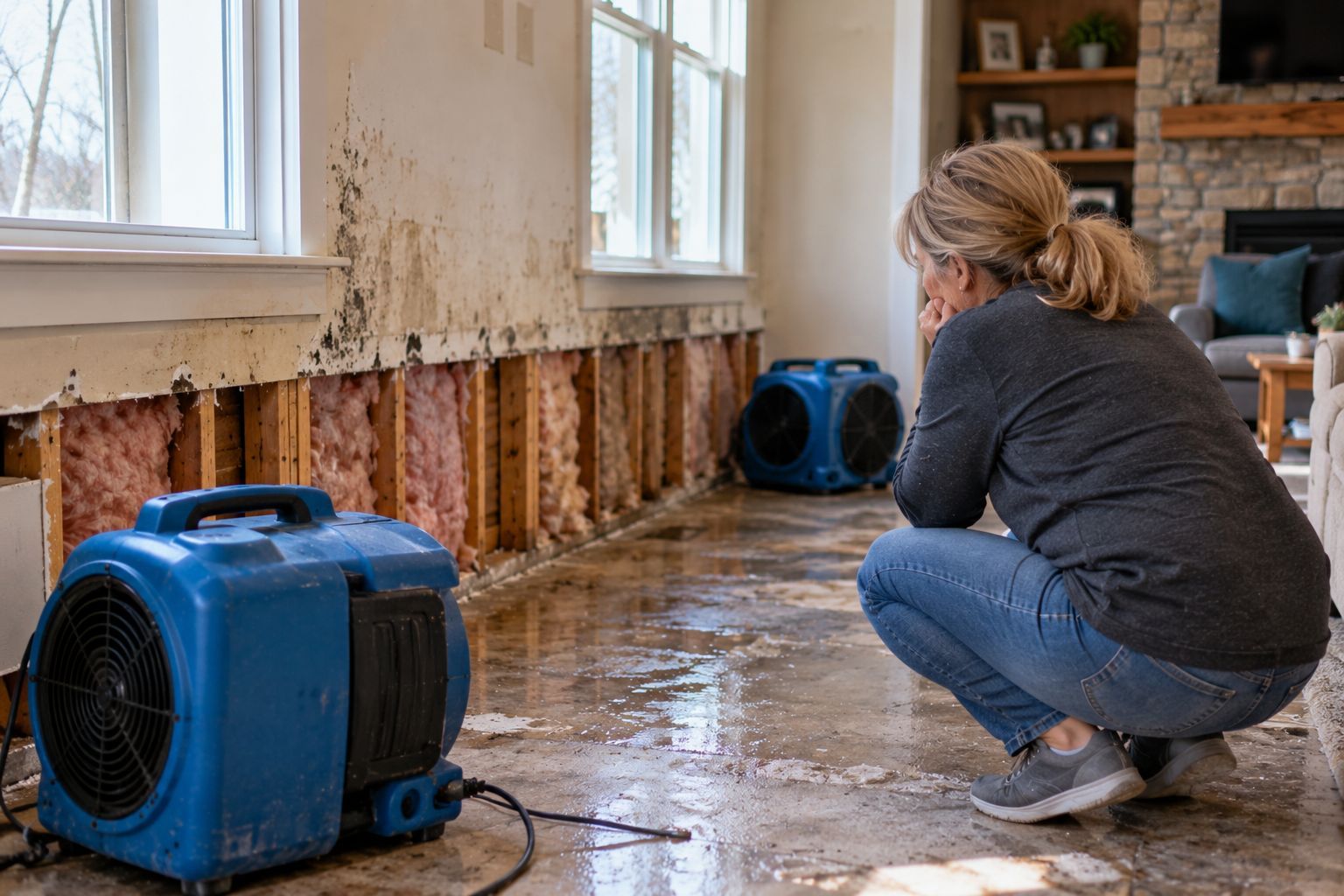
Sewer backup is a gap we see catch people off guard constantly. A standard policy usually excludes water that backs up through drains unless you've added a specific endorsement, and in a hillside neighborhood with aging municipal lines, one heavy storm can leave several inches of water in a finished basement. Carriers have watched these losses pile up across the region and priced accordingly.
Misclassification is the most common expensive mistake we see. A business gets lumped into one high-rated code, even though half the staff works in an office. Pennsylvania generally rates a business by its governing classification, but separate codes can apply when operations meet the PCRB's rules for division.
Take a small HVAC company where the owner's spouse handles billing full time. That clerical payroll may qualify for a far lower code than the field technicians' code. Review the classification page of your policy every year. If the description doesn't match what your people actually do, ask questions before the audit.
Your experience modifier compares your claims history to that of similar businesses. A 1.00 mod is average. A 0.85 mod cuts your premium by 15%, and a 1.25 mod raises it by 25%. Mods generally use three years of claims, excluding the most recent year, so today's injury affects your bill for years.
Frequency hurts more than severity. Five small medical-only claims often damage a mod more than one larger claim. Pennsylvania offers medical-only claim handling, but small injuries still need to be reported properly, so check how claims are counted before you decide how to handle minor incidents.
Frequently Asked Questions About PA Workers Comp Costs
It helps to think of Act 72 as three gates the worker has to pass through, in order:
- A written contract exists. No contract, no independent contractor status. A handshake deal or a text thread won't hold up.
- The worker is free from your control. They must be free from control or direction over the performance of services both under the contract and in fact. That second part trips people up: a contract saying "contractor controls the work" means nothing if your foreman is telling them how to frame the wall.
- The worker runs an independently established business. This is where the criteria above come in: proprietary interest, profit or loss, separate location, and so on.
The "in fact" language deserves attention. Investigators look at what happens on the job site, not just what the contract says. If you set their schedule, supervise their methods, and they can't send someone else in their place, the control prong fails no matter how polished the agreement is.
Payroll" for workers comp means more than base wages. It generally includes overtime pay (with the premium portion often excluded), bonuses, commissions, holiday and vacation pay, and certain other compensation. Business owners often miscount this, and the error shows up at audit.
Corporate officers follow special rules. For policies effective April 1, 2026, officer payroll ranges from $70,044 to $280,800 per year for rating purposes. An officer who pays themselves very little still gets rated at the minimum, and high earners get capped at the maximum. That ceiling rose sharply this year, so owners who pay themselves well may see more of their salary counted than they did in past years.
Required Documentation for a Clean Audit
Yes. With key person coverage, the business applies for the policy, pays the premiums, and is the beneficiary. In a cross-purchase buy-sell setup, the individual owners own policies on each other instead.
If a covered loss forces you to close, business income coverage replaces lost net income and helps pay ongoing expenses like rent, payroll, and loan payments while you rebuild. Picture a Butler County bakery after a kitchen fire. The ovens are replaceable, but six weeks without sales could end the business. Most BOPs also include extra expense coverage, which pays for things like renting temporary space so you can reopen sooner. Coverage usually applies only when the closure comes from a covered property loss, not from a slow season or a supplier's problems.
Can I change the key person if they leave the company?
Generally, no. Death benefits are typically received income tax-free if the business met IRC Section 101(j) notice and consent rules before the policy was issued and files Form 8925 each year. Proceeds paid to a named beneficiary are also generally exempt from the Pennsylvania Inheritance Tax.
Key person coverage and a funded buy-sell agreement both answer the same question: what happens to this business if someone essential dies? The business owns the policy and collects the benefit, premiums typically aren't deductible, and the payout stays income tax-free when Section 101(j) paperwork is done correctly and on time. Choose term or permanent coverage based on how long the risk actually lasts, and revisit valuations and face amounts as the company grows.
If your buy-sell agreement hasn't been reviewed in a few years, or you've never put a number on your key people, now is a sensible time. MVP Insurance, with offices in Zelienople, PA and New Springfield, OH, can compare options from multiple carriers so you don't have to. Start a quote and get a clear picture of what coverage would cost.
MVP Insurance is licensed in Ohio (#37714) and Pennsylvania (#519263), NPN 10588293.
Term coverage is usually the practical fit for protecting against the loss of a key employee during a specific window, like the life of an equipment loan or the years before a planned retirement. If your top salesperson is 45 and plans to work 15 more years, a 20-year term policy covers that period with room to spare.
Buy-sell funding is less clear-cut. If owners plan to stay until death or a late sale, permanent coverage can make sense because term policies often expire right when older owners are most likely to die. Cash value in a whole life policy can also help fund a lifetime buyout at retirement. Universal life gives flexibility, but owners need to review in-force illustrations every few years. Underfunded universal life policies have caused real problems for businesses that assumed coverage would last.
Conversion privileges are worth checking on any term policy. They let you switch to permanent coverage later without new medical underwriting, which matters if the insured's health changes.
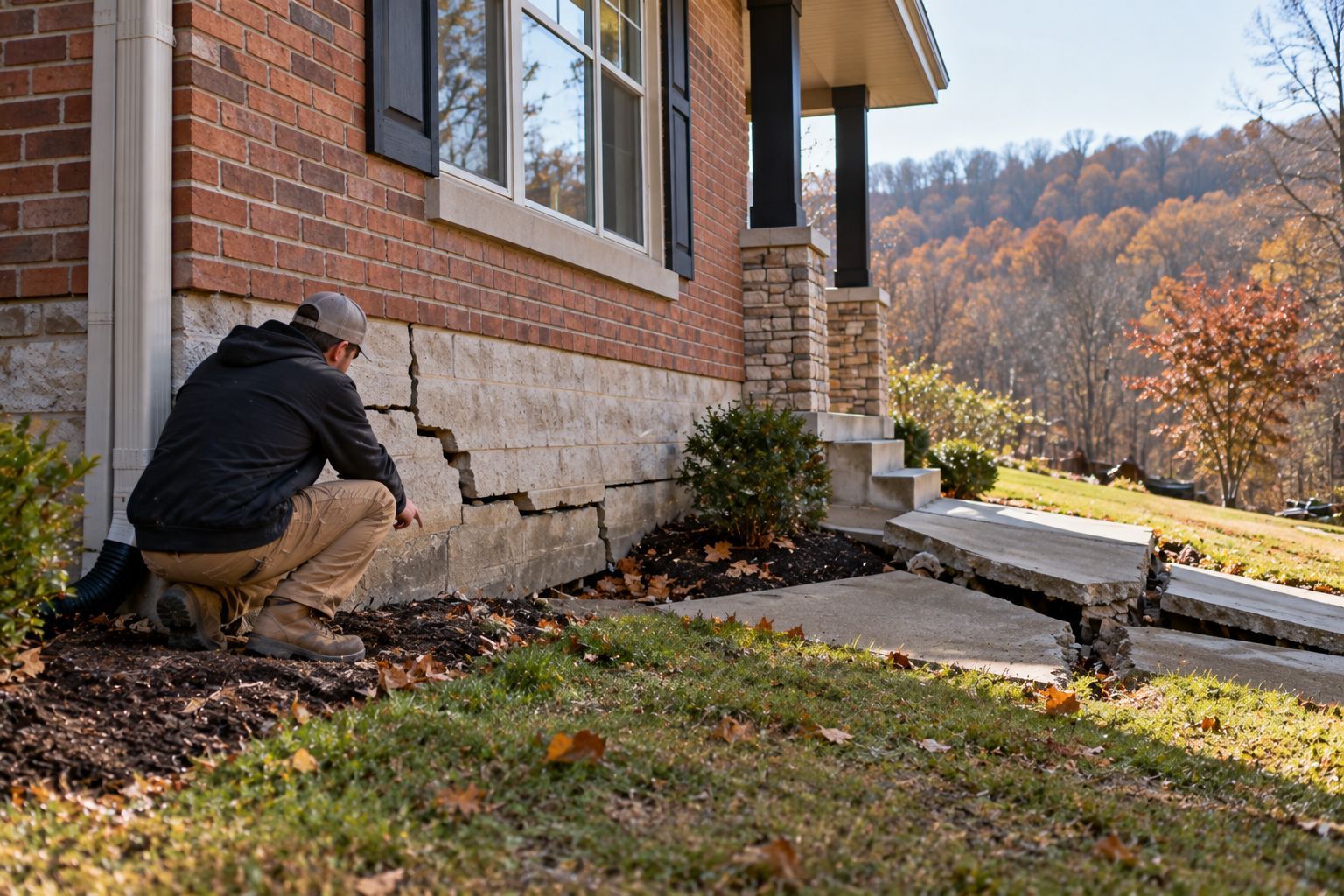
Ohio mine subsidence insurance pays to repair your home when an abandoned underground mine collapses beneath it. Coverage is automatically included in homeowners policies in 26 Ohio counties and optional in 11 more. As of this writing, it costs $1 or $5 a year. Claims are capped at $300,000 or your dwelling limit, whichever is less.
That is the short version. The details matter because a lot of Ohio homeowners pay for this coverage every year without knowing it exists. Others live in an optional county and assume they are protected when they are not. Eastern and southeastern Ohio sit on top of more than a century of coal, clay, and salt extraction, and many of those old tunnels were never mapped well. Some of them run under subdivisions built decades after the mines closed.
What follows is Ohio mine subsidence insurance explained in plain language. You will see which counties fall into each category, how the coverage gets attached to your policy, what the limits and deductibles look like, and where the gaps are. If you own a home anywhere from Youngstown down to the Ohio River, this is worth ten minutes of your time.
What is Ohio Mine Subsidence Insurance?
Mine subsidence insurance is a state-backed coverage that pays for structural damage when an underground mine collapses and the ground under your house sinks. Ohio law defines mine subsidence as structural loss caused by the collapse of underground coal, clay, limestone, or salt mines. That definition is narrow on purpose, and the narrowness is what makes the coverage so affordable.
The reason this coverage exists at all comes down to one exclusion. Standard homeowners policies exclude earth movement, which includes settling, sinking, and shifting ground. Without a separate endorsement, a collapsing mine void that cracks your foundation would fall squarely into that exclusion, and you would be paying for repairs yourself.
Ohio solved the problem by creating the Ohio Mine Subsidence Insurance Underwriting Association, a pool that every insurer writing property coverage in the state participates in. Your insurance company sells the endorsement and collects the premium, but the association backs the claim. In practice, you deal with your regular carrier and agent, and the association handles the subsidence portion behind the scenes.
Eligibility has its own rules. Coverage is restricted to
1-to-4 family dwellings where at least 50% of the total living area is occupied, and that includes mobile homes and farm houses. Homes under construction can qualify too: the coverage is
available on builders' risk policies as long as the finished building will be a 1-to-4 family dwelling. Commercial buildings and large apartment complexes fall outside the program.
Which Ohio Counties Are Covered for Mine Subsidence?
Ohio splits eligible counties into two groups: 26 mandatory counties and 11 optional counties. In the mandatory group, insurers are legally required to include mine subsidence coverage on homeowners policies. Here is the full mandatory list:
- Athens, Belmont, Carroll, Columbiana, Coshocton, Gallia
- Guernsey, Harrison, Hocking, Holmes, Jackson, Jefferson
- Lawrence, Mahoning, Meigs, Monroe, Morgan, Muskingum
- Noble, Perry, Scioto, Stark, Trumbull, Tuscarawas
- Vinton, Washington
If you live in Canton, Youngstown, Warren, Steubenville, Zanesville, or Marietta, you are in a mandatory county. The same goes for homeowners around New Springfield in Mahoning County, where old coal workings sit under neighborhoods that look nothing like mining country today.
The optional group includes counties such as Delaware, Licking, and Summit. These areas had mining activity, but it was scattered or limited enough that the state lets homeowners decide for themselves. Everyone else in Ohio lives in a county where the program does not apply.
Mandatory vs. Optional County Designations
The difference between the two designations is who makes the decision. In a mandatory county, the state made it for you: the coverage is on your policy whether you asked for it or not, and you cannot remove it. In an optional county, your insurer has to offer the endorsement, but nothing gets added unless you say yes.
That second scenario is where people get caught. A homeowner in Summit County might have a home sitting over an old clay or coal mine and never be asked about subsidence because the conversation skipped it. The designation reflects county-wide mining history, not the specific risk under your lot. A low-risk mandatory county home and a high-risk optional county home can both exist, which is why the optional endorsement deserves a real look.
How the Coverage Is Added to a Homeowners Policy
If your home is in a mandatory county, the coverage is added automatically and the premium shows up as a small line item on your declarations page. If you live in an optional county, you have to ask for the endorsement, and it only applies once it has been added to your policy.
In mandatory counties, the process is invisible. Your agent writes the homeowners policy, the carrier's system recognizes the property's county, and the subsidence premium gets attached. The annual charge is currently $1.00 for residents in mandatory counties, which is why most people never notice it. Look for a line labeled "mine subsidence" or "MSI" on your dec page.
Optional counties work differently. You request the endorsement, your agent adds it, and the premium is $5.00 per year as of this writing. It typically goes on at a new policy or at renewal, though many carriers will add it mid-term. Five dollars for up to $300,000 of structural protection is one of the most lopsided trades in personal insurance.
Ohio carriers such as Erie, Westfield, and Western Reserve all handle the endorsement through the state association. MVP Insurance works with these carriers as an independent agent, which means the agency places the coverage on your behalf rather than issuing it directly. The carrier writes the policy, the association backs the subsidence claim, and the agent makes sure the right box got checked.
A few practical steps help in either type of county:
- Pull your current declarations page and search for the subsidence line.
- If you are in an optional county and it is missing, ask your agent to add it at your next renewal or sooner.
- When you switch carriers, make sure the endorsement carries over to the new policy.
That last step catches people more often than you would expect. A mid-year switch to save a few dollars can quietly drop an optional endorsement.
Understanding Mine Subsidence Claim Limits and Deductibles
As of this writing, the most a mine subsidence claim will pay is $300,000 or your dwelling coverage limit, whichever is lower. The maximum aggregate limit for direct loss is capped at $300,000 or the dwelling coverage amount on your homeowners policy.
That "whichever is less" wording matters. If your home is insured for $220,000, your subsidence protection tops out at $220,000, not $300,000. If your home is insured for $450,000, the subsidence claim still stops at $300,000, and you would carry the gap yourself in a catastrophic loss. Higher-value homes in Stark or Mahoning County are the ones most exposed to that shortfall.
The subsidence limit operates separately from the earth movement exclusion on your main policy. Your dwelling coverage still handles fire, wind, and the usual perils, while the subsidence endorsement handles this one specific cause of loss. Think of it as a parallel coverage that only activates when the damage traces back to a collapsed underground mine.
Deductibles are modest. The standard deductible for a subsidence claim typically ranges between $250 and $500, depending on the guidelines in effect. That is often lower than the deductible on your main homeowners policy, which can surprise people who assume their $1,000 or $2,500 deductible applies.
Some changes are on the way. The $300,000 aggregate limit stays in place, but increased sublimits for specific types of damage are scheduled to take effect on January 1, 2027. If you file a claim after that date, some categories of loss may have more room than they do today.
Limits for Detached Structures and Personal Property
This is the part that trips people up. Mine subsidence coverage was built around the dwelling itself, meaning the foundation, walls, and structure of the home. It is not a mirror image of your full homeowners policy, so the generous separate limits you have for a detached garage or your belongings do not automatically transfer over.
Personal property damaged by subsidence, such as a china cabinet that falls when a floor drops, is generally treated more narrowly than structural damage. Detached garages, barns, and sheds may be limited or fall outside the coverage depending on how the association's rules and your endorsement read. The upcoming 2027 sublimit changes are aimed at specific damage types, so how these items are handled may shift.
The useful takeaway is simple: do not assume your outbuildings carry the same protection as your house. If you have a large pole barn or a detached workshop in a mandatory county, ask your agent to walk you through exactly how the endorsement treats it.
Comparing Mine Subsidence Coverage Requirements
The cleanest way to see how Ohio's system works is side by side. Where you live determines whether you pay, how much, and whether you have to do anything at all.
| County Type | Example Counties | Annual Premium (typical) | Added Automatically? | Max Claim |
|---|---|---|---|---|
| Mandatory | Stark, Mahoning, Trumbull, Belmont, Athens | $1 | Yes, cannot be removed | $300,000 or dwelling limit, whichever is less |
| Optional | Delaware, Licking, Summit | $5 | No, you must request it | $300,000 or dwelling limit, whichever is less |
| Non-Eligible | All other Ohio counties | Not available | No | No program coverage |
Notice that the claim limit is identical in mandatory and optional counties. Once the endorsement is on your policy, an optional-county homeowner gets the same protection as someone in Belmont County. The only real difference is the $4 premium gap and the extra step of asking.
For non-eligible counties, the state program simply does not apply. A homeowner in Franklin or Hamilton County who has ground movement issues would be dealing with the standard earth movement exclusion on their policy. That is a different conversation, usually involving engineers and policy language rather than a state fund.
One more nuance worth flagging: the premium figures here are the state association's rates as of this writing. They have stayed low for a long time, but they are set by the association, not by your carrier, so every company charges the same amount in the same county type.
What Does Mine Subsidence Insurance Exclude?
Mine subsidence coverage only pays for damage caused by the collapse of an underground mine. Ohio law spells out that the coverage excludes losses from earthquakes, landslides, or the collapse of strip mines and storm drains. If the ground under your house moved for any other reason, this endorsement will not respond.
Strip mines are the exclusion that confuses people most in eastern Ohio. Surface mining was common across Harrison, Jefferson, Belmont, and Tuscarawas counties, and plenty of homes sit on reclaimed strip mine land. If that fill settles and cracks your foundation, it is not an underground collapse, so the subsidence coverage does not apply. Sinkholes from natural limestone dissolving are excluded too, since they are not caused by a man-made mine.
Here is a quick list of what typically falls outside the coverage:
- Damage from strip or surface mining
- Earthquakes and landslides
- Natural sinkholes not tied to a man-made underground mine
- Collapsed storm drains or sewer lines
- Normal soil settling and construction defects
- Driveways, fences, and landscaping, unless the primary structure is also damaged
That last point matters for claims. If a subsidence event cracks your driveway and kills a row of shrubs but leaves the house untouched, those items are generally not covered on their own. They come into play only when the home itself suffers subsidence damage.
Proving the cause is the other hurdle. The association notes that significant cracks in foundations, walls, and sidewalks are primary indicators of possible subsidence, but those same cracks can come from soil settling or poor construction. Expect an investigation into the underlying cause before any claim gets paid.
The Role of Independent Agents and Ohio Carriers
An independent agent's job here is making sure the right endorsement is on the right policy, filed on the right forms, for the county where you actually live. MVP Insurance works with carriers including Progressive, Liberty Mutual, and Frederick Mutual, along with Erie, Westfield, and Western Reserve, as an independent agent rather than as the insurer itself.
That matters more than it sounds. Mistakes happen at the edges: a home listed in the wrong county because of a mailing address, a mobile home on a farm property that never got the endorsement, or an optional-county policy written without anyone mentioning subsidence. Homeowners in New Springfield and across Mahoning County fall in a mandatory zone, but a family who just moved from Summit County might not know the rules changed with their address.
The association has specific forms and eligibility questions, from occupancy percentages to dwelling type. An agent who handles these regularly catches problems before a claim exposes them. When you compare quotes across several carriers, the subsidence endorsement should be on every option in a mandatory county, and an agent can flag any quote in an optional county that left it off.
For a broader look at how your policy is put together, our page on ohio homeowners insurance covers dwelling limits, deductibles, and the other endorsements that fill common gaps.
Mine subsidence is a small line on your policy that only matters on the worst day of homeownership, and the gaps around strip mines, outbuildings, and dwelling limits are where people get hurt. If you want someone to review how your current coverage handles it, MVP Insurance has offices in Zelienople, PA and New Springfield, OH and compares policies from multiple carriers. You can
start your quote here. MVP Insurance holds Ohio license #37714, Pennsylvania license #519263, and NPN 10588293.
Frequently Asked Questions About Ohio Mine Subsidence
How do I know if a mine is under my house?
The Ohio Department of Natural Resources maintains maps and resources on abandoned underground mines across the state, which can show whether known workings sit near your property. Many older mines were poorly mapped, so living in a mandatory county is itself a strong signal that the risk is real.
Does my standard policy cover mine collapse?
No. Standard homeowners policies exclude earth movement, so mine collapse damage is only covered if the mine subsidence endorsement is on your policy.
Can I add this coverage if I live in a non-mandatory county?
Yes, if you live in one of Ohio's 11 optional counties, your insurer must offer the endorsement, typically for about $5 a year as of this writing. If you live in a county outside both groups, the state program is not available.
Search
Recent Posts


MVP Insurance is a local, independent agency, licensed to serve individuals and businesses across Ohio and Pennsylvania.
We serve clients from our offices in New Springfield, Ohio and Zelienople, Pennsylvania and throughout Northeast Ohio and Western Pennsylvania, working with multiple carriers to help contractors, landlords and real estate investors, restaurants, retail shops, auto repair shops, professional offices and many other personal and commercial clients find coverage that fits.
Our Owners
Two friends who started an agency
Owner
Joshua Medure
I am a Penn State marketing graduate with more than ten years in insurance. My childhood friend David and I started MVP Insurance in Northeast Ohio because we wanted the people around us to have an agency that gives honest advice, real choices and someone who picks up the phone. I lead the agency’s insurance strategy, which means I read the policies so our clients do not have to. Away from the office, I coach youth football.

About the Author
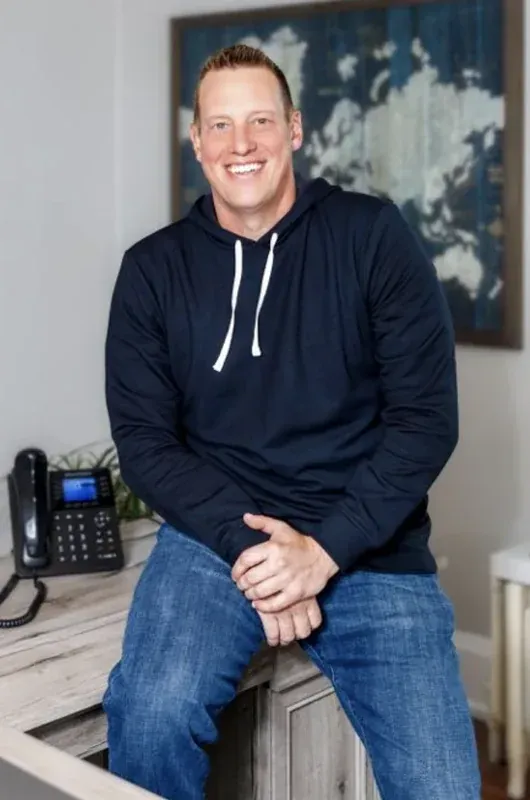
David Varrati
Owner, MVP Insurance
I started MVP Insurance with my childhood friend Josh because we wanted people in Northeast Ohio and Western Pennsylvania to have an agency that explains things plainly and picks up the phone. I studied Political Science at Slippery Rock University and have spent more than ten years helping families and individuals protect what matters to them. When I am not in the office, you will find me coaching youth sports.