

Frequently Asked Questions About Mine Subsidence
Raising your deductible is the fastest lever you have. Moving a standard deductible from $500 to $1,000 or $2,500 can reduce your premium by up to 25%. On a $1,600 annual premium, that could mean saving a few hundred dollars a year.
The trade-off is simple: you take on more of the small losses. Before raising it, ask yourself whether you could write a check for the new deductible tomorrow without touching credit cards. If yes, a higher deductible usually pays off within a few claim-free years. Also check whether your policy has a separate wind or hail deductible, sometimes set as a percentage of dwelling coverage, since that can be much larger than the flat amount you remember choosing.
How does credit score affect my PA rate?
Pennsylvania allows insurers to use a credit-based insurance score when setting rates, and stronger credit generally means a lower premium. Paying bills on time and keeping balances low can help your rate over time.
Does my location near a fire station matter?
Yes. Homes closer to a staffed fire station and a working hydrant usually get better pricing because fire damage tends to be less severe when help arrives quickly.
How often should I review my policy limits?
Review them at every renewal and any time you renovate, add a big purchase, or finish a basement. With rebuilding costs rising, a limit that fit three years ago may now fall short.
Coverage through the association is not unlimited. As of this writing, most property and casualty claims are typically capped at $300,000 per claim [https://govt.westlaw.com/pac/Document/N92524E00342611DA8A989F4EECDB8638?viewType=FullText&originationContext=documenttoc&transitionType=CategoryPageItem&contextData=(sc.Default)]. Workers' compensation is the big exception, with no cap on covered benefits.
That $300,000 figure catches people off guard [https://govt.westlaw.com/pac/Document/N92524E00342611DA8A989F4EECDB8638?viewType=FullText&originationContext=documenttoc&transitionType=CategoryPageItem&contextData=(sc.Default)]. Picture a homeowner with a $550,000 dwelling limit whose house burns down a week after their insurer is ordered into liquidation. Their policy promised more than half a million dollars, but the guaranty association will typically pay up to its cap. The rest becomes a claim against the failed insurer's estate, which may pay a portion years later, or nothing.
A few other rules shape what you'll actually receive:
- Unearned premium refunds are limited. If you prepaid for months of coverage you never got, the return of that premium is capped at $10,000 per policy.
- Large businesses face exclusions. PPCIGA excludes first-party claims from any insured whose net worth exceeded $25 million as of December 31 of the year before the insolvency. Bigger companies are expected to absorb losses themselves.
- Duplicate recovery isn't allowed. If another policy covers the same loss, you generally have to pursue that coverage first.
For most families, the cap is high enough to handle a typical auto accident or a burst pipe claim. The pain shows up with total losses on higher-value homes, serious injury liability claims, and commercial property losses.
One detail deserves extra attention. Sinkhole endorsements typically cover structures and personal property, not the land itself. Stabilizing the void, grouting, or filling the hole may remain your expense even after a claim is approved.
There's also movement at the state level. House Bill 589 would create a state-run program offering up to $150,000 in coverage for natural sinkholes and landslides, started with a $10 million General Fund appropriation and intended to become self-sustaining through premiums. As of this writing, the bill remained under consideration in the Senate after passing the House in September 2025. Supporters described it as recognizing that the commercial insurance industry is not stepping up to cover these costs, and the proposal would offer premium credits to communities that adopt mitigation practices.
| Requirement | Motorized Boats & PWCs | Non-Motorized (Kayak, Canoe, SUP) | Insurance Impact |
|---|---|---|---|
| Registration | Required for all | Required at PFBC or state park access (or launch permit) | Proof often needed to bind a policy |
| Safety Certificate | Required for PWCs; motorboats over 25 hp if born 1982 or later | Not required | Can help eligibility and may earn credits |
| Age Limits | No PWC or 25+ hp boat at 11 or younger | No state minimum | Underage operation can complicate claims |
| BAC Limit | 0.08% (0.02% under 21) | Same limits apply | BUI can lead to cancellation or non-renewal |
| Accident Reporting | 48 hours for injury/death; 10 days for $2,000+ damage | Same rules apply | Late reporting can weaken your claim |
| Typical Coverage Need | Liability, physical damage, towing | Liability, theft | Lenders and marinas often require coverage |
| Coverage | State Minimum | Common Higher Choice |
|---|---|---|
| Bodily injury (per person) | Low required floor | Several times the minimum |
| Bodily injury (per accident) | Low required floor | Matched to your assets |
| Property damage | Very low floor | High enough to replace a newer vehicle |
| Medical benefits | Required | Higher limits often added |
| Feature | Original Medicare + Medigap | Medicare Advantage |
|---|---|---|
| Doctor choice | Any provider taking Medicare | Usually a network |
| Monthly premium | Higher | Often lower |
| Costs when you get care | Low, predictable | Copays and coinsurance |
| Drug coverage | Separate Part D plan | Often included |
| Travel coverage | Nationwide | Limited outside network |
| Health questions | None during 6-month open enrollment | Generally none |
| Switching later | Easy to move to Advantage | Medigap may require underwriting |
Pennsylvania Statute of Limitations and Claim Deadlines
Here's where minimum-limit policies hurt people. Property damage minimums haven't kept pace with what cars cost. Hit a new pickup truck or a luxury SUV, and you can blow past a minimum limit before the tow truck arrives. Anything above your limit becomes your personal responsibility.
There's some good news on the pricing side. State insurance officials have pointed to a stabilizing market that "will help keep more money in Pennsylvanians' pockets." And as of this writing, the accident surcharge threshold rose to $2,350 effective July 1, 2026, which means insurers can't raise your premium for a single accident with costs below that amount. Small claims shouldn't scare you away from reporting.
What you pay for life insurance in Pennsylvania comes down to timing, health, and honest disclosure. Buying younger locks in a lower level premium, improving one health marker can move you up a class, and quitting nicotine opens up nonsmoker rates. Hobbies and occupations add cost, but how much depends on which carrier reviews your file, so comparison matters more for you than for most applicants.
If you want to see what the numbers look like for you, MVP Insurance can compare options across multiple carriers from our offices in Zelienople, PA and New Springfield, OH. You can start your quote in a few minutes and get a side-by-side view without calling each insurer yourself. MVP Insurance holds Ohio license #37714, Pennsylvania license #519263, and NPN 10588293.
The right policy is the one your family can count on and you can comfortably afford for the full term.
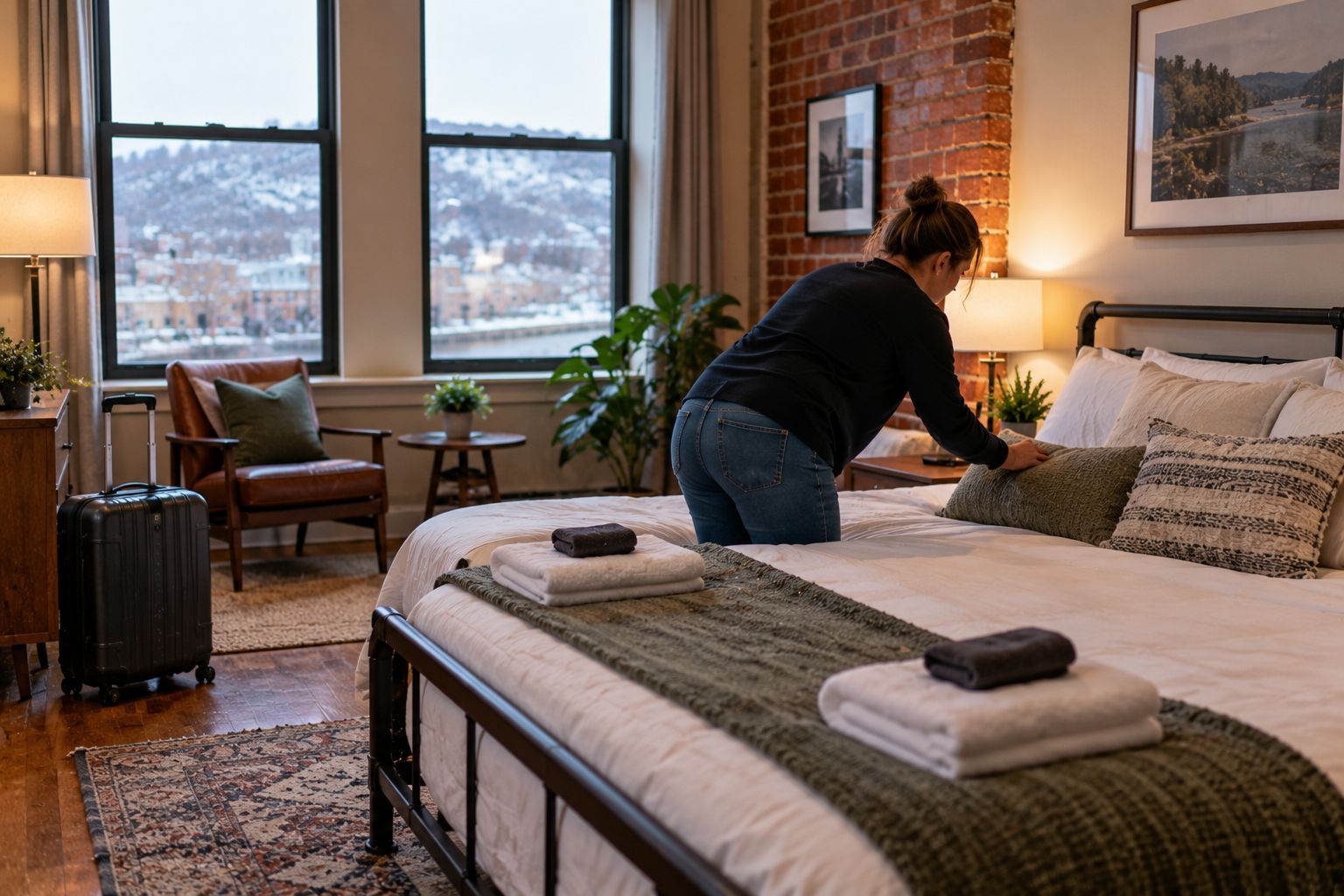
A homeowners policy is built for a family living in a house, not for strangers paying to sleep there. If you host on Airbnb or VRBO anywhere in Pennsylvania, you need short-term rental coverage: either a home-sharing endorsement or a dedicated commercial policy. Without it, a fire, theft, or guest injury claim can be denied outright.
That's the uncomfortable truth many hosts discover only after something goes wrong. A guest leaves a candle burning in a Lawrenceville rowhouse, or slips on an icy back step in Cranberry, and the homeowner calls their insurance company expecting help. Instead, the adjuster asks how many nights the home was booked last year and whether the guests paid.
Pittsburgh hosts face a second layer of pressure. The city is moving from a loose voluntary registry toward mandatory licensing and zoning rules, and those rules directly shape whether an insurer will even write a policy on your property. Getting the coverage right and getting the paperwork right are now the same project.
What follows walks through where standard policies break down, what platform protection really covers, how the main policy types compare, and what Pittsburgh is changing for hosts.
Short-Term Rental Insurance in Pennsylvania: Essential Coverage for Hosts
Short-term rental insurance in Pennsylvania is a specialized or commercial policy designed for the risks of hosting paying guests: property damage caused by people you don't know, liability for their injuries, and lost booking income when the unit can't be rented. Standard homeowners policies typically exclude business activity, so this coverage fills the hole they leave.
Think of it as insurance that assumes your home is a small lodging business, because legally and financially, that's what it is during every booked night. A good short-term rental policy usually bundles several protections that a homeowners policy either excludes or limits sharply:
- Dwelling and contents coverage that applies while guests are present, including furniture, linens, smart locks, and appliances you supply
- Premises liability for guest injuries, written with commercial use in mind
- Loss of rental income if a covered loss forces you to cancel upcoming reservations
- Theft by guests, which many personal policies treat differently than burglary by an outside intruder
- Optional add-ons such as liquor liability, equipment breakdown for hot tubs, or coverage for amenities like bikes and kayaks
There isn't one product that fits every Pennsylvania host. A retired couple renting a spare bedroom in Erie for a few weekends a year has very different exposure than an investor running three units in a Pittsburgh triplex year-round. The first might be fine with a home-sharing endorsement on their existing policy. The second needs a standalone commercial or dedicated short-term rental policy.
It also matters that Pennsylvania has no single statewide rule for hosts. Every one of the state's 2,500-plus municipalities can set its own insurance and registration mandates, so a township in Bucks County might require proof of liability coverage at a certain limit while a borough in Butler County requires nothing at all. A statewide framework has been proposed: House Bill 2303, introduced in March 2026, would create a mandatory registry and 24/7 local contact requirements, but as of this writing, local rules still govern.
Why a Homeowners Policy Fails for Airbnb Use
A homeowners policy fails for Airbnb use because nearly every one contains a business activity exclusion. Once your home generates rental income from transient guests, the insurer can argue the loss arose from a business pursuit, and that argument can wipe out coverage for fire, theft, and liability claims all at once.
Here's how it tends to play out. A host in Mt. Lebanon has a guest who overloads a space heater, and the fire guts the second floor. The claim looks routine until the adjuster learns the room was booked through a platform 90 nights that year. The policy language excluding "business pursuits" or property "rented to others" gives the carrier grounds to deny or reduce payment, and suddenly a five-figure repair becomes the host's problem.
Liability is where the damage gets worse. If that same guest is burned and sues, the personal liability section of a homeowners policy often carries a matching exclusion for injuries arising out of business activity. Now the host is paying for a lawyer out of pocket while also paying for the rebuild.
Some hosts assume that because they never told their insurer, the insurer won't find out. That's backwards. Claims investigations routinely pull listing histories, reviews, and booking records, and failing to disclose rental activity can give the carrier a reason to rescind the policy entirely, not just deny one claim.
The Difference Between Guest Use and Personal Use
Insurers draw a sharp line between people you invite and people who pay you. A cousin staying for a week while visiting Pitt is a houseguest. A stranger booking three nights for a Steelers game is a commercial guest, even if they sleep in the same bed.
That distinction changes the risk profile in ways underwriters care about. Paying guests don't know where the breaker panel is, they're less careful with property that isn't theirs, and they turn over constantly. A home with 60 different guests a year sees far more wear, more chances for injury, and more opportunities for theft than a home with one family. Personal policies are priced for the family, which is exactly why they exclude the rest.
When to Consider Pennsylvania Landlord Insurance
The right policy depends mostly on how long guests stay and how often you rent. Stays of a few nights at a time, booked through platforms, point toward a short-term rental policy. Leases of 30 days or more to a single tenant start to look like a traditional rental, which is where pennsylvania landlord insurance usually fits better.
Some rough patterns help sort it out:
- Occasional hosting (a handful of weekends a year while you still live there): a home-sharing endorsement may be enough, if your carrier offers one
- Frequent nightly or weekly bookings: a dedicated short-term rental or commercial policy
- Medium-term stays for traveling nurses or relocating workers on 30-plus day agreements: often a landlord or dwelling policy
- A mix of both: talk through the split with an agent, since some policies handle hybrid use and others don't
Host Protection Gaps in Secondary Platforms
Platform protection programs like Airbnb's AirCover and VRBO's liability coverage are not a substitute for your own policy. They often act as secondary coverage, carry exclusions for wear and tear and certain intentional acts, and come with claim processes that put the burden on you to document everything quickly.
Hosts read the marketing headline and stop there. The platform's own host damage protection terms describe a reimbursement program with conditions, deadlines, and exclusions, not a traditional insurance policy you own and control. That difference matters when the claim is large or disputed.
The most common gaps fall into a few buckets:
- Wear and tear. Scuffed floors, stained carpets, and worn furniture from normal guest use are generally excluded. Over a busy year, that adds up.
- Secondary status. Some platform liability protection is designed to respond after your own insurance, which means if your homeowners policy denies the claim, you may be stuck sorting out who pays first.
- Documentation burdens. Reimbursement often requires reporting within a short window, with photos, receipts, and proof of the item's condition before the stay. Miss the window and the claim weakens.
- Intentional and gradual damage. Mold from a guest leaving a window open for days, or damage a guest causes on purpose, can fall into gray areas or exclusions.
- High-value limits. If a guest suffers a serious injury, damages can climb past what platform protection was designed to handle, and sublimits on items like art, jewelry, or electronics can leave real money on the table.
- Lost income. Platform programs typically don't replace the bookings you lose while your unit sits under repair.
There's also a control issue. With your own policy, you have a contract, an agent, and a defined claims process. With a platform program, the platform controls the process and has its own business interests in how claims resolve. Treat platform protection as a bonus layer sitting on top of a real policy, never as the foundation.
Comparing Pennsylvania Short-Term Rental Coverage Options
Most Pennsylvania hosts choose among four or five coverage setups, and they differ mainly in how they handle guest-caused property damage, liability, and lost income. A standard homeowners policy alone is the weakest option for active hosts, while a dedicated short-term rental policy offers the broadest protection.
Limits and pricing vary by carrier, property, and location, so the table below focuses on how each option generally behaves rather than specific dollar figures.
| Policy Type | Property Damage by Guests | Liability for Guest Injuries | Loss of Rental Income | Good Fit For |
|---|---|---|---|---|
| Standard homeowners | Often excluded once rented | Often excluded for business use | Not included | Owners who don't rent at all |
| Homeowners + home-sharing endorsement | Covered within endorsement limits | Usually extended, sometimes with caps | Limited or none | Occasional hosts who live in the home |
| Dedicated short-term rental policy | Covered, written for guest use | Commercial-style limits available | Often included or available | Frequent hosts and investor units |
| Landlord / dwelling policy | Covered for long-term tenants | Covered for tenancy, not nightly guests | Fair rental value often available | Leases of 30+ days |
| Platform protection only | Reimbursement with conditions | Varies, may be secondary | Generally not included | Backup layer, not primary coverage |
A few practical points the table doesn't capture. Umbrella policies can add liability limits on top of a short-term rental policy, but many personal umbrellas exclude business activity just like homeowners policies do, so the umbrella has to be written to recognize the rental. Condo owners face another wrinkle: the HOA master policy and bylaws may prohibit short-term rentals outright, and Pennsylvania community associations have increasingly addressed rentals in their governing documents.
The biggest mistake shows up when hosts compare only premiums. A policy that costs less but excludes guest theft or has no income replacement can cost far more after a single bad booking. Compare what triggers coverage, what's excluded, and how lost income is calculated before you compare price.
Local Registration Rules in Pittsburgh
Pittsburgh hosts currently register through a city system, but the rules are tightening. The city is finalizing legislation that would replace the voluntary registry with mandatory licensing and zoning limits, and those changes will affect which properties can legally operate and, by extension, which ones insurers will cover.
The changes are tracked in Council Bills 2026-0008 and 2026-0009, which shift the city from asking hosts to register to requiring them to hold a license. For anyone running a unit in the city, that's a meaningful change in legal status.
Pittsburgh Rental Licensing Requirements
As of this writing, the city's registration process for rental units runs through Permits, Licenses, and Inspections. Current voluntary registration fees are typically a $16.00 flat fee per unit, plus inspection fees of $5.50 per unit and $14.00 per dwelling or sleeping unit. Hosts are also generally subject to a combined lodging tax of 14%, which includes state sales tax, local tax, and county hotel tax.
The proposed zoning rules are where things get serious for investors. Under the draft framework, non-owner-occupied short-term rentals would be banned in low-density residential zones including R1D, R1A, R2, and R3. The plan also proposes capping short-term rentals at two units in buildings with 20 or fewer units and five units in larger buildings.
These rules build on statewide precedent. The Pennsylvania Supreme Court's decision in Slice of Life v. Hamilton Township held that purely transient use is incompatible with single-family residential zoning, giving municipalities like Pittsburgh firmer footing to restrict whole-home rentals in residential districts.
Compliance and Insurance Validity
Here's where regulation and insurance collide. Insurers underwrite legal operations. If your unit operates without a required license, or sits in a zone where your type of rental is prohibited, an underwriter may decline to write the policy, and a claims adjuster may use the violation to contest a loss.
Safety inspections matter in the same way. Working smoke and carbon monoxide detectors, clear egress, and posted emergency information aren't just city requirements; they're the first things investigated after a fire or injury. A host who skipped inspection and had a dead smoke detector is in a weak position on both the code violation and the insurance claim. Keep your license, inspection records, and safety upgrades documented, and update your insurer if the city's new framework changes your property's status. Hosts across the state are watching similar shifts, so expect more scrutiny, not less.
Independent Carriers Offering Short-Term Rental Solutions
Not every carrier writes short-term rental coverage, and those that do handle it in very different ways. Some offer home-sharing endorsements, some write dedicated rental or commercial policies, and some decline nightly rentals entirely. An independent agent can compare several of these at once instead of you calling each company separately.
MVP Insurance is an independent agency that works with carriers including Erie, Westfield, Progressive, and NEXT to build coverage for Pennsylvania hosts. MVP works with these carriers as an independent agent, not as the insurer itself, which means the job is matching your property and rental pattern to the carrier whose rules fit it. A spare-room host in Zelienople and an investor with a duplex in Bloomfield will likely end up with different carriers and different policy forms, and that's the point.
When you sit down for a review, bring the details that drive underwriting:
- Number of nights booked in the past year and expected for the next
- Whether you live on-site during stays
- Platforms you use and any platform protection you rely on
- Your Pittsburgh registration or license status and zoning district
- Amenities that add risk, such as hot tubs, pools, fire pits, or decks
- Any long-term or medium-term leases mixed in with nightly bookings
Getting this right comes down to three things: drop the assumption that your homeowners policy covers paying guests, treat platform protection as a backup rather than a foundation, and keep your Pittsburgh registration and safety records current as the city's licensing rules take effect. Hosts who handle all three are the ones whose claims get paid.
If you're hosting now or planning to, the smart move is to have your coverage compared before the next booking rather than after the next claim. MVP Insurance, with offices in Zelienople, PA and New Springfield, OH, can shop multiple carriers for your rental setup and offers 24/7 claims support. You can start a quote here. MVP Insurance holds Ohio license #37714, Pennsylvania license #519263, and NPN 10588293.
Frequently Asked Questions About PA Rental Insurance
Do I need a special permit to Airbnb my home in Pittsburgh?
Yes. Pittsburgh requires hosts to register rental units with the city, and pending legislation would turn that into a mandatory license with zoning limits on where non-owner-occupied rentals can operate. Operating without proper registration can also create problems with your insurance coverage.
Does my Erie homeowners policy cover short-term guests?
A standard Erie homeowners policy is designed for personal use and generally won't cover regular paid short-term rentals the way a dedicated policy would. Hosts typically need an added endorsement or a separate rental policy, and an independent agent can review which option fits your situation.
What happens if a guest causes a fire in my rental?
With proper short-term rental coverage, your policy would typically pay to repair the property, cover liability if anyone is hurt, and may replace lost booking income while repairs happen. With only a standard homeowners policy, the insurer may deny the claim under the business activity exclusion, leaving you to pay for the damage yourself.
Search
Recent Posts



MVP Insurance is a local, independent agency, licensed to serve individuals and businesses across Ohio and Pennsylvania.
We serve clients from our offices in New Springfield, Ohio and Zelienople, Pennsylvania and throughout Northeast Ohio and Western Pennsylvania, working with multiple carriers to help contractors, landlords and real estate investors, restaurants, retail shops, auto repair shops, professional offices and many other personal and commercial clients find coverage that fits.
Our Owners
Two friends who started an agency
Owner
Joshua Medure
I am a Penn State marketing graduate with more than ten years in insurance. My childhood friend David and I started MVP Insurance in Northeast Ohio because we wanted the people around us to have an agency that gives honest advice, real choices and someone who picks up the phone. I lead the agency’s insurance strategy, which means I read the policies so our clients do not have to. Away from the office, I coach youth football.


About the Author
David Varrati
Owner, MVP Insurance
I started MVP Insurance with my childhood friend Josh because we wanted people in Northeast Ohio and Western Pennsylvania to have an agency that explains things plainly and picks up the phone. I studied Political Science at Slippery Rock University and have spent more than ten years helping families and individuals protect what matters to them. When I am not in the office, you will find me coaching youth sports.