

Pennsylvania teens move from a learner's permit to a junior license to a senior license. Each step requires a minimum amount of time, practice, or clean driving before the next one unlocks. Here's what each stage actually requires and what it means at home.
CG 20 37: Coverage After the Project is Finished
Can my 16-year-old drive their friends home from school in Pennsylvania? During the first six months of a junior license, they can carry only one passenger under 18 who isn't an immediate family member, unless a parent or guardian is in the car. After that window, the limit eases if your teen has stayed violation-free.
Does a teen with a learner's permit need to be on my car insurance? It depends on the carrier. Some require permit holders to be listed, and others don't rate them until they're licensed. Tell your agent when the permit is issued so there's no gap if something happens.
Can a junior license holder drive home from work after 11 PM? Yes. Pennsylvania's curfew includes an exception for travel to and from employment. Your teen should keep proof of their work schedule in the car in case they're stopped.
Pennsylvania's licensing rules work because they ease teens into risk instead of handing them full privileges on day one. Supervised hours, passenger caps, and the overnight curfew all target the situations where new drivers get hurt most. For families, those same rules shape the insurance conversation. A clean junior year, solid liability limits, and the right car assignment can keep your teen safer and your premium more manageable.
If your teen's road test is coming up, now is a good moment to see how different carriers would price your household. MVP Insurance is an independent agency with offices in Zelienople, PA and New Springfield, OH. We compare policies across multiple carriers so you don't have to. When you're ready, you can start your quote here, and we'll walk you through the options. MVP Insurance is licensed in Ohio (license #37714) and Pennsylvania (license #519263), NPN 10588293.
Pennsylvania still offers homeowners insurance below the national average, but recent increases have been steep, and Western PA homeowners have felt it through storms and rising rebuilding costs. Your location sets the starting point. Your deductible, your roof and home systems, and how you use your policy decide much of the rest.
The most useful step is seeing real numbers side by side instead of accepting a single renewal at face value. MVP Insurance is an independent agency with offices in Zelienople, PA and New Springfield, OH, and the team compares multiple carriers so you don't have to. When you're ready, start your quote here and get a clearer picture of what your home should cost to insure.
MVP Insurance is licensed in Ohio (license #37714) and Pennsylvania (license #519263), NPN 10588293.
Pennsylvania follows modified comparative negligence. You can recover damages from other drivers as long as your share of fault isn't greater than theirs combined. Your recovery is reduced by your own percentage. If you're found 30% at fault for a $10,000 loss, you'd typically recover $7,000 from the other side. Once you cross 50%, you can't recover from them at all.
Icy-road claims are full of split percentages. Say one driver was following too closely and another changed lanes abruptly on packed snow. Fault might land at 60/40 or 70/30. In a pileup, three or four drivers might each carry a slice. These percentages shape your claim history too, which is why it's worth disputing a split you think is wrong before it becomes final.
Property and Commercial Auto Needs
These two get confused all the time, and they pay for different situations.
- Emergency roadside service (sometimes called towing and labor) covers breakdowns: dead batteries on a zero-degree morning, flat tires, lockouts, or a winch-out when you've slid into a snowbank without damaging the car. It typically has a per-incident limit and is a low-cost add-on.
- Collision towing is part of your collision claim. When your car is damaged in a crash, the tow to a shop and reasonable storage are usually paid as part of the loss, subject to your deductible.
- Comprehensive can cover towing tied to non-collision losses, such as a tree limb crushing your hood during an ice storm.
A common mistake is assuming roadside service covers a crash tow, or that collision covers a simple winch-out. Check which one applies before you call, especially if you belong to an auto club as well.
Common Questions About Ohio Deer Accident Claims
A battery backup won't run as long as you'd think. A standard 75 Ah AGM battery may last only 4 to 6 hours under heavy continuous cycling during a winter snowmelt event. If an ice storm keeps your power off overnight, that may not be enough.
Test the system every fall:
- Unplug the primary pump.
- Slowly fill the pit with a bucket or garden hose until the backup float rises.
- Confirm the backup turns on, pumps the water out, and shuts off cleanly.
- Check the battery's date and terminals, and replace it if it's three to five years old or shows corrosion.
- Plug the primary pump back in and confirm it runs normally.
If you have city water and want something that doesn't depend on a battery, look at water-powered backup pumps. Models such as the Basepump or Liberty SJ10 are set-and-forget systems that run indefinitely without batteries. These pumps need adequate municipal water pressure, so they won't work on most well systems.
The order matters more than any single step. Form the business first, then get your tax registrations and vendor's license. Set up BWC before payroll starts, and have private coverage active before anyone walks through your door. Ohio also offers real support for new owners, including state business development resources and new Minority Business Assistance Centers that opened in 2026.
If you'd like help comparing general liability, property, and auto options from several carriers at once, you can start a quote with MVP Insurance. We're an independent agency with offices in Zelienople, PA and New Springfield, OH, licensed in Ohio (#37714) and Pennsylvania (#519263), NPN 10588293. Sort out your coverage early, and your opening day can be about your customers instead of your paperwork.
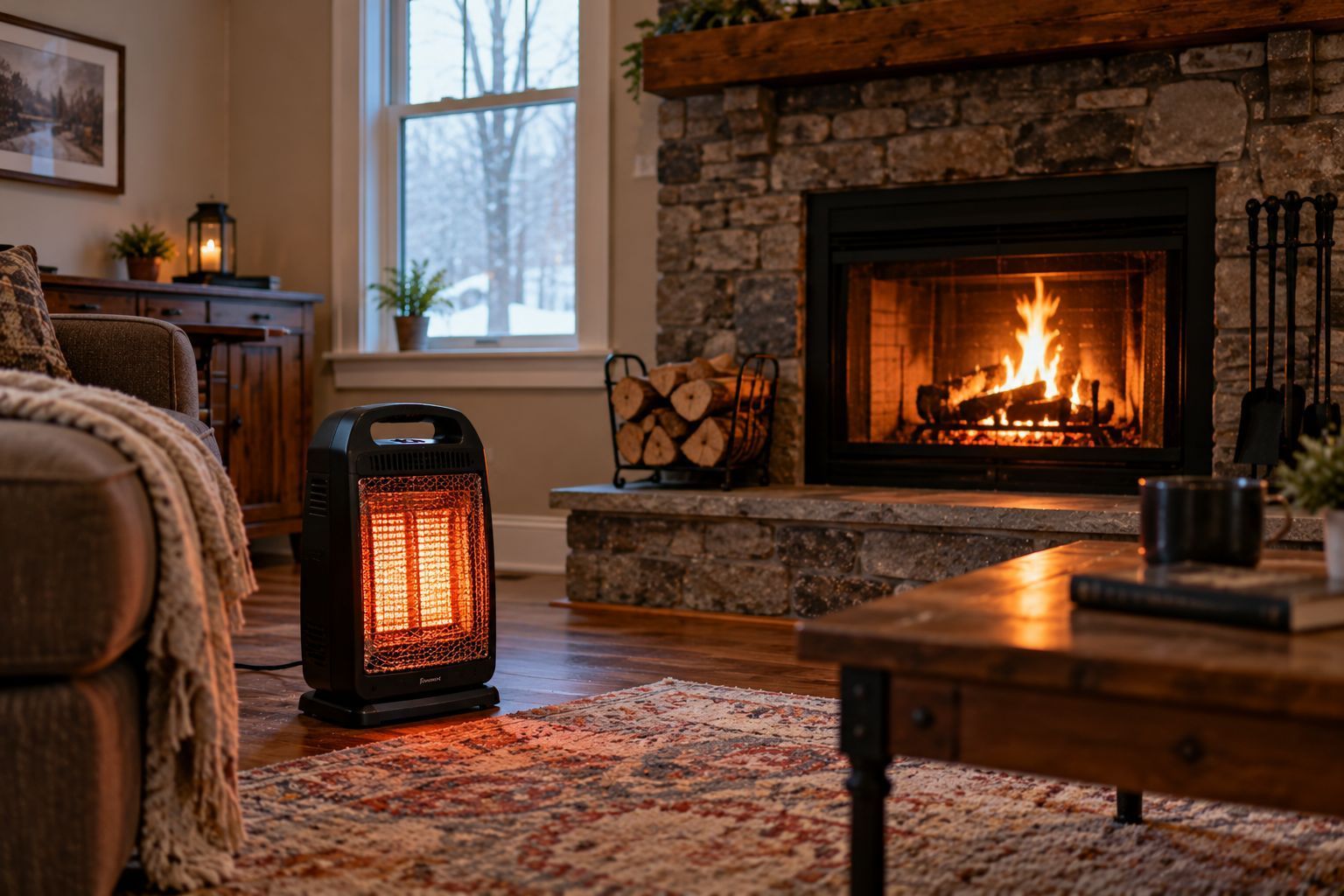
Most Ohio heating fires start small: a blanket slides too close to a heater, or creosote ignites in a chimney nobody has swept in a few winters. The damage spreads quickly, and the insurance questions start the moment the fire trucks leave. As cold weather returns this October, here is how these claims work in Ohio and what you can do to prevent one.
Space Heater and Fireplace Fires in Ohio Homes
Yes, a standard Ohio homeowners policy covers space heater and fireplace fires as long as the fire was accidental. A claim usually draws on three parts of your policy: dwelling coverage for the structure, personal property coverage for your belongings, and loss of use coverage for living costs while you are displaced.
These fires are common enough that every Ohio homeowner should understand the process. During the 2025-2026 winter season, the State Fire Marshal reported 108 home fires attributed to space heaters, and heating equipment ranks as the second-leading cause of home fires and fire deaths in Ohio. Nationally, about 46% of home heating fires happen between December and February.
A typical claim follows a predictable order:
- Call 911 and get everyone out. Nothing else matters until the house is clear.
- Report the claim right away. Most carriers take reports around the clock.
- Document everything. Photograph damage before cleanup, and keep receipts for anything you buy.
- Prevent further damage. Board up windows or tarp the roof if it's safe to do so. Your policy expects reasonable steps here.
- Meet the adjuster. They inspect the structure, review your contents list, and set up advance payments for living expenses when needed.
The word "accidental" carries a lot of weight. A heater that tips over or a spark that jumps the screen is covered. Intentionally set fires are not, and a home that sat vacant past the period your policy allows can face restrictions. MVP Insurance helps Ohio residents through this process from its New Springfield office, and the same rules apply whether you live in Mahoning County or Franklin County.
How Fire Claims Are Paid
Fire claims are paid at either Replacement Cost Value (RCV) or Actual Cash Value (ACV), depending on how your policy is written. Carriers such as Erie, Westfield, and Western Reserve all use these two methods, and the difference can mean thousands of dollars on the same loss.
Replacement cost pays what it takes to rebuild or replace something new today, minus your deductible. Actual cash value subtracts depreciation first. Picture a 12-year-old sectional destroyed by smoke. Under RCV you get enough to buy a comparable new one. Under ACV you get what a 12-year-old couch is worth, which is not much.
Many RCV policies pay in two stages. The first check covers the depreciated value. The second check, called recoverable depreciation, arrives once you actually repair or replace the item. People who never rebuild or replace sometimes leave that second payment unclaimed, so keep your receipts.
Standard ohio homeowners insurance typically covers both the structure and your belongings up to the policy limits listed on your declarations page. Those limits are the ceiling, so an outdated dwelling limit is the gap that hurts people most after a large fire.
Ohio also has a rule that works in your favor. Under the state's Valued Policy Law, if a building is a total loss from fire, the insurer must pay the full policy limit as long as there was no fraud. That protects homeowners when a house burns completely. It also means your dwelling limit should reflect true rebuilding costs, not what you paid for the home.
Dwelling Coverage and Structure Repair
Dwelling coverage pays to repair the house itself: framing, drywall, roofing, flooring, wiring, and built-in fixtures like cabinets. Chimney fires are a classic dwelling claim. A creosote fire can crack flue liners and char surrounding framing even when you can't see much damage from inside the living room.
Smoke and water damage fall under dwelling coverage too. Firefighters may soak an entire floor to stop a fire in one bedroom, and that water damage is part of the fire claim. Ask the adjuster about hidden smoke in wall cavities and HVAC ducts, because the odor comes back if those areas are skipped.
Building code upgrades are a common gap. If repairs trigger current code requirements, such as new electrical work, standard coverage may not pay the full difference unless you carry ordinance or law coverage. It's worth checking your policy before winter rather than after a fire.
Personal Property and Contents Claims
Personal property coverage pays for your belongings: furniture, clothing, electronics, kitchen items, and more. It's often set as a percentage of the dwelling limit, and most people underestimate how much they own until they try to list it.
That list, the contents inventory, causes more frustration than any other part of a fire claim. Families sit at a hotel table trying to remember every towel and phone charger. A walkthrough video of each room, stored in the cloud, makes this dramatically easier.
Watch the special limits too. Jewelry, firearms, collectibles, and cash usually have low sublimits unless they're scheduled separately. If a fireplace fire destroys a ring worth far more than that sublimit, the base policy won't cover the full value.
Additional Living Expense
Additional Living Expense, often called Loss of Use or Coverage D, pays the extra costs of living somewhere else when a covered fire makes your home uninhabitable. It reimburses costs above your normal living expenses, not your entire budget.
Say a space heater ignites a bedroom in your Boardman home and smoke damage spreads through the house. While contractors work, your insurer pays for temporary housing, such as a hotel or short-term rental. If the hotel has no kitchen, it covers the restaurant meals beyond what you'd normally spend on groceries. If your temporary place is 25 miles farther from work, the extra commuting costs count too.
The phrase "above normal" is where people get confused. If your family typically spends $200 a week on groceries and now spends $450 eating out, the claim pays roughly the $250 difference. Your mortgage payment continues, so that isn't reimbursed, but a temporary rental on top of it is.
Common covered expenses include:
- Temporary housing: hotel, apartment, or rental home of similar quality
- Food: the added cost of eating out compared with your usual grocery bill
- Mileage: extra driving to work or school
- Laundry, pet boarding, and storage: when your situation requires them
- Utility setup: hookup fees at a temporary residence
Loss of use limits are usually a percentage of the dwelling limit, and some policies also set a time limit. Major fire repairs in Ohio can take many months when contractors are busy, so check that your limit realistically covers a long rebuild. Keep every receipt and submit them regularly. Many adjusters will issue an advance so you aren't carrying the costs on a credit card for weeks.
Prevention Steps Insurers Look For
Insurers look for heaters used with clearance and attention, and fireplaces that are inspected and cleaned regularly. These habits prevent fires, and they help you stay in good standing with carriers like Frederick Mutual or Municipal Mutual, especially if you heat with wood.
The stakes are high. Space heaters and heating stoves account for only about one-third of heating fires but cause 73% of heating-fire deaths. The State Fire Marshal put it plainly: "the reality is the majority of these fires are preventable." Across the country, heating fires cause about $1.2 billion in property damage each year.
Underwriters ask about wood stoves, outdoor boilers, and fireplaces on applications for a reason. A professionally installed, inspected unit is an accepted risk. A homemade stove venting through an old flue is often a reason to decline. Telling your agent the truth about your heat sources keeps a claim from turning into a dispute.
Safe Operation of Portable Heaters
The three-foot rule is the foundation: keep anything that can burn, including curtains, bedding, furniture, and paper, at least three feet from a space heater. Most heater fires trace back to something placed too close.
- Plug directly into a wall outlet. Extension cords and power strips can overheat under a heater's load.
- Choose models with tip-over and overheat shutoff. Look for a recognized testing lab certification.
- Turn it off when you leave or go to sleep. An unattended heater is the scenario fire investigators see again and again.
- Check for recalls. In June 2026, about 255,000 Vornado SRTH tower heaters were recalled over a fire hazard from detaching fan blades. Search the electric heater recall list before you pull an older unit out of the basement.
- Keep kids and pets away. A wagging tail or a curious toddler can knock a heater over in seconds.
Fireplace and Wood Stove Maintenance
Have your chimney inspected once a year by a certified chimney sweep, and get it cleaned when creosote builds up. Heavy wood burners may need cleaning more than once per season. Creosote is highly flammable, and chimney fires often go unnoticed until real damage is done.
Burn only dry, seasoned hardwood. Wet wood and trash produce more creosote, and burning cardboard or wrapping paper can send embers up the flue. Use a sturdy screen or glass doors, and never leave a fire burning overnight unattended.
Ashes cause a surprising number of claims. They can hold heat for days, so put them in a metal can with a tight lid and set it outside away from the house, deck, and garage. Keep inspection receipts, because documentation helps if a carrier ever asks about maintenance after a loss.
Ohio Home Insurance Coverage Comparison
The three coverages that respond to a heating fire work very differently. Here is a plain-language look at what each one pays and how limits are commonly set in Ohio policies.
| Coverage | What It Pays For | Common Limit Structure | Common Gap |
|---|---|---|---|
| Dwelling (A) | Structure, built-ins, smoke and water damage | Set to estimated rebuild cost | Limit not updated as building costs rise |
| Personal Property (C) | Furniture, clothing, electronics | Often a percentage of dwelling | ACV payout, low jewelry sublimits |
| Loss of Use (D) | Hotel, extra meals, added mileage | Often a percentage of dwelling, sometimes time-limited | Limit runs out on long rebuilds |
| Other Structures (B) | Detached garage, shed | Often a percentage of dwelling | Wood stove in a garage may need disclosure |
Notice how many limits are tied to the dwelling amount. If that number is too low, every other coverage shrinks with it. Check your declarations page each fall before heating season, confirm whether contents are written at replacement cost, and ask whether your loss of use limit would cover a year away from home.
As an independent agency, MVP Insurance compares Ohio policies from multiple carriers so the coverage fits how you actually heat your home. If you use a wood stove, rely on space heaters in a drafty farmhouse, or just want a fresh look at your limits, start a quote with our team in New Springfield, OH or Zelienople, PA. MVP Insurance is licensed in Ohio (#37714) and Pennsylvania (#519263), NPN 10588293.
Common Fire Safety Questions
Does insurance cover space heater fires?
Yes. A standard Ohio homeowners policy covers accidental space heater fires, including damage to the house, your belongings, and temporary living costs. Intentional fires are excluded.
Is chimney cleaning required for coverage?
Most policies don't list chimney cleaning as a coverage condition, but annual inspections show you maintained your home. Neglect can complicate a claim and affect your eligibility with some carriers, so keep your receipts.
What is loss of use coverage?
Loss of use coverage pays the extra costs of living elsewhere when a covered fire makes your home unlivable. It covers things like hotels, added restaurant costs, and longer commutes until repairs are done.
Search
Recent Posts
MVP Insurance is a local, independent agency, licensed to serve individuals and businesses across Ohio and Pennsylvania.
We serve clients from our offices in New Springfield, Ohio and Zelienople, Pennsylvania and throughout Northeast Ohio and Western Pennsylvania, working with multiple carriers to help contractors, landlords and real estate investors, restaurants, retail shops, auto repair shops, professional offices and many other personal and commercial clients find coverage that fits.
Our Owners
Two friends who started an agency
Owner
Joshua Medure
I am a Penn State marketing graduate with more than ten years in insurance. My childhood friend David and I started MVP Insurance in Northeast Ohio because we wanted the people around us to have an agency that gives honest advice, real choices and someone who picks up the phone. I lead the agency’s insurance strategy, which means I read the policies so our clients do not have to. Away from the office, I coach youth football.


About the Author
David Varrati
Owner, MVP Insurance
I started MVP Insurance with my childhood friend Josh because we wanted people in Northeast Ohio and Western Pennsylvania to have an agency that explains things plainly and picks up the phone. I studied Political Science at Slippery Rock University and have spent more than ten years helping families and individuals protect what matters to them. When I am not in the office, you will find me coaching youth sports.