
Pennsylvania teens move from a learner's permit to a junior license to a senior license. Each step requires a minimum amount of time, practice, or clean driving before the next one unlocks. Here's what each stage actually requires and what it means at home.
CG 20 37: Coverage After the Project is Finished
Can my 16-year-old drive their friends home from school in Pennsylvania? During the first six months of a junior license, they can carry only one passenger under 18 who isn't an immediate family member, unless a parent or guardian is in the car. After that window, the limit eases if your teen has stayed violation-free.
Does a teen with a learner's permit need to be on my car insurance? It depends on the carrier. Some require permit holders to be listed, and others don't rate them until they're licensed. Tell your agent when the permit is issued so there's no gap if something happens.
Can a junior license holder drive home from work after 11 PM? Yes. Pennsylvania's curfew includes an exception for travel to and from employment. Your teen should keep proof of their work schedule in the car in case they're stopped.
Pennsylvania's licensing rules work because they ease teens into risk instead of handing them full privileges on day one. Supervised hours, passenger caps, and the overnight curfew all target the situations where new drivers get hurt most. For families, those same rules shape the insurance conversation. A clean junior year, solid liability limits, and the right car assignment can keep your teen safer and your premium more manageable.
If your teen's road test is coming up, now is a good moment to see how different carriers would price your household. MVP Insurance is an independent agency with offices in Zelienople, PA and New Springfield, OH. We compare policies across multiple carriers so you don't have to. When you're ready, you can start your quote here, and we'll walk you through the options. MVP Insurance is licensed in Ohio (license #37714) and Pennsylvania (license #519263), NPN 10588293.
Pennsylvania still offers homeowners insurance below the national average, but recent increases have been steep, and Western PA homeowners have felt it through storms and rising rebuilding costs. Your location sets the starting point. Your deductible, your roof and home systems, and how you use your policy decide much of the rest.
The most useful step is seeing real numbers side by side instead of accepting a single renewal at face value. MVP Insurance is an independent agency with offices in Zelienople, PA and New Springfield, OH, and the team compares multiple carriers so you don't have to. When you're ready, start your quote here and get a clearer picture of what your home should cost to insure.
MVP Insurance is licensed in Ohio (license #37714) and Pennsylvania (license #519263), NPN 10588293.
Pennsylvania follows modified comparative negligence. You can recover damages from other drivers as long as your share of fault isn't greater than theirs combined. Your recovery is reduced by your own percentage. If you're found 30% at fault for a $10,000 loss, you'd typically recover $7,000 from the other side. Once you cross 50%, you can't recover from them at all.
Icy-road claims are full of split percentages. Say one driver was following too closely and another changed lanes abruptly on packed snow. Fault might land at 60/40 or 70/30. In a pileup, three or four drivers might each carry a slice. These percentages shape your claim history too, which is why it's worth disputing a split you think is wrong before it becomes final.
These two get confused all the time, and they pay for different situations.
- Emergency roadside service (sometimes called towing and labor) covers breakdowns: dead batteries on a zero-degree morning, flat tires, lockouts, or a winch-out when you've slid into a snowbank without damaging the car. It typically has a per-incident limit and is a low-cost add-on.
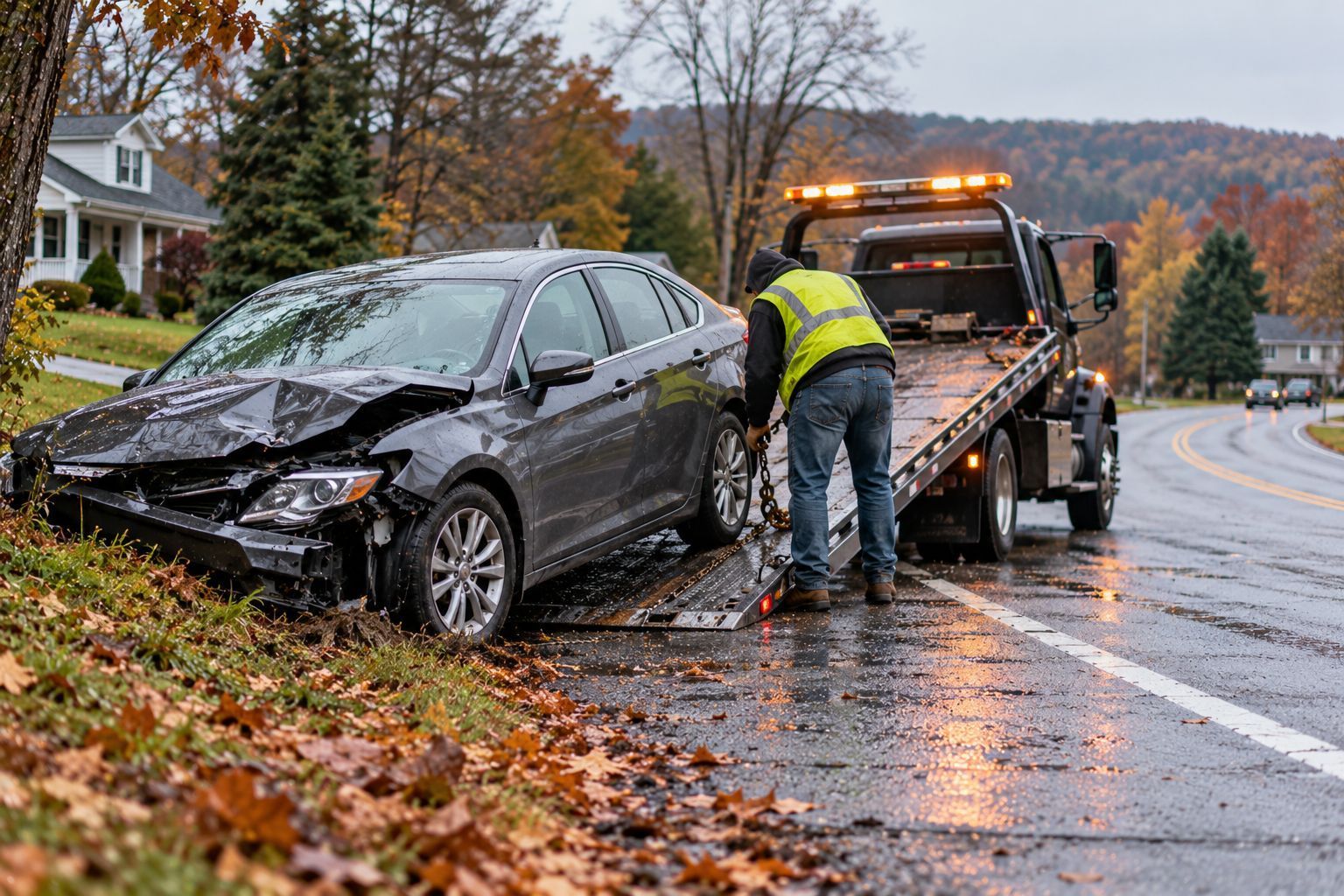
- Collision towing is part of your collision claim. When your car is damaged in a crash, the tow to a shop and reasonable storage are usually paid as part of the loss, subject to your deductible.
- Comprehensive can cover towing tied to non-collision losses, such as a tree limb crushing your hood during an ice storm.
A common mistake is assuming roadside service covers a crash tow, or that collision covers a simple winch-out. Check which one applies before you call, especially if you belong to an auto club as well.
Common Questions About Ohio Deer Accident Claims
A battery backup won't run as long as you'd think. A standard 75 Ah AGM battery may last only 4 to 6 hours under heavy continuous cycling during a winter snowmelt event. If an ice storm keeps your power off overnight, that may not be enough.
Test the system every fall:
- Unplug the primary pump.
- Slowly fill the pit with a bucket or garden hose until the backup float rises.
- Confirm the backup turns on, pumps the water out, and shuts off cleanly.
- Check the battery's date and terminals, and replace it if it's three to five years old or shows corrosion.
- Plug the primary pump back in and confirm it runs normally.
If you have city water and want something that doesn't depend on a battery, look at water-powered backup pumps. Models such as the Basepump or Liberty SJ10 are set-and-forget systems that run indefinitely without batteries. These pumps need adequate municipal water pressure, so they won't work on most well systems.

Most new owners in Ohio worry about the wrong thing first. They spend weeks on logos and lease terms, then realize days before opening that they can't legally pay an employee without state workers' comp in place. Starting a small business in Ohio follows a fairly clear order, and doing the steps in that order saves you from scrambling later.
The paperwork itself isn't hard. What causes trouble is the timing: a vendor's license you forgot, a landlord who wants a certificate of insurance before handing over keys, or a BWC policy that wasn't active on your first payroll date. The sections below walk through each piece so you know what to handle and when.
The Steps for Starting a Small Business in Ohio
To start an Ohio business, you register your entity with the Secretary of State and get your federal and state tax IDs. If you sell taxable goods, you also need a vendor's license. Before serving a single customer, you need workers' compensation through the BWC if you have employees, plus general liability and any other coverage your work requires.
Here's the order most new owners follow:
- Choose a structure (LLC, corporation, sole proprietorship, or partnership) and file with the Secretary of State.
- Get an EIN from the IRS so you can open a business bank account and hire.
- Register for Ohio taxes, including a vendor's license if you sell taxable goods or services.
- Check local permits with your city or county, such as zoning, health department, or signage approvals.
- Set up BWC coverage before your first employee starts.
- Bind your private insurance, including general liability, property, and commercial auto as needed.
Skipping ahead causes real problems. A carrier writing your liability policy will want your legal business name and entity type. That's hard to give them if the LLC filing is still pending.
How to Register Your Business and Obtain Licenses
Registration starts with the Ohio Secretary of State, and a vendor's license comes from the Department of Taxation. Most owners can finish both online in a few days. The total cost is usually modest compared with what they spend on equipment.
Forming a domestic LLC or for-profit corporation in Ohio carries a standard state filing fee of $99 as of this writing. Standard LLCs typically face no ongoing annual fee to the state, which makes the LLC a popular choice for owners who want liability separation without yearly upkeep costs. Sole proprietors using a name other than their own will usually register a trade name instead.
If you sell tangible goods or certain taxable services, you need a vendor's license before your first sale. The fee for a new county or transient vendor's license rose from $25 to $50 effective April 9, 2025. A county license covers a fixed location. A transient license fits sellers who move between craft fairs, festivals, or pop-up events.
There's some good news on taxes too. For the 2026 tax year, businesses with gross receipts under the $6 million Commercial Activity Tax exclusion generally owe no CAT and don't need to file. Eligible owners may also claim Ohio's permanent 20% Small Business Deduction on the first $250,000 of business income.
What You Must Know About Ohio BWC Registration
Ohio is a monopolistic workers' compensation state. That means you can't buy workers' comp from a private insurer. Coverage comes directly from the Ohio Bureau of Workers' Compensation, and most employers must have it in place before anyone is on payroll.
This catches people off guard, especially owners who've worked in other states where an agent bundles workers' comp with liability. In Ohio, your independent agent can't sell you a workers' comp policy. New employers apply through the BWC, which charges a $120 non-refundable application fee as of this writing.
A few practical points come up again and again:
- Part-time and seasonal workers count. A weekend helper is still an employee for BWC purposes.
- Calling someone a contractor doesn't settle it. How you control the work matters more than the label.
- BWC doesn't cover everything. Ohio employers often add stop gap (employer's liability) coverage through a private policy. It responds to lawsuits alleging employer negligence that state coverage doesn't address.
The BWC also funds safety improvements. Its Safety Intervention Grant offers a
3-to-1 match up to $40,000 for equipment that reduces workplace injuries. That's worth knowing if you're buying lifts, guards, or ergonomic gear for a shop or warehouse.
Choosing the Right Ohio Business Insurance Coverage
Outside of workers' comp, you choose your own coverage. An independent agent can compare several carriers at once instead of you calling around one by one. MVP Insurance works as an independent agent with carriers such as Westfield, Progressive, and Erie. Each one tends to fit different business types, so the right match depends on what you do and where you do it.
A landscaper with three trucks and a bakery with a storefront need very different packages. Looking at your actual operations is how you find workable ohio business insurance instead of a generic policy with gaps. Those operations include your vehicles, your equipment, your lease terms, and whether customers come to you.
General Liability Insurance Requirements
Ohio law doesn't require general liability for most businesses, but plenty of other people will. Commercial landlords usually require it in the lease, often with themselves listed as additional insureds. General contractors want proof from subs before they step on a job site, and many municipal permits and event organizers ask for a certificate too.
General liability covers third-party bodily injury and property damage. A customer slipping on a wet floor is the classic example. So is a painter knocking over a client's antique lamp. It does not cover your own equipment, injuries to your employees, or mistakes in professional advice. New owners often assume one policy covers all three, and it doesn't.
Property and Commercial Auto Needs
Commercial property coverage protects your building (if you own it), inventory, furniture, and tools. Even renters need it, because the landlord's policy covers the structure, not your stuff. Many small businesses combine property and liability in a business owner's policy (BOP), which often costs less than buying both separately.
Commercial auto is the other big gap. If a vehicle is titled to the business or used mainly for work, a personal auto policy may deny the claim. That applies to a van hauling equipment or a pickup pulling a trailer to job sites. Using your own car for occasional errands is different. Hired and non-owned auto coverage handles that exposure for a small cost.
Ohio Business Insurance Requirements Comparison
Only one of these coverages is mandated by Ohio law for most employers. The others are driven by contracts, lenders, and plain risk. This table sorts them out.
| Coverage | What It Covers | Required in Ohio? |
|---|---|---|
| Workers' Comp (BWC) | Employee injuries and lost wages | Yes, for most employers, through BWC only |
| Stop Gap / Employer's Liability | Employee lawsuits outside BWC | No, but commonly recommended |
| General Liability | Customer injuries, property damage | No by law; often required by leases and contracts |
| Professional Liability | Errors in advice or services | No; required by some clients and licensing boards |
| Commercial Property / BOP | Building, inventory, equipment | No; often required by lenders |
| Commercial Auto | Business-owned vehicles | Yes, minimum auto liability for registered vehicles |
| Cyber Liability | Data breaches, ransomware | No |
Professional liability deserves a closer look if you're a consultant, bookkeeper, designer, or IT provider. A client claiming your bad advice cost them money won't be covered by general liability, no matter how high your limits are.
Insurance Steps to Take Before Opening Your Doors
Line up your policies two to four weeks before opening. Have them effective on your first day of operations, or earlier if you're signing a lease or doing a build-out. Coverage that starts the day after an incident does nothing for you.
A realistic timeline looks like this:
- 4 to 6 weeks out: Finish your LLC filing and get your EIN. Gather details like square footage, payroll estimates, vehicle VINs, and projected revenue.
- 3 to 4 weeks out: Request quotes. Review lease insurance clauses with your agent so limits and additional insured wording match.
- 2 weeks out: Apply for BWC coverage if you'll have employees. Bind your general liability and property policies.
- 1 week out: Send certificates of insurance to your landlord, lender, or general contractor. Confirm commercial auto is active on any work vehicles.
- Opening day: Keep policy documents and claims contact info easy to find.
One common mistake is setting liability to start on the grand opening date even though contractors and employees are in the space weeks earlier. If someone gets hurt during setup, you want coverage already running. Funding can affect timing too. The combined SBA 7(a) and 504 loan cap doubled to $10 million as of July 2026, and lenders typically require proof of property coverage before closing.
Frequently Asked Questions About Ohio Business Laws
These are the questions new owners ask most often when starting a small business in Ohio.
Do I need workers' comp if I'm the only person in my business? Usually not. Sole proprietors and LLC members without employees can typically opt in for themselves, but they aren't required to. Once you hire anyone, even part-time, you need BWC coverage.
Can my insurance agent sell me workers' compensation in Ohio? No. Ohio requires employers to buy workers' comp directly from the BWC. Your agent can still help with stop gap coverage and your other business policies.
Is general liability insurance required by Ohio law? Not for most businesses. In practice, landlords, clients, and contractors usually require it before they'll work with you.
Getting Ready to Open in Ohio
The order matters more than any single step. Form the business first, then get your tax registrations and vendor's license. Set up BWC before payroll starts, and have private coverage active before anyone walks through your door. Ohio also offers real support for new owners, including state business development resources and new Minority Business Assistance Centers that opened in 2026.
If you'd like help comparing general liability, property, and auto options from several carriers at once, you can start a quote with MVP Insurance. We're an independent agency with offices in Zelienople, PA and New Springfield, OH, licensed in Ohio (#37714) and Pennsylvania (#519263), NPN 10588293. Sort out your coverage early, and your opening day can be about your customers instead of your paperwork.
Search
Recent Posts

MVP Insurance is a local, independent agency, licensed to serve individuals and businesses across Ohio and Pennsylvania.
We serve clients from our offices in New Springfield, Ohio and Zelienople, Pennsylvania and throughout Northeast Ohio and Western Pennsylvania, working with multiple carriers to help contractors, landlords and real estate investors, restaurants, retail shops, auto repair shops, professional offices and many other personal and commercial clients find coverage that fits.
Our Owners
Two friends who started an agency
Owner
Joshua Medure
I am a Penn State marketing graduate with more than ten years in insurance. My childhood friend David and I started MVP Insurance in Northeast Ohio because we wanted the people around us to have an agency that gives honest advice, real choices and someone who picks up the phone. I lead the agency’s insurance strategy, which means I read the policies so our clients do not have to. Away from the office, I coach youth football.
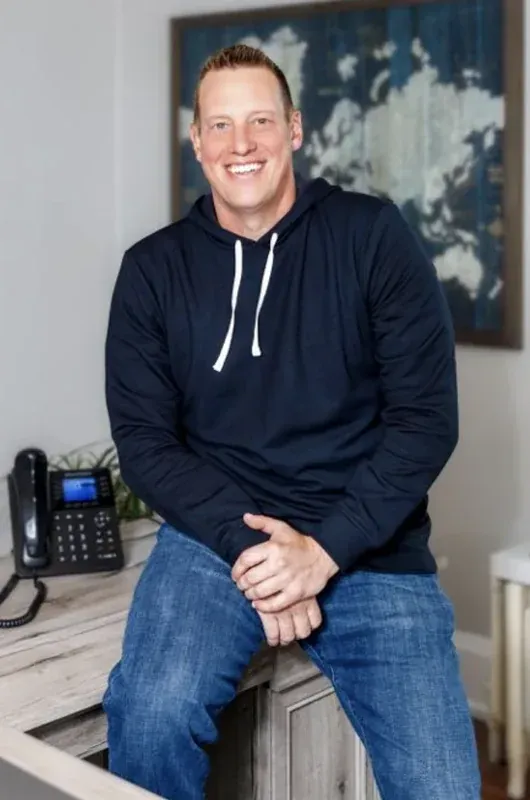

About the Author
David Varrati
Owner, MVP Insurance
I started MVP Insurance with my childhood friend Josh because we wanted people in Northeast Ohio and Western Pennsylvania to have an agency that explains things plainly and picks up the phone. I studied Political Science at Slippery Rock University and have spent more than ten years helping families and individuals protect what matters to them. When I am not in the office, you will find me coaching youth sports.