

Pennsylvania teens move from a learner's permit to a junior license to a senior license. Each step requires a minimum amount of time, practice, or clean driving before the next one unlocks. Here's what each stage actually requires and what it means at home.
CG 20 37: Coverage After the Project is Finished
Can my 16-year-old drive their friends home from school in Pennsylvania? During the first six months of a junior license, they can carry only one passenger under 18 who isn't an immediate family member, unless a parent or guardian is in the car. After that window, the limit eases if your teen has stayed violation-free.
Does a teen with a learner's permit need to be on my car insurance? It depends on the carrier. Some require permit holders to be listed, and others don't rate them until they're licensed. Tell your agent when the permit is issued so there's no gap if something happens.
Can a junior license holder drive home from work after 11 PM? Yes. Pennsylvania's curfew includes an exception for travel to and from employment. Your teen should keep proof of their work schedule in the car in case they're stopped.
Pennsylvania's licensing rules work because they ease teens into risk instead of handing them full privileges on day one. Supervised hours, passenger caps, and the overnight curfew all target the situations where new drivers get hurt most. For families, those same rules shape the insurance conversation. A clean junior year, solid liability limits, and the right car assignment can keep your teen safer and your premium more manageable.
If your teen's road test is coming up, now is a good moment to see how different carriers would price your household. MVP Insurance is an independent agency with offices in Zelienople, PA and New Springfield, OH. We compare policies across multiple carriers so you don't have to. When you're ready, you can start your quote here, and we'll walk you through the options. MVP Insurance is licensed in Ohio (license #37714) and Pennsylvania (license #519263), NPN 10588293.
Pennsylvania still offers homeowners insurance below the national average, but recent increases have been steep, and Western PA homeowners have felt it through storms and rising rebuilding costs. Your location sets the starting point. Your deductible, your roof and home systems, and how you use your policy decide much of the rest.
The most useful step is seeing real numbers side by side instead of accepting a single renewal at face value. MVP Insurance is an independent agency with offices in Zelienople, PA and New Springfield, OH, and the team compares multiple carriers so you don't have to. When you're ready, start your quote here and get a clearer picture of what your home should cost to insure.
MVP Insurance is licensed in Ohio (license #37714) and Pennsylvania (license #519263), NPN 10588293.
Pennsylvania follows modified comparative negligence. You can recover damages from other drivers as long as your share of fault isn't greater than theirs combined. Your recovery is reduced by your own percentage. If you're found 30% at fault for a $10,000 loss, you'd typically recover $7,000 from the other side. Once you cross 50%, you can't recover from them at all.
Icy-road claims are full of split percentages. Say one driver was following too closely and another changed lanes abruptly on packed snow. Fault might land at 60/40 or 70/30. In a pileup, three or four drivers might each carry a slice. These percentages shape your claim history too, which is why it's worth disputing a split you think is wrong before it becomes final.
These two get confused all the time, and they pay for different situations.
- Emergency roadside service (sometimes called towing and labor) covers breakdowns: dead batteries on a zero-degree morning, flat tires, lockouts, or a winch-out when you've slid into a snowbank without damaging the car. It typically has a per-incident limit and is a low-cost add-on.
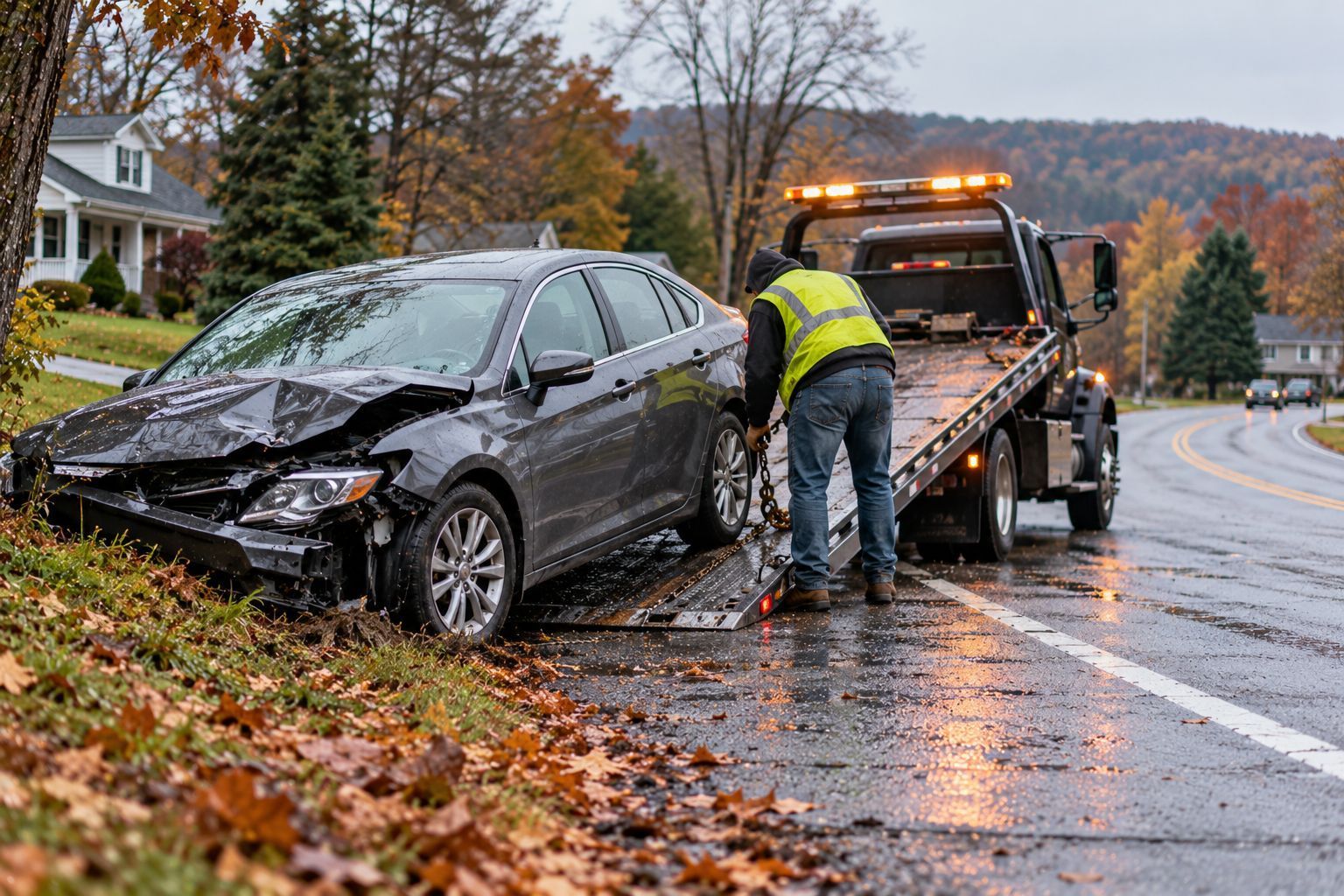
- Collision towing is part of your collision claim. When your car is damaged in a crash, the tow to a shop and reasonable storage are usually paid as part of the loss, subject to your deductible.
- Comprehensive can cover towing tied to non-collision losses, such as a tree limb crushing your hood during an ice storm.
A common mistake is assuming roadside service covers a crash tow, or that collision covers a simple winch-out. Check which one applies before you call, especially if you belong to an auto club as well.
Common Questions About Ohio Deer Accident Claims
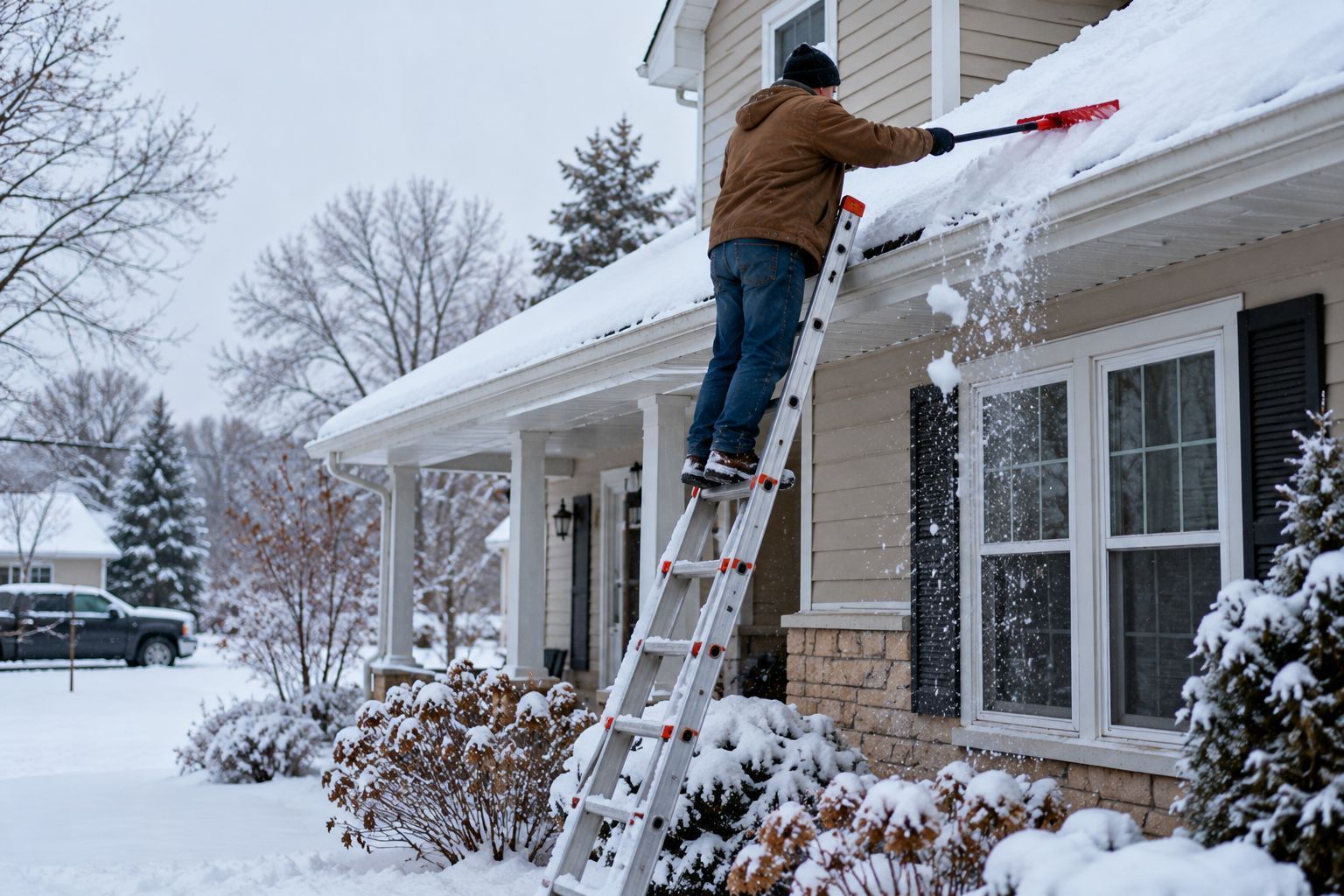
A typical Ohio winter prep list covers four things: insulating exposed pipes, testing your sump pump's battery backup, raking heavy snow off older roofs, and reviewing your homeowners policy for gaps before the first hard freeze. Each one prevents a specific, expensive claim, and each is much easier to handle in the fall than in January.
Ohio winters vary a lot by region. A house in Ashtabula County might see lake-effect bands drop a foot of snow overnight. A home near Cincinnati is more likely to deal with freeze-thaw cycles and ice. Wherever you live, the same few systems take the hardest hit, so they deserve your attention first.
Preparing an Ohio Home for Winter Before December
Preparing an Ohio home for winter comes down to four jobs. Insulate pipes in unheated spaces, test the sump pump and its battery backup, plan how you'll clear heavy snow from the roof, and read your policy for endorsement gaps before the first freeze. If you finish all four before December, you've covered most of the winter claims we see in Ohio.
Timing matters more than most people expect. By late November, plumbers are booked solid and roofers have stopped climbing ladders. Insurance changes have their own problem: many carriers won't add coverage while a winter storm warning is active. Endorsements added in September or October also tend to be in force well before the first real cold snap.
Here's a realistic order of operations for a typical Ohio household:
- September: Have the sump pump serviced, replace the backup battery if it's more than three years old, and schedule a roof inspection.
- October: Insulate pipes, seal gaps around rim joists, and clean the gutters after the leaves drop.
- Early November: Shut off and drain the exterior spigots, then buy a roof rake before stores sell out.
- Before December: Go over your policy declarations page with your agent and add any missing endorsements.
The insurance step tends to get pushed to last, but it's the one most likely to turn a bad week into a financial disaster. A burst pipe you didn't prevent is frustrating. A burst pipe that sends sewage back through a floor drain, on a policy without water backup coverage, can cost tens of thousands of dollars out of your own pocket. If you haven't reviewed your
ohio homeowners insurance since you bought the house, put that on the calendar now.
Frozen Pipe Prevention Strategies for Ohio Homeowners
To keep pipes from freezing, drain your exterior spigots, insulate any pipes in unheated crawlspaces, and keep the thermostat at 55 degrees or higher whenever you travel. Those three habits prevent most of the frozen pipe claims Ohio homeowners file each winter, and none of them costs much.
Outdoor spigots are the most common failure point. If a hose is still attached in November, water sits in the faucet body and freezes back into the wall. The pipe usually splits somewhere inside the house, and you won't know until the thaw, when water starts showing up in the basement ceiling. Disconnect every hose and close the interior shutoff valve for each outdoor faucet. Then open the outside tap to drain what's left. Frost-free sillcocks help, but only if the hose comes off.
Crawlspaces cause the second-largest share of problems, especially in older homes in places like Youngstown, Akron, and Columbus, where plumbing often runs along an exterior wall. Foam pipe sleeves are inexpensive and easy to install. For pipes that run close to vents or the rim joist, consider thermostatically controlled heat cable. Close the crawlspace vents for the season and seal any gaps where cold air comes in around utility lines.
The thermostat rule is the one people break most often. They head to Florida for two weeks, set the heat to 50 to save money, and come home to a ruined first floor. Keep it at 55 or above. Open the cabinet doors under sinks on exterior walls so warm air can reach those pipes.
There's an insurance angle here that matters. Many Ohio policies limit or exclude freeze damage if the home was left without reasonable heat. A smart thermostat that alerts your phone when the temperature drops gives you an early warning. It also gives you a record showing the heat was on.
Sump Pump Backups and Water Backup Endorsements
Standard homeowners policies often exclude water that backs up through drains or overflows from a failed sump pump, unless you've added a water backup endorsement. Before winter, ask whether your carrier, such as Erie or Westfield, offers a specific rider and how it treats a backup that fails because the battery died.
This is the gap that surprises clients most. People assume "water damage" is covered as one big category. It isn't. A pipe that bursts suddenly is usually covered. Water that comes up through the floor drain or out of the sump pit usually is not, unless the endorsement is on the policy. In late winter, when snowmelt saturates the ground and a power outage knocks out the primary pump, that difference can easily run into five figures.
The endorsement itself has details worth checking:
- Sublimit: Many riders cap backup coverage at $5,000 or $10,000. A finished basement with carpet, drywall, and a sectional can exceed that quickly.
- Mechanical vs. power failure: Some riders treat a pump that burns out differently from one that stops during a power outage.
- Battery backup failure: Ask directly whether water damage is covered if the backup system was installed but the battery was dead.
- Deductible: Some riders carry a separate deductible.
Erie and Westfield both write a lot of Ohio homes, and their endorsement options can differ by policy form. That's one reason to compare riders side by side instead of assuming they're all the same.
On the equipment side, a professional sump pump installation in Ohio typically runs $1,100 to $3,500 depending on horsepower, and adding a dedicated battery backup usually costs another $200 to $700 as of this writing. Compared with a single backup claim on a finished basement, that's a small expense.
Testing Your Battery Backup System
A battery backup won't run as long as you'd think. A standard 75 Ah AGM battery may last only 4 to 6 hours under heavy continuous cycling during a winter snowmelt event. If an ice storm keeps your power off overnight, that may not be enough.
Test the system every fall:
- Unplug the primary pump.
- Slowly fill the pit with a bucket or garden hose until the backup float rises.
- Confirm the backup turns on, pumps the water out, and shuts off cleanly.
- Check the battery's date and terminals, and replace it if it's three to five years old or shows corrosion.
- Plug the primary pump back in and confirm it runs normally.
If you have city water and want something that doesn't depend on a battery, look at water-powered backup pumps. Models such as the Basepump or Liberty SJ10 are set-and-forget systems that run indefinitely without batteries. These pumps need adequate municipal water pressure, so they won't work on most well systems.
Managing Snow Load on Older Roofs
Heavy lake-effect snow can push older Ohio roofs past what they were built to carry. Clearing the lower few feet of the roof with a roof rake after major storms is one of the most effective ways to prevent both structural strain and ice dams. Homes in the Snowbelt east of Cleveland and through Geauga, Lake, and Ashtabula counties face this risk every year.
The weight is what catches people off guard. In Northeast Ohio, dense lake-effect snow can weigh 20 to 30 pounds per cubic foot. At that weight, a 12-inch accumulation can exceed the design capacity of older or poorly maintained roofs. Fluffy powder is one thing. Snow that has settled, absorbed rain, and refrozen is much heavier, and it puts real strain on rafters sized under decades-old building practices.
Older structures carry extra risk for several reasons. Houses from the 1920s through 1950s often have undersized rafters, roofing added over original shingles, or rot near the eaves that nobody has noticed. Detached garages and porch roofs are even more vulnerable, since they're frequently built to lighter standards. Watch for these warning signs:
- Interior doors that suddenly stick or won't latch
- New cracks in drywall or plaster near the ceiling
- Creaking or popping sounds from the attic
- Visible sagging along the ridgeline
Ice dams are the more common problem. Heat escaping from the attic melts snow on the upper roof, the water runs down, and it refreezes at the cold eaves. Eventually it backs up under the shingles and leaks into walls and ceilings. A roof rake with an extension pole lets you pull off the bottom three to four feet of snow from the ground, which takes away the material that would form the dam.
Stay off the roof yourself, and never chip at ice with a hammer or shovel, because that damages shingles and can lead to a fall. For a large accumulation on a low-slope or older roof, hire an insured snow removal contractor. Long term, adding attic insulation and ventilation addresses the root cause.
Coverage Gaps to Check Before the First Freeze
The coverage gaps most worth checking before the first freeze are whether your dwelling limit matches current rebuild costs and whether your policy protects you from cold weather losses away from the main house. Carriers such as Progressive, Western Reserve, and Liberty Mutual handle these points differently, so a side-by-side comparison often turns up gaps you didn't know you had.
Start with the dwelling limit. Building and repair costs have climbed sharply in recent years, and many Ohio policies written five or more years ago haven't kept up. If a roof collapse or a frozen-pipe flood causes major damage and your limit falls short, you pay the difference. Ask whether your policy includes extended or guaranteed replacement cost, which adds a cushion above the stated limit. Ohio's insurance environment keeps moving, too. Rules and coverage gaps are shifting in 2026, including changes to how Fannie Mae and Freddie Mac influence insurance requirements for mortgaged homes. That's a good reason to look at your policy fresh this year.
Off-premises cold weather protection is the second area. Think about a detached garage with a utility sink, a vacation cabin near Lake Erie, a rental property, or a parent's house you check on. Coverage for freeze damage at those locations varies widely. Some forms cover other structures fully. Others limit them to a percentage of the dwelling limit. Vacant or seasonal properties often need a separate policy altogether.
How the major carriers typically approach these issues:
- Progressive: Policies are frequently packaged with auto. Check the other-structures percentage and whether water backup is optional or included.
- Western Reserve: An Ohio-based regional carrier familiar with local claim patterns. Ask about its endorsement packages for backup and replacement cost.
- Liberty Mutual: Offers a range of optional add-ons. Confirm the inflation guard settings and how vacancy affects freeze coverage.
Exact terms vary by policy form and change over time. The details on your own declarations page are what count.
Winter Coverage Comparison Table
This table shows how common winter losses are typically treated under a standard Ohio homeowners policy, and what might fill the gap. Use it as a starting point for a conversation with your agent, since specific forms vary.
| Winter Loss | Standard Policy (Typical) | Common Gap | What May Fill It |
|---|---|---|---|
| Burst pipe, heated home | Usually covered | Gradual leaks excluded | Base policy |
| Burst pipe, heat off or vacant | Often limited or excluded | Neglect clause | Maintain heat, vacancy endorsement |
| Sump pump failure | Usually excluded | No backup coverage | Water backup endorsement |
| Sewer or drain backup | Usually excluded | Low sublimits | Water backup endorsement |
| Roof collapse from snow | Usually covered | Wear and tear denials | Maintenance records |
| Ice dam interior leak | Usually covered | Repeat leaks scrutinized | Fix insulation after first claim |
| Detached garage damage | Covered to a percentage | Limit too low | Raise other-structures limit |
| Seasonal cabin freeze | Often excluded | Vacancy rules | Separate seasonal policy |
| Rebuild cost overrun | Capped at dwelling limit | Outdated limit | Extended replacement cost |
The pattern is clear: sudden, accidental damage at a heated, occupied home is generally covered. Gradual problems, unoccupied buildings, and water that comes up from below are where claims get denied. If any of the gap column describes your situation, fix it before the forecast turns cold.
Common Ohio Winter Insurance Questions
Does homeowners insurance cover frozen pipes in Ohio? Usually yes, if the pipe burst suddenly and you kept the home reasonably heated. Claims are often limited or denied when the heat was off or the house sat vacant for a long stretch, so keep the thermostat at 55 or higher.
Will my policy pay if snow collapses my roof? Most standard Ohio policies cover roof collapse caused by the weight of snow or ice. The carrier may push back if the roof was already rotted or poorly maintained, so keep inspection and repair records on file.
Is sump pump failure covered by homeowners insurance? Not by default on most policies. You typically need a water backup endorsement, and it's worth checking the sublimit and whether a dead backup battery affects the claim.
Winter in Ohio tests the same few weak points every year: exposed pipes, overworked sump pumps, older roofs under heavy snow, and policies that haven't been updated in years. Handle the physical prep this fall and give your coverage the same attention, because the endorsement you skip is often the one you end up needing.
If you'd like someone to compare winter coverage across several carriers for you, MVP Insurance is an independent agency with offices in Zelienople, PA and New Springfield, OH. You can start a quote here and have options in hand before December. MVP Insurance is licensed in Ohio (#37714) and Pennsylvania (#519263), NPN 10588293.
Search
Recent Posts
MVP Insurance is a local, independent agency, licensed to serve individuals and businesses across Ohio and Pennsylvania.
We serve clients from our offices in New Springfield, Ohio and Zelienople, Pennsylvania and throughout Northeast Ohio and Western Pennsylvania, working with multiple carriers to help contractors, landlords and real estate investors, restaurants, retail shops, auto repair shops, professional offices and many other personal and commercial clients find coverage that fits.
Our Owners
Two friends who started an agency
Owner
Joshua Medure
I am a Penn State marketing graduate with more than ten years in insurance. My childhood friend David and I started MVP Insurance in Northeast Ohio because we wanted the people around us to have an agency that gives honest advice, real choices and someone who picks up the phone. I lead the agency’s insurance strategy, which means I read the policies so our clients do not have to. Away from the office, I coach youth football.


About the Author
David Varrati
Owner, MVP Insurance
I started MVP Insurance with my childhood friend Josh because we wanted people in Northeast Ohio and Western Pennsylvania to have an agency that explains things plainly and picks up the phone. I studied Political Science at Slippery Rock University and have spent more than ten years helping families and individuals protect what matters to them. When I am not in the office, you will find me coaching youth sports.